বাংলা
 English
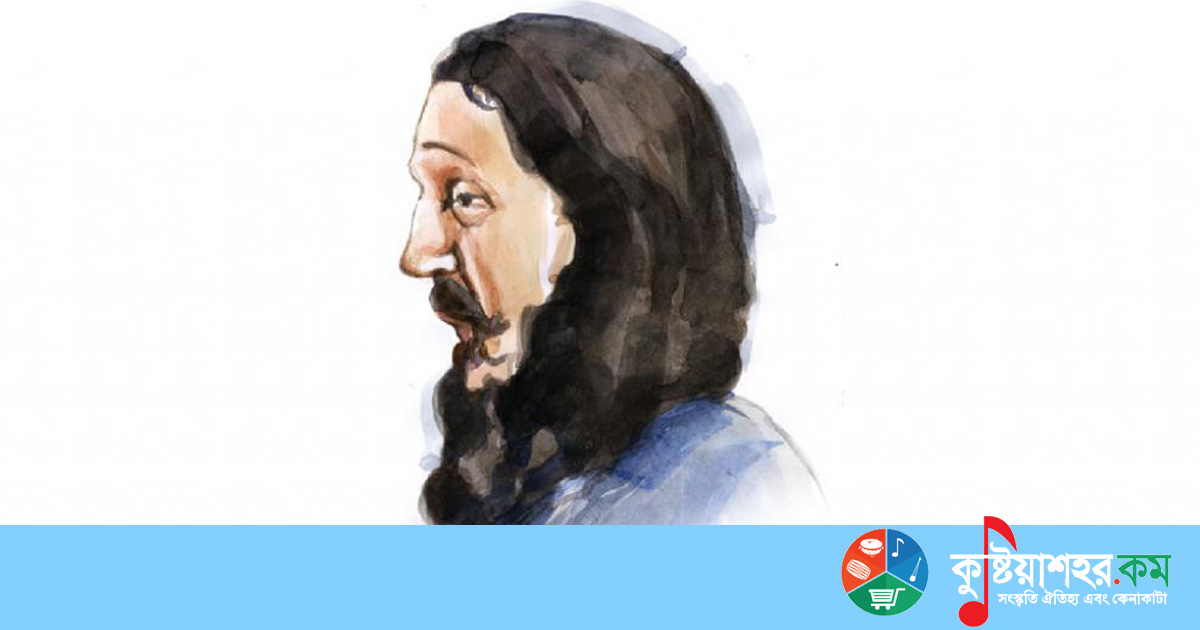
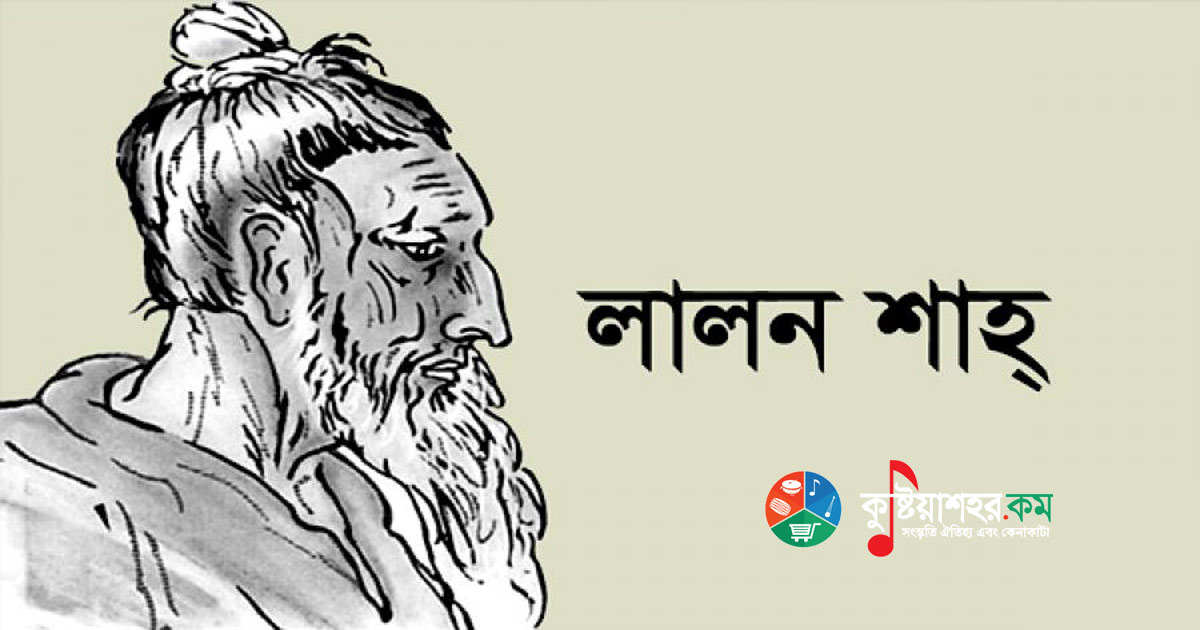
The acquaintance and bond between the Baul and Bengali society are of long standing. Through many a blow and counterblow over several centuries, the Baul reached the highest level of its flowering chiefly thanks to Fakir Lalon Sai. Lalon alone is the Baul community's greatest representative - in song, in sadhana, in theoretical knowledge. This luminary of the people is no longer confined within the bounds of Bangladesh or the Bengali-speaking regions; his seat today is in the world at large.
In the company of sadhana, 'through the songs', Lalon beheld that mystic 'little world'. In search of the unreachable man of the heart, Lalon's journey went 'along deep and lonely paths', from age to age. Into his two eyes came the glow of another light - and Lalon divided himself: on one side began the unending journey in search of Sai Niranjan, and alongside it the grim struggle to cross the thorns of the path and the barriers of society. Thus Lalon became at once mystic and rebel - teacher of society and reformer - the supreme guru of spiritual sadhana and the guide of humanity's liberation, and the conscience of the folk Bengali.
Lalon was born 242 years ago in an obscure village of reformed Bengal. He was granted a long life of 116 years. This long life of his was full of strange experience. Caste and creed, sectarian enmity, the tyranny of scriptural religion, class oppression, social injustice, the suppression of women, the degradation of humanity, the disgrace of humaneness, the worship of power, irrational conduct, feudal exploitation - these kept sinking human life in sorrow and despair. Even later the situation did not change. Perhaps in some cases its form changed, but its imprint was never wholly erased from the body of society.
Lalon's life flowed in two streams - on one side the gentle stream of mystic sadhana, on the other the endeavour of lighting the fire of rebellion and burning away society's injustice and refuse. Yet in that world of sadhana into which he entered, there was no question of being moved by events of the outer world. But why must the Baul be protesting and rebellious? In truth the Baul's very birth was through protest - against the powerful rich and the bearers of scripture this was a silent 'rising of the poor masses'. Those who joined mystic sadhana to protect themselves from society's scorn and persecution felt, within, the need to deny and reject institutional religion. The Baul therefore has no scripture - the guru's commands and prohibitions become songs that give them their bearing and show the way. Lalon's life and sadhana too moved along this stream.
Blow after blow came upon the Baul community and upon Lalon. The scorn, condemnation and hatred directed at Lalon were the reaction of a deranged social mind. The reason was that Lalon believed in free thought all his life, wished to spread a humanist philosophy, wished to change that worm-eaten society, and took the vow of setting caste and religion aside and letting mankind blossom in the feeling of the humane. Why would the upper-caste people of society tolerate such counter-current deeds of a mere mystic fakir! For in the name of religion - by the authority of scripture - by the power of money - by the pride of force - they wished to shut every window of the house of society and build a kingdom of everlasting darkness. Because Lalon spoilt that design, these people became his enemies. So he had to hear and endure such abuses as heretic, outcast, shorn, effeminate, bastard. Yet the brand of infamy and condemnation heaped on him - in his own time, let alone later - became, through the good judgment of people of conscience, a mark of Lalon's glory.
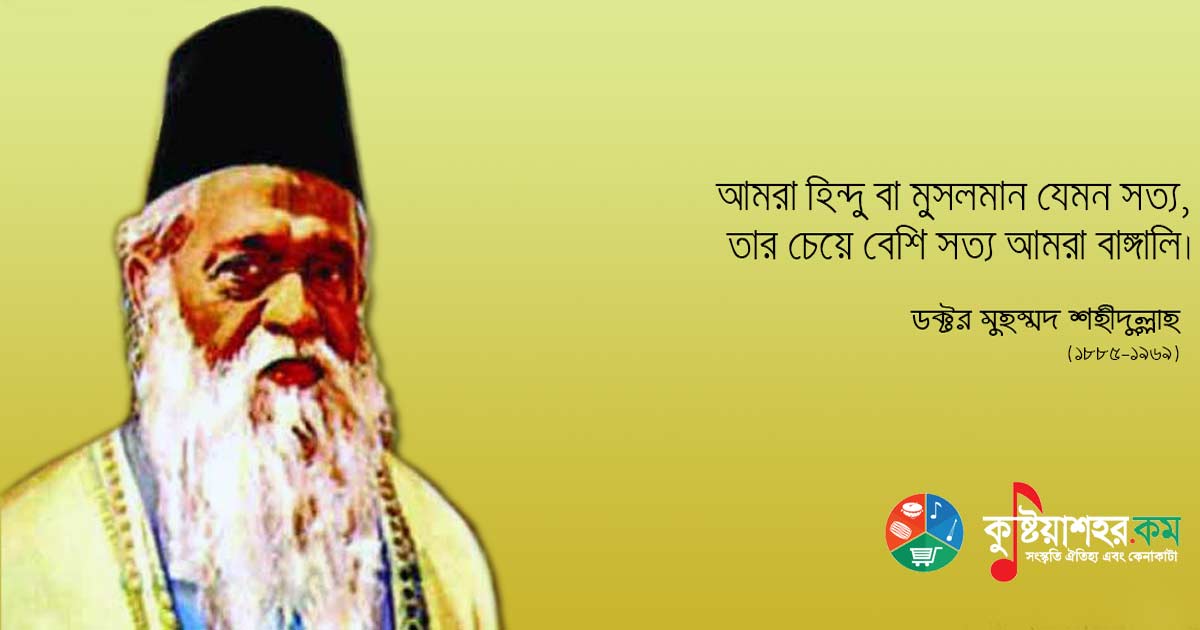
He was not a Hindu - nor a Muslim; instead he strove with all his might to be a 'human being'.
As a mystic sage, Lalon's task, one would think, was only to compose songs of body-sadhana, the verses of intricate Baul philosophy. But from experience and observation he came to know that unless society's darkness is dispelled, the light of sadhana will not bloom. Going beyond the sadhana lineage, he therefore had to write songs to awaken society, songs to enlighten mankind. The many injustices, evil customs and inconsistencies of society fell under Lalon's eyes. He came to know: 'In Kali, the inhuman hold the power / thieves are the ones who make men good.' Morality turns into empty words: 'Beneath, beneath, they eat the hidden loot / before people they pose as virtuous / many such pious men are found / the one who is the chief is the sinner.'
The simple-hearted poets of the middle ages said through allegory, 'Above all man is truth, there is nothing above him.' To proclaim man's supremacy Lalon drew aside that allegory's veil and said directly: 'The Sai created infinite forms / I hear nothing is higher than man / gods and deities worship and adore / to be born as man.' Lalon did not believe in rebirth. So he had an earnest appeal to make this mortal earthly visit fruitful with good deeds, once for all: 'Through the fruit of what fortune, who knows / O mind, you have received this human birth / cross swiftly by the stream of nectar / lest the ferry sink.' Lalon did not endorse the claim 'the world is false, Brahma is true'. So he could not but respond to the beckoning of the worldly: 'Such a human birth - will there be another? / Do quickly, O mind, what you would do in this world.' More than gaining heaven in the afterworld, his leaning was towards the world's 'cash payment'. Man was at the centre of Lalon's consciousness. So the themes of human life, the human guru and the worship of man came up again and again in his songs. 'Worship man and you will become a golden man', 'In this world, devotion to the human guru / makes all sadhana bear fruit', 'He who has the man of the mind in mind - does he need to count beads?', 'That man is within him, the mind says, call him man-jewel', 'He whose mind holds the truth of man-theory / does he accept any other theory' - though these verses of Lalon were bound by the need of sadhana, they are in essence songs of the glorification of man. 'Distrust of man does not make man cease to be man's treasure' - this line, like fine counsel, is the symbol of his deep faith in and love for humanity.
And what is the Baul's caste or religion? Washing all that away he took his place in the 'sadhu's market' to search for the 'man of the mind', leaving home and family. Lalon too accepted neither caste nor religion nor scripture - he had no use for lineage and clan. Woman and man - that is man's caste. In the very first hour of youth he had to cut the threads of caste and religion and leave home. And then, drifting along, he found his guru, 'the life of his life', Sai - he took initiation from Siraj Sai - he became a Baul - no claims of religion or caste remained. But though he had none, the people close to him seek man's identity in the light of caste and religion - is the man a Hindu or a Muslim? These people hounded Lalon to learn his caste identity. Lalon could not pass by evading; he had to answer: 'Everyone says, Lalon fakir, is he Hindu or Yavan / Lalon says, I do not know my own seeking.' In the fire of his rebellion Lalon wished to burn these caste distinctions to ash: 'Lalon says, if I find caste at hand / I shall burn it with fire.' The saint-sages of medieval India too scorned caste and religion - Kabir, Ramdas, Nanak, Paltu, Rajjab, Tulsidas, Dadu - the same words on all their lips. How did Lalon come to know, sitting still, the news from afar? Or is the mind and bhava of all mystics cast in the same mould! Here place and time all vanish - bound by one invisible thread remains only the mystic mind of the sage who loves mankind.
The stream of sadhana's essence flows in the union of nature and purusha. What was the life of that nature, or woman, in Lalon's time? How did Lalon look upon woman? - the answers to these curiosity-arousing questions reveal a new Lalon. Woman is the vessel of creation. Wrapped in the cover of a riddle Lalon therefore says: 'On the sea floats the world-mother / Lalon says, in the mother's womb the father is born.' The gentle-born woman made 'helpless' by the pressure of society, family and religion can also diminish man's arrogance and dominion, and the man who longs for love must at times kneel to woman - with the comparison of Krishna Lalon says exactly this: 'In which love, tell me, at the gopi's door / in which love does Shyam hold Radha's feet...' The glory and supremacy of woman find their identity in this song of Lalon: 'Worship the mother and you gain the father's address / in the reckoning of the scripture the truth went thus, so it is known.' This teaching crushed the supremacy of patriarchy.
Lalon did not care at all for matters of sin and virtue, heaven and hell either. He counted the notion of sin and virtue as 'custom of the land': 'To whom shall I ask of sin and virtue / what is counted sin in this land is virtue in another.' The thought that woke in Lalon's mind is that he is no 'slave of custom'. The Muslim's 'besht' (heaven) or the Hindu's 'swarga' - Lalon wished to go nowhere; to him both were 'equally a lottery' - so 'who indeed likes to be a dweller there'!
Lalon did not accept caste, did not accept scripture, had no faith in institutional religion, nor any inclination to communal identity. Rejecting blind belief wholesale, he set reason there instead. So he can say with ease, 'Does the Veda know its essence?' or 'Dark clouds over the Vedic sky / the sun-jewel does not rise.' Mocking what becomes of religion when ritual and orthodoxy keep it spellbound, Lalon says: 'The god ought to be worshipped then, like the gourd-pot of the hamlet / so that it purifies the temple.' Mocking the fright of religion he again wove a song: 'Fine pretence of piety / no essence in it, the austerity is heavy / the drum-drum of Hari's name / a rosary of three twigs is his japa-mala.' Lalon asked: 'He who in secret eats the whore's bread / what harm does that do to religion' - who will answer this? He was indifferent and sceptical about all institutional religions and scriptures. The Muslim does not drink 'jol', the Hindu does not drink 'pani'. But Lalon made the division-minded, unwilling Hindu and Muslim drink the same ghat's 'pani' and 'jol' - in his songs he accepts both these synonymous words gladly and in equal honour. Thus he cut at the root of the language-communalism fostered by caste and religion too. His songs deliver this very message: he was not a Hindu - nor a Muslim; instead he strove with all his might to be a 'human being'.
Lalon was a man ahead of his time. But he was against his time. The social mind was not made to listen to him or understand his significance. So he had to endure many a blow. At times pain, at times despair woke in his mind, so he composed songs mixed with lament and long sighs: 'In this land, where has this happiness gone, I know not where to go / I have got a broken boat, my life went bailing water.' But the human guru Lalon cannot accept defeat; surrender to despair cannot be his creed! He whose longing was to be a wave-laden river, to be a current that bears both banks - and he remained the still 'well-water' of a 'dark pond'! But Lalon wants to give mankind its bearing, so he keeps hope alive for better days: 'When will the laden rain come? I have kept my mind on that hope.' One day the monsoon will descend, this rough soil will be drenched in new streams of water, the crop fields will fill with green - the mystic farmer Lalon's dream of tilling the land of humanity will come true.
Abul Ahsan Chowdhury: Lalon researcher; Professor, Department of Bangla, Islamic University.