বাংলা
 English
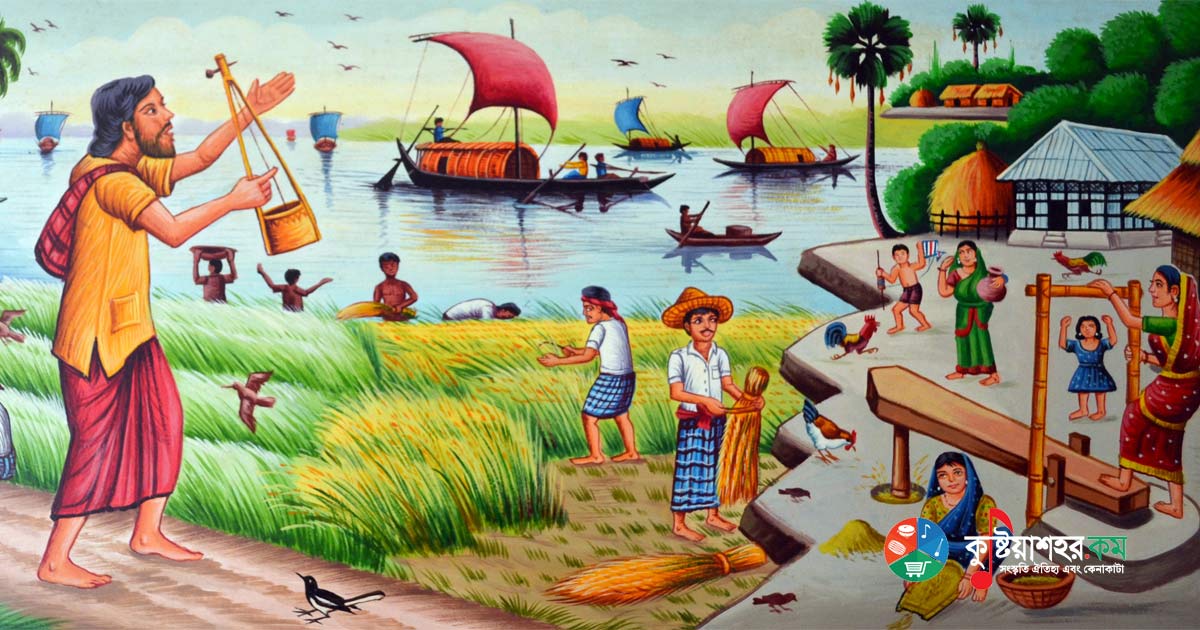
Various facts about the nature of the Baul have been stated in Baul songs. At this stage the explanation of the Baul creed is presented by taking refuge in the sayings of the songs composed by Baul sages. For instance, from the saying of one Baul song we find —
He who searches for Khoda within man — he indeed is the Baul; in substance I find the God above.
He refuses the previous birth; conjecture cannot seize him; the man who serves the present is the one accepted.
The Vedas, the tulsi rosary, the tiki — all these they call hoaxes; with Satan's help they cheat, gone astray.
In man all meets; seeing and hearing, the Baul says — what does poor Duddu say of Lalon Saiji's line?
In the saying of the song above, composed by the Baul sage Duddu Shah of the Jhenaidah region of Bangladesh, the gist of the “Baul mat” — that is, of Baul philosophy — has found expression most simply. Because, one of the principal aspects of the primary identity of the Bauls of Bengal is that they seek the Creator within man. The second aspect is that, unlike the people of the established religious groups, they do not believe in conjecture; they even refuse to accept the doctrine of the past birth or transmigration. Thirdly, they regard the Vedas, the tulsi garland and the tiki as acts of hoax. In fact, standing outside the established religious consciousness, the Baul mat of Bengal has essentially given birth to the theory that “in man all meets”.
The Baul researcher Shaktinath Jha has said in his explanation — “The Baul doctrine is no religion. The word sampraday (community) can be used here loosely. Individuals of different religious groups and social strata receive this doctrine, the songs and the sadhana from a particular guru and try to follow them according to their own capacity and upbringing, and thus form one loose voluntary body. The sage again, being distinguished as guru, builds a separate circle. Within this population there are both unity and diversity. In Baul philosophy and sadhana the established values and rituals are idealised in an inverted form; the anti-scriptural sadhana in its various diverse forms has composed the Baul way of life. The Baul, who disbelieves in a wonder-working God, a soul apart from the body, a heaven and other afterworlds, is a man of this world, a man of the body. Men protesting the socio-economic-cultural codes take up the Baul doctrine.”
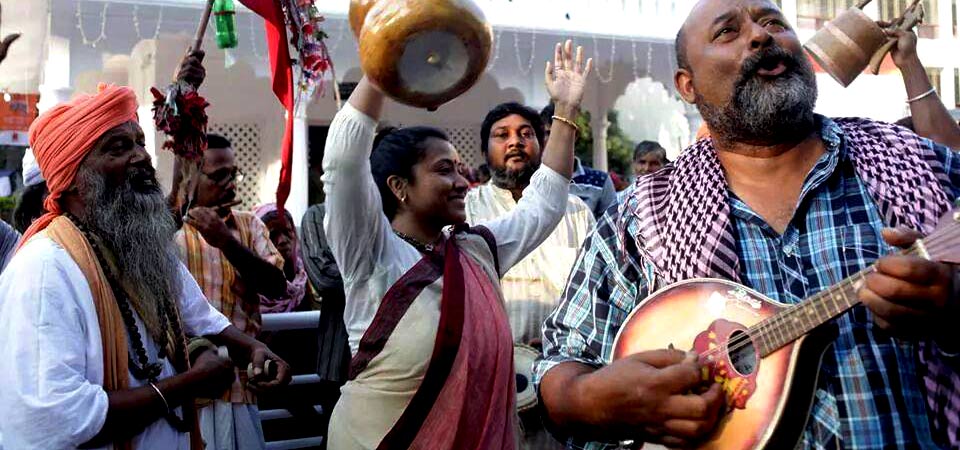
The influence of the Baul creed exists almost everywhere in Bangladesh. However, the Baul creed of one region has developed in one way, of another in another. For instance, the sadhana method, way of life, dress and dwelling, sadhu-sangha, and even the singing style and the melody and diction of the songs of the Lalon-following Baul sages of the Kushtia region bear hardly any resemblance to the Bauls of the greater Sylhet, Mymensingh, Netrokona and other regions. But there is some similarity in the matter of bhab and of taking the body as the seat of sadhana. In fact, the Bauls of all regions take the body as the shelter of sadhana, and within the house of the body they observe the location of creation and the Creator; and through the guru-disciple succession the Bauls of almost all regions keep the stream of sadhana flowing. In this they consider the guru equal to the Creator. They believe that through the worship of the guru or the murshid one can have the meeting with the Creator. Lalon Saiji expressed this line of guru-disciple succession thus —
He who is the murshid, he indeed is the Rasul; there is no error in this — Khoda too is he; Lalon says: no, such words the Quran does not say.
In this way the Bauls of Bangladesh, in the light of irrefutable logic and keeping the Sharia-bound books in front, have established the sadhana-practice of the guru-centred line. Not only that; holding the worship of the man-guru and considering man worthy of prostration — and that through it the finest ibadat of the Creator is possible — the Baul sages of Bengal have not hesitated even to express this. It must be remembered that the Baul mat of Bengal is not the creation of any distinguished individual. Therefore the Bauls are not any distinguished community like the Vaishnava, Chishtia and other classes of sages. As the followers of the Vaishnava and various classes of Sufi creeds can name their founders, the Bauls cannot. Hence there is no end to the argument over who the original Baul was.
Baul researcher Shaktinath Jha has, of course, given the oldest instances of the Baul mat of Bengal by collating the sources of various researchers — with quotations and explanations from literary monuments such as the Charyapada, the Vaishnava Padavali and the Mangalkavya.10 In his view, although the name of the primal guru of the Bauls cannot be determined exactly, at least this much can be said — Bengal's 'Baul path is no modern-day doctrine.'
Introducing the nature and identity of the Bauls, Muhammad Enamul Haq says: “The 'Bauls' are called 'batul', that is, mad. After whom the Bauls are mad, he has no name — he is 'anamak' (the Nameless). Yet they call him by whatever name they please. Hence we see them trying to introduce him by so many names as 'Mon-Monura', 'Aleque', 'Alekh Sai', 'Achin Pakhi', 'Moner Manush', 'Dordi Sai' and 'Sai' and the rest. By whatever name they introduce him, he remains to them forever 'anamak'. It is not their nature to impose any particular name upon him like the Hindu's 'Brahma', the Vaishnava's 'Krishna' or the Muslim's 'Allah'.12 At the same time, like ordinary religious people, the Bauls of Bengal do not regard that supreme being as fearsome, or as an object outside the body and outside one's own inner self. Rather, in sadhana through the body-centred yoga of the six chakras they go seeking the matchless peace of beholding the self and the Creator.
Acknowledgement for information: playwright and researcher Saymon Zakaria