বাংলা
 English
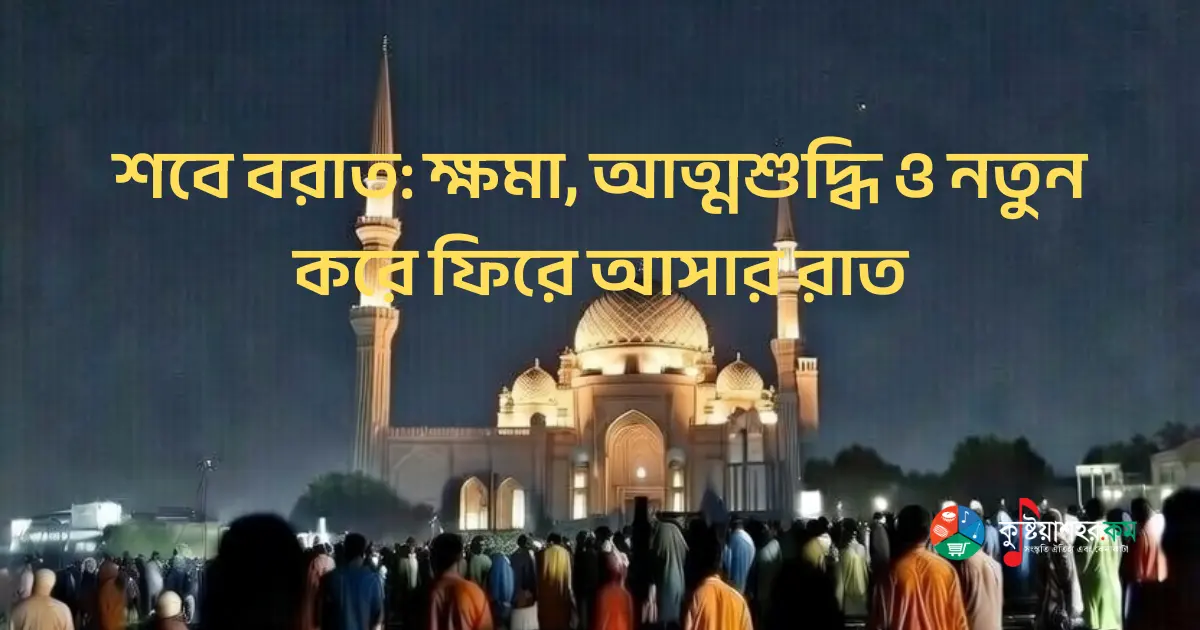
One of the glorious nights of the Islamic calendar is Shab-e-Barat. The Persian word 'Shab' means night and 'Barat' means freedom or deliverance. That is, Shab-e-Barat is a night in which Allah Taala opens the doors of forgiveness, mercy and salvation for His servants. This night brings Muslims a unique opportunity for self-examination, repentance and self-purification.
The Historical and Hadith-Based Background of Shab-e-Barat
Shab-e-Barat is observed on the night following the 15th of the month of Shaban. Several hadiths describe the virtue of this night.
It is narrated from Hazrat Ayesha (RA) that she said -
"One night I did not find the Messenger of Allah (SAW) beside me. When I went out searching, I found him in prostration in Jannatul Baqi. Then he said: 'Indeed Allah Taala descends to the heaven of the world on the middle night of the month of Shaban (the night after the 15th) and forgives more people than the number of hairs on the sheep of the Banu Kalb tribe.'" - (Sunan Tirmidhi: 739; Ibn Majah: 1349)
Another hadith states -
"On the middle night of the month of Shaban, Allah Taala turns His gaze upon His creation and forgives everyone except the polytheists and those who harbour enmity." - (Sahih Ibn Hibban: 5555)
From these hadiths it is understood that although this night is a night of forgiveness and mercy, purity of heart and a faith free from shirk are absolutely essential for it.
The Significance of This Night (In the Light of the Quran and Sunnah)
Although the term 'Shab-e-Barat' is not mentioned directly in the Quran, the lessons of forgiveness, taqwa and self-purification that the Quran teaches are deeply connected with the core spirit of this night.
Allah Taala says -
"O you who believe! Turn to Allah with sincere repentance." - (Surah At-Tahrim: 8)
He further says -
"Indeed Allah does not change the condition of a people until they change their own condition." - (Surah Ar-Ra'd: 11)
These verses remind us that the core lesson of Shab-e-Barat is self-transformation. Accordingly, the significance of this night stands on three pillars -
- Repentance and seeking forgiveness: returning to Allah with sincerity.
- Purity of the heart: abandoning envy, malice and arrogance.
- Resolve for the future: making a pledge to give up sins and remain steadfast on the righteous path.
Deeds to Perform on Shab-e-Barat (An Evidence-Based Approach)
There is no specific fard or sunnah muakkadah act prescribed for the occasion of Shab-e-Barat. However, the righteous predecessors (salaf-e-salihin) would pass this night in nafl worship.
The best deeds are -
- Nafl prayers: best offered alone and in solitude.
- Recitation of the Quran: with the intention of purifying the heart.
- Zikir and istighfar: especially reciting 'Astaghfirullah' again and again.
- Dua: for oneself, one's family and the whole Ummah.
The Messenger of Allah (SAW) said -
"Dua is the essence of worship." - (Sunan Tirmidhi: 2967)
Moreover, in the light of the hadith, keeping abundant nafl fasts in the month of Shaban was the sunnah of the Messenger (SAW). - (Sahih Bukhari: 1907; Sahih Muslim: 1156)
What Should Be Avoided
Some practices carried out in the name of Shab-e-Barat are not consistent with the core teachings of Islam -
- Setting off fireworks
- Wasteful and showy arrangements
- Baseless rituals and superstitions
Islam teaches us that worship is to be done in solitude, with humility, and full of sincerity.
Social and Moral Lessons
Shab-e-Barat is not merely a night of personal worship; it reminds us of our responsibility towards society as well. Seeking forgiveness from those one has wronged, untangling strained relationships, and making a resolve to establish justice and humanity in society - these are the true demands of this night.
Shab-e-Barat is a golden opportunity to make a new beginning in our lives. Let this night not become a mere formality - rather, let it be a night of self-examination, repentance and change. May Allah Taala grant us all the tawfiq to attain the full blessings of this night. Amin.