বাংলা
 English
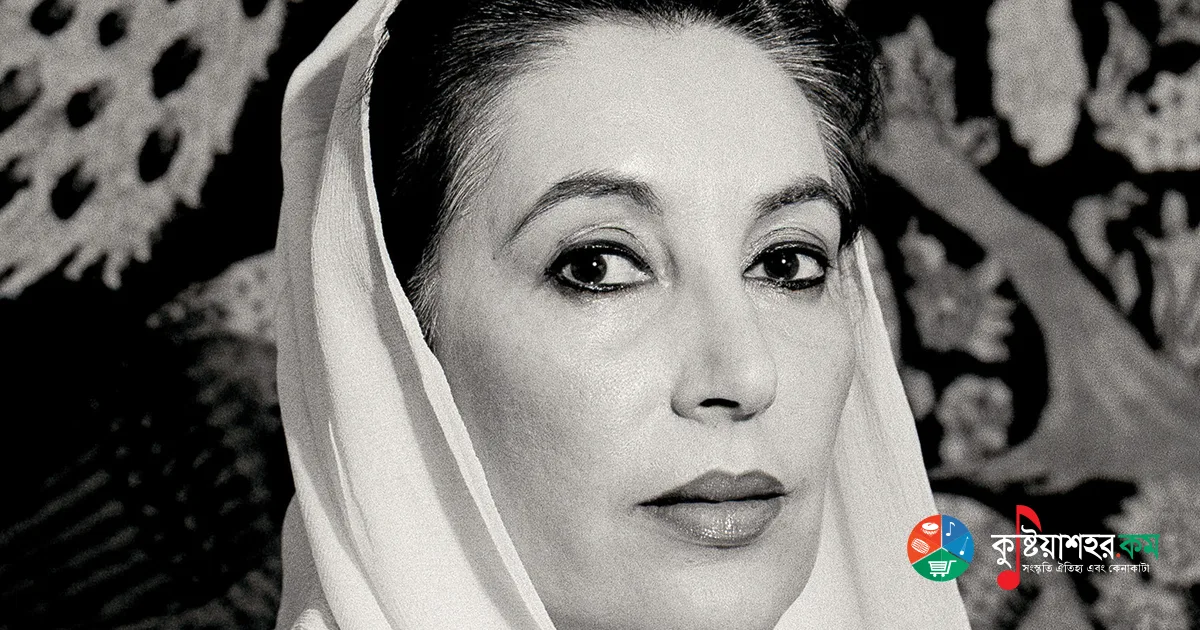
A father’s execution at twenty-one, the world’s youngest prime ministership at thirty-five, two terms in office, two exiles—and death in the very month of her final return: Benazir Bhutto’s life was itself a political epic. Born in Karachi on 21 June 1953, she became in 1988 the first woman elected to head a democratic government in a Muslim-majority country—and history remembers her as Pakistan’s first and only woman prime minister.
A daughter of the Bhutto family
Benazir Bhutto was born on 21 June 1953 at Pinto’s Nursing Home in Karachi, into the politically influential Bhutto family of Sindhi and Kurdish parentage. Her father Zulfikar Ali Bhutto later became Pakistan’s president and prime minister and founded the Pakistan People’s Party (PPP)—the first classroom of her politics was at home. After convent schooling in Karachi and Murree, her higher education turned west, toward Harvard.
Harvard and Oxford
At Harvard she read comparative government and graduated cum laude with a Bachelor of Arts in 1973; then she completed Philosophy, Politics and Economics at Lady Margaret Hall, Oxford, and a one-year course in international law and diplomacy at St Catherine’s College. In 1977 she was elected president of the Oxford Union debating society—the first Asian woman to hold the post; the oratorical skill that later carried her to the world’s platforms has its roots in that school.
The coup, the prisons and the father’s execution
She returned home in June 1977 to join her father’s government—but within July, General Zia-ul-Haq’s coup ousted Zulfikar Bhutto’s government. Within two years, in April 1979, the former prime minister was hanged after a controversial trial. Benazir herself was repeatedly jailed under Zia’s rule—Karachi to Sukkur prison—and, alongside her political identity, openly opposed Zia’s Islamic Hudud Ordinances.
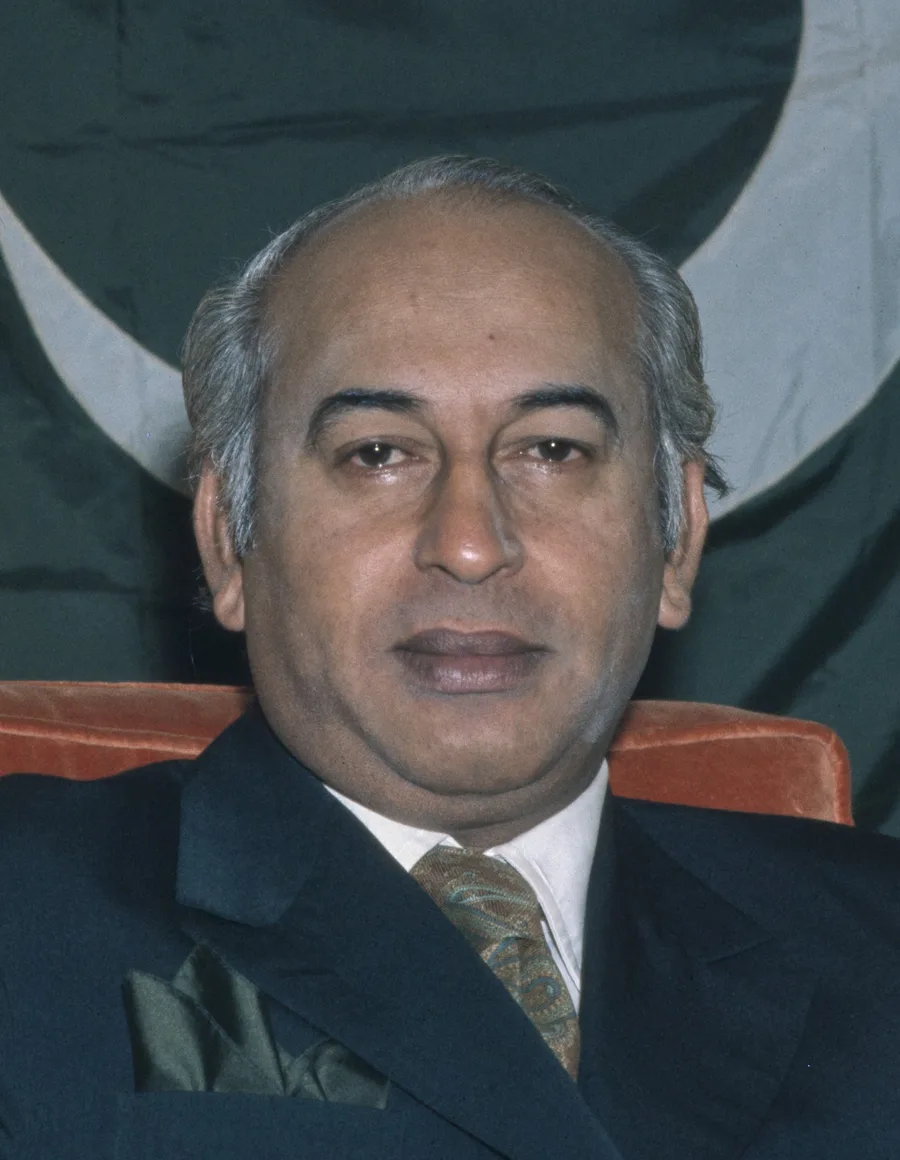
Zulfikar Ali Bhutto (Photo: Wikimedia Commons, Public domain)
First exile and the historic return of 1986
Released under mounting international pressure in January 1984, she moved through Geneva to a flat in London’s Barbican Estate—that flat became the unofficial headquarters of the exiled PPP, and Benazir the rallying point of the party. In April 1986 she returned to Lahore Airport, greeted by an enormous crowd, and the anti-Zia movement found its momentum. Politics had one more great event in store: with a marriage arranged through her mother, she married businessman Asif Ali Zardari in December 1987 at Karachi’s Clifton Palace Gardens.
1988: the world’s youngest prime minister
After Zia-ul-Haq died in an air crash in 1988, the elections that followed carried Bhutto’s PPP to victory, and on 2 December 1988 she took the oath at thirty-five—the youngest elected leader in the Islamic world and, at the time, the world’s youngest prime minister, and the first woman elected to head a democratic government in a Muslim-majority country. Her son Bilawal was born in the middle of that election campaign; the same year saw her autobiography, Daughter of the East, published. But in August 1990, President Ghulam Ishaq Khan used the Constitution’s Eighth Amendment to dismiss her government on corruption allegations.
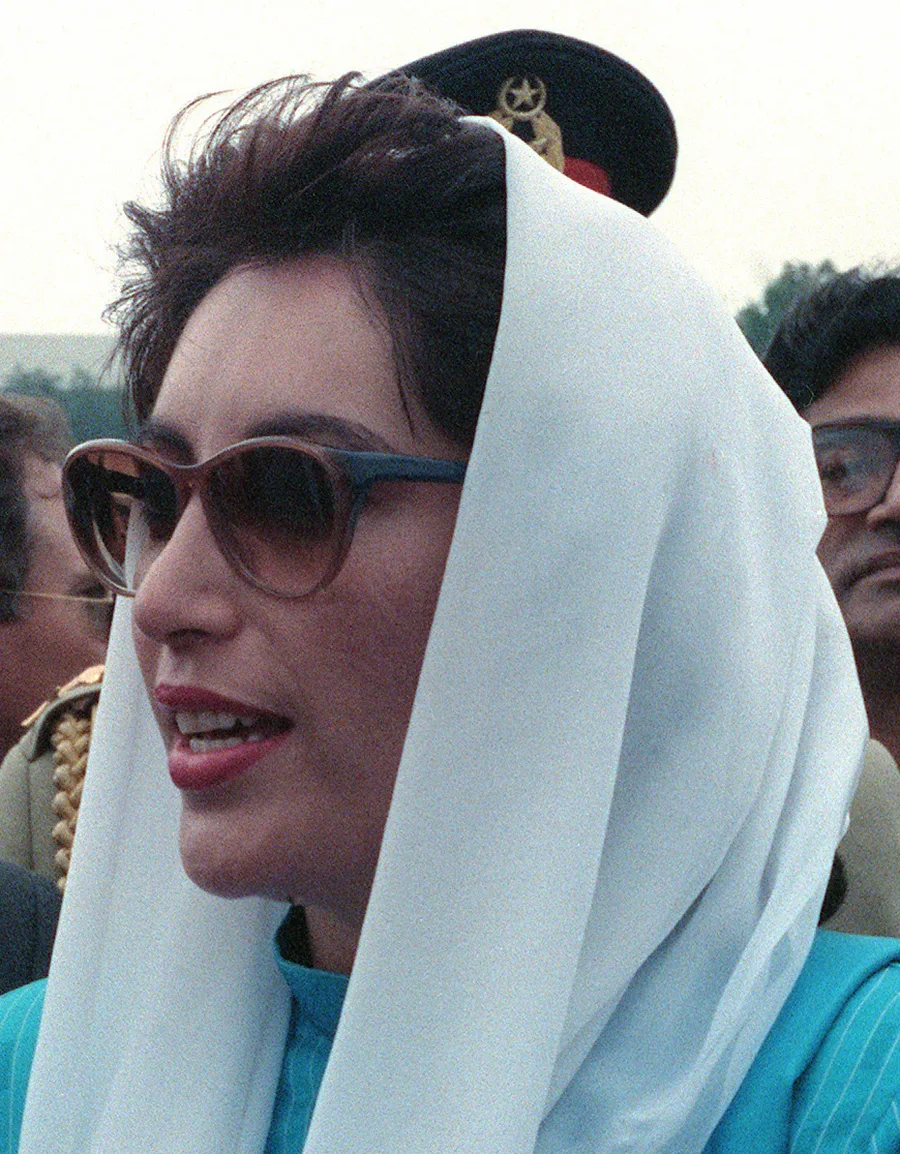
Prime Minister Benazir Bhutto, 1989 (Photo: Wikimedia Commons, Public domain)
The second term and its storms
During the 1993 campaign the militant Ramzi Yousef twice tried and failed to kill her; in October’s election the PPP emerged as the largest party and on 19 October 1993 Bhutto took the oath a second time. But this term ran through storms—a failed coup attempt in 1995, swelling corruption allegations around her husband Zardari, and the death of her brother Mir Murtaza Bhutto in police gunfire near Karachi on 20 September 1996. President Farooq Leghari dissolved the government the same year citing corruption and instability, and the PPP lost the 1997 election.
Second exile and the final return
In 1998 Bhutto went into voluntary exile again—a decade between Dubai and London; in 1999 the Lahore High Court convicted her in absentia to five years in prison and an 8.6-million-dollar fine, and that October Musharraf’s coup brought down Nawaz Sharif’s government as well. In 2007, US-brokered talks with Musharraf bore fruit—to contest the 2008 elections she returned to Karachi on 18 October 2007. Within her welcome procession two bombs killed 149 people and injured hundreds more; even under the shadow of assassination she did not stop campaigning.
27 December 2007: Liaquat Bagh
On the morning of the assassination she met Afghan president Hamid Karzai; in the afternoon, after addressing a PPP rally at Rawalpindi’s Liaquat National Bagh, she was killed in an attacker’s assault. Al-Qaeda commander Mustafa Abu al-Yazid claimed the killing, calling her “the most precious American asset”; the PPP accused the government of a cover-up, Britain’s Scotland Yard investigation ended inconclusive, and the later UN commission’s view was that the attack was likely carried out by the Pakistani Taliban (the Mehsud circle), possibly aided by rogue elements of the intelligence agencies.
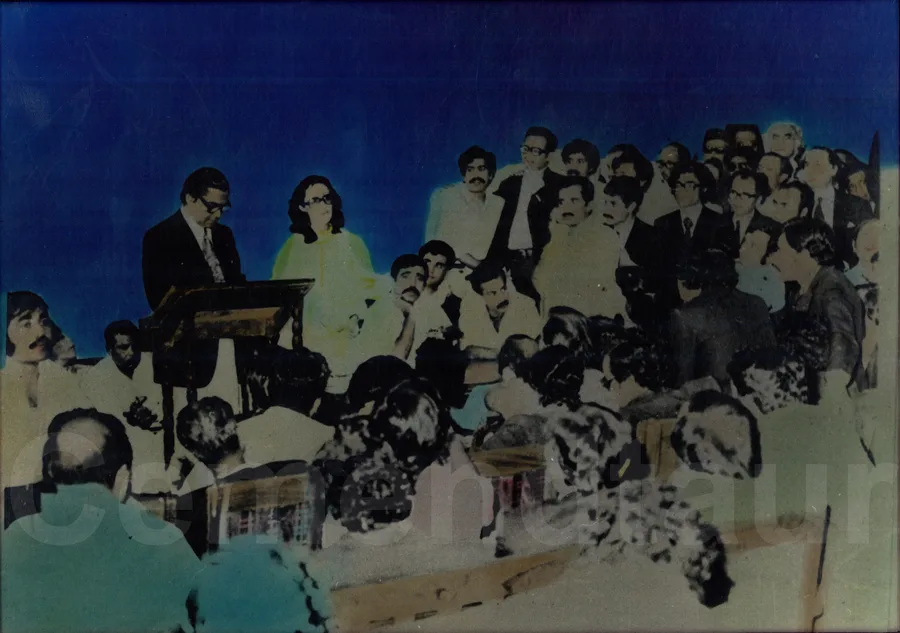
Benazir Bhutto at the Karachi Bar Association, 2007 (Photo: Wikimedia Commons, Public domain)
Legacy
After the assassination Zardari became the PPP’s co-chairman and served as Pakistan’s president from 2008 to 2013; her son Bilawal Bhutto Zardari chairs the party—the Bhutto dynasty’s politics continues. Corruption allegations did cast a shadow over her career, yet in 1996 the Guinness Book named her the most popular international politician of the year, and France awarded her the Legion of Honour. She remains living proof that the road of women’s leadership in the Muslim world can be opened. For six more stories of leaders returning from exile, see our feature on The Great Homecomings.