বাংলা
 English
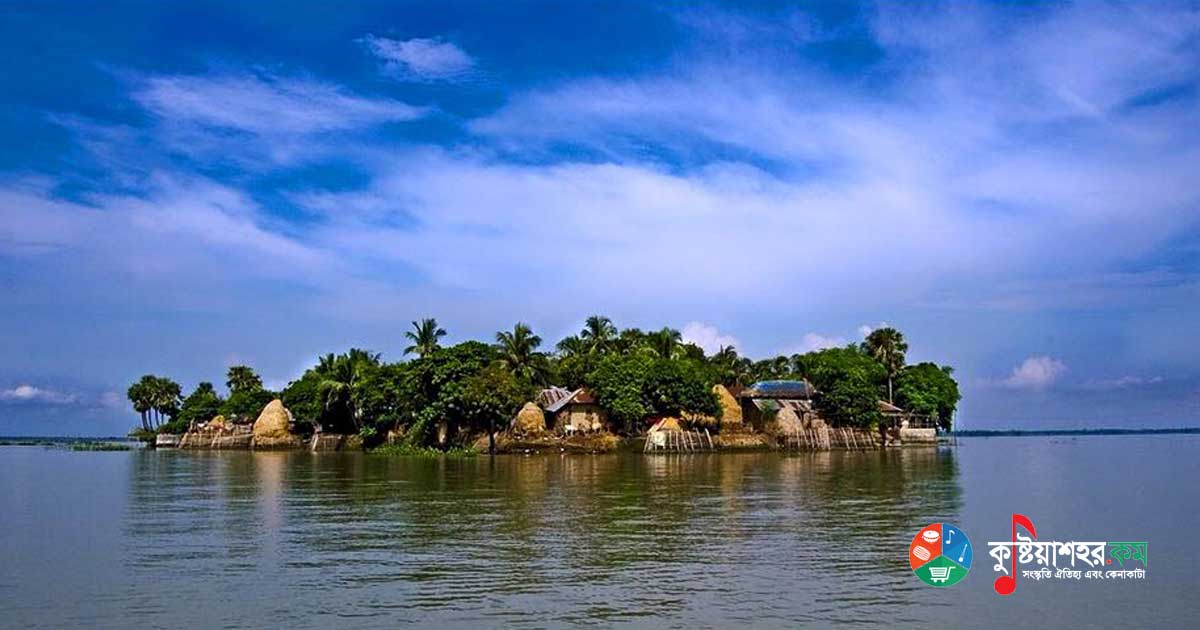
Nizhum Island is a small island of Bangladesh. It belongs to Hatiya upazila of Noakhali district. On 8 April 2001 the Government of Bangladesh declared the whole island a national park. In 2013 the island separated from Jahajmara union and gained the status of an independent union. The former name of Nizhum Island was Char-Osman, and some also called it Ichhamatir Char. Because plenty of ichha fish (the local name of shrimp) was found in this char, it was also called Ichhamatir Char.
A bathaniya named Osman first settled in Nizhum Island with his buffalo herd. Then it was named after that name. Later Hatiya's member of parliament Amirul Islam Kalam changed this name and named it Nizhum Island. Basically Ballarchar, Char Osman, Kamlar Char and Maulavir Char - these four chars together make Nizhum Island. The island of about 14,050 acres rose from the sea around 1940. Around 1950 human settlement grew up. In the terrible cyclone of 1970 there was no existence of any life on the island. After the cyclone, the then popular leader of Hatiya, Mr. Amirul Islam Kalam, visiting the island saw that there was no existence of any life, so he said in a tone of regret, alas, soundless! From there the island's new name is Nizhum Island.
The soil of this island is glimmering and sandy, so the fishermen themselves named it Balur Char. Because there were occasionally mounds or hillocks of sand on this island, the local people also called this island Baillyar Deil or Ballarchar. Although its present name is Nijhumdwip, the local people still address this island as Baillyar Deil or Ballarchar.
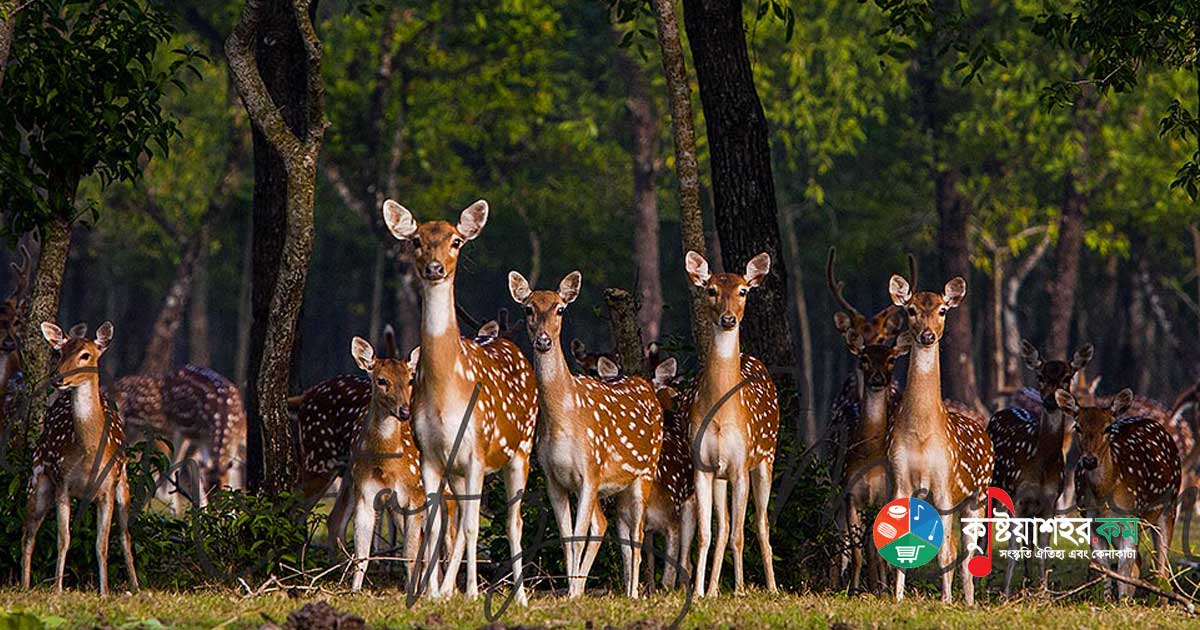
The Forest Department of Bangladesh began the activities of the forest department in the seventies. First, experimentally, it released four pairs of deer. Nizhum Island is now a deer sanctuary. According to the deer census of 1996, the number of deer is 22,000. Nizhum Island, surrounded by saline water, is a sanctuary of keora trees. Many claim that, among mangrove forests, Nizhum Island is Bangladesh's second largest mangrove forest after the Sundarbans.
In Nizhum Island of about 91 sq km area there are 9 cluster villages. Besides these cluster villages, small shanty houses are scattered in various places. According to the reckoning of 1996, Nizhum Island is situated over an area of 36,970.454 hectares.
In Nizhum Island there is no other fierce animal except deer and buffalo. The number of deer is about 22,000 (as of 1996). Nizhum Island has about 35 species of birds. Besides, in the winter season Nizhum Island becomes a sanctuary of countless species of guest birds. Nizhum Island has a vast area of silt chars. They sink in the tidal water and dry up when the tide ebbs. In these places various species of birds live. The various species of fish carried by the tidal water are their only food. Here there is a kind of creature called marsripari, which are called amphibians. This marsripari lives up to 5 years and grows 6-9 inches long. In the monsoon season Nizhum Island is famous for ilish. At this time wholesalers from various regions of Bangladesh including Dhaka come to Nizhum Island to buy fish. Besides, in winter or in the season after winter Nizhum Island is famous for chewa fish. Fishermen catch this fish and make shutki (dried fish). This dried fish is sold to wholesalers of various regions including Dhaka, Chittagong and Chandpur at the rate of 30-35 taka per kg. Again this dried fish is also used in duck and hen feed. Nizhum Island has keora trees. Recently the Forest Department is also planting some nona jhau. Besides, there are about 43 species of vines and shrubs and 21 species of other trees.
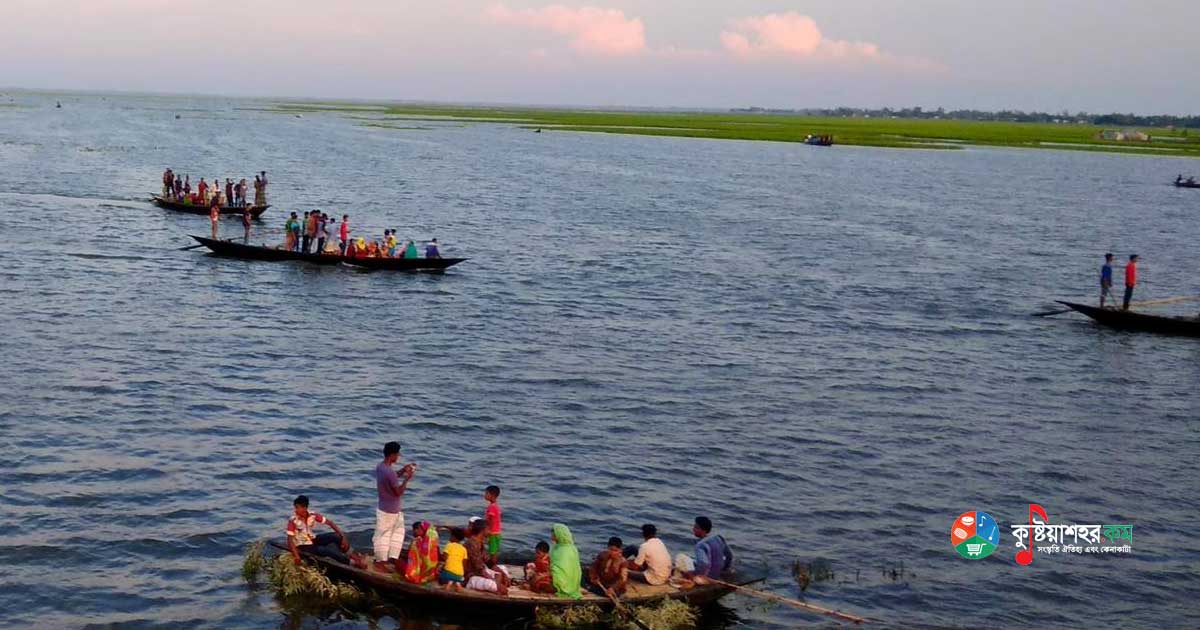
On one side of Nizhum Island is the Meghna river, and on three sides the Bay of Bengal surrounds it. The most attractive thing about Nijhumdwip is the keora forest stretching mile after mile and the spotted deer hidden behind the leaves of that forest.
The present area of Nijhumdwip is about 92 square kilometers. In its northern part is Bandartila. 70 percent of the island's people are fisherfolk and 30 percent are farmers. They earn their livelihood by catching fish, risking their lives in the deep sea and the river. During natural disasters the inhabitants remain terrified. Still, drawn by livelihood, they have to venture into the deep sea. Among the khals of Nijhumdwip are Choudhurir Khal, Patakhalikhal, Soankhalikhal, Dubai Khal, Dhamsakhalikhal, Bhotrokhali Khal, Kauniya Khal and Lengta Khal.
Sights:-
- Kamlar Island: Plenty of ilish fish are found in its Kamlar Khal. Besides, the surrounding islands are beautiful. One can walk around the whole island, and the heart will be filled. After the cyclone, seeing a few boxes of oranges fallen from a ship on this island, it was named Kamlar Island.
- Choudhury Khal and Kabirajer Char
- Chowakhali and the Chowakhali sea beach
- Mangrove forest: the Nizhum Island afforestation project. There are keora trees and vines.
- Namar Bazar sea beach:
- Damar Char: Recently another sea beach has risen in the Bay of Bengal. The beach is quite raw, virgin. It is now being called the 'Virgin Sea Beach'. The people of Nizhum Island and those who go to catch fish call this beach 'Deila' or a mound of sand.
Tourist residence
For tourists there is a holiday center in Nizhum Island, where there is water supply and electricity by generator. For food there are local hotels, where locally produced rice, fish, chicken, eggs etc. are available.
- Nijhum Resort (holiday hotel), Namar Bazar
- Hotel Shahin, Namar Bazar
- Hotel Sohel, Namar Bazar
- Mosque Boarding, Namar Bazar
- Nijhum Dream Land Resort, Bandartila
- Hotel Dwip Sampad (Soyed Chacha's boarding and eating hotel), Namar Bazar
- Hotel Sheraton, Bandartila Bazar
- District Council dak bungalow
- The Forest Department's dak bungalow
- Mahmud Boarding
- Primary school
Transport
For communication with other regions the people of Nizhum Island have to depend on the tide. To communicate with Hatiya, Bhola or Dhaka they have to follow the tide completely. To go to Dhaka they have to journey toward Hatiya after 9 o'clock in the morning (when the tide comes). After about 2-3 hours the trawler reaches Hatiya. Then is available the Dhaka-bound launch, which journeys toward Dhaka once a day every day. Since this launch reaches Dhaka via Barisal and Bhola, the people of Nizhum Island can go to Bhola or Barisal by this same launch. Besides, there is an alternative way to come to Hatiya or Dhaka. From Bandartila one has to cross the river to reach Hatiya. From there, crossing by various vehicles, first to Hatiya town, then crossing by launch to Maizdi, and thereafter to Dhaka.