বাংলা
 English
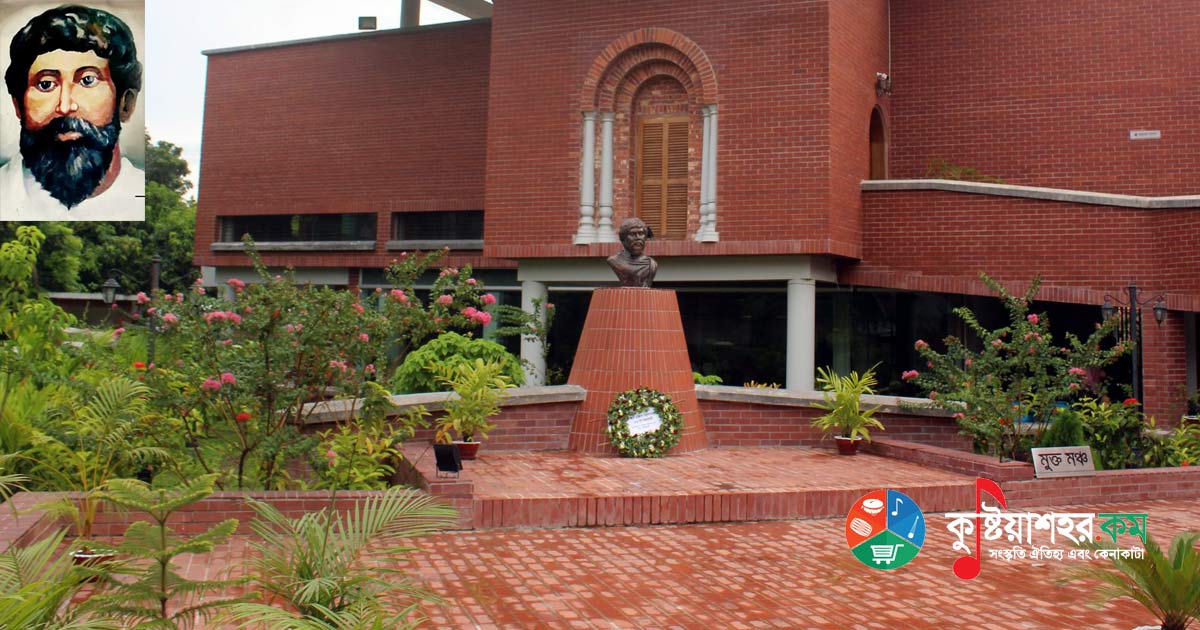
Kangal Harinath, also known as Harinath Majumdar (born 1833 – died 16 April 1896), known as one of the chief bearers of Bengali folk culture, was one of the pioneers of Baul song. He was also widely known by the name Fakir Chand Baul.
He was born at Kumarkhali in Nadiya district of then British India (present-day Kushtia district of Bangladesh). His parents passed away when he was very young. His father's name was Horchandra Majumdar. As a child he studied for some days at Krishnanath Majumdar's English school, but want of money kept him from going far in formal education.[1] Still, all his life he worked to spread education in neglected rural Bengal and to campaign through the press against exploitation. Then, with the help of friends such as Gopal Kundu, Jadab Kundu and Gopal Sannyal, Harinath Majumdar founded a vernacular school in his own village on 13 January 1855. For quite some time afterwards he was engaged in the great profession of teaching without pay at that school. Later, with his support, on 23 December 1856 Krishnanath Majumdar set up a girls' school at Kumarkhali.
Harinath Majumdar took up journalism itself as his profession — the weapon for protecting the oppressed, helpless, crushed peasant community. With little schooling he published writings on poverty and awareness in newspapers. He wrote first for Sangbad Prabhakar; this ancient newspaper played an important role in the matter.
Later, in April 1863, he published a monthly from the Kumarkhali area under the name Grambarta Prakashika. In course of time this monthly was first turned into a fortnightly and finally into a weekly priced at one paisa.[2] Essays on literature, philosophy, science and the like were printed regularly in it; tales of the exploitation by moneylenders and indigo-planter sahibs were also published. The continuous threats of British magistrates and local zamindars could not keep him from this work either.
Though destitute Kangal Harinath never saw prosperity in his life, in 1873 the paper Grambarta Prakashika did get its own printing press in his native Kumarkhali. After the paper ran for eighteen years on the financial patronage of Swarnakumari Devi, the Rani of Rajshahi, it had to be shut down for financial reasons.
After editing Grambarta Prakashika for eighteen long years, he gave up the profession of journalism and devoted himself to religious practice. Harinath Majumdar was an ardent admirer of the songs of Fakir Lalon, his spiritual guru and a great sage. To spread religious feeling, in 1880 he founded a Baul musical troupe of his own; the troupe was known as the Kangal Fakir Chand troupe.
Harinath's own songs too were filled with spirituality. He displayed extraordinary skill and mastery in composing songs. His use of the bhanita 'Kangal' in his self-composed songs was especially noteworthy. The Baul songs he composed were widely renowned as Fakir Chand's Baul songs. As part of his religious practice he composed many simple-melodied songs and went about singing them with his troupe. 'Hari Din To Gel Sandhya Halo' is his notable composition; its first four lines are as follows:
The day, Hari, is gone and evening has come — carry me across.
You are the master of the far shore; knowing the message, that is why I call to you.
I came before and sat waiting at the ghat.
Those who came later went ahead; I remained behind.
How to get there: 1 kilometre south of the Kumarkhali bus stand; accessible by CNG, rickshaw or motorbike.