বাংলা
 English
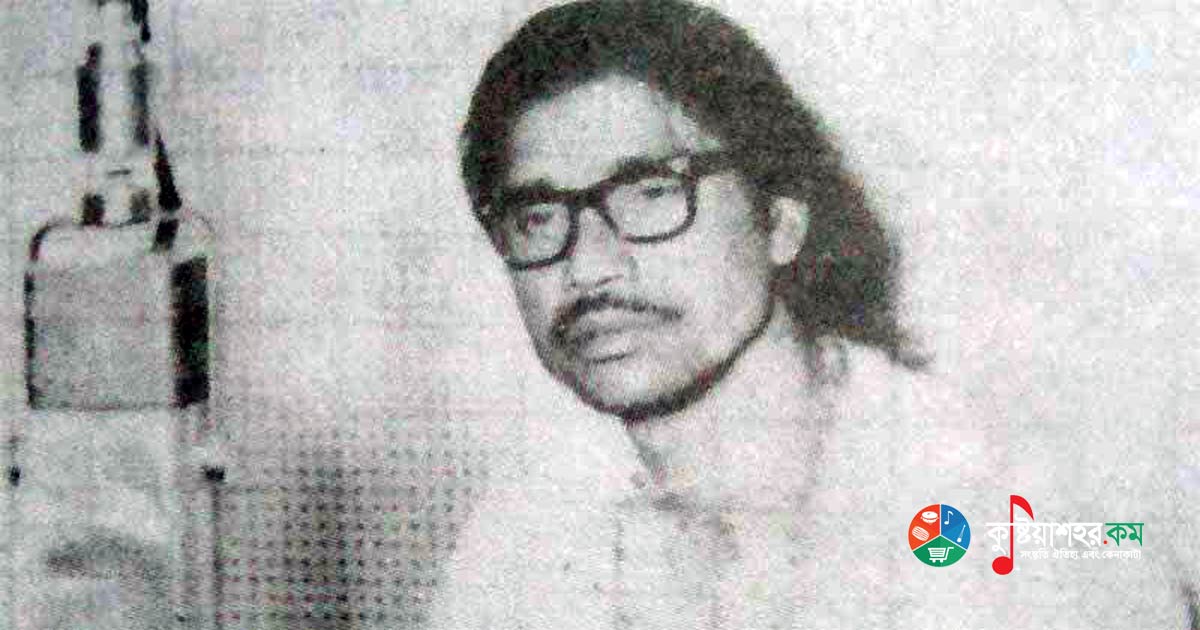
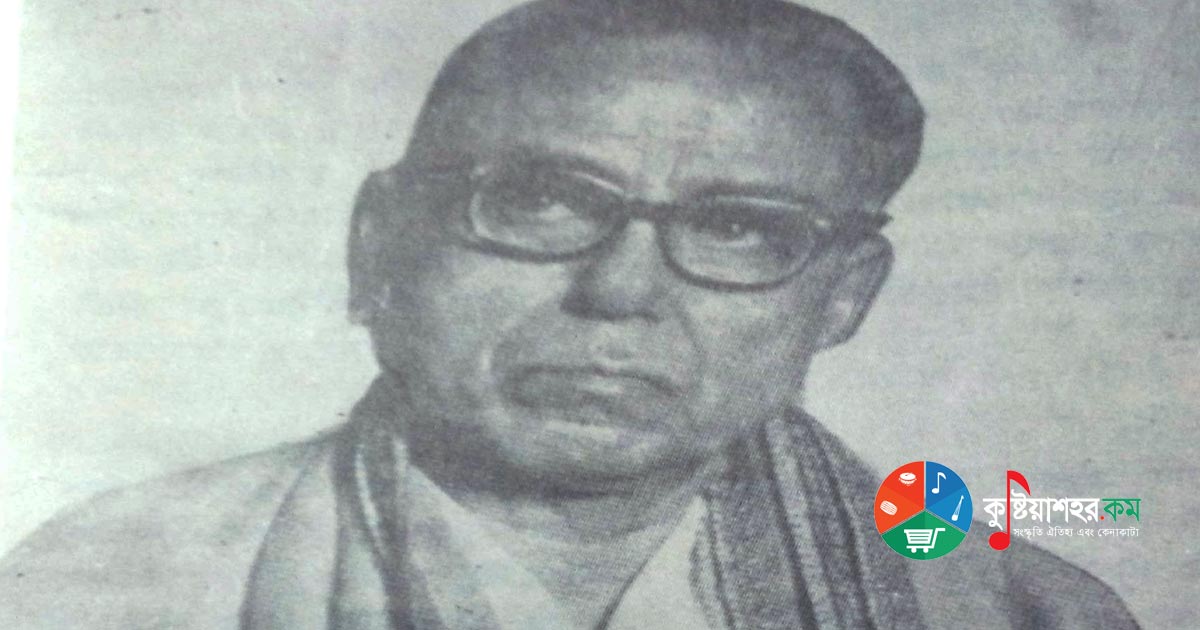
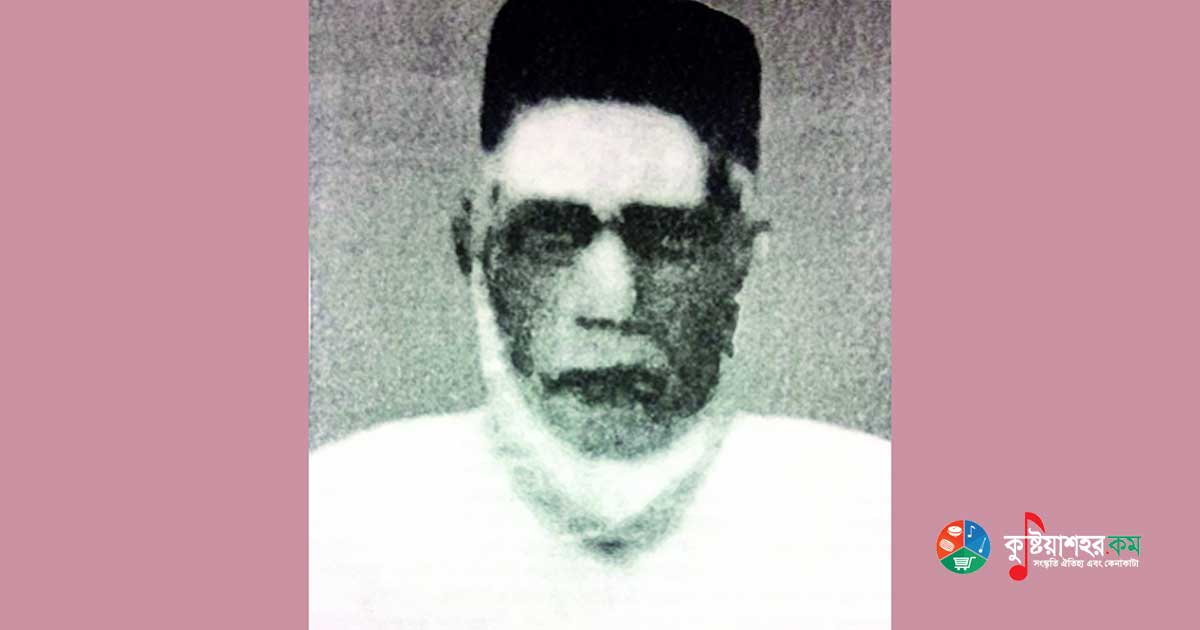
Moksed or Mokshed Ali Shah (born 1 March 1935, died 17 June 1981) was a vocal artist of the Swadhin Bangla Betar Kendra, a lyricist and composer. Mokshed Ali Shai's contribution is memorable as a soldier of sound; equally, in the trend of presenting Lalon's songs with various instruments that spread internationally in post-independence Bangladesh, his pioneering role stands.
Mokshed Ali Sai was born in 1933 (some say 1935) at Chandgarapara of Harishankarpur village in Kushtia town. 'Khan' was his father's title; 'Shai' he appended himself. His father was Abdur Rashid Khan, his mother Nikari Begum.
Mokshed Ali Shai was a refined vocal artist of Lalon's songs; he was not a sadhak. Dropping the ancestral title 'Khan' from the end of his name, he added 'Shai' himself, and by that name he is better known. Early in life, besides classical music, he practised mass songs, Nazrul songs and other music. For a time he was also with a jatra troupe. Professionally, after being temporarily engaged at the Kushtia tehsil office during the SA survey (1962), before 1971 he worked as an Ansar commander. In the practice of classical music his first teacher-guru was Ustad Osman Gani. In the sixties of the last century, inspired by a few well-wishers, he turned his particular attention to learning Lalon's songs.
Before the Partition of 1947, when a distinguished vocal artist of Lalon's songs named Amulya Shah, following the Bauls of the Burdwan-Birbhum region, began singing Lalon's songs standing in various assemblies, playing the ektara in his right hand and the baya in the left, a new trend in the presentation of Lalon's songs was initiated. Later this trend was carried on through sweet-voiced artists such as Behal Shah, Nimai Shah and Khoda Box Shah (Janhapur). Mokshed Ali Shai had the opportunity to gain the close company of all three; as a result, Amulya Shah's singing style indirectly influenced him. On the other hand, he was particularly conversant with the singing styles of Ismail Fakir, fakir Golam Yachin, Motahar Khandakar and others, who were known as the 'Cheuria school', instituted through Lalon's disciple Bholai Shah. With their help Mokshed Ali Sai learnt Lalon's songs. He was the first to seek out in Lalon's songs the melodies of raga-ragini, Ramprasadi, kirtan, dhua songs and the like. When Mokshed Ali Sai, a refined vocal artist of the world of music, synthesising the influences of his surroundings, began singing Lalon's songs in his own style with the use of various kinds of instruments, and at the same time set his performed style of songs in the voices of many more artists, this trend easily won popularity. Today many follow Mokshed Ali Shai's style in presenting Lalon's songs. Farida Parveen, Indramohan Rajbongshi, Chandana Majumdar, Kiran Chandra Roy, Reba Sarker, Beuty and others are the worthy heirs of this very trend.
When the Liberation War began, by the third week of May he went to India and became associated with the Swadhin Bangla Betar Kendra. Broadcast from the Swadhin Bangla Betar Kendra as lyricist and composer was his —
'Our Bengal wrapped in gold,
who has turned it into a cremation ground?
Here you will have to answer like the accused'.
— The song became very popular.
His other notable songs from the Swadhin Bangla Betar Kendra were —
- 'Bangladesh's true man is brother Sheikh Mujibur'
- 'O fire, O light of the sun'
- 'In the tears of the eyes and the blood of the breast, the whole country has floated away'
- 'Mother, do not weep'
- 'Mother, do you search for me among the stars of the sky'
- 'Messenger of peace, O white dove, fly to Bangladesh'
In 1971 the Calcutta record company 'Hindustan Musical Product Limited' published on gramophone records two Lalon songs of Mokshed Ali Shai: 1. 'Gour prem korbi jodi' 2. 'Apan ghorer ne na'.
After independence a department called 'Transcription Service' was started at the Dhaka Betar Kendra. He served there as music director for several years. His pioneering role in gathering many of the country's neglected and unknown artists and taking the initiative of recording the songs of their voices on tape recorders is particularly memorable.
Mokshed Ali Shai's written songs were published from time to time in newspapers and periodicals; besides, most of his composed songs and essays remain unpublished to this day. On the basis of Lalon Shah's sadhak life he planned to write a play titled Kirti Lalon [Kirtiman Lalon?]; draft portions of some scenes of its four acts have been found. A few months before his death, Mokshed Ali Shai published a pamphlet on Lalon titled Se Diner Ei Din (March 1981), jointly edited with Golam Yachin Shah. On 17 June 1981 he died suddenly at his ancestral home in Harishankarpur village.
Vocal artist, lyricist and composer — A few words with Mokshed Ali Shai:
Source: M. Moniruzzaman — Prothom Alo and KushtiaShahor.com