বাংলা
 English
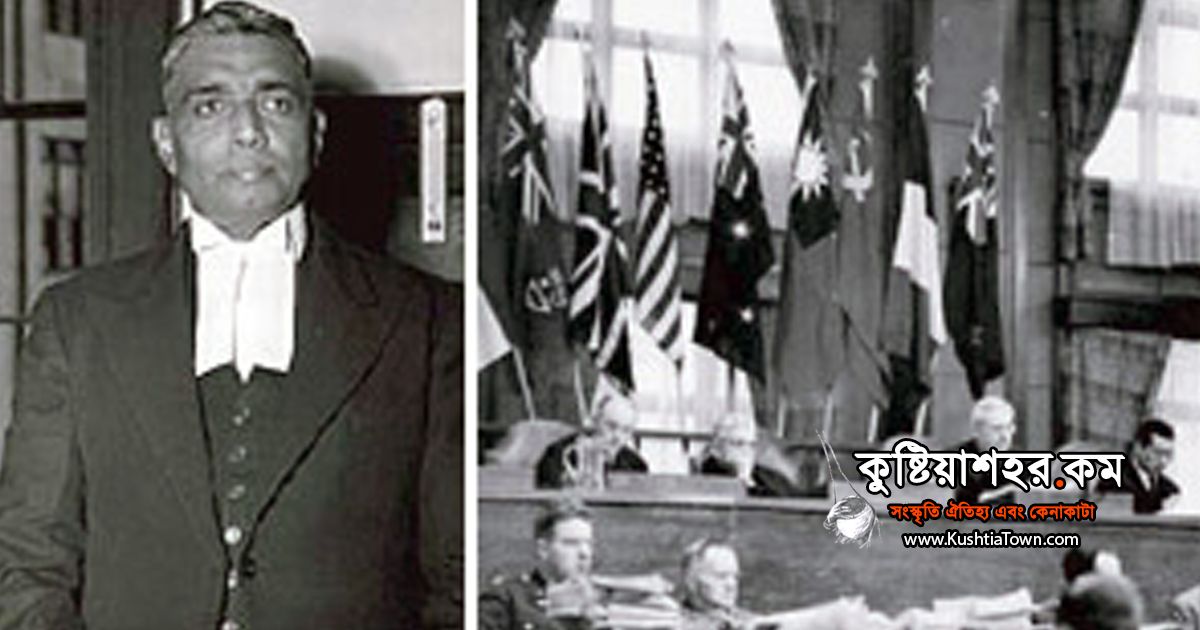
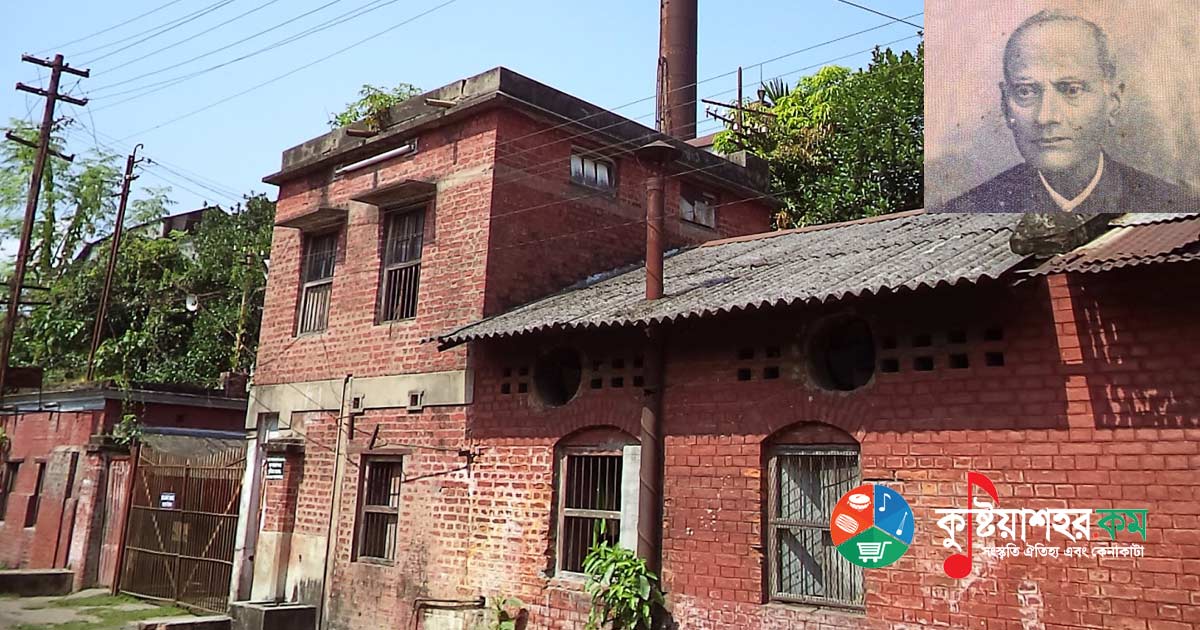
Justice Dr Radha Binod Pal, Judge Radhabinod Pal (born 27 January 1886 – died 10 January 1967) made history with a landmark verdict against the Allied powers victorious in the Second World War and in favour of the Japanese. The people of this land remember the name of this renowned judge with reverence. Though there has been talk of building a museum around this accomplished son of Kakiladah in Mirpur, Kushtia with government initiative, it has still not been properly realised.
Justice Dr Radha Binod Pal was born in 1886 at his maternal home in the village of Taragunia under Mouza Salimpur of 'Madhurapur' union of Daulatpur, Kushtia. The area is now known as Jojpara. His father was Bipin Bihari Pal. He began his student life under Golam Rahman Pandit of the village of Shatian in Shatian union of Mirpur upazila of Kushtia. At Kushtia High School he studied up to the secondary level. In 1906 he obtained an MSc degree in mathematics in the first class from Calcutta Presidency College. At the beginning of his career he taught at Anandamohan College in Mymensingh from 1911 to 1920. In 1920 he passed his LL.M. from the University of Calcutta and began the practice of law at the Calcutta High Court. He afterwards earned a doctorate from the same university in 1924. While engaged in the legal profession, he produced a timely revision of the laws of undivided India enacted in 1919, and became associated with advising the Government of British India on legal matters and with teaching at the University Law College.
From 1941 to 1943 he was appointed a judge of the Calcutta High Court. He then served as Vice-Chancellor of the University of Calcutta from 1944 to 1946. By then the Second World War was nearly over, and with the Axis powers marked as war criminals, two tribunals were formed at Nuremberg and Tokyo. The trials of Hitler's cabinet and of the senior officers involved in the war were held at Nuremberg, and Japan's strategist General Hideki Tojo was tried at the Tokyo Tribunal. One of the chief judges of the Tokyo Tribunal was Dr Radha Binod Pal. At one stage of the trial, all the judges except Radha Binod Pal found General Tojo guilty as a war criminal and decided to hang him. The other judges thought that Judge Pal too would remain loyal to the Allied side. But Judge Radha Binod Pal's 46-page historic judgment stunned the Allied powers and even the whole world. Judge Pal, deeply respectful of the rule of law, argued that the earlier verdict was controversial.
The Tokyo Tribunal - Judge Radhabinod Pal
- A declaration concerning the practice of conventional weapons for the rapid stabilisation of the Second World War in the interest of lasting peace, made by the three principal Allied leaders.
- Violation of the principles of restraint and impartiality of international law.
- The use of atomic bombs causing dreadful devastation while disregarding the indications of Japan's surrender.
At the Yalta summit held in February 1945, American President Franklin Roosevelt, Russian President Joseph Stalin and British Prime Minister Winston Churchill gave their assurance of remaining limited in the use of the weapons widely practised in the bloody war, for its rapid stabilisation in the interest of lasting peace. On what justification, then, was an atomic bomb dropped on Japan? Moreover, when Japan had given indications of surrender while the war was still going on, the blow of a nuclear weapon upon it was inhuman and contrary to international law. The evidence of Japan's surrender lay with the court. Yet why did America, on 6 August 1945 at Hiroshima and on 9 August at Nagasaki, drop an atomic bomb of about twelve thousand kilotons' weight with high radioactivity, killing 2 lakh 17 thousand people and 70 thousand innocent people, including children and women? The atomic attack on Hiroshima and Nagasaki intensified the nuclear war already raging in Europe. Judge Radha Binod Pal's verdict could not really create an obstacle to the carrying out of the hanging of General Tojo and seven others. But his stand in favour of moral rights, human rights, peace and the rule of law was highly praised. Dr Binod Pal had fallen in love with war-ravaged Japan. He believed that Japan would one day stand established as an economically and industrially rich country.
The people of Japan did not hesitate to honour Dr Radha Binod Pal. The Pal Foundation has been formed in Japan to make his memory immortal. The jurist of international law, Dr Radha Binod Pal, later served several times as a judge and chairman of the International Law Commission. In 1959 the government of India honoured him with the Padma Bhushan and with national professorship. This great jurist died on 10 January 1967. The ancestral home of this pioneer of establishing man's fundamental human rights still remains unguarded. In his own birthplace he has been neglected.