বাংলা
 English
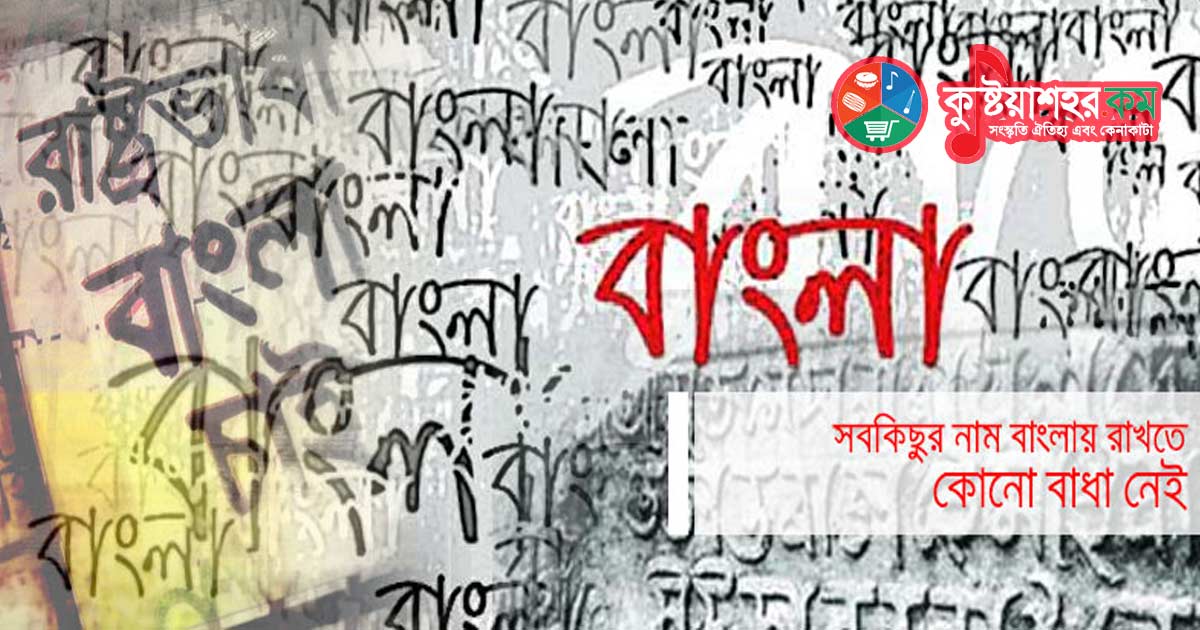
The Bengali Language Movement was a cultural and political movement that took place in the then East Pakistan (present-day Bangladesh). Born around the Bengali language in defence of fundamental rights, the movement gave expression to the popular demand that Bengali be established as one of the state languages of Pakistan of that time. Although the movement took its final shape on 21 February 1952, its seed had in fact been sown long before; on the other hand, its repercussions and consequences were far-reaching.
In 1947, on the basis of the two-nation theory, British India was partitioned and Pakistan came into being. But between the two parts of Pakistan — East Pakistan and West Pakistan — there existed many fundamental differences in cultural, geographical and linguistic terms. In 1948 the Government of Pakistan declared that Urdu alone would be the state language of Pakistan. Against the backdrop of this declaration, deep resentment arose among the Bengali-speaking common people living in East Pakistan, and an adverse reaction was created. In effect, the Bengali-speaking people of the East Pakistan region could not accept this sudden and unjust decision, nor were they mentally prepared for it in any way. As a result, the movement for the equal status of the Bengali language quickly grew strong in East Pakistan. To suppress the movement, the police imposed Section 144, declaring assemblies, processions and the like in Dhaka city unlawful and prohibited.
On 21 February 1952 (8 Falgun 1358), defying this order, a large number of students of the University of Dhaka, together with some progressive political activists, began a procession. As the procession approached Dhaka Medical College, the police opened fire on the demonstrators on the pretext of contempt of Section 144. Rafiq, Salam, Barkat and many others were killed in the firing. The streets were dyed with the blood of the martyrs. The shock of this mournful event spread intense anger across the whole of East Pakistan.
Faced with the growing mass movement, the central government of Pakistan was ultimately compelled to yield, and in 1956, through a change of constitution, it granted recognition to Bengali as one of the state languages of Pakistan. In 1999, in honour of the Bengali Language Movement and of people's right to their language and culture, UNESCO declared 21 February International Mother Language Day — which is observed every year across the world with deep respect and due solemnity.
Observance
Since 1953, deep homage has been paid every year on 21 February to the memory of the martyrs of the great Language Movement. At dawn on this day, people of all classes join the probhat feri (dawn procession) barefoot, and go to the Shaheed Minar to offer deep homage and lay floral wreaths. Throughout the day people wear black badges as a mark of mourning. Besides, the memory of the Language Movement is honoured through discussion meetings, cultural programmes and the like, and prayers are offered for the forgiveness and peace of the souls of the martyrs of the Language Movement. Since the establishment of independent Bangladesh in 1971, the day has been observed officially, at times as National Mourning Day and at times as National Shaheed Day. Since 2001 the day has been observed as International Mother Language Day. In Bangladesh it is a public holiday. Its significance is highlighted in various mass media, including Bangladesh Betar and Bangladesh Television. Special supplements are published in the daily newspapers. The Amar Ekushey Book Fair, held on the premises of the Bangla Academy, runs throughout the whole month of February. Around the Bengali Language Movement, the Government of Bangladesh confers the Ekushey Padak on eminent personalities.
Background
The present states of Pakistan and Bangladesh were formerly parts of undivided India under British rule. From about the middle of the nineteenth century, Urdu was raised to the lingua franca of the Indian Muslims through the efforts of a number of Muslim political figures and religious leaders such as Sir Khwaja Salimullah, Sir Syed Ahmad Khan, Nawab Waqar-ul-Mulk Maulvi and Maulvi Abdul Haq. Urdu is an Indo-Aryan language, a member of the Indo-Iranian language group, which in turn belongs to the Indo-European language family. Under the close influence of Persian, Arabic and Turkish upon Apabhramsa (the final linguistic stage of the medieval Indo-Aryan languages Pali and Prakrit), Urdu developed and flourished in South Asia during the Delhi Sultanate and the Mughal Empire. Because of its Perso-Arabic script, Urdu was regarded as an important part of the Islamic culture of the Indian Muslims, whereas Hindi and the Devanagari script were regarded as elements of Hinduism.
The use of Urdu gradually gained popularity among the Muslims of northern India, but the Muslims of Bengal (a province in the eastern region of British India) were accustomed to using Bengali as their principal language. Bengali is an eastern Indo-Aryan language descended from the eastern Middle Indo-Aryan languages, and it flourished greatly during the Bengali renaissance. From the latter part of the nineteenth century, Begum Rokeya Sakhawat Hossain, a pioneer of Muslim women's education, began to write literature in Bengali, and from then on Bengali developed as a modern language. The supporters of Bengali had begun to oppose Urdu even before the partition of India, when at the Lucknow session of the Muslim League in 1937 the members from Bengal rejected the proposal to nominate Urdu as the lingua franca of the Muslims of India. The Muslim League was a political party of British India which played a leading role in establishing Pakistan as a Muslim state at the time of the partition of India.
Beginning of the movement
After the partition of India in 1947, the 44 million Bengali-speaking people of East Pakistan (also known as East Bengal) became citizens of the newly formed Pakistan, which had a population of 69 million. But West Pakistanis were in the majority in the government, administration and armed forces of Pakistan. In 1947, at the Pakistan Educational Conference held in Karachi, an important declaration proposed the use of Urdu as the sole state language of Pakistan, along with the use of Urdu only in the mass media and in schools. Opposition and protest against this proposal were voiced immediately. At that conference a strong demand was raised for Bengali to be recognised as one of the state languages of Pakistan and to be used as the medium of education in East Pakistan. But the Pakistan Public Service Commission dropped Bengali from its list of approved subjects, and at the same time Bengali letters were removed from coins and postage stamps. The central education minister Fazlur Rahman Malik made extensive preparations to make Urdu the sole state language of Pakistan. There was widespread indignation in East Pakistan, and on 8 December 1947, at a huge student gathering on the University of Dhaka campus, a formal demand was raised for Bengali to be given the status of the state language. In pursuit of this demand the students organised processions and rallies in Dhaka.
Leading Bengali scholars spoke against making Urdu the sole state language. The linguist Muhammad Shahidullah pointed out that Urdu was not the local language of any part of Pakistan. He said: "If we have to fix a second state language, then we may consider Urdu." The littérateur Abul Mansur Ahmed said that if Urdu were made the state language, the educated society of East Pakistan would become "illiterate" and "unfit" for all government posts. Towards the end of December 1947, the first Rashtrabhasha Sangram Parishad (State Language Movement Council) was formed in support of making Bengali the state language. Professor Nurul Huq Bhuiyan of the Tamaddun Majlish was the convener of this committee. Later, with the member of parliament Shamsul Haq as convener, a new committee was formed and the activities in favour of making Bengali the state language were further strengthened.
Dhirendranath Datta's demand for the state language in the Constituent Assembly
On 23 February 1948, in the Pakistan Constituent Assembly, the assembly member Dhirendranath Datta moved an amendment calling for members to be allowed to speak in Bengali alongside English and Urdu, and for the Bengali language to be used in official affairs. In a speech delivered in English, Dhirendranath, citing Bengali as the language of the majority of the ethnic groups, demanded that Bengali be given the status of the state language. He also protested the decision not to use Bengali in official documents.
Assembly members Premhari Barman, Bhupendra Kumar Datta and Sris Chandra Chattopadhyay welcomed this proposal. They were assembly members elected from East Pakistan, and through their support the natural opinion of East Pakistan was in fact reflected. Under the leadership of Tamizuddin Khan, all the Muslim members of the assembly (all of them of the Muslim League) opposed the proposal together. Khwaja Nazimuddin spoke against the proposal. He said: "The majority of the people of East Bengal want the state language to be Urdu." The Prime Minister of Pakistan, Liaquat Ali Khan, described the proposal as an attempt to create discord in Pakistan. Describing Urdu as the language of a hundred million Muslims, he said: "The state language of Pakistan can be Urdu alone." After much debate the amendment was defeated by vote. Because of the objection of the parliamentary party, many Bengali Muslim members could not support the amendment moved by Dhirendranath Datta.
First reaction
The first reaction to the events in the Constituent Assembly began in Dhaka. On 26 February, at the initiative of the students of the University of Dhaka, Dhaka Medical College and Jagannath College (present-day Jagannath University), the students of most educational institutions in the city boycotted classes. A strike was declared on 29 February as well, and that day Protest Day and the strike were observed across the whole of East Pakistan. At the government's instigation, the police charged the procession with batons and arrested many leaders and activists. The Tamaddun Majlish played a special role at that time. On 2 March a gathering of students and intellectuals was held at Fazlul Haq Hall of the University of Dhaka. At that meeting the State Language Movement Council was formed for the second time, and Shamsul Alam was elected convener. Provision was made in the council for two representatives from each of the other organisations. From there the students called a strike for 11 March and thanked Dhirendranath Datta for his courageous role.
To fix the programme of 11 March, a meeting was held at Fazlul Haq Hall on 10 March. At dawn on 11 March, as planned beforehand, students came out from the different halls of the University of Dhaka. A full strike was observed at the University of Dhaka and other educational institutions. In the morning a group of students went to the Ramna Post Office and were arrested. Another group of students, together with political leaders, took part in picketing in front of the Secretariat on Nawab Abdul Gani Road. Standing in front of the Constituent Assembly building (the union hall of the collapsed Jagannath Hall), the Prime Minister's residence Burdwan House (the present Bangla Academy), the High Court and the Secretariat, they pressed everyone to boycott the offices, and as a result they faced police baton charges at various places. At one stage the demonstrators forced the food minister Syed Mohammad Afzal and the education minister Abdul Hamid to sign letters of resignation. To crush this demonstration the government called in the army. Brigadier Ayub Khan (later President of Pakistan), the General Officer Commanding of East Pakistan, posted a group of infantry under Major Pirzada and himself went to the Constituent Assembly and brought Khwaja Nazimuddin out through the kitchen. When a meeting was held that afternoon in protest, the police broke it up and arrested several people. Among those arrested were Shamsul Haq, Sheikh Mujibur Rahman, Oli Ahad, Shawkat Ali, Kazi Golam Mahbub, Rawshan Alam, Rafiqul Alam, Abdul Latif Talukder, Shah Mohammad Nasiruddin, Nurul Islam and others. Naimuddin Ahmed presided over that meeting.
Agreement with Khwaja Nazimuddin
After the events of 11 March, the strike was observed from 12 to 15 March. In the face of the intensity of the movement, on 15 March Khwaja Nazimuddin met the leaders of the Sangram Parishad in a sitting. On behalf of the Sangram Parishad, Abul Kashem, Kamaruddin Ahmad, Mohammad Toaha, Syed Nazrul Islam, Abdur Rahman Chowdhury and others took part. As a result of the discussions, an agreement of understanding was signed between the two sides on eight points. The chief reason for the government's yielding attitude in the face of the students' movement was Jinnah's arrival in Dhaka on 19 March. Before his arrival, Nazimuddin had agreed to the agreement in order to bring the situation back to normal and calm. But the demand that Bengali be given the status of the state language had not yet been conceded. The agreement included such matters as the release of those arrested during the movement, an impartial inquiry into police excesses, giving Bengali the status of medium of education and state language, and the withdrawal of bans on newspapers.
Muhammad Ali Jinnah's visit to Dhaka
On 19 March 1948, the founder and Governor-General of Pakistan, Muhammad Ali Jinnah, arrived in Dhaka. It was his first visit to East Pakistan after the partition of India. On 21 March a public reception was arranged on the Racecourse maidan (the present Suhrawardy Udyan), where he delivered a speech. In his speech he described the language movement as a conspiracy to create discord among the Muslims of Pakistan. Though he said that the provincial language of East Bengal would be determined according to the language of the inhabitants of the province, he declared unequivocally: "Urdu alone shall be the state language of Pakistan, no other language." He warned: "Those among the people who are conspirators are enemies of Pakistan, and they will never be forgiven." At Jinnah's adverse remark, a section of the students and public present at once burst into protest. The demonstrators were enraged by such one-sided statements as "Urdu alone shall be the state language of Pakistan". On 24 March he went to Curzon Hall of the University of Dhaka and made a similar statement. He noted that the movement was an expression of a narrow outlook, and complained that some people were trying to serve their personal interests through it. When he restated his position on Urdu, the students present cried out together with shouts of "no, no".
The same day a delegation of the State Language Movement Council met Jinnah and presented a memorandum demanding that Bengali be made the state language. The delegation included Shamsul Haq, Kamaruddin Ahmad, Abul Kashem, Tajuddin Ahmad, Mohammad Toaha, Aziz Ahmad, Oli Ahad, Naimuddin Ahmad, Shamsul Alam and Nazrul Islam. But Jinnah rejected the agreement signed with Khwaja Nazimuddin as one-sided and concluded under duress. The meeting was held amid much argument and uncertainty. The students submitted a memorandum to Jinnah for making Bengali the state language. On 28 March Jinnah left Dhaka, and in his speech on the radio that evening he reiterated his earlier position. After Jinnah's departure from Dhaka, a meeting of the Chhatra League and the Tamaddun Majlish was held, at which Shamsul Alam, the convener of the Tamaddun Majlish, handed over his responsibility to Mohammad Toaha. Later the Tamaddun Majlish issued a statement blaming the communists for the movement ending in failure, and afterwards they gradually withdrew from the path of the movement.
Liaquat Ali Khan's visit to Dhaka
On 18 November 1948, Liaquat Ali Khan, the first Prime Minister of Pakistan, came to East Pakistan on a visit. On 27 November he addressed a student gathering on the playground of the University of Dhaka. At that meeting the demand for the Bengali language was raised once again in the address of felicitation presented on behalf of the Dhaka University Central Students' Union, but he refrained from making any comment. On 17 November, at a meeting of the State Language Action Council held with Ataur Rahman Khan in the chair, Aziz Ahmad, Abul Kashem, Sheikh Mujibur Rahman, Kamaruddin Ahmad, Abdul Mannan, Tajuddin Ahmad and others drew up a memorandum, which was sent to Prime Minister Liaquat Ali Khan. The Prime Minister gave no response in this case either.
The proposed solution to the language problem
A short time afterwards, on behalf of the East Bengal government, an East Bengal Language Committee was formed under the leadership of Maulana Akram Khan to obtain a detailed explanation of the language problem, and it was asked to prepare a report on the matter. By 6 December 1950 the committee had prepared its report; however, it was not published before 1958. In it the government proposed an effective measure for solving the language problem, in which they recommended writing Bengali through Arabic letters.