বাংলা
 English
In the history of Bengali literature, some names transcend the boundaries of time and remain immortal forever. Their works are not merely a reflection of the thoughts, emotions and lifestyles of one particular era; they also become vital documents of history, culture and human values for generations to come. Mir Mosharraf Hossain is one such evergreen literary figure. As the creator of the immortal Bengali novel ‘Bishad Sindhu’, he holds a special place in the hearts of Bengali readers.
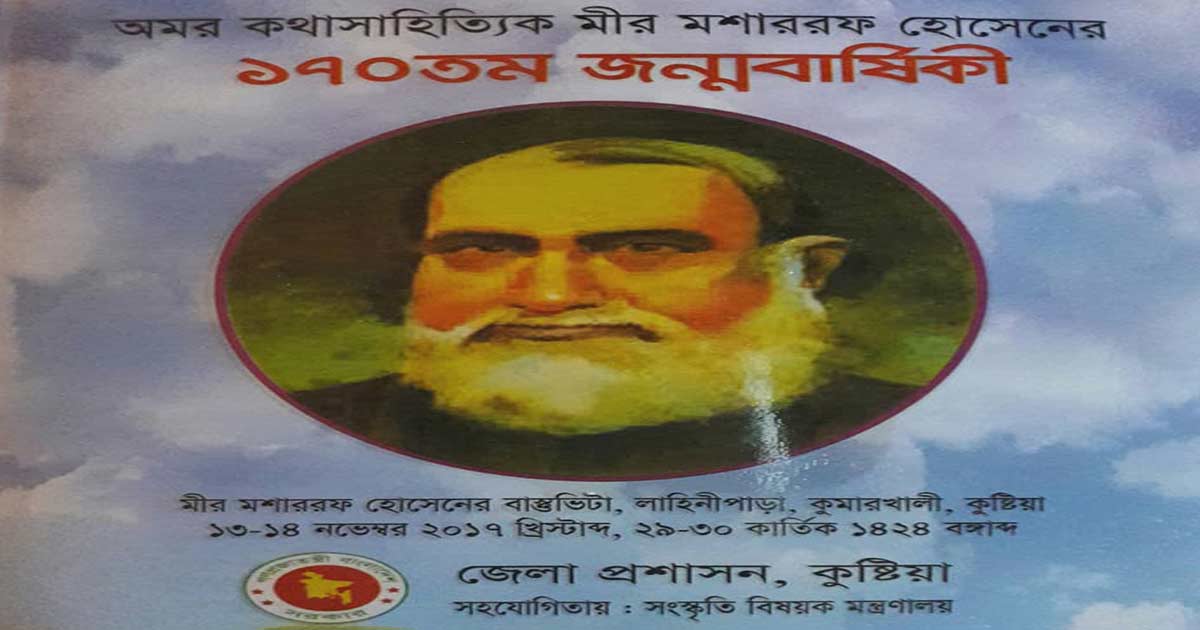
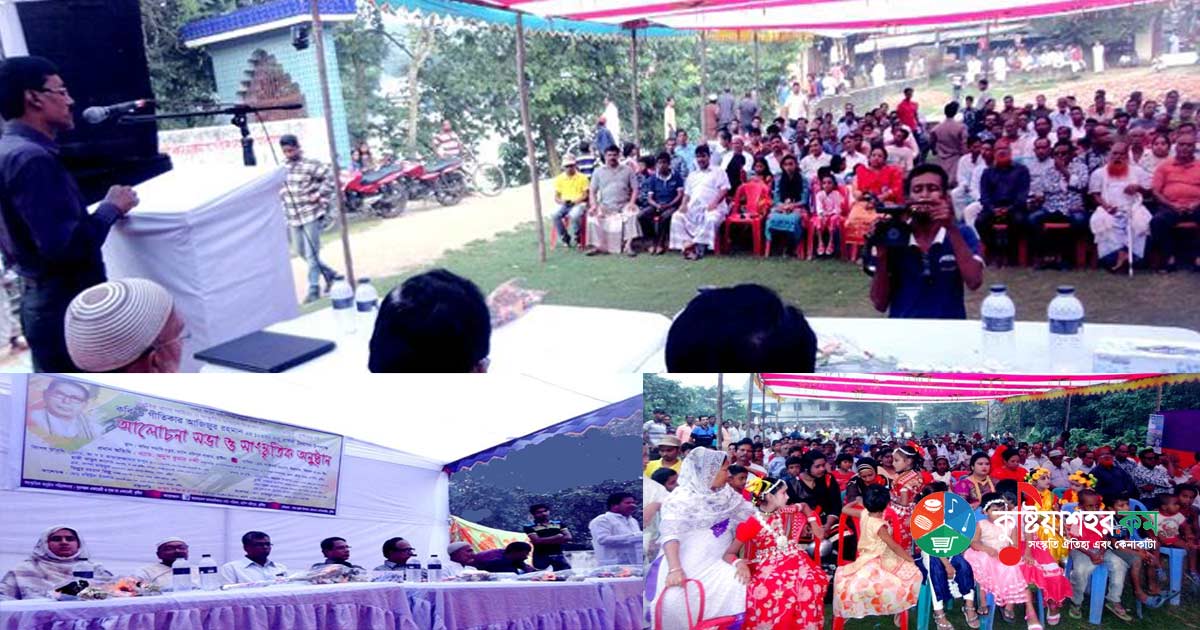
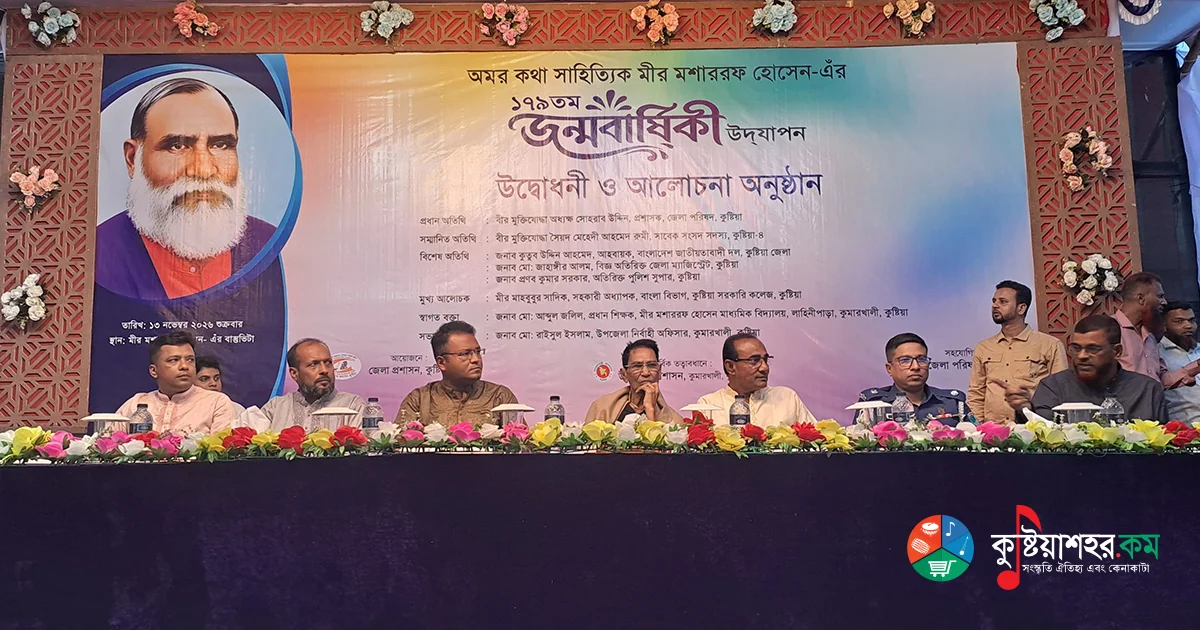
On 13 November 2026, on the occasion of his 179th birth anniversary, a vibrant three-day birth festival was organised at his memory-laden ancestral birthplace at Lahinipara in Chapra union of Kumarkhali upazila, Kushtia. Organised by the Kushtia district administration from 13 to 15 November, the festival featured traditional lathikhela (stick fighting), discussion sessions, cultural performances, theatrical productions, essay competitions, prize-giving ceremonies and a rural fair.
Birth, Childhood and Education
Mir Mosharraf Hossain was born on 13 November 1847 (26 October, according to some researchers) in the village of Lahinipara under Kumarkhali of the then Nadia district of British India. Lahinipara (present-day Chapra union, Kumarkhali upazila, Kushtia district) was his maternal home; his paternal home was the village of Padamdi in Baliakandi upazila of Rajbari district. His father Nawab Syed Mir Moazzem Hossain was a zamindar and his mother was Daulatunnesa.
In his family environment he learned Arabic and Persian, and alongside it a deep interest grew in the Bengali language and literature. His formal education began at Jagmohan Nandi's pathsala; he then studied at Kumarkhali English School, Padamdi Nawab School and Krishnagar Collegiate School. Towards the end he was admitted to Kalighat School in Calcutta, but his formal education did not last long. Nevertheless, his deep interest in literature and language later made him one of the most important writers of Bengali literature.
In his personal life he married Aziz-un-Nesa, the daughter of his father's friend, in 1865; later, in 1874, Bibi Kulsum. A large part of his life was spent in zamindari administration — first supervising his paternal estate, then working at the Nawab Estate of Faridpur, and from 1885 until his death serving as naib and manager of the Delduar zamindari. He lived in Calcutta from 1903 to 1909.
The Beginning of His Literary Career and the Influence of Kangal Harinath
Newspapers and periodicals of the time played an important role in shaping Mir Mosharraf Hossain's literary career. While still a student he became a mofussil correspondent for Calcutta's historic ‘Sangbad Prabhakar’ (1861) and for ‘Grambarta Prakashika’ (1863), published from Kumarkhali. Kangal Harinath Majumdar, editor of ‘Grambarta Prakashika’, loved him like a younger brother; his companionship became the first school of Mir's literary practice. Kangal Harinath was a journalist and social reformer who spoke out loudly against the injustice, oppression and exploitation of the society of his time — this environment enriched Mir's thinking and literary vision.
Later he too became involved in editing periodicals. His edited monthly literary journal ‘Azizan Nehar’ is recognised as the first Bengali literary periodical edited by a Muslim; afterwards he also edited the paper ‘Hitokari’ (1890). During his stay in Calcutta he is also known to have assisted Rowshan Ali Chowdhury in publishing the monthly ‘Kohinoor’.
‘Bishad Sindhu’: An Immortal Creation of Bengali Literature
The work that comes to mind first when Mir Mosharraf Hossain's name is mentioned is ‘Bishad Sindhu’. Published in three parts — ‘Moharram Porbo’ (May 1885), ‘Uddhar Porbo’ (August 1887) and ‘Ejid-Bodh Porbo’ (March 1891) — the entire book was brought out together in 1891. Centred on the historic and tragic events of Karbala in 61 AH, it builds a deeply sorrowful narrative. The lives of Imam Hasan and Imam Husain, the tragic end of Karbala, sacrifice, faith, the lust for power and various facets of human anguish all find expression in this book.
Written in sadhu (formal) Bengali in a poetic style, following the convention of the time, this book is not merely a literary presentation of a historical story; it stands as a remarkable example of emotion, description and narrative construction in Bengali prose. The book earning an almost religious reverence among readers far and wide is a rare phenomenon in the history of Bengali literature. More than a century later, ‘Bishad Sindhu’ still moves readers to tears — it has been translated into English as ‘An Ocean of Sorrow’ (translated by Fakrul Alam, 2016) and also into Hindi.
‘Jamidar Darpan’: A Literary Protest Against Exploitation and Social Injustice
Mir Mosharraf Hossain did not write only about history and religious themes; the reality of contemporary society found powerful expression in his writings. ‘Jamidar Darpan’, published in 1873, is one of his most important plays — set against the backdrop of the Sirajganj peasant uprising of 1872–73, it depicts the oppression of zamindars, the abuse of power and the helplessness of ordinary peasants.
The most remarkable aspect is that although he himself was born into a zamindar family and worked in zamindari administration, he took up his pen against the exploitation of his own class. From this perspective, ‘Jamidar Darpan’ is not merely a play; it is an important literary document of the social and economic reality of nineteenth-century Bengal.
Notable Literary Works of Mir Mosharraf Hossain
Mir Mosharraf Hossain was blessed with versatile talent. He wrote novels, plays, farces, essays, poems, songs and even educational textbooks. His notable works include:
- Ratnabati (1869): the first novel(ette) in Bengali literature written by a Muslim.
- Gorai Bridge or Gouri Setu (1873): poetry.
- Basanta Kumari (1873): the first Bengali play written by a Muslim.
- Jamidar Darpan (1873): a play on zamindari oppression and the reality of peasant society.
- Er Upay Ki (1875): a farce.
- Bishad Sindhu (1885–1891): his immortal novel.
- Sangeet Lahari (1887): a work on music.
- Go-Jibon (1889): an essay that triggered religious controversy and a lawsuit.
- Behula Gitabinay (1889): a play.
- Udashin Pathiker Moner Katha (1890): an autobiographical novel on the oppression of indigo planters.
- Tahmina (1897): a novel.
- Niyoti Ki Obonoti (1898): a play.
- Gazi Miyar Bostani (1899): a satirical sketch of social criticism.
- Rajia Khatun and Bandha Khata (1899): a biography and a farce.
- Moulud Sharif (1903) and Moslemander Bangla Shikkha (Part 1 in 1903, Part 2 in 1908): educational works.
- Amar Jiboni (Volume 1, 1908–1910): autobiographical writings.
- Kulsum-Jiboni (1910): a work based on the life story of his wife Bibi Kulsum.
His Contribution to Society, Culture and Humanist Thought
The works of Mir Mosharraf Hossain give voice to social contradictions, people's rights, religious sentiment and human values. He never shied away from criticising the superstitions and inequalities of the society of his time. Although his writings dealt with religious themes, as a literary artist he placed greater importance on the broader social reality and human values. His contribution to the development of modern literary practice among Bengali Muslims in the Bengali language is especially memorable.
On this point Dr. Abul Ahsan Chowdhury, retired professor of Islamic University (Kushtia) and a renowned Lalon researcher, has remarked that viewing Mir Mosharraf merely as a ‘Bengali Muslim writer’ is another injustice done to him — he is one of the greatest storytellers of Bengali literature, worthy of standing beside Bankimchandra, Vidyasagar and Michael Madhusudan.
Death and the Preservation of Memory: Lahinipara and Padamdi
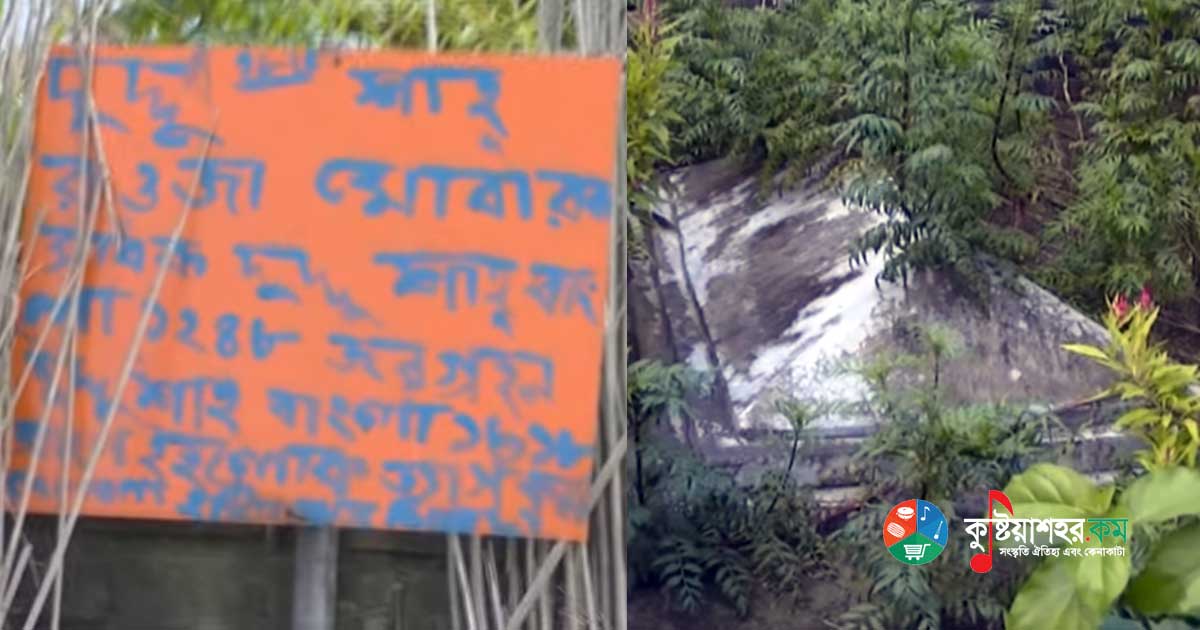
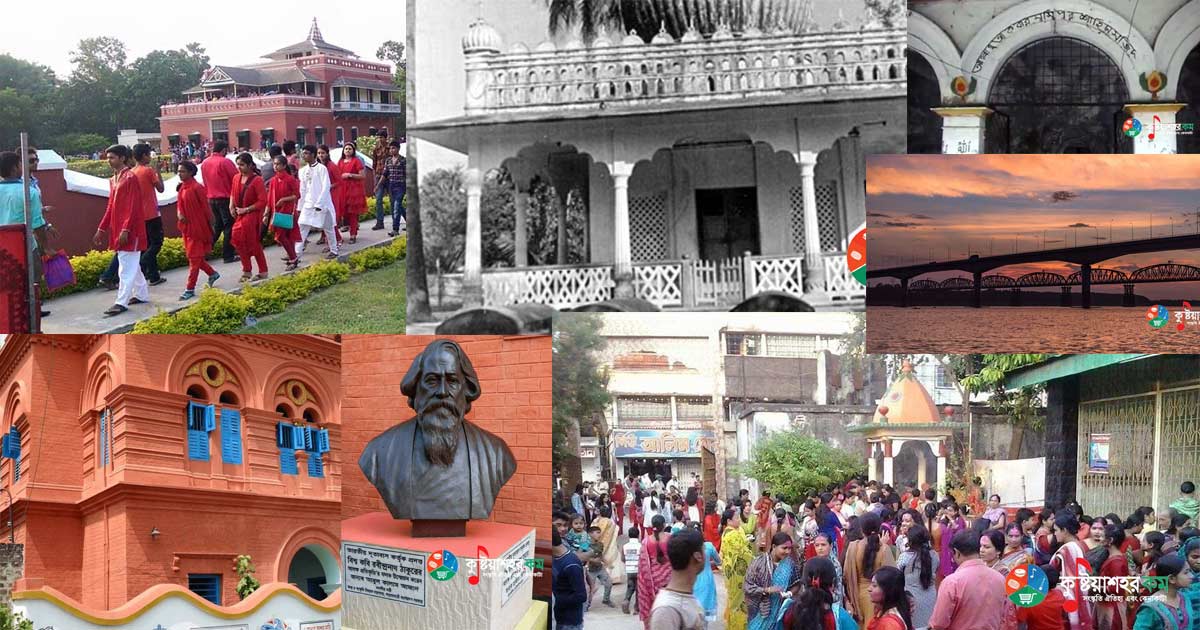
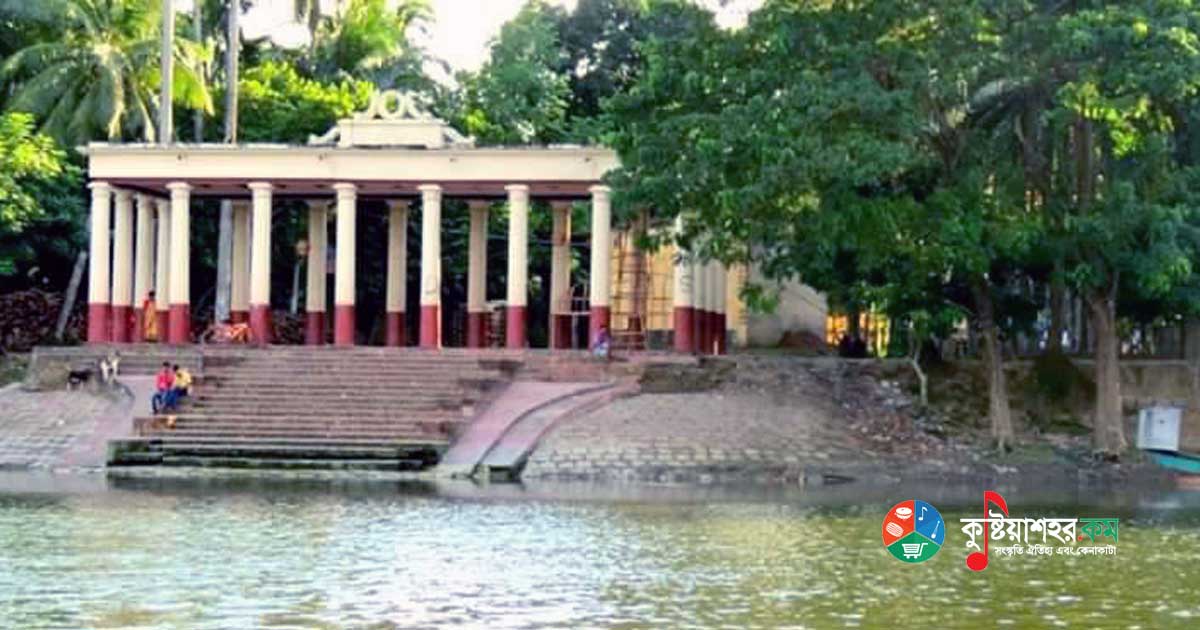
Mir Mosharraf Hossain died on 19 December 1911 (some sources say 1912). He was buried at Padamdi, where the ‘Mir Mosharraf Hossain Smriti Complex’ has grown up. At his birthplace Lahinipara, the chair he used, photographs and memorabilia are preserved, along with a small library. A school and a mosque have been established in his name through local initiative. One of the residential halls of Jahangirnagar University (built in 1978) also bears his name. Yet a modern museum of proper standard has still not been built — the speakers at the birth anniversary revived precisely this expectation. There is ample scope to develop Lahinipara and Padamdi together as centres of literary and heritage tourism.
The Inauguration of the 179th Birth Anniversary and the Speakers' Statements
The festival began on Friday (13 November) in the afternoon with traditional lathikhela. The birth festival was inaugurated by Bir Muktijoddha and former Member of Parliament (Kushtia-4) Syed Mehedi Ahmed Rumi. The inaugural discussion session was presided over by Kumarkhali Upazila Nirbahi Officer (UNO) Md. Raisul Islam.
The UNO said the event would help bring the writer's life and works closer to the new generation, and that in future the relevant ministry would be contacted to celebrate the birth anniversary at the national level.
- Dr. Abul Ahsan Chowdhury, retired professor of Islamic University: placing Mir Mosharraf merely in the row of Bengali Muslim writers does him an injustice — he is one of the greatest of Bengali literature, on a par with Bankimchandra, Vidyasagar and Madhusudan; the range of his writing, from novels to farces, essays, poems, songs and even textbooks, is rare in Bengali literature; ‘Bishad Sindhu’ is an evergreen classic, translated into English and Hindi.
- Dr. Sarwar Murshed, professor of Islamic University: “Mir Mosharraf Hossain is not only the asset of Kushtia, he is the asset of the whole of Bangladesh.” He expressed regret that the earlier expectation of building a memorial complex, a rich library and a museum has not yet been realised.
- Mohammad Abdul Jalil, headmaster of Mir Mosharraf Hossain Secondary School: through local initiative a school and a mosque have been established in his name since 1981, but a museum of proper standard is yet to come — a larger, state-level initiative is now needed.
- Ashraful Islam, a student of Rajshahi University of Engineering and Technology: unlike Rabindranath's Kuthibari or Lalon's Akhra, regular year-round cultural activities are absent here; Mir Mosharraf's works deserve greater weight in the curriculum.
- Local resident Walid Hasan Arian and students Ayesha Khatun and Hasibul Hasan: proud as sons and daughters of his birthplace; they want the fair to grow bigger and longer, his works to spread nationally and internationally, and a larger museum and event venue to be built.
Day-wise Programme of the Festival
First day: 13 November 2026, Friday
- 3 pm: traditional lathikhela.
- 4 pm: inauguration and discussion session.
- 5:30 pm: cultural programme.
- Night: staging of the play ‘Jamidar Darpan’ by artistes of the Upazila Shilpakala Academy and Bijoy Natyagoshthi.
Second day: 14 November 2026, Saturday
- 5:30 pm: discussion session.
- 7 pm: cultural programme.
- Theatrical staging and other cultural performances.
Third day: 15 November 2026, Sunday
- 5:30 pm: closing and discussion session.
- Prize-giving among the winners of the essay competition.
- 7 pm: cultural programme.
- Theatrical staging: ‘Fash Kagaj’.
The Three-Day Rural Fair
One of the main attractions of the birth festival was the traditional rural fair. From 13 to 15 November the fair ran every day from 10 am to 8 pm. The rural fair is not merely a place of buying and selling; it is an important part of Bengal's folk life, social relations and heritage. Such events create a festive atmosphere among local people and give the new generation the chance to become familiar with rural culture.
Theatrical Staging and New Cultural Initiatives
A notable aspect of the 2026 birth festival was that Mir Mosharraf Hossain's literary works were not confined to discussion meetings but were presented before audiences through stage plays. In particular, the staging of ‘Jamidar Darpan’ and ‘Fash Kagaj’ enhanced the cultural significance of the festival. In addition, the initiative to newly set some of his lesser-known and previously untuned songs to music and perform them was also especially noteworthy — such initiatives create the possibility of introducing his music-related creations afresh.
The Festival: Possibilities and Expectations for the Future
At one time, seven-day ‘Mir Utsab’ celebrations used to be held at Lahinipara around his birth and death anniversaries — with rural fairs, plays, lathikhela, cultural programmes and the publication of commemorative books, attended even by ministers. Year after year the event shrank, and this year it came down to a three-day, fair-centred festival. Yet the speakers at this edition revived the expectations — the ‘national-level celebration’ announced by inaugurator Syed Mehedi Ahmed Rumi and the Upazila Nirbahi Officer should be the first step towards future editions. Long-term planning is needed for the development of Kushtia's literature, culture, history and tourism.
- A week-long event: in future, initiatives could be taken to hold the birth festival for at least seven days instead of three.
- Universal participation: writers, researchers, students and cultural activists from Rajbari and other districts should be involved alongside Kushtia.
- Literary conference: national-level research, discussions and seminars on his works could be organised.
- Theatre festival: alongside regular stagings of his plays, other historical plays could also be presented.
- Literary competitions: essay, recitation, reading and quiz competitions should be organised for school, college and university students.
- Book and research exhibitions: exhibitions of his works, rare books, manuscripts and life-based research could be arranged.
- Preservation of heritage sites: proper preservation, cleanliness and tourist facilities are needed for the historic sites of Lahinipara and Padamdi.
- Digital archive: an online archive of his works, photographs, biographies, research and historic documents could be built.
In particular, if a literature- and heritage-based tourism route is created by linking Lahinipara and Padamdi together, visitors from different parts of the country will be drawn to travel to these two historic places.
Our Responsibility in Preserving Kushtia's Literary and Cultural Heritage
Kushtia is not merely a geographical place; it is a rich historic region of Bengali literature, music, philosophy and folk culture. The memories of countless great figures — Fakir Lalan Shahi Ji, Mir Mosharraf Hossain, Kangal Harinath Majumdar and many others — have enriched the cultural identity of this land. The responsibility for preserving this heritage does not belong to government institutions alone. Local people, educational institutions, literary organisations, cultural activists, the media and the new generation all have important roles to play.
Alongside organising festivals for a few days on the occasion of the birth anniversary, discussions, research, reading circles, music and theatre practice on their lives and works should continue throughout the year. Kushtia's historic places must be brought to national prominence as well as to the international stage.
Conclusion: History Must Be Preserved, Not Merely Remembered
The three-day festival organised at Lahinipara on the occasion of Mir Mosharraf Hossain's 179th birth anniversary has given us the opportunity to remember our literary and cultural heritage afresh. The works of the immortal creator of ‘Bishad Sindhu’ still teach readers to reflect on history, humanity, emotion and social reality. His ‘Jamidar Darpan’ reminds us of the history of literary protest against exploitation and injustice.
However, to pay true homage to a great writer, celebrating the birth anniversary alone is not enough; sustained initiatives are needed to read, research, preserve his works and carry them to the new generation. We expect that in the coming years this birth festival at Lahinipara of Kumarkhali will be celebrated on a much larger scale, with far greater participation, and with the dignity of a national cultural festival.
May the beacon of Bengali literature that was lit from this historic soil of Lahinipara spread from generation to generation. May Mir Mosharraf Hossain's literature and life's work live on in our reading, our research, our culture and our study of history. Deep respect and humble remembrance to this great writer.