বাংলা
 English
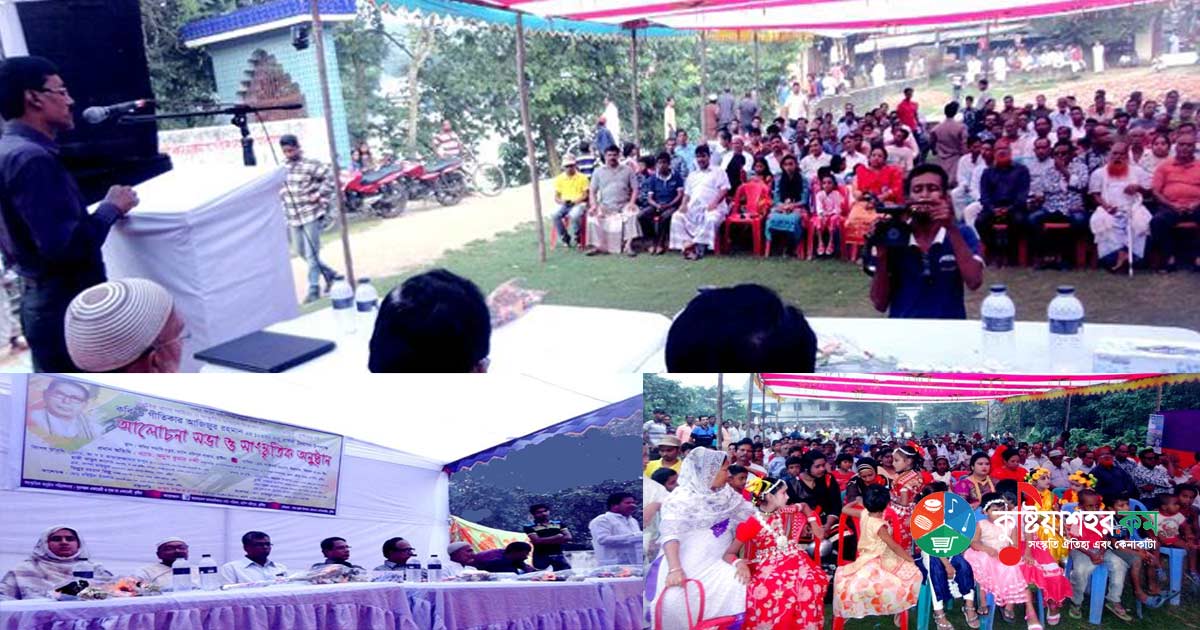
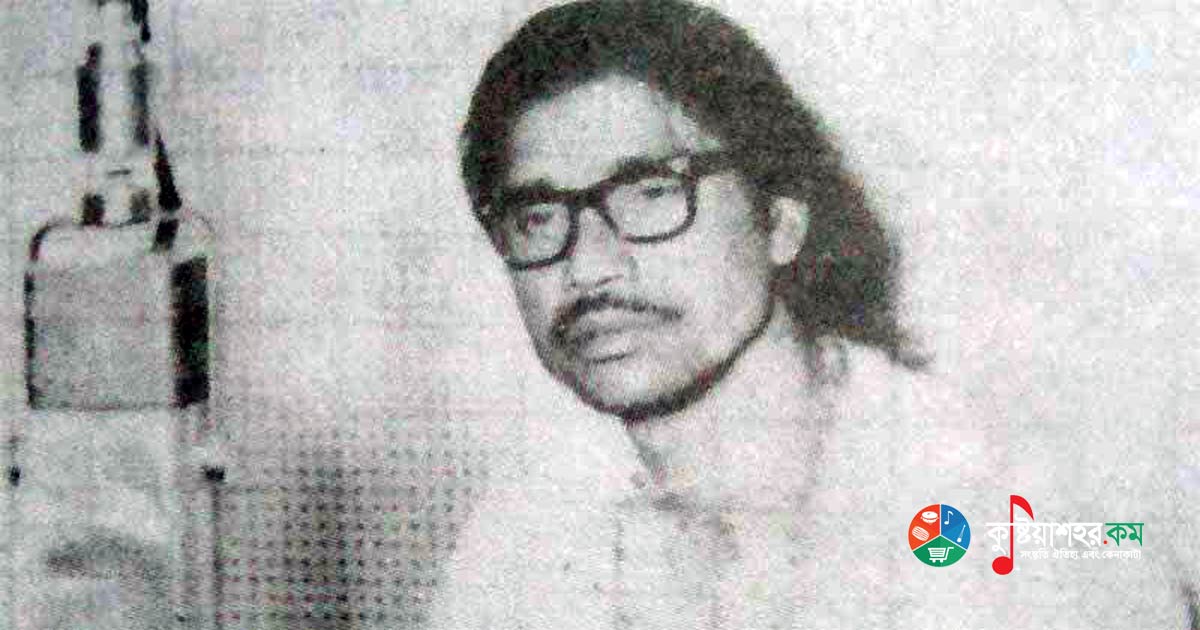
On the theme of the soul-stirring message of the song “Manre bhaber natyashalay manush chena day” — knowing a person in this world's theatre is a hard task — a discussion meeting and cultural programme were held on the 103rd birth anniversary of the pride of Kushtia, the Ekushey Padak-winning pioneer of the country's modern Bengali literature and culture, poet and lyricist Azizur Rahman (born: 18 October 1914; died: 12 September 1978).
On Friday at 3:30 in the afternoon, at the poet's grave compound in Hatsh Haripur of Sadar upazila, under the presidency of Abdur Razzak Master, convener of the observance committee, and organised by the Manabadhikar Natya Parishad (Human Rights Theatre Council), a discussion meeting was held, and poems and rhymes composed by the poet were recited, with songs and dances performed.
Present at the event as chief guest was the learned PP Advocate Anup Kumar Nandi; as special guests the learned GP Advocate ASM Aktaruzzaman Masum, general secretary of the Kushtia Bar Association Advocate Jahurul Islam, organiser of the Ganajagaran Mancha and president of Kushtia district JSD Haji Golam Mohsin, UP chairman M Sampa Mahmud and former UP chairman M Mushtak Hossain Masud. At the event the literary works of poet and lyricist Azizur Rahman were spotlighted by Rabibul Islam, assistant professor of the Bengali department of Khoksa College, and by the poet and writer Azizur Rahman.
Speaking at the discussion meeting, the speakers said Azizur Rahman was a poet, lyricist, editor and theatre organiser. In the diversity of his work he was, for his time, unfathomable and versatile. He was born into a zamindar family in the village of Hatsh Haripur of Kushtia, famed as the cultural capital. His real date of birth is 18 October 1914. Unluckily, in the 'Charitabhidhan' published by the Bangla Academy his date of birth is shown as 18 January 1917. In many people's eyes this error is perhaps no fault at all. The question is: the Bangla Academy is a symbol of the nation's mind and thought, a symbol of the nation's will and aspirations. Enriching the Bengali language and presenting the writers of the Bengali language to the world stage is its main task. For that reason the Bangla Academy authorities, including those connected with the Charitabhidhan, cannot evade this responsibility.
Misfortune was the god of the French playwright Jean Genet. In the same way the saying can be carried over to poet Azizur Rahman. Because he was a zamindar's son. The pomp of the zamindars of the undivided Indian subcontinent still survives in this region as legend. That life could not fascinate him. A different calling of his life made him the companion of the common folk. For that reason he formed a theatre troupe and acted. We see that, beyond Azizur Rahman's identity as a poet, his identity as a lyricist grows the larger. The most popular songs of Bengali cinema of the fifties and sixties were written by him. Whether he is valued as poet or as lyricist, the chief themes of his writing are love, nature and love of country. He also composed Islamic songs. Beyond his identity as an artist, as a human being too he was a root-seeker. He had a very close bond with the common people.
The 'Charitabhidhan' published by the Bangla Academy states that he composed nearly two thousand songs. But analysing various data it appears that the number of his songs is nearly three thousand. We will not consider the count of the songs. We will consider the thematic diversity of his songs — his popularity and worth as a lyricist. When Bengali cinema was in its golden age, lyricist Azizur Rahman's songs breathed new life into the golden idol of the golden age. The amusing thing is that while in those days those songs rolled from people's mouths, who the lyricist was remained unknown to many. Notable among the songs are “I am the princess of Rupnagar, I have brought the magic of beauty”, “I don't realise, O mind, how it sways to the flute's melody”, “O mind, knowing a person in this world's theatre is a hard task”, “On this star-filled night the thought of you returns to me in sorrow”, “Don't be displeased, dear — try to understand”.
Besides, in the freedom movement of the subjugated motherland his songs kindled the longing for liberation in the minds of the freedom fighters and the people of this land. Notable among his country songs and songs of the fighting spirit are “My land, brother, carpeted with palash and echoing with cuckoos”, “Radiant days coloured with blood blaze in the tongues of fire”, “Like an unstoppable storm the meteor speeds with momentum”, “My land, brother, filled with paddy and filled with song”, “Mujib has brought the new sunrise of Bangladesh”. In Bangladesh, after our national poet Kazi Nazrul Islam, poet and lyricist Azizur Rahman's contribution to the composition of Islamic music is also seen to be exceptional. Among the Islamic songs he wrote are “Never wound anyone's heart, that wound lands in the Kaaba's house”, “O God, may I keep hidden the rosary of Your name”. His notable literary works include a good number of popular books such as “In the Kingdom of Dinosaurs”, “Tales of Animals”, “On Holiday”, “This Country, This Soil”, “Songs of the Occasion”.
On the eve of celebrating the 103rd birth anniversary of this Ekushey Padak-winning, near-forgotten luminary, the failure of our own duty and accountability is far more painful to bear. Yet the good within the bad is this: though without pomp, this attempt to hold this luminary in the heart, even if only a little, within the bounds of our thoughts, and to spread it among the present generation — is that little at all? We shall keep it for eternity. Through us the coming generation will know him and his creative works. After the discussion, at the cultural event the Saptasur Music Academy and Nrityo Rong presented dance and music. The event was conducted by M A Kaiyum.