বাংলা
 English
Every year on December 16, Bangladesh celebrates Victory Day, one of the most significant dates in the nation's history. On this day in 1971, after nine months of a devastating Liberation War, Pakistani occupation forces surrendered to the joint forces of Bangladesh and India at the historic Racecourse Ground in Dhaka, now known as Suhrawardy Udyan. The surrender marked the decisive military victory of the Bengali people and the emergence of Bangladesh as an independent and sovereign nation.
Victory Day is more than a national celebration. It represents the courage, sacrifice, determination, and collective struggle of millions of people who fought for freedom. It commemorates the countless lives lost, the extraordinary bravery of freedom fighters, and the resilience of ordinary citizens who contributed to the liberation of their homeland.
The victory of December 16 did not happen overnight. It was the culmination of decades of political movements, economic discrimination, cultural suppression, the struggle for democratic rights, the historic 1970 general election, and ultimately, nine months of armed resistance in 1971.
Historical Background: Why Did Bangladesh Fight for Independence?
To understand the significance of Victory Day, it is important to look back at the events of 1947.
Following the end of British colonial rule in the Indian subcontinent, British India was partitioned into two independent states: India and Pakistan. Pakistan consisted of two geographically separated territories—West Pakistan and East Pakistan, the latter being present-day Bangladesh. The two regions were separated by more than a thousand miles of Indian territory.
Although both regions shared the same religious majority, they had distinct languages, cultures, economic interests, and social identities. From the beginning, the people of East Pakistan faced political, economic, and cultural discrimination from the ruling establishment in West Pakistan.
One of the earliest major conflicts concerned language. The Pakistani authorities attempted to impose Urdu as the sole state language, ignoring the fact that Bengali was spoken by the majority of Pakistan's population.
This led to the historic Language Movement of 1952. On February 21, students and activists demanding recognition of Bengali as a state language were shot by police. Salam, Barkat, Rafiq, Jabbar, and other language activists became martyrs.
The Language Movement strengthened Bengali national identity and laid the foundation for subsequent political struggles.
In 1966, Sheikh Mujibur Rahman introduced the Six-Point Movement, demanding greater autonomy for East Pakistan. The mass uprising of 1969 further intensified resistance against military rule.
These movements gradually transformed the political consciousness of the Bengali population and strengthened the demand for self-determination.
The 1970 General Election: The People's Mandate Was Denied
The general election held in Pakistan in December 1970 was a turning point in the history of Bangladesh.
Under the leadership of Sheikh Mujibur Rahman, the Awami League won an absolute majority in Pakistan's National Assembly. The result demonstrated overwhelming public support for the party's Six-Point Programme and its demand for political and economic autonomy.
According to democratic principles, the Awami League was entitled to lead the formation of the central government and play the principal role in drafting Pakistan's new constitution.
However, the military leadership of Pakistan refused to transfer power according to the election results. President Yahya Khan postponed the National Assembly session indefinitely on March 1, 1971.
The announcement triggered widespread protests across East Pakistan. A massive non-cooperation movement emerged, and Sheikh Mujibur Rahman's leadership became central to the political and administrative resistance.
The political crisis soon developed into a struggle for independence.
March 7, 1971: The Historic Speech That Inspired a Nation
On March 7, 1971, Sheikh Mujibur Rahman delivered his historic speech at the Racecourse Ground in Dhaka before a massive gathering.
His speech called upon the people of East Pakistan to prepare for the struggle for freedom and resistance against oppression.
One of the most memorable statements from the speech was:
"এবারের সংগ্রাম আমাদের মুক্তির সংগ্রাম, এবারের সংগ্রাম স্বাধীনতার সংগ্রাম।"
Translated into English:
"This time, the struggle is for our emancipation; this time, the struggle is for our independence."
The speech became a defining moment in the history of Bangladesh's independence movement. It united people from different backgrounds and prepared the nation for the coming struggle.
The speech was later recognized by UNESCO and included in the Memory of the World International Register in 2017.
March 25, 1971: The Beginning of a Brutal Genocide
On the night of March 25, 1971, the Pakistani military launched a devastating military operation in East Pakistan under the codename Operation Searchlight.
The operation targeted unarmed civilians, students, teachers, police personnel, and political activists.
Major attacks took place at Dhaka University, the Rajarbagh Police Lines, Pilkhana, and various residential areas of the capital.
The military crackdown involved widespread killings, destruction, and systematic violence against civilians.
The operation effectively ended the possibility of a peaceful political settlement and pushed the Bengali population toward armed resistance.
March 25 remains one of the darkest nights in Bangladesh's history.
March 26, 1971: Declaration of Independence
Following the military crackdown, Bangladesh's independence was declared in the early hours of March 26, 1971, by Sheikh Mujibur Rahman.
The declaration called upon the people to resist the Pakistani occupation forces and fight for the independence of their homeland.
The declaration was subsequently transmitted through various communication channels and reached people across the country.
On April 10, 1971, the elected representatives of the people formally adopted the Proclamation of Independence, giving constitutional and legal expression to the declaration of independence and establishing its effective date as March 26, 1971.
The declaration marked the beginning of Bangladesh's armed Liberation War.
Military personnel, police officers, members of the East Pakistan Rifles, students, and ordinary citizens joined the resistance across different parts of the country.
The Mujibnagar Government: Political Leadership During the Liberation War
To organize the independence movement and coordinate the war effort, Bangladesh's elected representatives established a provisional government.
On April 10, 1971, the Proclamation of Independence was adopted, and the government was formally constituted.
On April 17, 1971, the provisional government took its oath at Baidyanathtala, in present-day Meherpur District. The location was renamed Mujibnagar, giving the government its historical name.
Sheikh Mujibur Rahman was appointed President of Bangladesh. In his absence, Syed Nazrul Islam served as Acting President, while Tajuddin Ahmad assumed the responsibility of Prime Minister.
The Mujibnagar Government played a crucial role in organizing the Liberation War, establishing administrative structures, coordinating military operations, managing international relations, and securing support for the independence movement.
Its formation transformed the scattered resistance into an organized national liberation struggle under a recognized political leadership.
Nine Months of Liberation War: From Resistance to Victory
The Liberation War of Bangladesh lasted from March to December 1971.
Despite facing a militarily powerful opponent, Bengali freedom fighters continued their resistance through guerrilla warfare, direct military engagements, and strategic operations.
For military coordination, the country was divided into 11 operational sectors, each led by designated commanders.
The Liberation War was not fought by trained military personnel alone. Students, farmers, workers, teachers, doctors, cultural activists, women, and people from all walks of life contributed to the struggle.
Some fought on the battlefield, while others provided shelter, food, medical assistance, intelligence, communication support, and logistical resources.
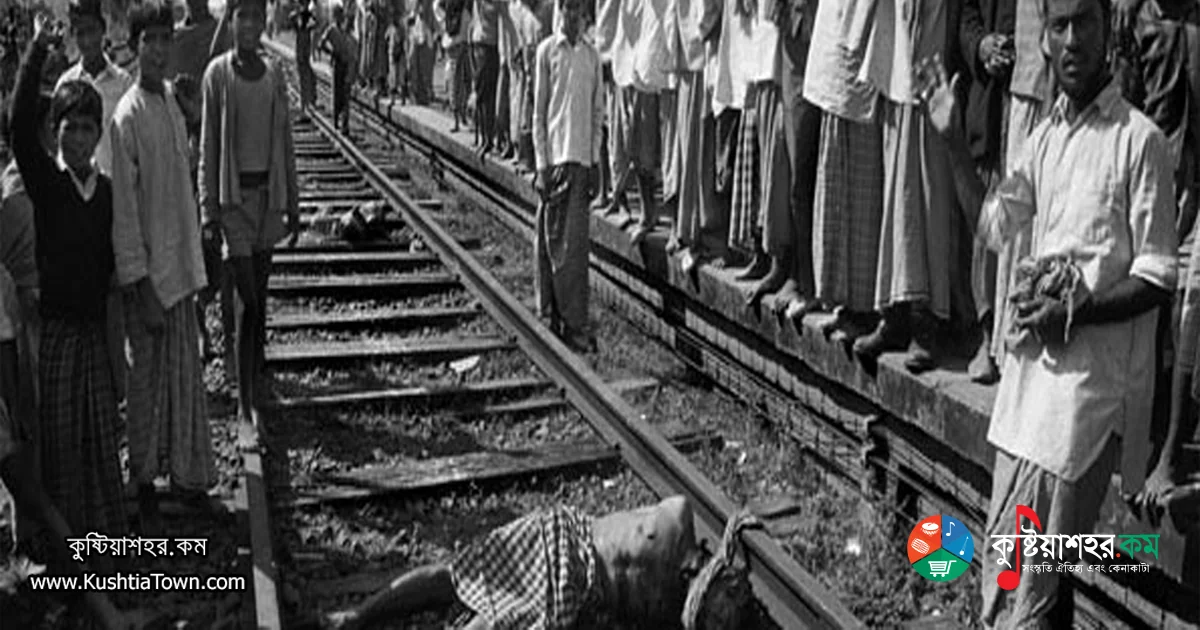
During the war, Pakistani forces and their local collaborators committed widespread atrocities, including mass killings, torture, arson, looting, and forced displacement.
Approximately ten million people fled to India to escape the violence. Countless families lost their homes, and many women suffered horrific sexual violence.
The Liberation War was therefore not simply a military conflict. It was also a profound humanitarian tragedy marked by immense suffering, courage, and sacrifice.
The Role of the Mukti Bahini and the Allied Forces
The Mukti Bahini, or Bangladesh Liberation Forces, served as the principal Bengali armed resistance against Pakistani occupation forces.
Freedom fighters conducted guerrilla operations and direct military engagements across the country, weakening Pakistani military positions and disrupting their communication and supply networks.
India played an important role in supporting the independence movement by providing refuge to millions of displaced Bangladeshis, training freedom fighters, and supplying military assistance.
On December 3, 1971, Pakistan launched airstrikes against several Indian airbases. This resulted in a full-scale war between India and Pakistan.
Indian armed forces subsequently joined the military campaign alongside the Mukti Bahini. Their combined forces became known as the Allied Forces.
During the first half of December, the Allied Forces advanced rapidly across Bangladesh. Pakistani military positions weakened, communication routes were disrupted, and several strategically important areas were liberated.
Dhaka gradually became the central focus of the military campaign.
The combined operations of the Mukti Bahini and Indian forces brought the Pakistani military command in East Pakistan close to collapse.
December 14, 1971: The Killing of Intellectuals
Just two days before the final victory, Bangladesh experienced another devastating tragedy.
On December 14, 1971, members of the Pakistani military and their local collaborators, particularly the Al-Badr militia, abducted and murdered prominent Bengali intellectuals.
Among the victims were university professors, doctors, journalists, writers, engineers, and other distinguished professionals.
The objective was to deprive the emerging independent nation of its intellectual leadership and weaken its future development.
Many of the abducted intellectuals were later discovered dead at sites including Rayerbazar in Dhaka.
The systematic killing of intellectuals remains one of the most painful chapters in Bangladesh's history.
December 14 is observed annually as Martyred Intellectuals Day in Bangladesh.
December 16, 1971: How Bangladesh Achieved Its Final Victory
By mid-December 1971, the military position of Pakistani forces in East Pakistan had become increasingly desperate.
The coordinated offensives of the Mukti Bahini and Indian armed forces had weakened Pakistani defenses, disrupted communications, and surrounded major military positions.
The Pakistani Eastern Command, led by Lieutenant General A. A. K. Niazi, faced an increasingly impossible military situation.
On December 16, negotiations and arrangements for surrender moved forward.
Lieutenant General J. F. R. Jacob, Chief of Staff of the Indian Army's Eastern Command, played an important role in preparing the surrender arrangements.
Later that day, Lieutenant General Jagjit Singh Aurora, the commander of the Allied Forces, arrived in Dhaka.
Group Captain A. K. Khandker represented the Bangladesh Liberation Forces at the surrender ceremony.
The historic ceremony took place in the afternoon at the Racecourse Ground in Dhaka, now known as Suhrawardy Udyan.
Lieutenant General A. A. K. Niazi signed the Instrument of Surrender on behalf of Pakistan's Eastern Command. Lieutenant General Jagjit Singh Aurora signed on behalf of the Allied Forces.
The surrender formally ended the organized military resistance of Pakistani forces in Bangladesh.
According to the historical record preserved by the Liberation War Museum, the surrender document was signed at approximately 5:01 PM.
The historic moment marked the decisive military victory of Bangladesh's nine-month Liberation War.
Across the country, people celebrated with immense emotion and relief. After months of violence, destruction, and uncertainty, the Bengali nation had finally achieved its long-awaited victory.
December 16 became the symbol of the triumph of freedom over oppression.
The Historical Significance of the Surrender
The surrender of Pakistani forces was the decisive military outcome of Bangladesh's Liberation War.
It brought an end to the authority of Pakistan's Eastern Military Command and paved the way for the establishment of effective control by the newly independent state.
However, the significance of the surrender extended far beyond a military defeat.
It represented the success of a nation's struggle for political rights, cultural identity, self-determination, and sovereignty.
The Bengali people's resistance against decades of discrimination and oppression had resulted in the creation of an independent country.
It is important to distinguish between the declaration of independence and the final military victory.
Bangladesh declared its independence on March 26, 1971. December 16 was not the date of the declaration; it was the day the Liberation War achieved its decisive victory through the surrender of Pakistani forces.
Bangladesh After Victory: The Beginning of a New Journey
Although Bangladesh achieved victory on December 16, the challenges facing the newly independent nation were enormous.
The war had severely damaged roads, bridges, railways, industries, educational institutions, hospitals, and communication infrastructure.
Millions of people had been displaced, countless families had lost loved ones, and the national economy was in ruins.
The country faced the difficult task of rebuilding its infrastructure, restoring public administration, rehabilitating freedom fighters, providing medical assistance to war victims, and supporting families affected by the conflict.
On January 10, 1972, Sheikh Mujibur Rahman returned to independent Bangladesh after being released from Pakistani imprisonment.
His return became another defining moment in the nation's early history.
The process of rebuilding Bangladesh had begun, marking the start of a new chapter in the country's journey as an independent state.
Why Is December 16 Victory Day and March 26 Independence Day?
Many people sometimes confuse Bangladesh's Independence Day with Victory Day. Although both commemorate the same historic struggle, they represent two different milestones.
March 26, 1971, marks the declaration of Bangladesh's independence and the beginning of its armed struggle for freedom.
December 16, 1971, marks the final military victory, when Pakistani forces formally surrendered to the Allied Forces.
The following timeline makes the distinction clear:
- March 7, 1971: Sheikh Mujibur Rahman's historic speech and the call for resistance.
- March 25, 1971: Operation Searchlight and the beginning of the military crackdown.
- March 26, 1971: Declaration of Bangladesh's independence.
- April 10, 1971: Adoption of the Proclamation of Independence and formation of the provisional government.
- April 17, 1971: Oath-taking ceremony of the Mujibnagar Government.
- December 14, 1971: Martyred Intellectuals Day.
- December 16, 1971: Surrender of Pakistani forces and the final victory of Bangladesh.
The easiest way to remember the difference is:
March 26 is the declaration of independence; December 16 is the victory achieved through the Liberation War.
These two dates are inseparable parts of Bangladesh's national history, but they must never be confused.
The Importance of Victory Day for Future Generations
Every year on December 16, Bangladesh observes Victory Day through national ceremonies, memorial events, cultural programs, discussions, and educational activities.
The National Memorial at Savar becomes a central place of tribute, where the President, the head of government, government representatives, members of the armed forces, and citizens pay their respects to those who sacrificed their lives for independence.
The national flag is raised across the country, and various institutions organize programs highlighting the history and significance of the Liberation War.
However, the importance of Victory Day should extend beyond formal celebrations.
Preserving historical documents, collecting eyewitness accounts, recording the experiences of freedom fighters, and educating younger generations about the Liberation War are essential responsibilities.
Understanding the sacrifices made in 1971 helps future generations appreciate the value of freedom, human dignity, democracy, and national sovereignty.
Victory Day should inspire citizens to contribute to a society built on justice, equality, human rights, and responsibility.
Conclusion: Victory Is the Story of a Nation's Identity
December 16 remains one of the most unforgettable dates in the history of Bangladesh.
On this day in 1971, after nine months of armed struggle and immense human sacrifice, Pakistani forces surrendered in Dhaka. The historic signing of the Instrument of Surrender marked the final military victory of the Liberation War.
The victory demonstrated the extraordinary power of a united people determined to secure their freedom and establish their own sovereign state.
Bangladesh's independence was not a gift. It was achieved through decades of struggle, the courage of freedom fighters, and the sacrifice of countless people.
Therefore, December 16 is not merely a day to remember the past. It is a reminder of the responsibilities that come with independence and the importance of preserving the nation's historical identity for future generations.
On this Great Victory Day, we respectfully remember all the martyrs, freedom fighters, victims of atrocities, and everyone who contributed to the struggle for Bangladesh's independence.
Their sacrifice will remain an inseparable part of Bangladesh's history, identity, and national pride.