বাংলা
 English
On the night of the full moon of the month of Kartik, when thousands of lamps are lit along rivers and the sea and the raslila of Radha and Krishna comes alive to the flute, the Bengali people observe Rash Purnima—the Vaishnava face of Kartik Purnima. From the Sharad-rasa of scripture to the century-old Rash Mela of Dublar Char in the Sundarbans, from Nabadwip's Shakta Ras to Manipur's rasnritya—Rash Purnima is the name of a vast festival tradition of Bengal and the Bengalis.
Ras is essentially a religious festival held in the Vaishnava spirit in imitation of Sri Krishna's braja-lila; and the principal date of that festival falls on the full-moon tithi of the month of Kartik—hence the day is known as Rash Purnima. In Bengal the names 'Rash Purnima' and 'Kartik Purnima' run side by side: national dailies of West Bengal, too, mark the day writing "Rash Purnima is another name for Kartik Purnima." Lighting lamps in temple courtyards and along riverbanks and beaches on this day is also a widespread custom.
According to the 2026 almanac, Rash Purnima falls on 24 November. Kartik is then in its final hours—at the end of the sequence of Rakher Upobash, akashpradip and month-long bratas, this full moon brings the month to a close.
1. Ras in scripture: from the Bhagavata's Sharad-rasa to the raslila
The root description of ras is found in the Puranas. The Srimad Bhagavata and the Vishnu Purana describe only the sharad-rasa (autumn ras), while the Padma Purana mentions both the sharad-rasa and the basanti-rasa (spring ras). In the gloss of Shankara, the commentator on the Harishcharita, ras is a circular dance that can be performed together by eight, sixteen or thirty-two persons.
In Bengal's Vaishnava tradition this ras takes the form of lila-poetry and jatra plays—the narrative of Radha and Krishna's circular dance with the gopinis is the raslila. Rash Purnima is therefore not merely a religious tithi; it is a festival of folk art as well—dance, song and jatra.
2. Ras in Bengal: from Nabadwip's Shakta Ras to Manipur's rasnritya
The best-known address of the ras festival in Bengal is Nabadwip in Nadia—where the rasyatra has crossed beyond the Vaishnava tradition to take a Shakta form of worship (Nabadwip's Shakta Ras), while Santipur's Bhangaras is observed with its own identity. Beyond the braja of Mathura and Vrindavan, the rasyatra is celebrated with special distinction in Odisha, Assam and Manipur; Manipur's raslila is today an inseparable part of classical Manipuri dance—by region, rasnritya enjoys special honour in the Kathak, Odissi and Manipuri styles.
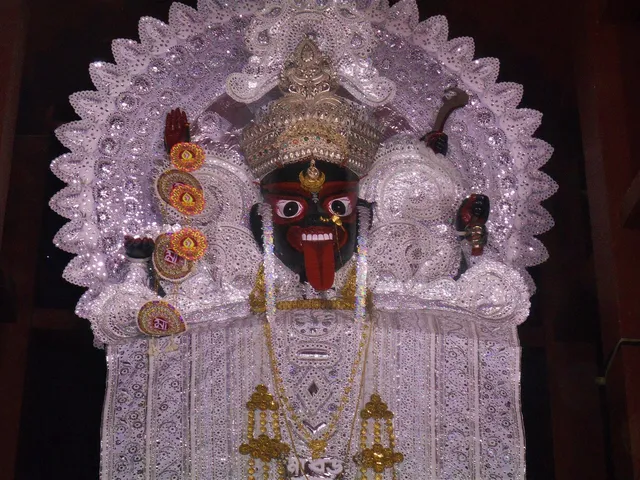
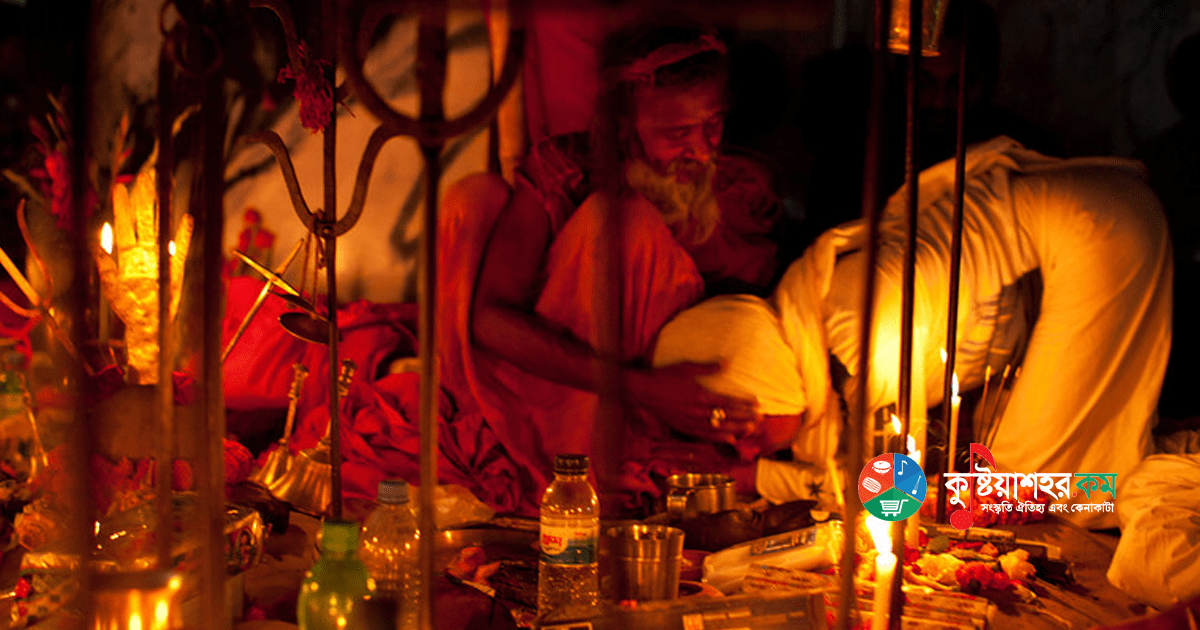
A scene from the Nabadwip Shakta Ras festival (photo: বাক্যবাগীশ / Wikimedia Commons, CC BY-SA 4.0)
3. The Rash festival and the century-old Rash Mela of Dublar Char
In Bangladesh the most traditional address of Rash Purnima is Dublar Char in the Sundarbans. Every year in the month of Kartik (November) this sea island is famous for the Rash Mela and sacred bathing—by popular account the fair is two hundred years old; however, it is known that in 1923 Haribhajan (1829–1923), a devotee-in-exile of Harichand Thakur, started this mela. In this three-day festival countless pilgrims come to bathe in the sea on the occasion of Rash Purnima; at sunrise devotees float fruit in the sea water, and bhajan-kirtan fills the surroundings to the rhythm of instruments. City-dwellers from far away and even foreign tourists join in spontaneously.
In recent years (2024–2026), however, the formal organisation of the mela has been suspended—national dailies reported even on 3 November 2026 under the headline "Rash Mela not being held at Dublar Char again this year." Still, the Rash festival and the gathering of devotees continue—the full account of this century-old tradition of Dublar Char is in our separate article.
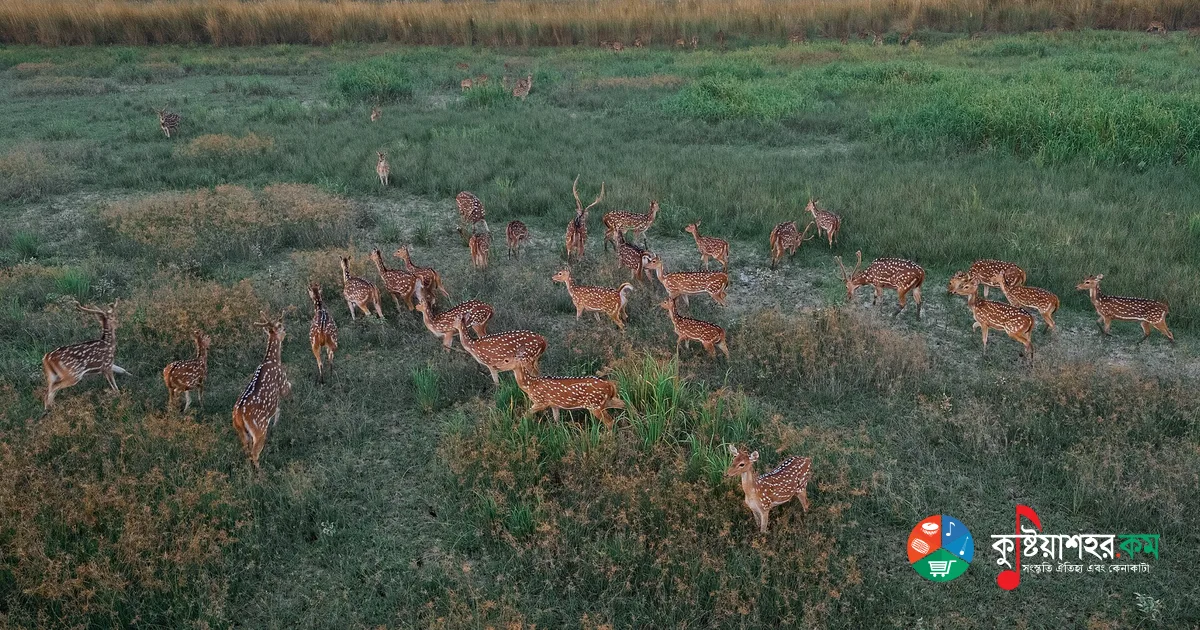
Scenery of the Sundarbans near Dublar Char (photo: Fuadctg009 / Wikimedia Commons, CC BY-SA 4.0)
4. Kuakata and other Rash observances of the country
Besides Dublar Char, another famous address of ras in Bangladesh is Kuakata in Patuakhali—here too, along the sea beach, an annual Rash festival is held; Bangladesh Sangbad Sangstha reported that the Kuakata Rash festival began on 4 November 2025. In temple courtyards across the country as well, raslila performances and lamp-lighting are organised on Rash Purnima.
5. From Rakher Upobash to Rash Purnima: one Kartik's tide of festivals
The month of Kartik is among the densest months in Bengal's festival calendar. On the Saturdays and Mondays of the month comes Rakher Upobash, through the whole month akashpradip and Kartik bratas, in between Nabanna—and at the end, Rash Purnima. In 2026 the sequence falls like this: Rakher Upobash on 3/7/10/14 November (Mondays and Saturdays), Nabanna on 16 November (Paila Agrahayan), Rash Purnima on 24 November. This single month ties Bengal's lamp tradition, agrarian festivals and bhakti heritage together in one thread.
6. Why Rash Purnima still matters
Rash Purnima holds three streams together: the scriptural heritage (the Bhagavata's sharad-rasa), folk art (raslila, jatra, Manipuri dance) and the festival of common life (the gatherings of Dublar Char and Kuakata). Even if the formal fair has stalled, the gathering of devotees and the heritage of dance and song survive—and the small lamp of the full-moon night remains the eternal memorial of this tradition.