বাংলা
 English
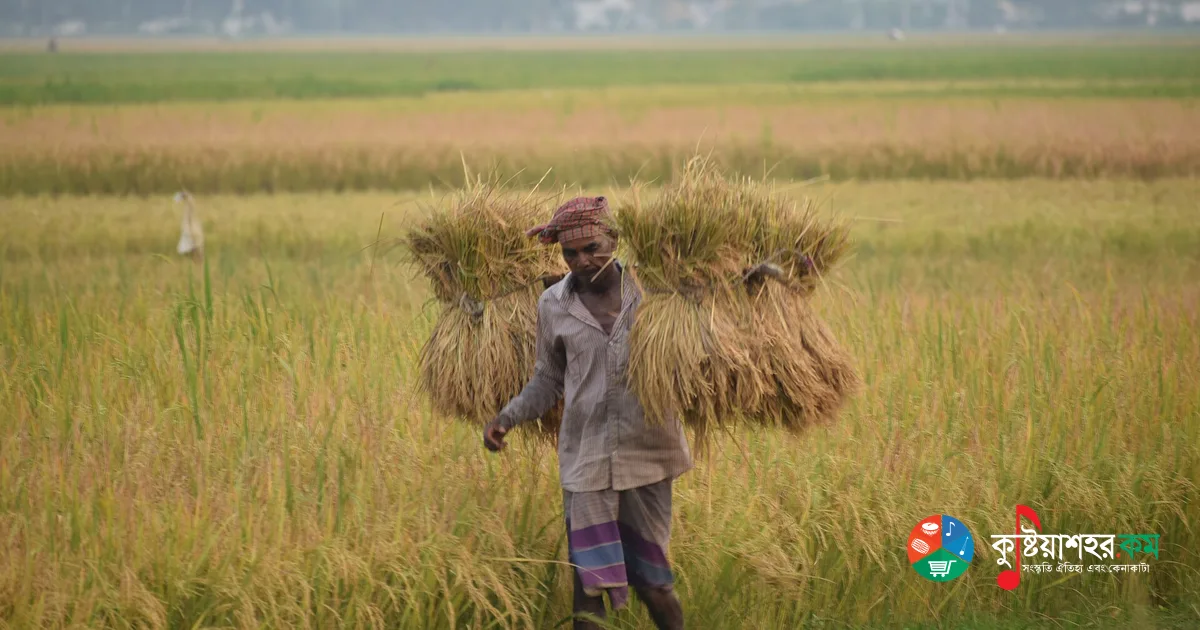
Just before winter arrives and the golden Aman rice begins to reach home across Bengal's fields, the first day of Agrahayan opens one of the Bengali people's oldest harvest festivals—Nabanna. New rice is cooked and offered first to the deities and ancestors, then eaten with new molasses; pitha and payesh are exchanged, and homes are decorated with alpona. Rooted in a rice-based agrarian civilisation, Nabanna is the most ancient expression of the Bengali gratitude for the harvest.
The word Nabanna simply means "new rice" (naba anan). According to Banglapedia, the national encyclopedia of Bangladesh, it is a grain-based folk festival celebrated in agrarian civilisations around the gathering of the principal crop. At its heart lay the desire for abundant harvest, rain, children and livestock—everything held together in one celebration.
In rice-farming Bengal, rice remains the staple food, and of the three seasonal rices it is the Aman crop of hemanta that turns Bengal's farmland golden for a season. The joy of the harvest coming home gave birth to Nabanna in rural Bengal—but it is far more than a feast: it is a meeting ground of rituals, beliefs and folk culture.
1. Hemanta season and the Aman rice: the background of Nabanna
In the Bengali almanac's cycle of six seasons, the months of Kartik and Agrahayan make up hemanta. The fog-veiled mornings of autumn grow thicker, the wind along the riverbanks turns dry, and vast paddy fields slowly turn from green to gold.
Banglapedia's entry on Nabanna notes that the festival was celebrated in the month of Agrahayan or Paush, after the Aman rice was cut in hemanta. For farming families the Aman crop was the main foundation of the year's food supply, so when the harvest reached home the celebration spread through the entire village.
An important tithi linked to Nabanna is Utthan Ekadashi—the eleventh day of the bright fortnight of the month of Kartik. Tradition holds that eating the new rice is permitted from this Ekadashi onward. Nabanna is therefore not merely a single-day festival; an almanac-based sequence of observance runs beneath it.
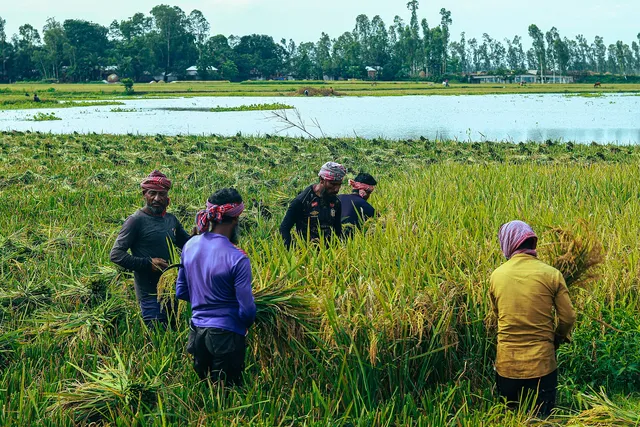
Farmers harvesting rice in a wetland paddy field (photo: A S M Jobaer / Wikimedia Commons, CC BY-SA 4.0)
2. The date of Nabanna: Paila Agrahayan
In rural Bengal the festival is generally observed on the first day of the month of Agrahayan—Paila Agrahayan. National newspapers have reported that Dhaka University's DUCSU announced celebrations of the day as the "adi nababarsha" (the first new year), reflecting how significant this date remains in Bengali culture.
According to the 2026 almanac, Paila Agrahayan falls on 16 November. Banglapedia's account also notes that in traditional practice the festival was observed in the month of Paush as well as Agrahayan—in other words, depending on when the harvest reached home, the custom varied from village to village.
3. The rituals of Nabanna: shradh, offerings and the new rice
The central ritual of Nabanna combined the religious and the familial. First, rice cooked from the new grain was offered as shradh to the ancestors. Then offerings were made to the deities, to the fire god Agni—even to the crow—and given to Brahmins and relatives; only afterwards did the family partake of the new rice together with new molasses.
The custom of offering to the crow deserves special mention: in Bengal's folk belief the crow is a symbol of the ancestors and of Sani, and the foremost guardian of the new crop. The rituals of Nabanna thus embraced not only people but nature and departed kin as well—a gratitude that is holistic.
4. Pitha, alpona and folk culture
Nabanna is as much a festival of taste and colour as it is of ritual. In Banglapedia's account the exchange of pitha and payesh was one of its principal elements—neighbours and relatives exchanged pitha made from the new rice, while courtyards and homes were decorated with alpona floor art.
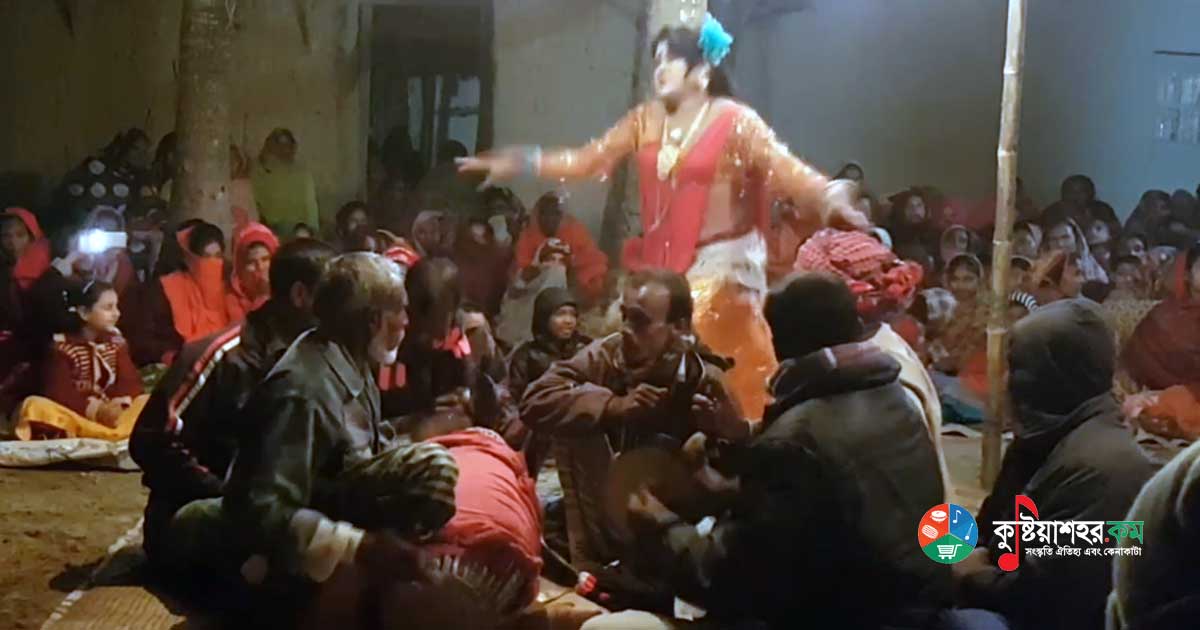
Culturally, the nights of Nabanna came alive with kirtan, pala gan and jari gan. The gatherings of these folk arts on village grounds were an inseparable part of the festival—where the joy of the harvest was sung.
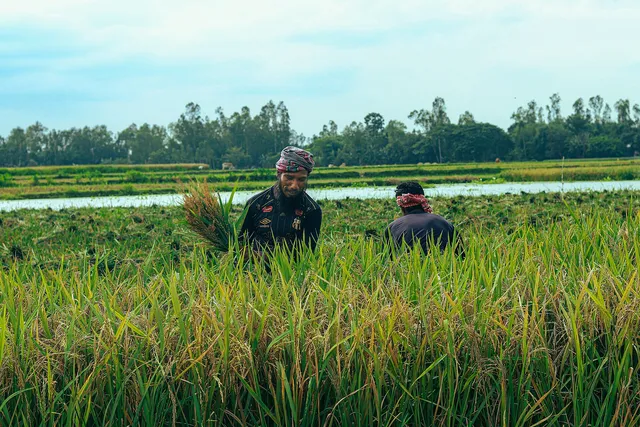
Paddy harvesting in the field (photo: A S M Jobaer / Wikimedia Commons, CC BY-SA 4.0)
5. The harvest festivals of indigenous communities
Nabanna is not the festival of the Bengali Hindu community alone—many of Bangladesh's indigenous communities keep their own harvest festivals as a parallel tradition. Banglapedia's account offers this picture:
Sohoray: the greatest festival of the Santals, celebrated in Paush-Magh with seven days of song and music.
Mailukma: the festival of the Ussui community welcoming Lakhsmi, the giver of the new rice.
Chamoinat: the festival of the Mro people, featuring a chicken sacrifice and a feast of the new rice.
Wangalla: the Garo festival of gratitude for the abundance of crops, rich in dance and song.
Together these festivals prove that when the harvest reaches home, every community of Bengal gives thanks in its own language and rites—and Nabanna is simply the best-known name of that shared joy.
6. Nabanna today: the national festival at Charukola
Over time Nabanna has grown from the village courtyard into a grand urban festival. The "national Nabanna festival" held every year on the grounds of the Faculty of Fine Arts (Charukala) at the University of Dhaka is now one of Bangladesh's most vibrant cultural events—the Bukultala area fills with colour and pitha fairs, and national newspapers regularly report on it.
Yet Banglapedia's caution remains important: many of Nabanna's rituals have now faded, with some observing the festival only in a shortened form. The detailed rites of shradh and offering are gone from many rural courtyards, but the joy of new rice, pitha and alpona survives—and in the cities it has taken on a grander form.
7. Why Nabanna still matters
Nabanna is not merely a religious or folk observance; it is the memory of an agrarian civilisation. In this rice-centred land, the joy of the harvest coming home is a foundational pillar of Bengali culture—whether in a village courtyard or on the grounds of Charukola in Dhaka.
In the river-wrapped villages of greater Kushtia too, the Aman crop reaches home in hemanta—when the silt-fed fields along the Gorai and Kopotakkho turn golden, the echo of this tradition can still be heard. Paila Agrahayan is therefore not just a date on the calendar: it is the annual remembrance of Bengal's agrarian civilisation.
Sources
- Banglapedia—Nabanna (entry by Mahmud Nasir Jahangiri)
- National press reports: "Charukolay jatiyo nabanna utsob", "Nogore nabanna" (bdnews24), "Bokultolay jomeche nabanna utsob" (Prothom Alo), "Poila Agrahayaney 'adi nababarsha' udyapon korbe DUCSU" (Prothom Alo)
- 2026 almanac date (1 Agrahayan = 16 November 2026) verified via drikpanchang.com