বাংলা
 English
Kartik, the seventh month of the Bengali calendar, means the farewell of autumn and the white arrival of Hemonto — mornings wet with night-jasmine and dew, golden Aman rice brought home, pots hung on date-palm trees, and the full moon of Kartik Purnima lighting the night sky. For the people of Kushtia the first day of this month carries a deeper meaning: on the first Kartik of 1297 BS (17 October 1890) Fakir Lalon Shah passed away at his akhra in Cheuriya, and from this very month the gachhis — the sap-tappers — of Mirpur, Daulatpur and Jagti get busy collecting date-palm sap. Calendar, nature, harvest, festivals and the Kushtia connection — here is the full picture of the month of Kartik.
Kartik in the Calendar
Kartik is the seventh month of the Bengali calendar. The name derives from the Krittika constellation — while popular usage links it to the god Kartika, the constellation itself is the documented source of the name. Under Bangladesh's revised official calendar (in effect since 2019) the month begins on 17 October and, with its fixed length of 30 days, ends on 15 November — meaning the Kartik of 1433 BS is running exactly through these days now. The Kartika month of the Hindu lunar calendar corresponds to it but differs in reckoning and start date: there it is the eighth month, drifting with lunar tithis, and West Bengal's lunisolar calendar keeps Kartik at 29–30 floating days. In Bangladesh the count is fixed — 30 days.
Farewell to Sharot, the Arrival of Hemonto
In the reckoning of the six seasons, Hemonto is the fourth — "হেমন্ত হলো ষড়ঋতুর চতুর্থ ঋতু, যা কার্তিক ও অগ্রহায়ণ মাসের সমন্বয়ে গঠিত" (Hemonto is made of Kartik and Agrahayan). Banglapedia describes it as really a transitional phase between autumn and winter, when the day–night temperature contrast leaves the fields soaked in heavy dew at dawn. Kartik's morning therefore belongs to the shiuli — flowers that bloom at night and fall by dawn, their scent mixed with dew-heavy grass. The flower list of this season includes gandharaj and kamini beside it. Rabindranath, in his poem 'Hemonto' from Banobani, addressed the season in a feminine form:
"হে হেমন্তলক্ষ্মী, তব চক্ষু কেন রুক্ষ চুলে ঢাকা,"
And in Bengali song, Hemonto immediately recalls "ধনধান্য পুষ্পভরা" — worth remembering that this famous anthem is not by Rabindranath but by Dwijendralal Ray (from the play 'Shahjahan', 1909). Sufia Kamal's Hemonto verse, too, brings the season across the horizon as a letter of yellow marigolds in an envelope of green leaves.
The Month of Bringing the Harvest Home
Kartik may be called Hemonto's first chapter — the month of filling the granary. Rice ripens in this month, and the Aman harvest is cut through the Hemonto season, across Kartik and Agrahayan. The festival of the first cooking of new rice, Nobanno, comes only in the next month: by tradition Nobanno falls in Agrahayan after the Aman ripens, and Dhaka's national Nobanno festival (held since 1998) takes place on the first of Agrahayan. Kartik, then, is the month of preparation before Nobanno — the sickle in the field, the threshing floor, the rice heaped in the granary.
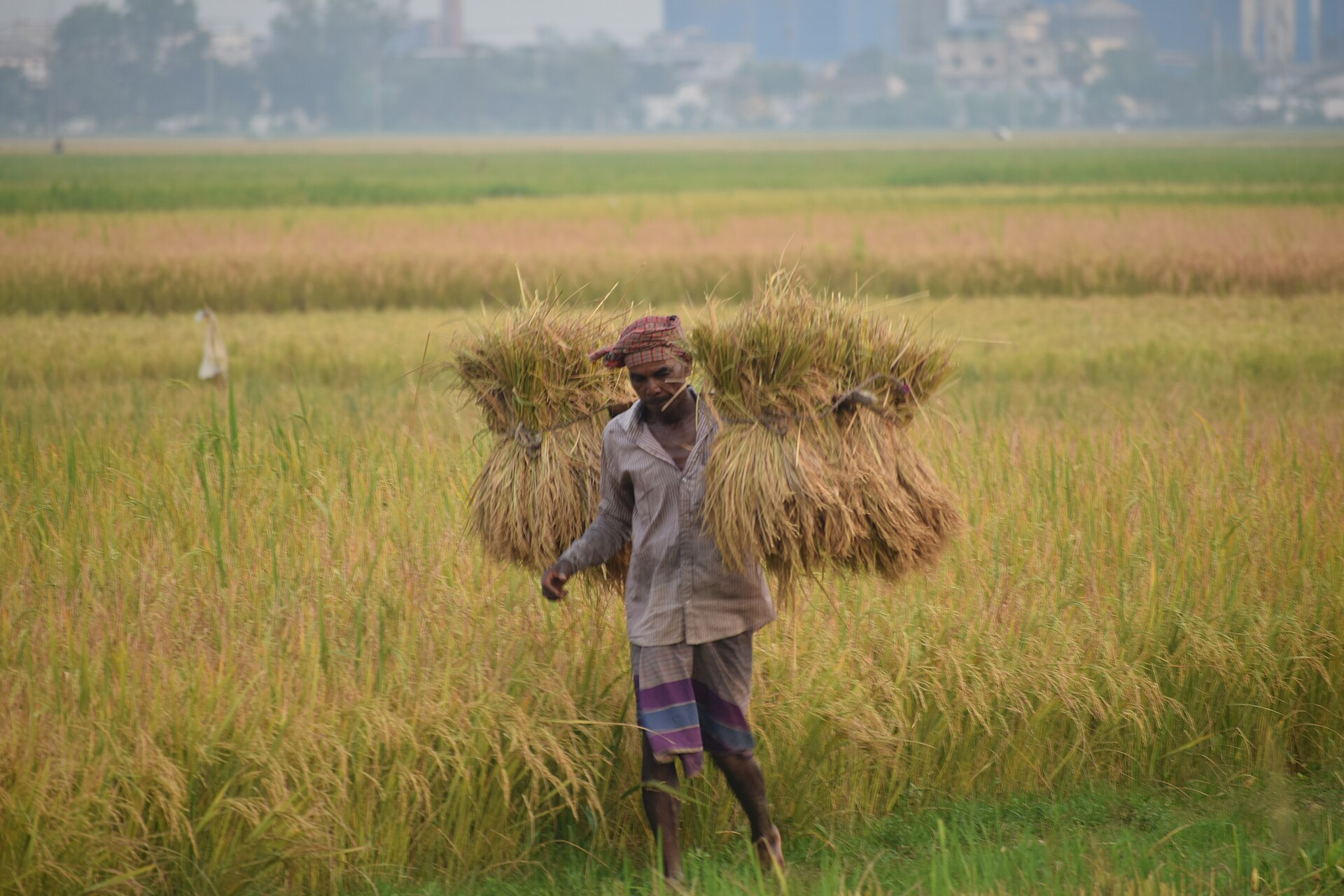
Bringing the harvest home in the Hemonto fields (photo: Zaheed Sarwer Khan / Wikimedia Commons, CC BY 4.0)
Date-palm Sap: The Gachhi Season of Kushtia
Kartik's night means pots on the trees — the season of date-palm sap. By the traditional count, sap collection runs from Agrahayan to Falgun; but the gachhis of Kushtia climb even earlier — as a recent report put it, "বাংলা কার্তিক মাসের শুরু থেকেই খেজুরের রস সংগ্রহের কাজ পুরোদমে শুরু হয়" (from the beginning of the month of Kartik, date-palm sap collection is in full swing). The tappers of Mirpur, of Ailchara-Bagdanga in Sadar, of Daulatpur and of Jagti in the district spend their nights collecting the sap. The neighbouring district of Chuadanga gives a sense of this sap economy: last season its date-palm villages sold nearly 750 million taka worth of sap and gur. In the words of the locals themselves — "খেজুরের রস শুধু একটি ঐতিহ্য নয়, এটি শীতকালীন আনন্দের প্রতীক" (date-palm sap is not merely a tradition; it is the emblem of winter's joy).
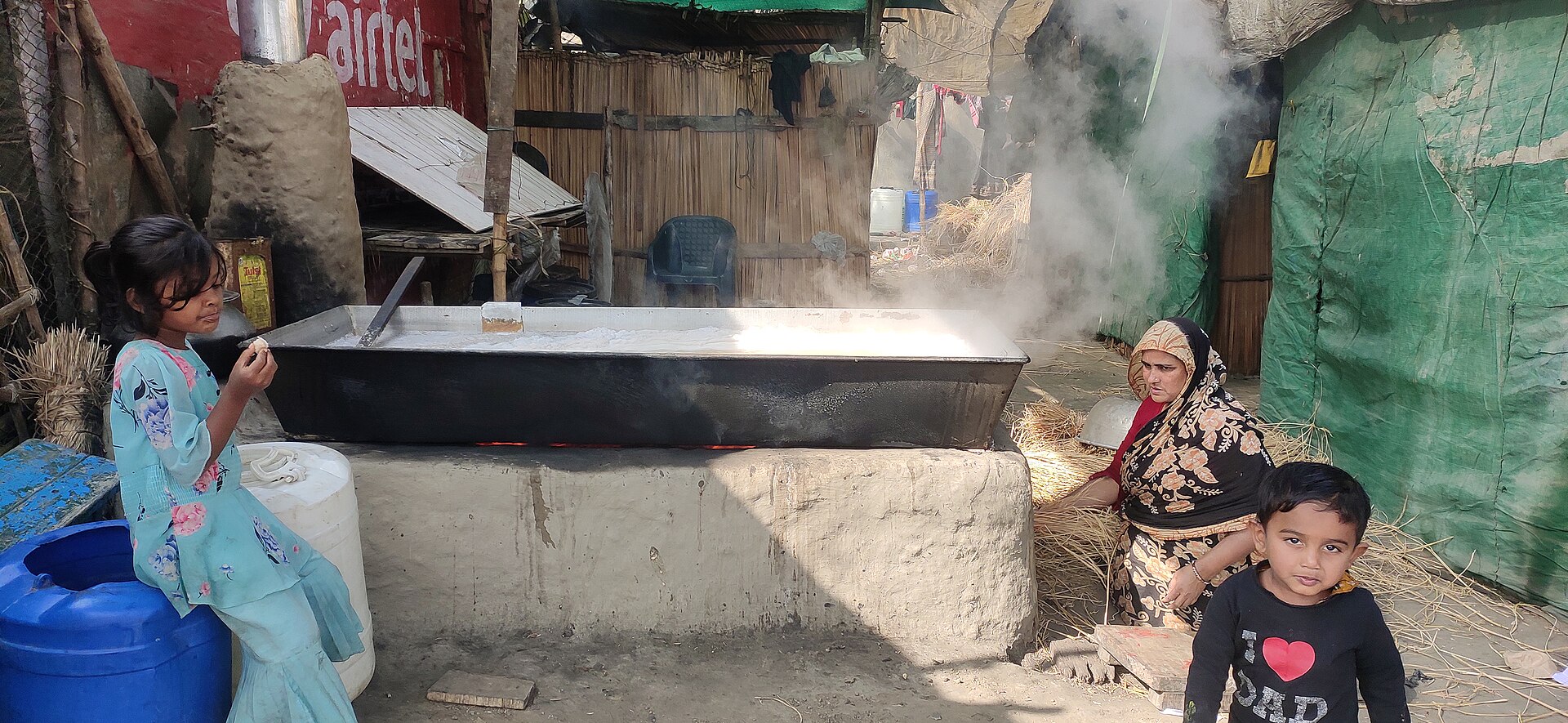
Boiling sap into gur, Gangasagar (photo: Goutam1962 / Wikimedia Commons, CC BY-SA 4.0)
Bhayphonta, Jagaddhatri and Kartik Purnima
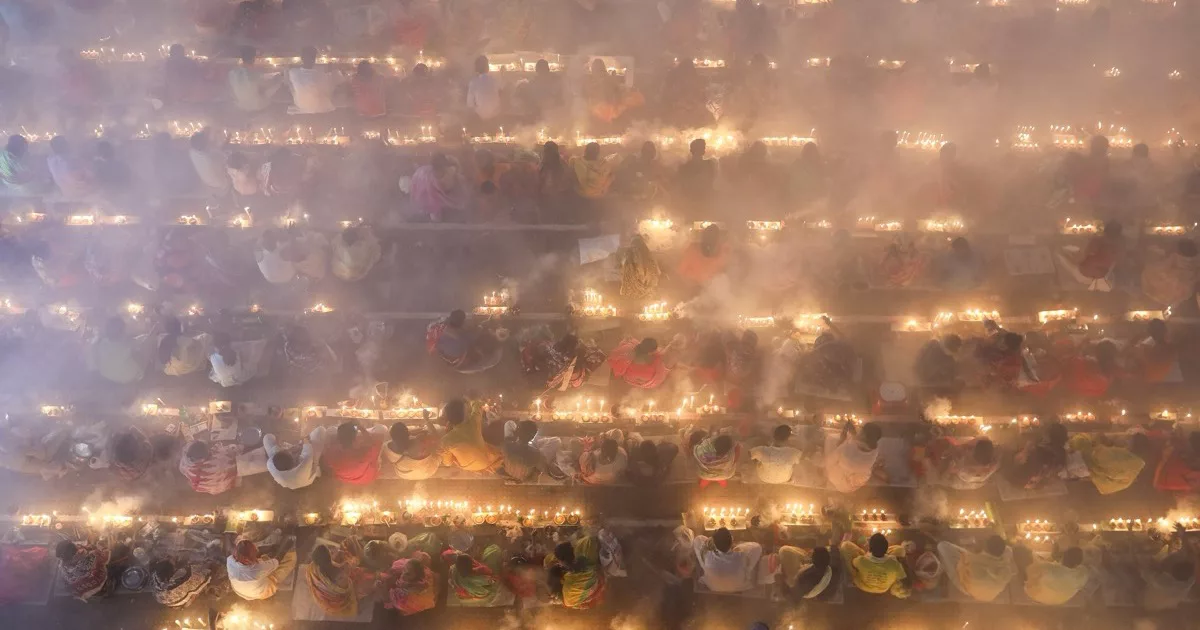
Kartik's tithi-list is crowded. The month opens with Bhayphonta — observed, as Banglapedia's entry records, "on the second tithi of the bright half of Kartik," that is, on the day after Kali Puja, when sisters mark their brothers' foreheads and renew the bond of affection; the festival is celebrated with much splendour in both Bangladeshs. Exactly a month after Durga Puja, on the ninth of the bright half, comes Jagaddhatri Puja — a worship largely peculiar to Bengal, where the sleeping goddess is decked in finery. At mid-month falls Kartik Purnima: the day of the divine awakening (debo-utthapon), of deep-daan — lighting 360 to 720 lamps against the dark night — and the close of the Tulsi wedding, whose rituals run from Probodhoni Ekadashi to this full moon. And on the same Rash Purnima the Manipuri villages come alive: "রাসপূর্ণিমা উৎসব বাংলাদেশের মণিপুরী আদিবাসীদের সবচেয়ে বড় ধর্মীয় ও সাংস্কৃতিক ঐতিহ্যবাহী উৎসব" (the Rash Purnima festival is the largest religious and cultural heritage festival of Bangladesh's Manipuri community) — with Maharas, Boshonto Rash, Kunjorash and more, tied to the Rash mela.
Kartik in Kushtia: From Cheuriya to Shilaidah
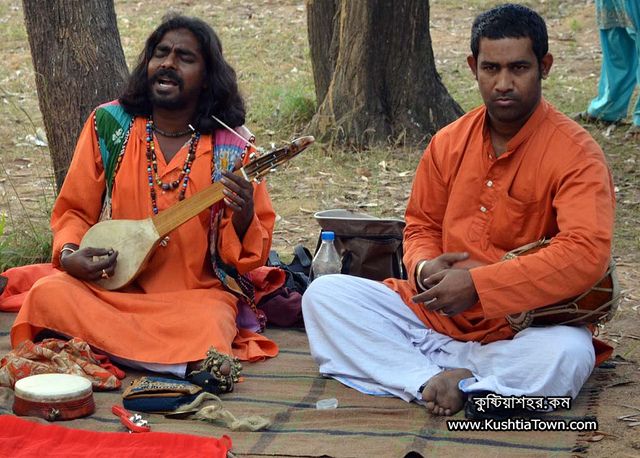
For Kushtia, the first day of Kartik is written in history: Fakir Lalon Shah passed into tirodhan on the first Kartik of 1297 BS (17 October 1890), at his akhra in Cheuriya. Since then the Lalon Tirodhan Day observance begins every year on the first of Kartik — last October (17–19 October) the riverside of the Kaliganga hosted the three-day 136th tirodhan festival, and in 2025 the day was classified as a government category-'Ka' observance. On the tirodhan day the akhra courtyard hosts the 'Sadhu's market' — Bauls gathering for sadhu-sanga, self-purification and remembrance of the guru.
And Shilaidah's Kuthibari holds a quieter Kartik link: Rabindranath Tagore first came to Shilaidah in November 1889 — that is, within the Bengali month of Kartik; between 1891 and 1901 he then spent more than a decade here at work and in verse. The riversides of this region wear kash-flowers in late autumn too — as a Padma-bank travel account records, "শরতে নদীতীরে ও নদীর মাঝে জেগে থাকা চরে কাঁশফুল ফোটে" (in autumn kash blooms on the banks and on the risen chars of the river); the Gorai's banks are no exception. In the previous installment of this series we painted the month of October — Kartik is the next page of the same story.
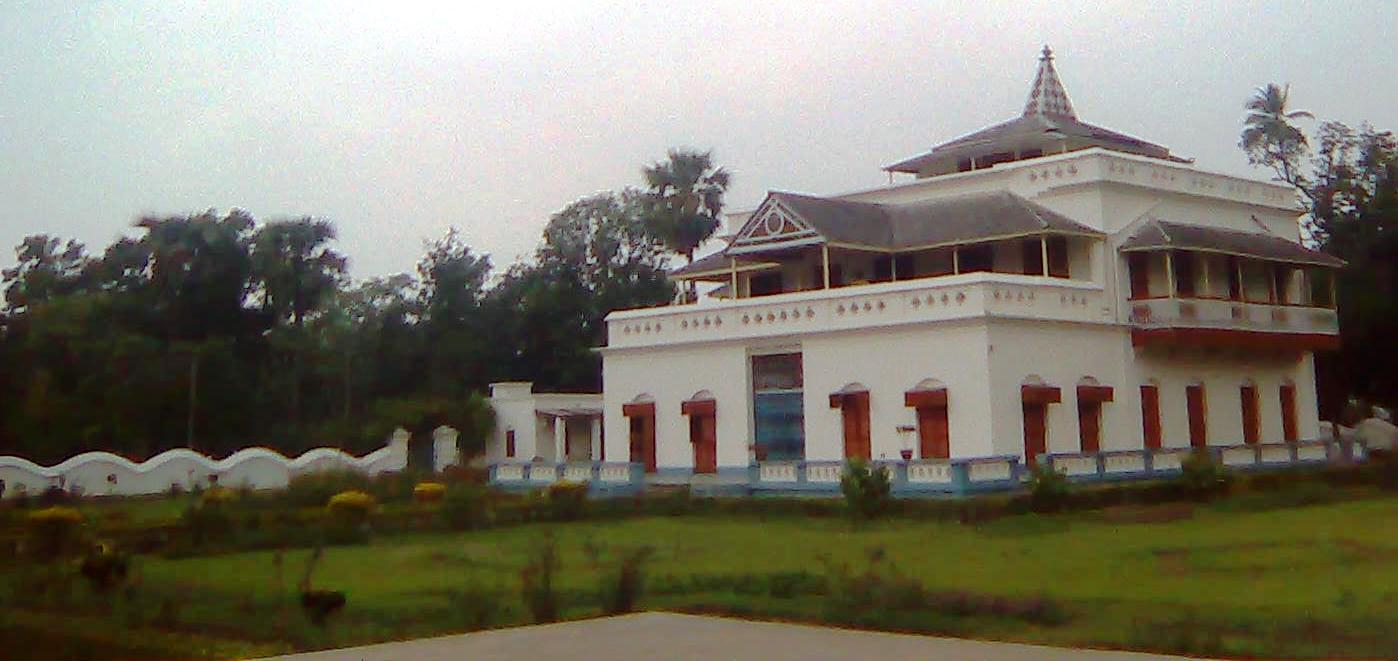
Shilaidah Kuthibari — Tagore first came here in November 1889, within Kartik (photo: Ferdous / Wikimedia Commons, CC BY-SA 4.0)
Conclusion
Kartik is that breath of the Bengali year where the closing note of autumn's festivals and winter's first dew fall together. The threshing of the harvest, the pots of sap on the trees, the mark of Bhayphonta, the Rash of the full moon and the Baul gathering at Cheuriya — on the Kushtia landscape every layer of this month grows a little denser. Some call Hemonto, the fourth of the six seasons, a fading season; standing in a Kartik dawn amid falling shiuli, one does not feel it — the dew is not yet done.
Sources and Further Reading
- Bangla Wikipedia — কার্তিক: bn.wikipedia.org
- Bangla Wikipedia — হেমন্ত: bn.wikipedia.org
- Banglapedia (English) — Seasons: en.banglapedia.org
- Bangla Wikipedia — শিউলি: bn.wikipedia.org
- Bangla Wikipedia — ভাইফোঁটা: bn.wikipedia.org
- Bangla Wikipedia — জগদ্ধাত্রী পূজা: bn.wikipedia.org
- Bangla Wikipedia — কার্তিক পূর্ণিমা: bn.wikipedia.org
- Bangla Wikipedia — রাসনৃত্য ও রাসমেলা: bn.wikipedia.org
- Bangla Wikipedia — তুলসী বিবাহ: bn.wikipedia.org
- Bangla Wikipedia — নবান্ন: bn.wikipedia.org
- Bangla Wikipedia — শিলাইদহ কুঠিবাড়ি: bn.wikipedia.org
- BSS — Lalon tirodhan (first Kartik of 1297 BS; 136th festival): bssnews.net
- Bivinno News 24 — Tirodhan Day classified category-'Ka' (2025): bvnews24.com
- Daily Sangram — "Kartik month start: sap collection in full swing" (October 2026): dailysangram.com
- BSS — Chuadanga's Tk 75 crore sap-gur trade (October 2026): bssnews.net
- Bangla Tribune — kash flowers on the Padma banks: banglatribune.com
- Banobani, 'Hemonto' (Rabindra Rachanabali): bn.wikisource.org
- Bangla Wikipedia — ধনধান্য পুষ্প ভরা (Dwijendralal Ray): bn.wikipedia.org