বাংলা
 English
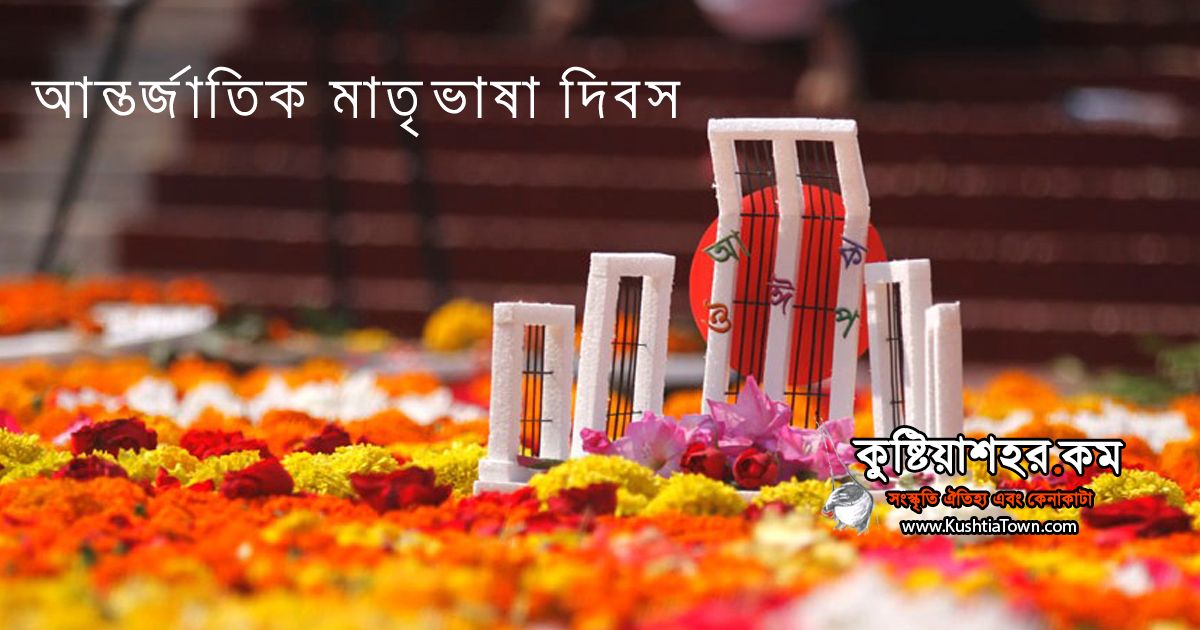
On this day in 1952 (8 Falgun, 1359), several young men were martyred in the police firing on students demanding that Bengali be made one of the state languages of Pakistan. 21 February is a glorious day for the people of Bangladesh. It is well known as Shaheed Dibosh (Martyrs' Day) and International Mother Language Day. It stands marked as a poignant and glorious memorial to the Bengali people's language movement.
That is why this day is observed as Shaheed Dibosh. Two Bengalis living in Vancouver, Canada - Rafiqul Islam and Abdus Salam - submitted an application to the UN Secretary-General Kofi Annan in 1998, as the original initiators, seeking the declaration of 21 February as International Mother Language Day. At the UNESCO General Conference held on 17 November 1999, 21 February was declared International Mother Language Day, and since 21 February 2000 the day has been duly observed among the member states of the United Nations.
At the 65th session of the United Nations General Assembly on Thursday, 21 October 2010, a proposal to the effect that the UN would henceforth observe 21 February every year as International Mother Language Day was passed unanimously. Bangladesh tabled the proposal for observing International Mother Language Day at the Assembly's 65th session. In May, the proposal was passed unanimously in the UN's 113-member Committee on Information.
The language-conscious awakening that arose out of the Bengalis' self-searching over the place of the Bengali language in Bengali society - following that very thread, the language movement began in Dhaka, the capital of then East Bengal, in November-December 1948. In March 1948 it spread beyond the borders as a movement, and its final manifestation came on 21 February 1952.
Back then, the students of Dhaka University defied Section 144 and took to the streets, and the police opened fire on them. In this, Abu Barkat, Abdul Jabbar, Abdus Salam and several other young students were killed. In protest at this incident, the whole of Dhaka city gathered at the Dhaka Medical College hostel. The following day, 22 February, ordinary people came out onto the streets again in defiance of all manner of persecution, beside the students. They took part in a funeral prayer held in front of the Dhaka Medical College hostel for the martyrs. To immortalize the memory of the language martyrs, a memorial was raised overnight on 23 February in front of the Dhaka Medical College hostel, which the government demolished on 26 February. Through this incident of 21 February, the language movement grew more intense. With the United Front's victory in the provincial assembly elections, Bengali was recognized as one of the state languages of Pakistan at the session of the constituent assembly held in May 1954.
Since then this day has been observed every year as a national 'day of mourning'. Today, at one minute past twelve on the night of 21 February around the Dhaka University campus, first the President and then, in succession, the Prime Minister, members of the cabinet, the Vice-Chancellor of Dhaka University, teachers, staff, members of the diplomatic corps in Dhaka, political leaders, heads of various institutions and organizations, and people from all walks of life come to the Central Shaheed Minar and pay solemn homage to the martyrs. At such a moment: '21 February, dyed with my brother's blood - can I ever forget it, while the mournful tune of the song keeps playing?'
After Bangladesh became independent, 21 February was declared a public holiday by the government. On this day, in remembrance of Martyrs' Day, radio, television and cultural organizations arrange various programmes. The country's newspapers also publish special supplements.
The awakening that arose on 21 February 1952, for which the Bengalis established their mother tongue on the altar of honour by shedding blood, has today crossed the country's borders and won recognition from the international community.