বাংলা
 English
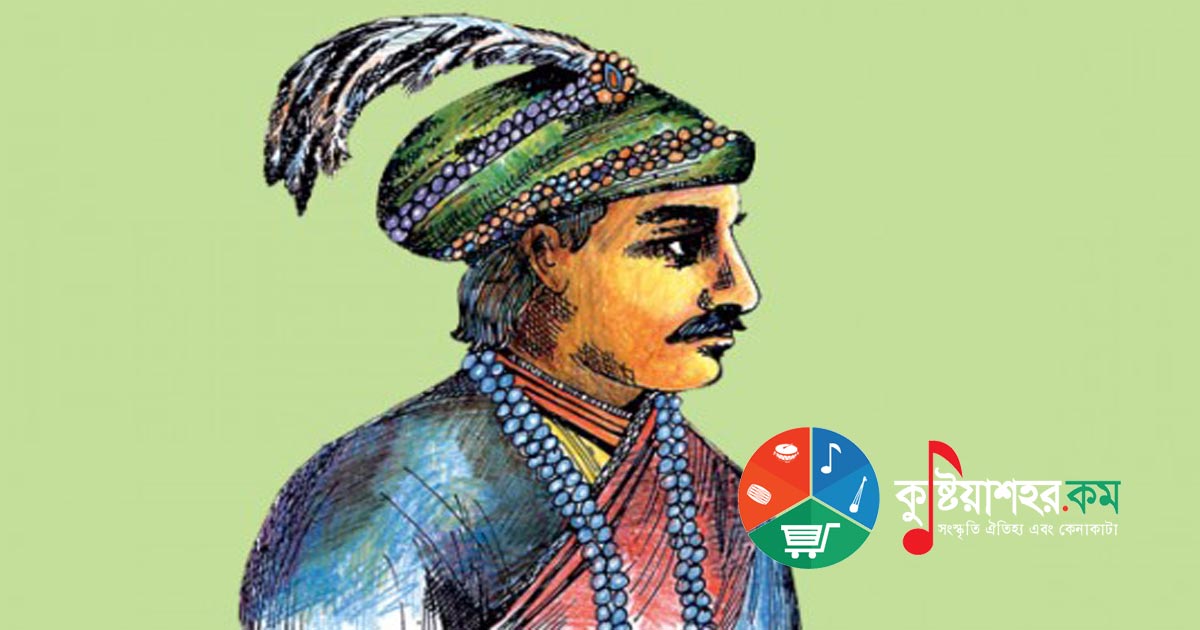
In the mystic literary tradition, Lalon Shah is extremely popular. Among the mystic poets who came after Lalon, the name of Panju Shah is particularly noteworthy. Lalon Shah's blessings and recognition made Panju known in the community of mystic sadhaks and kept him engaged for a long time as the director of this land's circle of sadhaks. Khondkar Rafiuddin's remarks on this matter are especially valuable. He said: "Among the Sufi fakirs of Bengal, Lalon's place is the highest. But after Lalon's passing, he was the one who filled Lalon's void among the fakir circles of all of Bengal." Panju Shah was born with the ability to fill the void left by the passing of the extraordinarily talented Lalon Shah.
Considering this statement, there remains no room for doubt about Panju's talent. Indeed, Panju Shah fully realized the dignity of a worthy successor. That is why he too, as a follower of Lalon's spiritual lineage, devoted himself to the practice of poetry. As a result, Panju's poetic fame and mystic spiritual pursuit exerted a special influence in the Bengal of his time. Thus we see that this sadhak, "the much younger contemporary of Lalon Shah," as the initiator of a distinct school and a special "poetry-music" group, remained present in an exceptional field of this land's literature and culture from the latter half of the nineteenth century through the first half of the twentieth. Considering all these aspects, Panju's life history is especially significant.
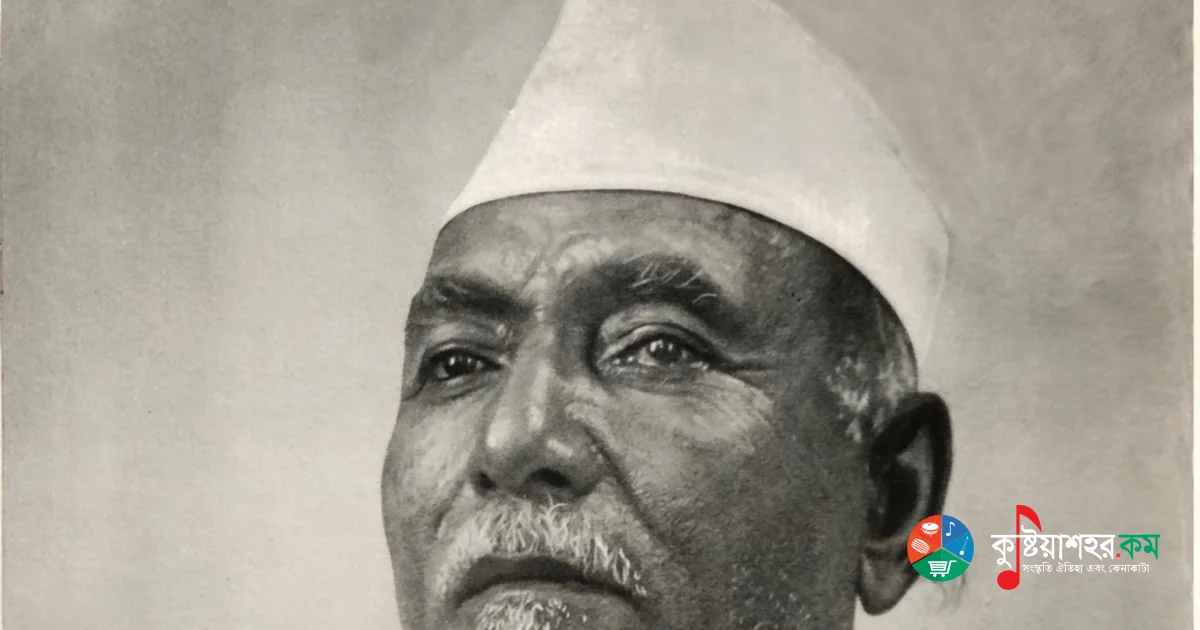
The poet Panju Shah was born on the 28th of Sraban of 1258 of the Bengali calendar (1851 CE) in Shailkupa village of Jhenaidah district. At that time the poet's father Khademali Khondkar and the poet's mother Johora Begum lived in their own zamindar mansion in Shailkupa itself.
Khademali Khondkar was the father of five children. They were, in order: Shaharan Nesha, Tahiran Nesha, Panju Khondkar, Wasimuddin Khondkar and Aimani Nesha. Panju was his father's third child.
When Khademali Khondkar left Shailkupa and set out toward Harishpur, his eldest daughter was at her in-laws' home, his middle daughter had passed away, and the youngest daughter had not yet been born. Thus, in that twist of fate, the boy Panju and the child Wasim were companions on their father's journey. After the family settled in Harishpur village, Panju's sister Aymani was born.
Panju Shah's life truly began at Harishpur. "My dwelling place is Harishpur village" — by saying this the poet acknowledged the truth of this fact. Indeed, he grew up not as a pampered son of a zamindar but as the child of a hard-striving mollah. He had no opportunity to study at any school. His childhood passed with the learning of Arabic and Persian under the supervision of a home tutor.
Panju Shah's father was a devout Muslim. He had extraordinary reverence for religious rituals. Khondkar Rafiuddin said: "Fakir Panju Shah's father was a staunch Muslim. Devoted to the scriptural rituals, he opposed learning the Bengali language." Under his father's influence, in childhood Panju Shah could learn nothing beyond Arabic and Persian — neither Bengali nor English. But as he grew older he realized that without mastering the mother tongue well, the full flowering of thought was not possible. Consequently, "at the age of sixteen he secretly learned Bengali in Harishpur under the supervision of Mohor Ali Bishwas, a resident of Harishpur."
Here ends Panju Shah's irregular student life. Quite a bit of responsibility for the family fell upon him. To help his aging father, he was compelled to devote himself to material affairs.
At the age of twenty-four he married Chhandan Nesha, daughter of Abdur Rahman Khondkar, a resident of Ailhas-Lakshipur in Chuadanga district. This pious and virtuous life companion inspired Panju in many ways.
Two years after the marriage, his first child Shamsuddin was born. In the following years his two daughters Kalimon Nesha and Chaleha Khatun were born.
At the age of twenty-seven, Panju Shah lost his father. From then on the full responsibility of the family rested on his shoulders. Dutiful Panju never shirked that responsibility. Indeed, he never neglected any material task. His particular aim was to ensure the comfort and well-being of everyone in the family. At this time, leaving the ancestral home to his younger brother Wasimuddin Khondkar, Panju Shah purchased seven bighas of property and built a new residence. In addition, he bought twenty-five bighas of farmland in his own name and tried to increase the family's prosperity.
From adolescence Panju Shah had a special fondness for mysticism. But out of fear of his orthodox father, he did not openly join any fakiri gathering during his father's lifetime. After his father's passing, his free movement to fakiri gatherings began. At this time he received initiation from a spiritual sadhak named Hirajtullah Khondkar. The awakening of mystic consciousness in Panju's mind, his guru, his initiation and such matters have been discussed separately. So further elaboration here is unnecessary.
In social life too, Panju Shah was extremely amiable and popular. He greatly respected the esteemed persons of society, sat in court with them and sought their advice on the various problems of society. Hospitality was a special trait of his character. He never sent a seeker away empty-handed. Blind, ailing, deaf, mute and other beggars always received alms from him.
At the age of forty-five, Panju Shah accepted the kherka (fakir's garb). From then on began his full sadhak life. Attaining an elevated consciousness, he arrived at the turiya path of spiritual practice. In hope of attaining spiritual knowledge, many people became his disciples. At this time the need arose for another life companion to oversee the akhra. Then he took Pachi Nesha, daughter of Afiluddin Pramanik, a resident of Barulia in Kumarkhali upazila of Kushtia district, as his second wife. He gave both wives equal status. He affectionately called his first wife Chhandan Nesha "Rajani" and lovingly called his second wife Pachi Nesha "Priyoshi".
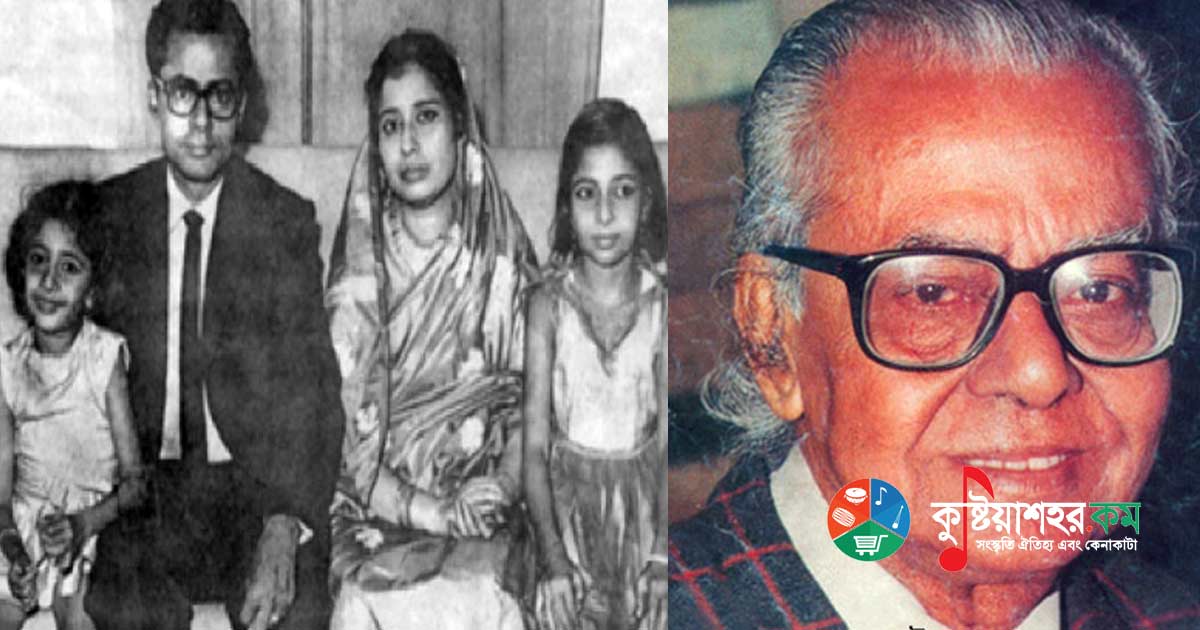
Pachi Nesha gave birth to three sons and one daughter. They were, in order: Khondkar Shafiuddin, Jaytun Nesha, Khondkar Rafiuddin and Khondkar Raichuddin. Of Chhandan Nesha's children — Khondkar Shamsuddin, Kalimon Nesha and Chaleha Khatun — mention has already been made. Among Panju's children, only Raichuddin is still alive. Shamsuddin, Shafiuddin, Rafiuddin and Jaytun Nesha have left this world.
In his personal life too, Panju Shah was extremely simple and free of luxury. He lived on plain rice and lentils. He ate fish but did not eat meat. Following his example, many of his disciples abstained from meat. However, there is no record of his ever issuing any prohibition on this matter.
Moreover, he never considered meat inedible. His mother, it is said, was very fond of meat. For his mother's meals he would have chicken cooked and brought from a neighboring house in the area, keep it by his mother's bedside around the clock, and feed her the meat whenever she asked for it.
A spontaneous poetic life was joined to Panju Shah's real life. The spiritual knowledge stored in his heart blossomed in his poems and songs. Mystic spiritual pursuit and natural poetry took a unique form in his verse and music. But no serious effort has been made to evaluate this literary achievement. Dr. Asitkumar Bandyopadhyay has rightly said: "We are as curious about Lalon Fakir's poetry and metaphysics as we are not curious about Panju Shah. It needs to be proclaimed today that Panju Shah was a pioneering sadhak of the spiritual path and a natural poet." Indeed, it is through the dissemination of the poet's works that the course of his poetic practice can be understood. The same is true in Panju Shah's case.
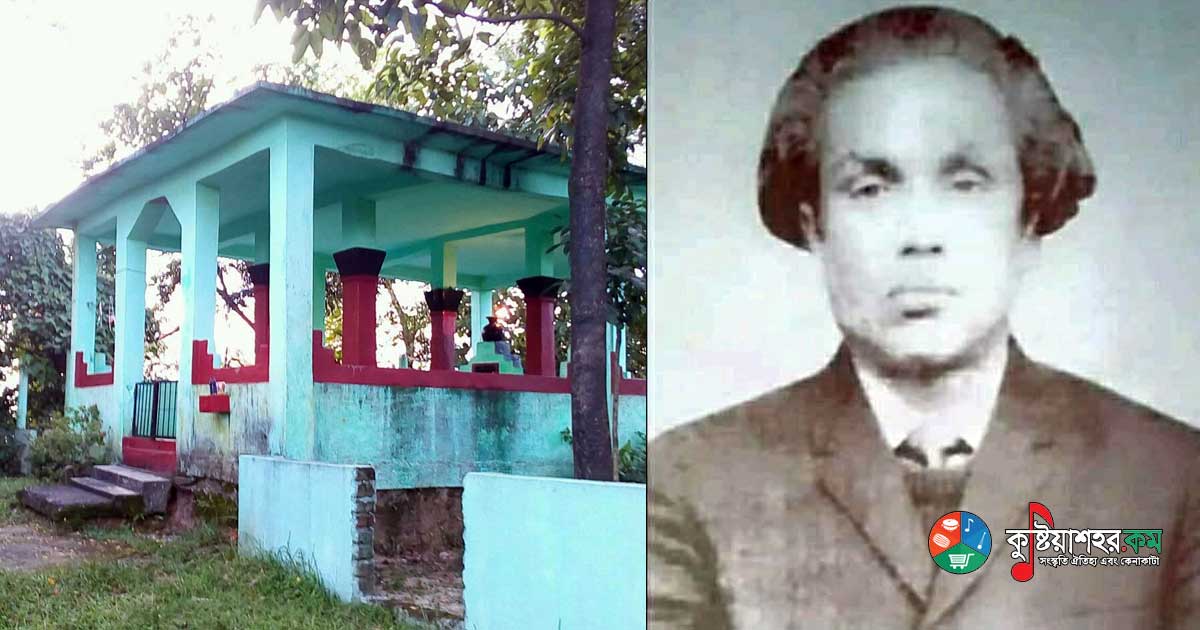
This renowned sadhak-poet left this world on the 28th of Sraban of 1321 of the Bengali calendar (1914 CE) at the age of 63. He lies buried in the courtyard of his akhra residence at Harishpur. His two wives lie at his two sides. Through the efforts of his disciples, a permanent memorial monument has been built over the mazar.
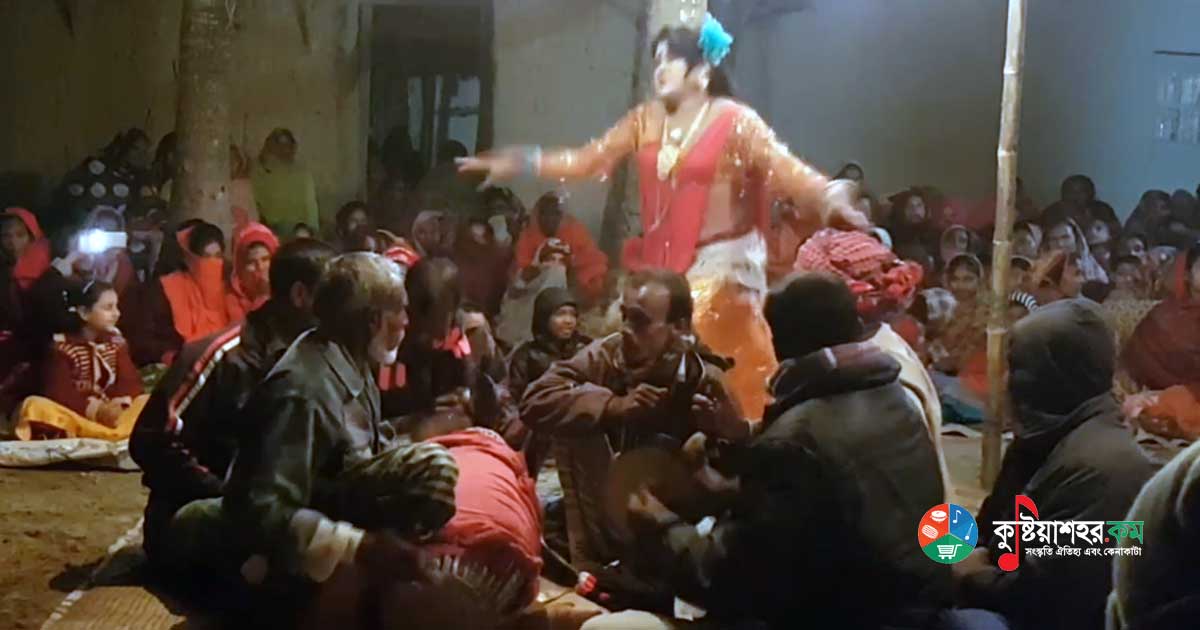
It is worth noting that Panju Shah and his two wives lie on the western side of the grave. It is said that at the poet's own final request they were buried in this way. Many people come from home and abroad to see this exceptional mazar. The devotees hold mystic literature conferences and commemorations of his memory here three times a year.
- Modernity in Panju's Writings
- Panju Shah's Contributions
- Panju Shah - Development of Spiritual Thought
- A Brief History of Panju Shah's Ancestors
- Mystic Poet Panju Shah: Life and Philosophy