বাংলা
 English
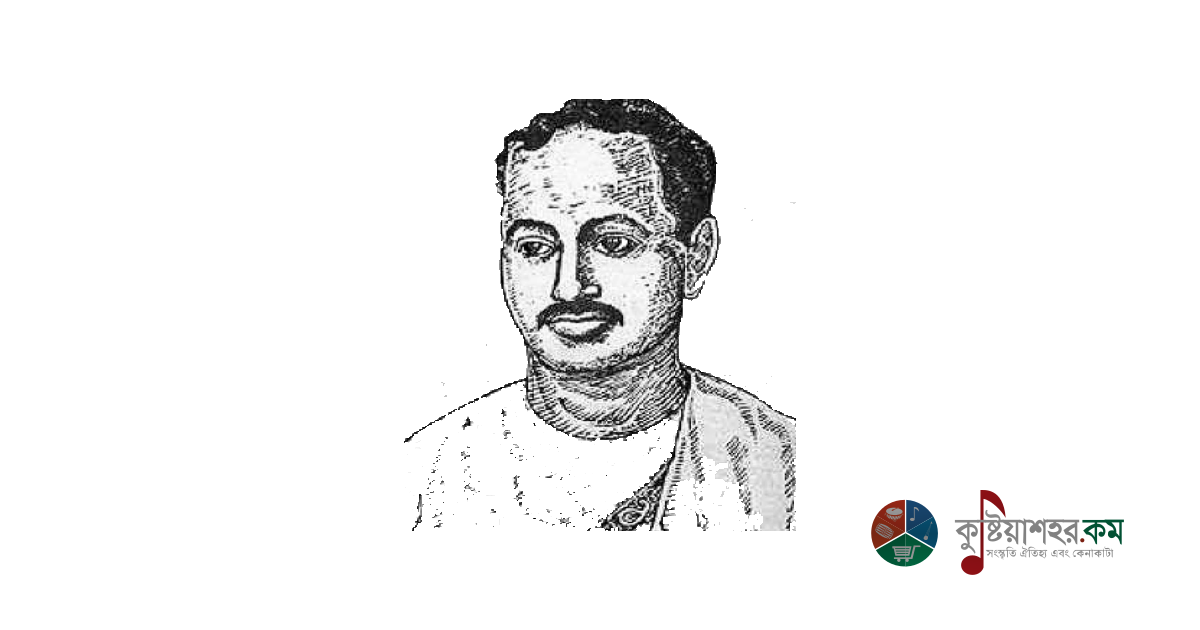
Dinabandhu Mitra - given the name Gandharva Narayan Mitra by his parents (10 April 1830 - 1 November 1873) - was one of the greatest playwrights of nineteenth-century Bengali drama. A contemporary of Michael Madhusudan Datta, the introducer of the modern dramatic tradition of Bengal, Dinabandhu Mitra, however, did not follow the mythological or historical dramatic path charted by Michael, but concentrated on realistic social drama. In this tradition he became a model for the playwrights of later times.
Dinabandhu Mitra's first play Nil Darpan was published in 1860 from Dhaka. Then in 1863 his second play Nabin Tapasvini was published. He dedicated this play to Bankimchandra Chattopadhyay. Dinabandhu Mitra's two finest farces are Sadhabar Ekadashi and Biye Pagla Buro. The farce 'Sadhabar Ekadashi' was written mocking the drinking and consorting with courtesans of the newly English-educated young men. In 1872 another of his farces, Jamai Barik, was published. In 1873 his last play Kamale Kamini was published. Besides plays, Dinabandhu also wrote two books of poetry - Dwadash Kabita (1872) and Suradhuni Kabya (first part - 1871 and second part - 1876).
Birth and Family:-
Dinabandhu Mitra was born in Chouberia in the district of North 24 Parganas. At the time Dinabandhu Mitra was born in Chouberia village of North 24 Parganas district, this place was not part of North 24 Parganas district; it was part of Nadia district. This Chouberia village was surrounded by rivers on all sides, hence the name of the place Chouberia. His parents named him Gandharva Narayan Mitra. In his parents' minds was the dream that this man would one day accomplish something impossible for these destitute village people, for the people of this Bengal. His father was Kalachand Mitra. Born into a poor family, Dinabandhu's early education was at the village pathshala. After studying there for some days, his father appointed him to work as a serestadar in the zamindar's office.
Student Life:-
Dinabandhu Mitra was eager for learning. So he fled to Calcutta and, washing dishes at his uncle's house, continued his studies. During this period he assumed the name Dinabandhu and began studying at James Long's free school. Later, passing the school final examination from Colootola Branch School (now Hare School) in 1850 and receiving a scholarship, he was admitted to Hindu College (now Presidency College). In 1851 he again received a scholarship in the higher examination, and in 1852 received a senior scholarship from the third class. In every examination he held the highest place in Bengali language and literature. Dinabandhu then probably taught somewhere, because in 1853 he passed the Teachership Examination. He passed all the college examinations with distinction in 1854.
Career:-
Dinabandhu Mitra was appointed postmaster in Patna in 1855 at a salary of 150 rupees. Gradually he was promoted, and he was appointed Superintendent Postmaster in the Orissa, Nadia and Dhaka divisions, and later in Calcutta. During the Lushai War he was sent to Cachar on postal service. At this time, pleased with his supervisory work, the government conferred on him the title of Rai Bahadur. Although he was a high-ranking employee of the postal department, he did not receive a proper salary.
Literary Work:-
His literary career began with writing poems in Ishwar Gupta's paper Sangbad Prabhakar. Later he began writing in the paper Sangbad Sadhuranjan as well.
Plays:-
Dinabandhu Mitra's first and greatest play Nil Darpan is a specially well-known play in Bengali literature. The play's connection with patriotism, the Indigo Revolt and the social order of contemporary Bengal is very deep. He wrote this play under the pseudonym nilakar-bishadhar-dangshan-katar-prajanikar-khemankarena-kencit-pathik. Yet it was this play that raised him to the ultimate pinnacle of fame and honor. In Asitkumar Bandyopadhyay's words,
'When the play Nil Darpan was published and its English translation circulated, in a single day the play was praised as much in Bengali circles as it was reviled in white circles. On this play was founded the Bengali's love of homeland and the beginning of nationalism; through this play a bond of friendship was established between the educated middle class and the raiyats; and through it the barbaric character of the white indigo planters was exposed.'
It is believed that the English translation of the play Nil Darpan was done by Michael Madhusudan Datta. However, modern researchers do not agree on this. The translation was published under the name Nil Durpan, or The Indigo Planting Mirror by the Reverend James Long. As soon as this translation was published, excitement arose in the country, and James Long was fined and imprisoned. Kaliprasanna Singha paid the fine right there in court. It is worth noting that this was the first Bengali play to be translated into English.
The main theme of the play Nil Darpan is the story of the unspeakable oppression inflicted by the indigo-planter sahibs on the Bengali peasants and the bhadralok class. A heart-rending picture is drawn in this play of how the family of the prosperous peasant Golakmadhab was destroyed by the oppression of the planters, and of the death of Kshetramani, daughter of Sadhucharan. The character of Torap is an extremely powerful character of this play; it has very few parallels in Bengali literature. One of the play's features is its fluent use of regional language. The skill in the regional dialects of various parts of eastern and western Bengal that Dinabandhu mastered through his work finds a glimpse in this play's vivid characterization.
The English translation of the play Nil Darpan was sent to the Parliament of England. A movement against the indigo planters began at home and abroad. As a result the government was compelled to set up the Indigo Commission. By law, arrangements were made to stop the barbarity of the planters. Bankimchandra Chattopadhyay later compared this play with Harriet Stowe's Uncle Tom's Cabin. From this one can understand what profound influence this play was able to exert on the Bengali literature and social life of that time. The life-story of the people of the grassroots of society is reflected so effectively and so deeply in the play Nil Darpan that many accepted it as Bengal's first people's play. Again, it was this play that first instilled a sense of nationalism in the life of the nation by speaking of standing up against a foreign power. It is heard that watching the performance of this play, Vidyasagar threw a shoe at the actor Ardhendushekhar Mustafi, who played the role of the Rogue Sahib.
Yet, overall, some structural flaws of the play did not escape the critics' notice. For example, inner conflict in character is not much in evidence in this play. Dominated by external conflict, no character could develop into a growing personality. Because the plot lacked appropriate complexity, the play could not sustain a corresponding interest among audiences. Although the picture of the lower strata of society is extremely vivid in this play, the conduct and dialogues of the bhadralok class characters here are quite artificial. Moreover, in composing tragedy, Dinabandhu exceeded the measure of the restraint and prudence expected and took refuge in excess. As a result, much of the play is tainted by the fault of being melodramatic or over-dramatic, and for that reason Nil Darpan loses the qualification to be regarded as a proper tragedy.
Dinabandhu Mitra's second play is Nabin Tapasvini. In this play the influence of his contemporary Madhusudan is apparent in large measure. Yet the play's dramatic material is quite ordinary - somewhat like a fairy tale. When King Ranimohan, incited by his mother and second wife, abandons his chief queen, the pregnant queen leaves home and adopts the life of an ascetic. In due course a son named Bijoy is born to her. On coming of age, Bijoy falls in love with Kamini, daughter of the court pundit Bidyabhushan. Meanwhile, preparations were under way for King Ranimohan's marriage with Kamini. As it happens, Bijoy's paternal identity is revealed. The king begs forgiveness of his chief queen and brings her back home. The auspicious union of Bijoy and Kamini is accomplished. Nabin Tapasvini is an extremely immature dramatic work. Being unable to create a setting appropriate to the story, the whole matter here ends in artificiality. Even the character of Kamini, after whom the play is named 'Nabin Tapasvini', does not receive proper importance in the play. Long tiresome speeches and the occasional use of payar verse and Sanskrit shlokas slowed the pace of the play. Only Jaldhar's humor is this play's greatest asset, though it was written in imitation of Shakespeare's Falstaff.
Dinabandhu Mitra's second romantic play Kamale-Kamini is also the last dramatic work of his life. Immediately before writing this play, Dinabandhu spent some time in the Cachar-Manipur region on official duty. Against the backdrop of that region, Kamale-Kamini was written in the garb of an imaginary tale. When Brahmaraj's brother-in-law occupied the royal throne of Cachar, Brahmaraj's war with the king of Manipur began. At this time Rankalyani, princess of Brahmaraj, fell in love with the king of Manipur, Shikhandibahan. This love story is the play's main theme. This play has some dramatic scenes that are difficult to stage. Again, Dinabandhu's failure at creating humor greatly diminished the dramatic flavor of this play.
Lilavati is a social play. Its plot is extremely complex. The story revolves around the complicated life centered on the conflict between Haribilas Chattopadhyay, a wealthy householder of Calcutta, and his children. The love between Lalit and Lilavati is the play's main theme. However, in such a romantic presentation of ordinary civic life, the play's realism was not preserved at all. Yet this play has mystery in its subject matter, has conflict and sudden turns, and even gains quite a pace toward the end. But the sensuality-based plot and the failure at humor ultimately deprived the story of effectiveness.
Farces:-
The play Biye Pagla Buro (1866) was first staged in 1872. It was written satirizing the old-school conservatives of society. The story of how, in this farce, the immature schoolboys arrange a mock marriage for an old man obsessed with marriage mania and completely nonplus him is the subject of this farce. Sadhabar Ekadashi is a farce published in 1866. In the mid-nineteenth century, drinking and prostitution wrought havoc in the lives of young men. The farce was written based on the story of this social upheaval. Another farce he wrote is Jamai Barik (1872).
Poetry:-
- Suradhuni Kabya (1st part 1871 and 2nd part 1876)
- Dwadash Kabita (1872)
Other Writings:-
- The Conclusion of Nil Darpan
Dinabandhu Mitra wrote seven plays and farces. 'Nil Darpan' (1860), 'Nabin Tapasvini' (1863), 'Kamale Kamini' (1873) - these three are his plays of deep flavor. And the four farces are 'Biye Pagla Buro' (1866), 'Sadhabar Ekadashi' (1866), 'Lilavati' (1867), 'Jamai Barik' (1872). Among these, 'Sadhabar Ekadashi' is one of his and Bengali literature's greatest plays.
Death:-
Due to a breakdown in health from excessive toil, Dinabandhu Mitra passed away on 1 November 1873 at only forty-three years of age.