বাংলা
 English
Niharranjan Ray says in his essay “Bangalir Itihas: Adi Parba” (History of the Bengali People: The Early Period) –
... ... And so, taking in everyone — kings, the state, those who lived off the throne, artisans, merchants, traders, seths, landholders, the great landowning magnates, landless peasants, intellectuals, social workers, community labourers, and those ‘unrecorded down to the Chandala’ — that was the society of ancient Bengal. Taking all of them together is what we mean by the Bengali people and the history of the Bengalis.
According to him, ‘If, in speaking of the Bengalis, we speak of Bangladesh, then most of the material for the history of Bengal’s state and royal dynasties that we know has been supplied by inscriptions. Whether these be stone inscriptions or copperplates, in most cases they are composed by court poets in praise of a king or a royal dynasty, or are accounts written on the occasion of some special event, or documents of land grants and sales, or votive inscriptions carved on some idol or temple.’ From this writing it becomes clear that the literary practice of the Bengalis had its associations with the memory-texts, legal manuals and similar works composed by court poets, courtiers, court priests, royal preceptors or the state’s chief officials; much material has also been obtained from the various Buddhist and other religious and sectarian manuscripts found in Tibet and Nepal.
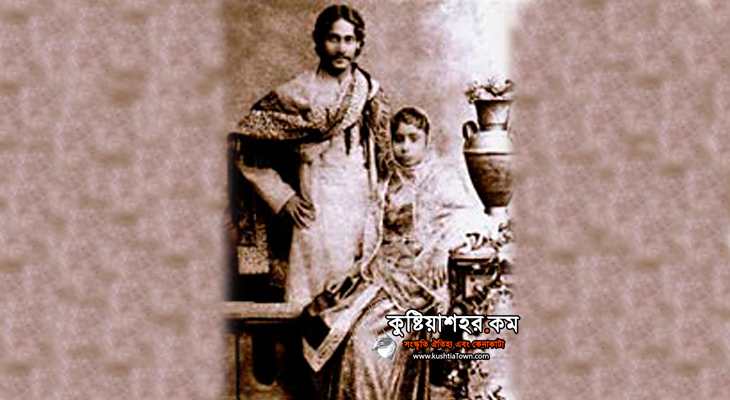
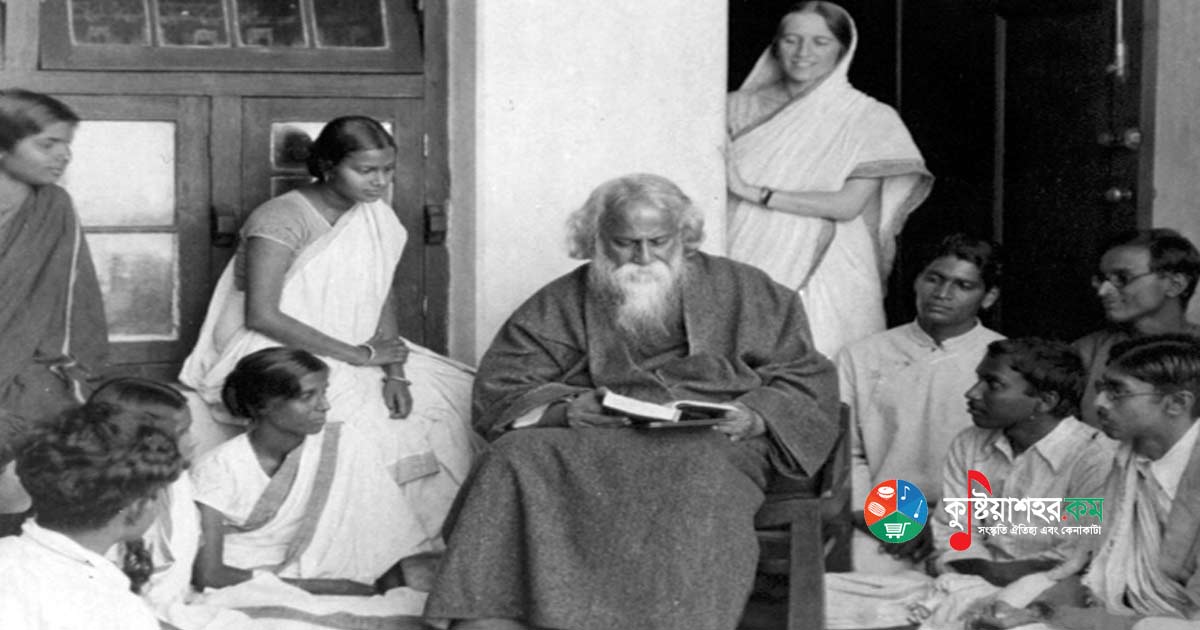
In the reckoning of our habitable land, of daily food, of the production of fruits and crops for sustenance, of time, of seasons, of buying and selling, of work and duty, of the tally of ghats and land boundaries — at some point the Bengali year joined our culture, crossing over Chaitra, and from it came the month of Boishakh. In the methodical rule of the king of seasons, shaking off the old and unfurling the banner of the new, the Bengali New Year greets us and makes the feeling of Boishakh its own. Boishakh means an exuberance of joy: in one line we are all equal. Into the zamindar family of Jorasanko, Rabindranath Tagore was born. His grandfather Dwarkanath Tagore was a ‘Prince’; his father Debendranath Tagore was a ‘Maharshi’. His father was himself a man of Calcutta, whose manners, etiquette and conduct of several generations belonged to the companionship of Englishmen. Of Maharshi Debendranath Tagore’s six daughters and nine sons, the youngest son Budhendranath Tagore died when he was barely one year old. By that circumstance, the world poet Rabindranath Tagore, elder to him, was born as the youngest human being of this family. When his youngest son Rabindranath was born, the father wrote down on the day of his birth: twenty-fifth Boishakh, 1268 Bangabda. That day was in fact 7 May 1861 of the Christian era, but he did not write that down.
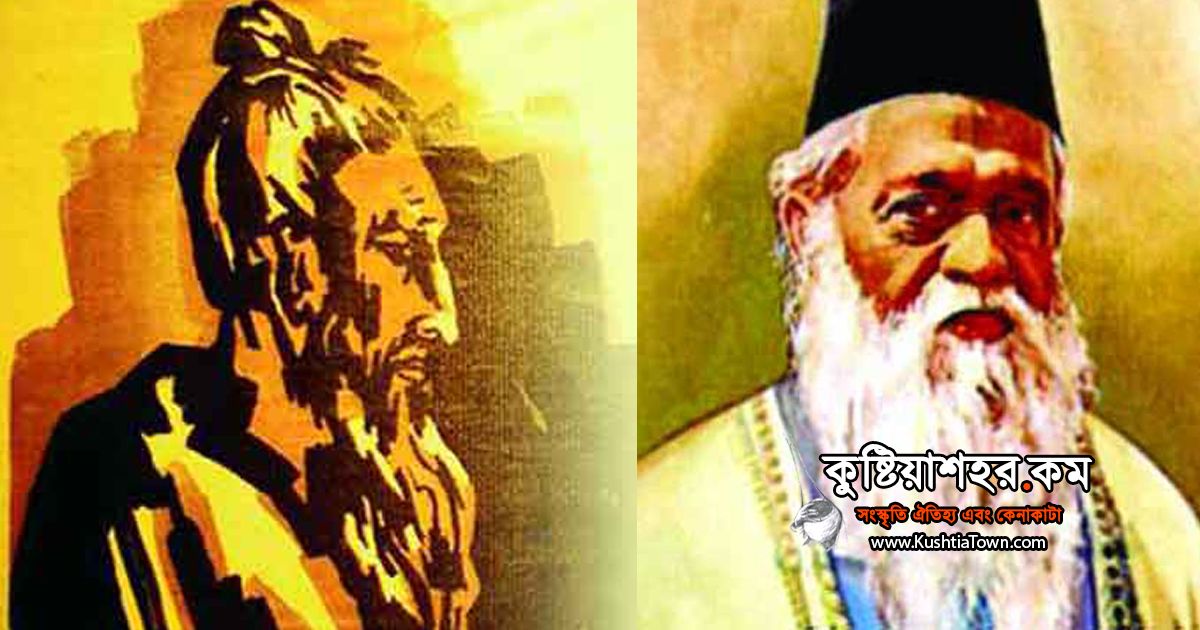
Another auspicious day began in the culture of the Bengalis. With the arrival of one more moment, another luminary rose: the poet-guru Rabindranath Tagore himself. Before this, on the occasion of Chaitra Sankranti or the New Year welcome, all Bengalis were bound in one line; now, with the turn of time, today on Kobiguru’s birth anniversary all of us Bengalis once again become equal with one another. The songs of the Bengali New Year celebrations, musical dramas, poems, storm-blown leaf songs or Agomoni tunes may illuminate Boishakh again and again, but with the songs of the poet’s great age — ‘O that great Man, come’, or ‘touch my soul even with the touchstone-spark of fire’ — and many such songs, the poet left us awakened by the stirrings of our mind and world. Carrying the Bengali word, meaning, verbal measure, melody and their transitions onto a higher path went the poet Rabindranath. The intoxication of Bengali culture comes through the companionship of folk art. Kangal Harinath Majumdar, the great Lalon, Mir Mosharraf Hossain, Gagan Harkara, poet Jasimuddin, S M Sultan, Kamrul Hasan, Shah Abdul Karim, Bijoy Sarkar, Chaitanya Mahaprabhu and thousands of other Bengalis created it. It is Kobiguru Rabindranath Tagore who further enriched and gave shape to all these matters of thought.
Rabindra researcher Ahsanul Kabir informs us in the article “Bangabandhu and the Rabindra Institute at Shilaidaha” in his verse work “Rabindranath’s First Hermitage: Shilaidaha” that after independence Bangabandhu came home. Maitreyi Devi, a well-wisher of this land and a renowned litterateur, met him and presented the Father of the Nation with a photograph autographed by the poet. Holding the picture to his head, Bangabandhu told her, “Didi, do you know that in the War of Liberation our Rabindranath Tagore was also a martyr freedom fighter? Where the Pakistani occupiers saw the poet’s picture in a house, they fired at that very picture.”
Bangabandhu said –
‘Being Bengalis, we have done nothing for him.’ He said, ‘I have a wish: I will set up an institute in his name.’
Seeing Bangabandhu’s generosity, Maitreyi Devi requested him to establish this institute at Shilaidaha. We know that Rabindranath Tagore and the architect of our independence, Sheikh Mujibur Rahman, fought age after age to lift the Bengali out of dire want. That is why the Father of the Nation thought of building here a ‘replica’ modelled on Santiniketan of West Bengal, to reassert the pride of Shilaidaha and take it to the roots of prosperity. The dream we now see taking real shape — we still dream it. Perhaps, holding Bangabandhu’s dream, Shilaidaha will become the peaceful hermitage of Santiniketan.
In the time of the Ejmali zamindari, Rabindranath Tagore came to Shahzadpur in Sirajganj district on 20 January 1890 to supervise the estate. But even before that he had come to Shilaidaha in 1888. He went to Shahzadpur from Shilaidaha. He supervised the zamindari here for seven years. Yet the poet was never stingy in drawing material for his literary creation. He grasped the natural affinity of this place from the innermost corner of a sorrow-laden heart. Sitting here, the poet was able to write letters, compose verse, write poems, rhymes and plays. To court the beautiful form of nature, Shilaidaha and Shahzadpur share one mind.
Seated at Shahzadpur, he wrote to Indira Devi –
“... .. In our country it is nature that strikes the eye the most — a sky free of clouds, fields without limit, the sunlight blazing; in the midst of it all human beings seem very small — people come and go, crossing over like this ferryboat — their faint voices can be heard,... .. .”
Poet Rabindranath, Shilaidaha-Shahzadpur, the ferryboat and its passengers, form and nature, or the heady juice of Gitanjali — all are, in fact, strung on one thread. Even now there is the river, there is still water. But to bind the connecting thread of Shilaidaha and Shahzadpur more firmly, what is needed is ‘a Rabindranath or Gitanjali bridge’. It will help lift the inner souls of the lovers of Rabindranath to still greater elation.
The twenty-fifth of Boishakh comes. And it goes away again. He is one of the dearest of our Bengali hearts. As neglected as Rabindranath was in Pakistan, even after 47 years of independence the poet Rabindranath could not attain that height. The stream of memory of the Bengali that runs through our body, veins and marrow still issues from Shilaidaha and from the glory Rabindranath created there. So the prayer is: in Boishakh, let the storm-blown leaves be blown away. With the originality of new leaves and the melodic hum of the bee, may Rabindranath return again and again to the courtyard of Shilaidaha on the twenty-fifth of Boishakh. In the poet’s vivid simplicity and in his works of creation, may we all again and again immerse ourselves in pure love.
Writer: A researcher, innovator and environment personality.