বাংলা
 English
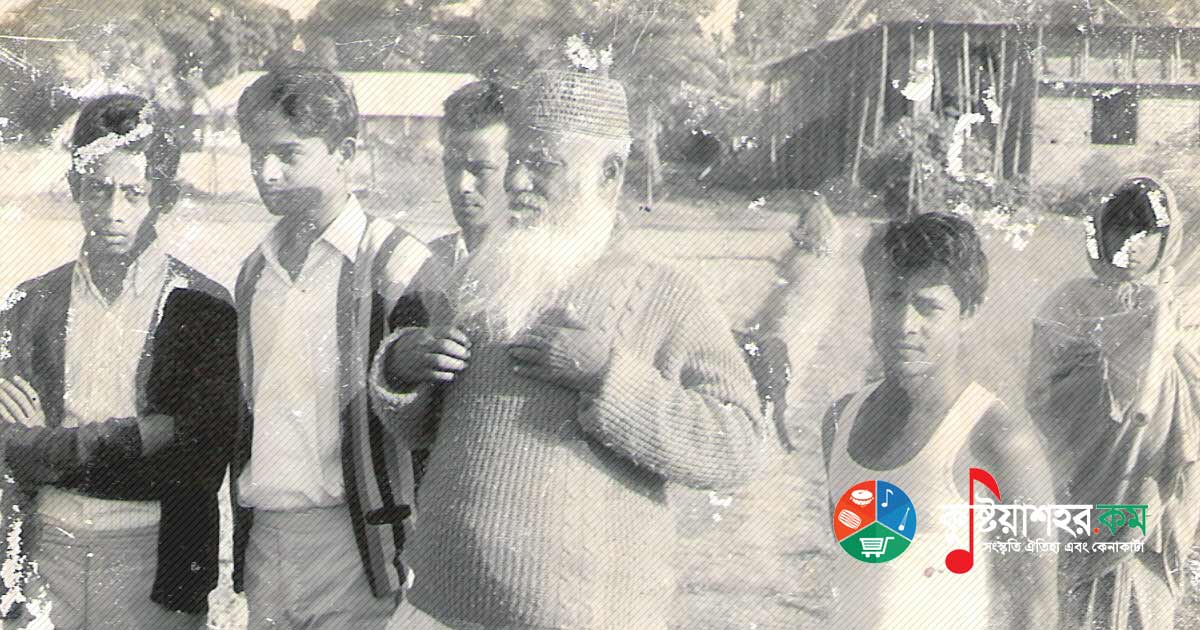
When a state named Pakistan was established on 14 August 1947, freed from the deadly scourge of the British, Maulana Bhasani returned to independent Pakistan from a prison in Assam carrying many dreams and hopes. Then in February 1948 he was elected unopposed, as a Muslim League candidate from a constituency of South Tangail, a member of the East Bengal Legislative Assembly.
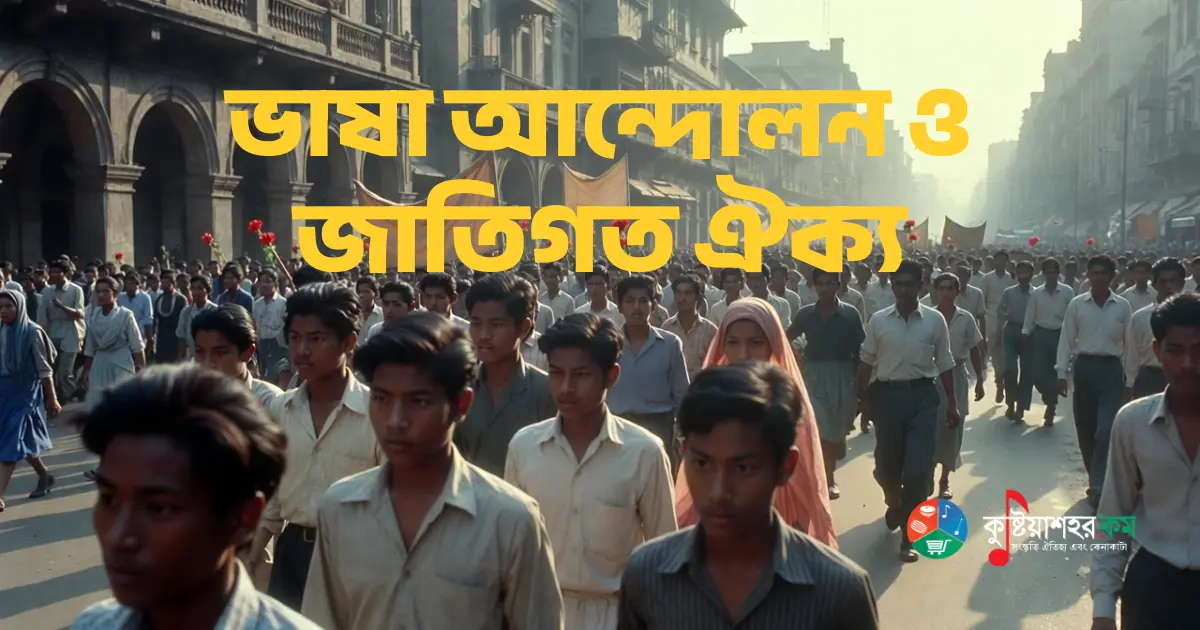
By then, demands had begun to rise from various quarters to give Bengali the status of the state language. On 11 March 1948, a hartal was observed in Dhaka demanding Bengali as the state language. Many were injured in police repression during the hartal, and some 65 people, including Shamsul Haq, Sheikh Mujib and Oli Ahad, were arrested. Earlier, on 29 February, many had been arrested as well. In protest, heated discussions took place in the budget session of the Provincial Legislative Assembly which began on 15 March.
Those who spoke on the language question in the session included Dhirendranath Datta, Maulana Bhasani, Khawaja Nazimuddin, Dr Pratapchandra Guha Roy, Prabaschandra Lahiri, Manoranjan Dhar, Dr A. M. Malik, Abu Tayeb Mazharul Haq, Mofizuddin Ahmed, Shamsuddin Ahmed, Mahmud Ali, Mohiuddin Ahmed, Anwara Khatun, A. K. Fazlul Haq, Mohammad Ruknuddin and others.
On 17 March Maulana Bhasani demanded that the discussion on the language question in the assembly be conducted in Bengali rather than in English. He said: "All the members present here will acknowledge that this is the land of the Bengali-speaking people; the one presiding (the Speaker) over this assembly will certainly also speak in Bengali. You say we understand nothing of it. What you say can have no connection with any discussion by the members. If you do not give your rulings in Bengali, how then shall we take part in your discussions? I hope you will give a ruling so that everyone speaks in Bengali and you too give your rulings in Bengali." In reply the Speaker said, "Everyone will speak in the language he knows." Maulana Bhasani kept pressing the Speaker to make arrangements so that everyone would speak in the Bengali language.
In the Assam Legislative Assembly in 1938, Maulana Bhasani was the first person to deliver a speech in Bengali. During the question-and-answer period, while Ramnath Das, health minister of the Assam Legislative Assembly, was answering in English, Maulana Bhasani said: "I want the answer in Bengali." Later, the Bengali language received recognition in the Assam Legislative Assembly of independent India. Through this event, at that time Bengali earned the first official government recognition in the world.
Gaziul Haq, who was deeply and inseparably involved in the Language Movement, wrote: "Of the 42 leaders, including Maulana Bhasani, who stood for this movement, several influential ones severed their connection with the movement, taking up ministerships and the post of ambassador." On 31 January 1952, at a meeting held under the chairmanship of Maulana Bhasani, the All-Party State Language Action Council was formed, combining various organisations including the Jubo League, East Pakistan Chhatra League, the Dhaka University State Language Action Council, Tamaddun Majlish, the Islamic Brotherhood, the East Pakistan Muslim Students' League and the East Pakistan Awami Muslim League. The 40-member council included Maulana Bhasani, Ataur Rahman Khan, Kamaruddin Ahmed, Khairat Hossen, Anwara Khatun, Shamsul Haq, Abul Kasem, Abdul Gafur, Mohammad Toaha, Oli Ahad, Mirza Golam Hafiz, Abdul Matin, Kazi Golam Mahbub, Shamsul Haq Chowdhury, Khaleque Newaz Khan, Sayed Abdur Rahim and others. At that very meeting of the council, support was expressed for the student strike called by the 'University State Language Committee' at all educational institutions of Dhaka city on 4 February. At the meeting of 4 February, a province-wide general strike was called for 21 February demanding Bengali as the state language.
Oli Ahad, another doyen of the Language Movement, wrote: "On 6 February, a meeting of the All-Party State Language Struggle Council was held at the office of the East Bengal Workers' Camp, No. 150 Mogultuli, with Maulana Abdul Hamid Khan Bhasani in the chair. …… Whether the law would be broken if the government imposed bans under Section 144 and the like was also discussed at the meeting. The majority of the members present expressed their opinion against breaking the law. But I firmly declared myself in favour of breaking Section 144. From the president's seat the aged Maulana Bhasani, in strong language, declared in support of what I was saying: to bow one's head and accept the ban issued by a government that unjustly takes refuge in the law in order to deliberately crush our constitutional, peaceful mass movement would mean surrender to autocracy."
As the atmosphere in Dhaka kept heating up around 21 February, an emergency meeting of the All-Party State Language Action Council was held on the night of 20 February at the central office of the Awami Muslim League, 94 Nawabpur. As Maulana Bhasani was away on tours of Mymensingh, Pabna and Comilla from 18 February, he could not be present at the meeting. At the meeting there was fierce argument among the members of the Action Council over breaking Section 144 on 21 February, and despite the students' strong opposition the decision to break Section 144 was rescinded by 11 votes to 4. Meanwhile the leaders of the Student Struggle Council, led by Abdul Matin, took the decision to break Section 144 and to stay on the ground in processions of ten. In line with that decision, from the morning of 21 February they came out on the streets in groups of ten, chanting slogans. By midday a massive clash broke out between the students and the police. When the police opened indiscriminate fire, many including Salam, Barkat, Rafiq and Jabbar were martyred.
Learning of the incident from the mofussil, Maulana Bhasani came to Dhaka the next day and led the funeral prayers in absentia for the martyrs. After the janaza, in his munajat he issued a stern warning to the ruling clique and demanded a proper trial of the killings. The next day he issued a statement condemning this massacre. Meanwhile the government continued its policy of repression and arrested many anew, including Maulana Bhasani along with Abul Hashim, Maulana Tarkabagish, Shamsul Haq, Mohammad Toaha, Oli Ahad, Abdul Matin, Kazi Golam Mahbub, Khairat Hossen, Khan Sahib Osman Ali, Khondaker Mostak Ahmad, Mozaffar Ahmad Chowdhury, Ajit Guha, Khaleque Newaz Khan, Mirza Golam Hafiz, Sardar Fazlul Karim and others. In prison, Maulana Bhasani decided to observe a fast, drinking only lemon juice, demanding the release of state prisoners and other demands. As he began an indefinite hunger strike from 18 April 1953 and his physical condition deteriorated, he was released on 21 April. Even after that he continued to play a strong role in demanding the release of the state prisoners. It is worth noting that on 21 February 1953, the first Martyrs' Day, he too observed a fast in memory of the martyrs.
After the sweeping victory of the United Front in the 1954 elections, on 21 February 1956 Maulana Bhasani, Chief Minister Abu Hossain Sarkar and the mother of martyr Barkat laid the foundation of the central Shaheed Minar. That afternoon, after the meeting of the All-Party State Language Action Council at the Armanitola grounds, a huge procession led by Maulana Bhasani circled Dhaka city.
After paying respects at the graves of the martyrs in the Azimpur graveyard, Maulana Bhasani addressed the weeping mother of Barkat as the mother of four and a half crore sons of Bengal. On 29 February 1956, Bengali was recognised as the state language in Article 214(1) of Pakistan's first constitution. Then the constitution of 1962 stated that the national languages of Pakistan would be Bengali and Urdu. The constitution of independent Bangladesh of 1972 states: the state language of the Republic is Bengali. On 17 November 2000, UNESCO accorded recognition to 21 February as International Mother Language Day.
Source and acknowledgement: M. A. Azad Khan Bhasani, President, Maulana Bhasani Krishak Samiti