বাংলা
 English
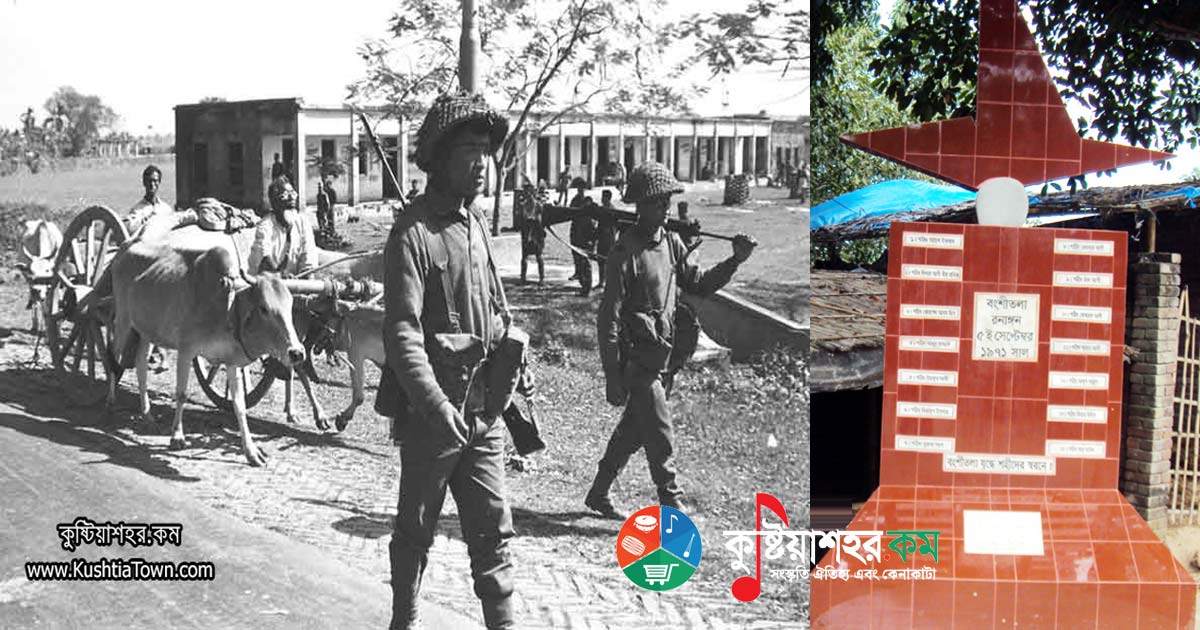
A group of the BLF under the leadership of Ziaul Bari Noman had a camp in Durbachara village. They had separate camps. One of these camps was headed by Shamsul Hadi. On 5 September, in his absence, Shahabub Ali and Bahar were in charge of the camp, and under their leadership there were about 200 freedom fighters. The Razakar forces informed the Kushtia Peace Committee. When the Peace Committee alerted the army camp, the Pakistani forces advanced towards Durbachara by way of Bhadalia. The news that Pakistani troops were coming reached the freedom fighters' camp. From midnight, the freedom fighters laid an ambush at Bongshitola, two miles west of Durbachara.
Not finding any trace of the Pakistanis until 10 o'clock the next morning, the freedom fighters left their positions to have breakfast. When the LMG men Abdul Kuddus and Sekem Ali took up positions to the east of the sugarcane purchasing centre at Bongshitola, they saw the Pakistani soldiers approaching on foot. When the Pakistani soldiers came very close, Abdul Kuddus opened brush fire with the LMG. Caught by the sudden attack, the Pakistanis were stunned. They could not attack the freedom fighters. Many Pakistanis were killed at the scene. Under the incessant gunfire, Abdul Kuddus's LMG jammed. Taking this opportunity, the Pakistani soldiers fired. The brave freedom fighter Abdul Kuddus was hit in the leg by a bullet. Even so, he threw the LMG into the water and, swimming under the surface together with his comrade Sekem Ali, moved out of the reach of the Pakistani soldiers. In the meantime, the other freedom fighters came forward and began firing. The Pakistani soldiers stationed at the Kushtia Textile Mill, three miles from Bongshitola, began firing shells. After a long battle, both sides began to retreat. In this battle, 45/50 Pakistani soldiers and several officers were killed.
Those martyred in the Battle of Bongshitola:
- Tajul Islam - father Abdul Karim Sheikh
- Khorshead Alam Dil - father Shad Ahmad
- Sheikh Didar Ali - father Nurul Islam
- Yakub Ali Sheikh - father Kudrat Ali
- Golam Mostofa Razzak - father Mohammad Ali Sheikh
- Abu Daud - father Yad Ali
- Chand Ali Molla - village
- Abdul Mannan - father Mozahar Uddin
- Mobarak Molla
A K M Azad (father Md. Shamsuddin, Piarpur, Kushtia), Shafiul Islam Zillu (father Amirul Islam, Kenirar, Kushtia), Motiar Rahman (village Manohardia), Firoz Ahmed (Amlapara, Kushtia), Habibur Rahman (Sherkandi, Kumarkhali), Abdul Kuddus (Mongal Bariya, Kushtia), Abdul Khalek (Hats Haripur, Kushtia) and many others were wounded.
The next day the Pakistanis carried out air strikes on Bongshitola, Durbachara and the surrounding areas.
The battle of Sherpur was also a memorable event.
During the war, a Peace Committee was formed under the leadership of Advocate Sad Ahmed and the Razakars were created, and widespread massacres were carried out.
On 9 December the whole of Kushtia was liberated except Kushtia town (Meherpur on 1 December and Chuadanga on 7 December). To liberate Kushtia town, the allied forces and the freedom fighters began attacking from all sides of the town. Pakistani troops from Jessore Cantonment and the Jhenaidah sub-cantonment converged at Pakshi Ghat by way of Kushtia town, the troops from Chuadanga and Meherpur by way of Poradah, and the troops of Daulatpur by way of Bheramara. As they began their journey from the eastern side of the bridge, across it and by boat and ferry, bombing began from the allied air force. Part of the Hardinge Bridge was broken by the allied bombs, and many Pakistani soldiers and their henchmen of the Razakar forces were killed.
While Bengali freedom fighters, weapons in hand, were fighting heroically in the battlefield against the Pakistani invading forces and their cohorts — the Razakars, the Al-Badr, Jamaat and Muslim League collaborators — some Bengalis also stood beside the freedom fighters with pens in hand. To highlight the successes of the freedom fighters and the activities of the Pakistani invaders, they published many newspapers. One such newspaper was Swadhin Bangla. Swadhin Bangla was Bangladesh's first newspaper. Under the publication of Khondker Shamsul Alam Dudu, organizing secretary of the Kushtia District Awami League, edited by Waliul Bari Chowdhury, editor of the weekly Mashal, and with Liakat Ali, editor of the weekly Darshak, in acting charge of the editorship, the weekly newspaper Swadhin Bangla was published from Mujibnagar on 1 May.
To help the refugees of Kushtia, an organization called the Freedom Fighters' Aid Association worked in Krishnanagar in the Nadia district from May to July, with Liakat Ali as its convener.
Even amid the war, a training centre for giving political training was run for about three months at Ranaghat in Nadia, with Mr. Ahsanullah MPA as principal and Anwar Ali, then head of the District Awami Volunteer League, and the student leader Khondker Rashiduzzaman Dudu appointed as teachers.
Swadhin Bangla Betar Kendra (Free Bengal Radio Station) worked as the second front of the Liberation War. Most of the artists and performers of Swadhin Bangla Betar Kendra were from Kushtia. The patriotic songs in the voice of the melody-maker Abdul Jabbar inspired the freedom fighters. When the programme Jallader Darbar of Swadhin Bangla Radio comes to mind, the names of Raju Ahmed and Babua Bose rise before everyone's mental canvas. The author of the programme Jallader Darbar was Kalyan Mitra of Kushtia. Another notable name is Aminul Haque Badsha.
Those whose contribution of Kushtia district to the country's Liberation War will remain memorable are, along with hundreds of thousands of local people, Azizur Rahman Akkas (then MNA), Barrister Amirul Islam (then MNA and PS to the Prime Minister), Abdur Rauf Chowdhury (then MPA), Barrister Badal Rashid (liaison officer in the Liberation War), Sahiuddin Ahmad, Ahsanullah (then MPA), Golam Kibria (then MPA), Nurul Haque (then MPA), Advocate Yunus Ali (then MPA), Shamsul Haque (then DC of Kushtia), Toufique Elahi Chowdhury (then SDO of Meherpur), Dr. Asabul Haque (then MPA and chairman of the Bangladesh Red Cross run by the government-in-exile during the Liberation War), and others.