বাংলা
 English
Any life-conscious poet leaves behind in the field of the society-mind and national culture such a contribution as points the way to the beneficent light of knowledge for the country and the age to come. For this reason, in various contexts the analysis and judgement of his poetic thought becomes extremely necessary. Because literature is as serviceable for today, its serviceability for the days to come is even greater. And if that literature is composed on the basis of the quest for the ultimate truth of the human mind, and if it is brimming with human appeal, then from age to age no one can block its unstoppable march. This saying is especially memorable about poet Panju Shah's poetic contribution as well.
Panju's life-story, the development of his spiritual thought and the unfolding of his poet's power have been analysed in this connection. We have also explained why, though he lived in the age of the reflective poetic thinking of the last decade of the nineteenth century and the first decade of the twentieth, he remained immersed in composing doctrine-poetry and spiritual song. Here only this much remains to be said: it is not that he cherished the old mentality or past poetic thought needlessly or merely in the luxury of imagination. There are good reasons behind it.
In the first decade of the second half of the nineteenth century a consciousness appeared among the Bengali Muslims. They came forward to take modern education. It was at this time that their march forward in the field of modern Bengali literature also began. Before this it had not been possible for them to concentrate on this direction. This time was again the golden age of modern Bengali literature as well. Nevertheless, those Bengali Muslims who devoted themselves at this time to creating modern Bengali literature were not daring in new experiments except in following the pioneering Hindu writers. For that very reason their literary works were lustreless compared with the finest Hindu writers. Panju Shah deemed it more worthy to follow Bengal's eternal literary tradition rather than engage himself in such lustreless, imitation-all literature. In that uncertain juncture of national life, the propagation of the message of peace of spiritualism seemed to him the foremost duty. Instead of the futile imitation-laden poet-work, by telling doctrine-sayings founded on mysticism he rather came closer to our hearts. From the aforesaid statements it seems we have also been able to realise something.
In the judgement of talent one meets with two classes of people, namely the 'epoch-making poet' and the poet made by the age. Panju Shah belongs to the latter group - 'the stream-made poet of the very line that the mystic poet Lalon Shah created'. He was not only Lalon Shah's musical disciple; rather, he discharged the remaining duty of the whole Lalon-mind and the Lalon age. How Panju's talent developed, passing the test of composing thought-songs under Lalon's hint and inspiration, we have shown in the preceding discussion. But that talent did not remain confined to composing songs alone. Under the direction of his initiating guru Hiazatullah Khondokar it became active in poetic composition as well. I have said before that this line is not the line of modern imitation. This poetic line is so lively and attractive that his sons and disciples busied themselves imitating it. Not only that; it is also true that this line-flow has remained active down to the present time.
In judging the qualitative merit of literary work, the question may be raised whether Panju's writings can be placed alongside the literary wealth of his contemporaries. In this connection it must be remembered that the judgement of literature does not depend only on the opinion of one class of people in society. Literature is composed and circulated for the whole nation. Literary work that creates an appeal in the hearts of the common people does not wait for the judgement of whether it is refined or unrefined. Therefore it must be said that, instead of judging Panju's literature by the standards influenced by the foreign criticism of the nineteenth century, it is its popularity and popular appeal that are the consideration. Because, though in puthi form, Panju Shah's poetry touched the hearts of the whole Bengali-speaking people. Two editions of the poet's 'Chhohi Iski Chhadeki Gaohor' poetry were published in his lifetime. According to the statement of the poet's son Raichuddin, it is learnt that more than a lakh of books have been sold even to this day. This is sufficient testimony to prove the poetry's popularity and the reader-society's regard.
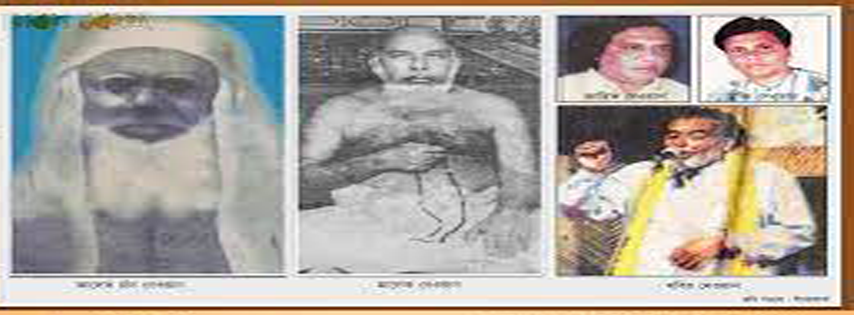
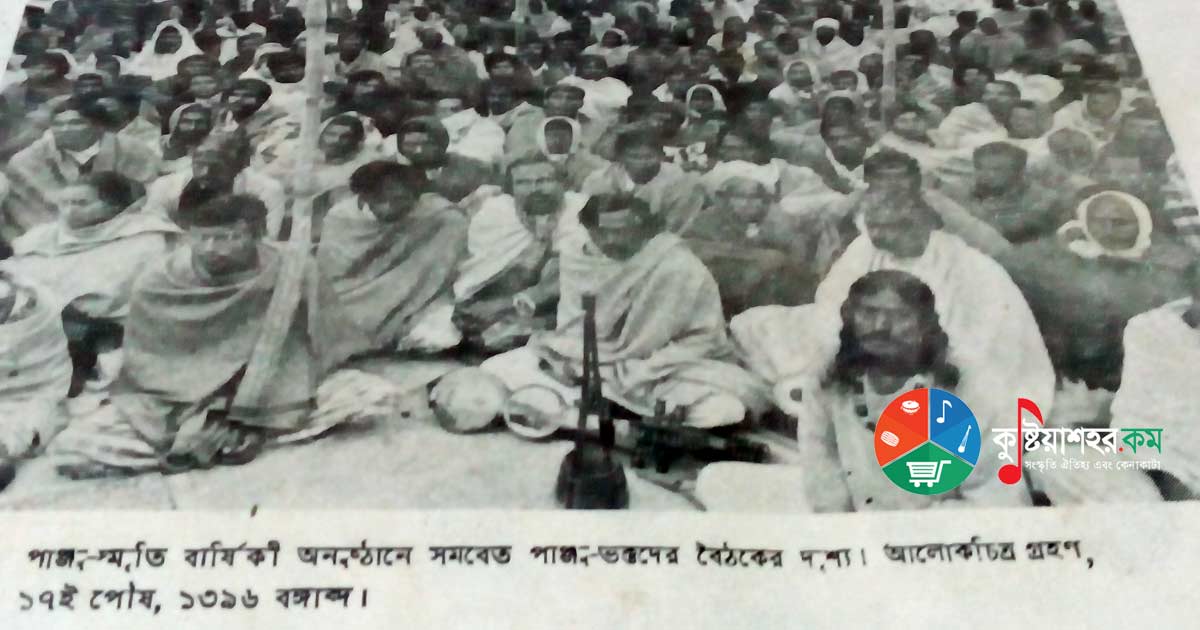
All his messages have been rhymed in the form of songs, whose popularity is by no means small. In the whole of Bangladesh, and in West Bengal and Assam, there are countless devotees, singers and connoisseurs of his songs. This can also be understood by seeing the countless gatherings at the annual observance held at his mazar. Proof of it also comes from the interviews of his disciples and their followers.
The tendency to imitate exactly the rhythm, words and style of composition of Panju Shah's songs was not confined only to his disciples. Other contemporaneous thought-sadhaks were also attracted to it. Among the mystic poets imitating Panju, the mystic poet Ahsan Ali, a resident of Bajrahar under Singra Upazila of Natore district, is its shining instance.
One more thing about Panju Shah's literary contribution is noteworthy. With the advent of modern Bengali literature in the nineteenth century, the poetic art and poetic craft composed by Bharat Chandra became extinct. The poets were no longer able to follow that line. But in fact that line did not become extinct. In the nineteenth and early twentieth centuries countless poets of the mixed language-style made the endeavour to preserve this line in their poetry. That age's Muslim poets' 'power of literary creation' is embedded in these compositions laden with Arabic-Persian words. Although in the history of Muslim practice in Bengali literature this poetic line is merely a means of maintaining the historical link between the medieval and the modern age, nevertheless it is the national literature of the Muslims. Panju Shah is the shaper of this national literature. This line, founded on 'mystic poetry and mystic song' composed against the background of rural life and society, beneath the surface of the urban modern literature of the nineteenth century, flowed like an underground stream. Among the countless poetries of this age, Jamaluddin's 'Premratna', Buddhu Shah's 'Didare Elahi' and so on fall in this line. Panju Shah's 'Chhohi Iske Chhadeki Gaohor' is of the same kin as those poetries. Judged from this direction, Panju Shah's literary contribution cannot be called meaningless or worthless. There is extended discussion of this in the preceding chapter. Therefore more statement here is unnecessary.
We know that the language used in the modern literature of the nineteenth century was called 'sadhu bhasha' (Sanskrit-derived) and the language of the aul-baul-bhakta poets 'asadhu bhasha'. Nevertheless, Rabindranath said that this asadhu language is Bengal's purest language. According to Rabindranath, modern literature is the Bengali made by the hands of pundits versed in the English language; it is a barren, fruitless senior queen. Though kept with care and honour, no daughter-child was born in this queen's womb. That is, no living feeling could be expressed in this language. Though some literary creation became possible, their premature death occurred on the bed of newspapers. On the other hand, in the womb of the native woman - the compositions of the native bhakta poets, whom Rabindranath called the junior queen - were born the country's literature, the country's hope and reliance, the sole lasting glory of the ill-fated land. This child, without bosom-ornament, smeared with dust and soil over its whole body, is the Bengali literature composed in the primal, native feeling and language. So Rabindranath once called upon the devoted friends of the Bangiya Sahitya Parishad and said - 'If we take this unadorned, dust-covered child to our bosom and take pride in it and rely on it, no one will mind in the least. Blessed are those who sit in the royal court; victory to those who sit in the people's assembly; we express the joys, sorrows and anguish of the heart of the prevailing language of this disregarded, dependent land; we spend the household's pice on printing it, and no one cares to spend a pice to buy it - please grant us the favour of only a little pride. And it is not the pride of the present; it is the pride of the future - not the pride of ourselves, but the pride of the land to come, perhaps of the India to come.' Panju Shah is the poet of that proud language of Rabindranath - the native language. In the context of language-style and other discussions we have tried to raise this point.
One aspect of Panju Shah's poet-work is the composition of 'mystic song'. In this connection too the sweetness of folk melody has been spoken of. Rabindranath's comment on this subject is wonderful. Rabindranath says, 'Looking and listening all around, it seems to us that we have not all been able to determine what exactly is the Bengali nation's true language; we do not know in what form the feelings reside in the heart of the Bengali nation. For this reason, in what is commonly written in modern Bengali we do not seem to see a pure distinctiveness. On reading, it does not feel that this was written by a Bengali, that writing it is possible by a Bengali, and that if this were translated into another nation's language it could gain a new thing born of the Bengali heart. Good or bad, on reading what writings have come out these days it feels that such writings are commonly written, or might be written, in English or in other languages. Its main reason is that even now we have not been able to grasp the right feeling, the right language. The Sanskrit-tongued will say - you have spoken rightly; in today's writing we do not see compounds; there is no regard for pure Sanskrit speech, and there is no Bengali in English grammar either; the Bengali language lies within the Bengali's heart.' Panju Shah's language is this language of the heart. It does not seem improper to come to this conclusion following the trace of Rabindranath's words.
In Rabindranath's world-facing campaign of thought, the expression of this mystic feeling-practice of Bengal has done the work of the hidden sailor. 'Literature of the primal folk adorned in native feeling and language' is like the child on one's own lap. To search for it outside is futile. Knowing himself, diving into the innermost depths of his homeland's people-mind, gathering the pearls and rubies of culture, he alone handed them to the country's people and the world's people at the touch of his own talent.' Panju Shah is one of the gems of that pearl-and-ruby garland gathered by Rabindra. Rabindranath knew Lalon. With the acquaintance of Lalon, the other followers of Lalon too were not unknown to the Rabindra-mind. But perhaps many did not get the opportunity to descend directly into Rabindra's presence. The poet Panju Shah is 'the precious literary flower of that garden fostered in the negligence of Bengal, blossoming unknown, sprinkled with the dew of Lalon-kamgul-water' - I feel this comment is apt.
After surveying Panju's contribution in the field of literature and song, an appraisal of his mind-characteristics in the world of religious thought is necessary. From the preceding discussion it has been learnt that Panju Shah was a seeker following Sufism. According to the rules and laws of the Chishti-Nizami school he propagated his tenets. Though a follower of a definite path of practice, he never gave rein to religious one-sidedness, orthodoxy and blind belief. He was extremely awake about the true significance of religion. Yet, while acknowledging the greatness of the four strata of Islamic thought and religious practice (shariat, tarikat, hakiqat, marefat), he gave the greatest importance to marefat alone. He accepted the hidden mystery of religion or tasawuf, from which Sufi doctrine arose and developed, as the very essence of human birth's path of practice. At the same time he strove to reflect in life that sense of humanity which is religion's main aim. Through paying respect to Hazrat Muhammad (peace be upon him), the prime inaugurator of religion, and to all his caliphs and followers, Panju's poetry and song are uttered. Keeping devotion to Islam's hermit circle, he also paid devotion to the other great personages as symbols of humanism. Conceiving that the same truth lies at the root of all religions, he even coveted the blessings of all these great personages. Ram, Krishna, Chaitanya and the like are all symbols of the Merciful. Among the great ones, Kabir, Dadu, Rajjabji and so on are personages especially honoured by him. In sum, Panju Shah was utterly partisan to the observance of 'man-dharma'. Herein lies the characteristic of his religious thought.
The philosophy reflected in Panju's mind has been discussed in its proper place. If one is to say a little more about it here, it may be said that, like the other Muslim poets, Panju Shah followed the 'yoga and doctrine philosophy' embedded in the Charyapada. The jest-filled statements embedded in the Charyapada on kaya-sadhana have their full indication in Panju's writings. No one - not the Dravidian, not the Aryan, and later not even the Muslim outsiders of other nations - could deny the tantric influence of this native yoga. It is a historical truth. It is also true that the Muslim seekers studied with utmost care the Arabic translations of Bengal's yoga-related books and took up the practice of yoga and tantra. Therefore there is nothing to marvel at in Panju Shah's adoption of poetic practice while being a Muslim Sufi seeker. Because transition from the body to the trans-corporeal practice is desirable in Sufism too. The tantra experts' opinion is also generous. They say, Hindu, Muslim, Christian, Buddhist, Jain, Parsi - the religion-abiding of all countries can all be tantric seekers. In society and assembly the Muslim will remain a Muslim, the Christian will remain a Christian; they will cause no breach of their own religions; yet if he be the qualified one, if he obtains the sadguru, he may be initiated in the practice. The tantric influence observed in Panju Shah's writings is, I feel, nothing other than the 'body-practice-path' taken under the supervision of a proper sadguru. As for the statements concerning the maithun doctrine quoted in Panju's writings, there is no reason to consider him some perverted sexologist. In the ancient history of Indian philosophy and in the Semitic philosophy (the Arabic scripture), this maithun doctrine is also embedded in the tale of man-woman or Adam-Eve. It has been discussed in the introductory part. In fact in Panju's writings we see this doctrine explained as a most pure system of practice. Besides, this maithun doctrine is also an important chapter of Bangladesh's mystic philosophy.
Research shows that, taking as the basis only a single doctrine-dependent path of practice, the native fakiri doctrine of this land has been named 'Baul religion'. Panju Shah is deemed one of the bearers of this so-called Baul religion. But it is also right that a full religious creed cannot be formed around a single doctrine (such as the maithun doctrine). For a religious creed to be established, the reconciliation of the religion's inaugurator, the religion's scripture and various rites and rituals is needed. Baul doctrine is not such a religion; at the very most it is a 'creed'. Besides, the maithun doctrine is in essence a universal and worldly biological doctrine. Not only man; the whole living world is under this doctrine. Therefore, if man, as a knowing being, can apply this maithun doctrine in practical need as a means of restraint to a pure and trans-mundane life, as the practice of temperance and self-control, then it is no ill but the welfare of human society. There is no way to deny this beneficent contribution of Panju's philosophy. His writings and tenets point the finger in this direction.
Not only in Vaishnava literature; even in Sufi doctrine 'love' has received recognition under the name of the ashik-mashuq (lover-beloved) doctrine. In fact herein lies the peace of the love-hungry soul. Therefore it is seen that in Sufi-Persian literature the 'love personages' such as Laila-Majnu, Shiri-Farhad and others came to Bengal and were accepted in the Radha-Krishna form. In essence this doctrine expresses the love-relation of the jivatma (individual soul) and the paramatma (supreme soul). In one critic's words - 'The Sufi-minded poets of Bengal, going to speak of the jivatma and paramatma, instead of using the forms such as Laila-Majnu, Shiri-Farhad and the rest, adopted the very national form of Bengal, the Radha-Krishna theme. The main tune of Bengal's mystic mind seems to be here. Both the Sufi and Vaishnava doctrines, made one, have mingled there. Of the plea of humanity at the last stage of the union of jivatma - paramatma, there are abundant tokens in Panju Shah's language. Nothing more need be said on this.
Lalon Shah is the originator of that thought-song by whose melody the mystics created their own culture in Bengal. The Lalon philosophy is in essence the 'man-ratan (man as jewel) doctrine', and Panju Shah is the true establisher of this doctrine. This has been expressed in the preceding discussions. But Panju's 'man-ratan' or 'adhor manush (the unseen man)' is, on the one hand, indicative of spiritual humanism, and likewise on the other it also nourishes neutral, general humanism. This is the characteristic of his philosophy too. It is also seen that Panju Shah's 'man-ratan-doctrine' is in fact based on Sufism. The Sufis say - 'Kulube-l mumenira arshullah', that is, in the believer's heart is present Allah's throne.' Therefore Panju's philosophy is no novel doctrinal thinking. Sufism, the extremely popular doctrine of Muslim philosophy, is the root of his philosophy. But on it have also fallen the influences of various Bengali doctrines. In fact, instead of argument and logic, the practice of realising the heart's beloved through devotion and belief with the mind's help is the foundation of Panju's doctrinal thought. Judged from this direction, Panju can be counted among the foremost thinkers of the East. His doctrinal philosophy has gained further efficacy through its practice from generation to generation. Through his disciples and their followers his dervish line of thought is also spreading gradually. And so a permanent seat for Panju Shah as one of the subcontinent's foremost thinkers does not seem inconceivable.
A little discussion is necessary on the subject of what influence age and environment had on Panju's mind. In Panju Shah's own time a tendency is observed in religion, literature and society towards doubt about the ancient and the establishment of individual conscience and reason above blind belief. Not all the people of society were influenced by English influence in the same way. The Englishman's character, the Englishman's policy of governance and the various systems related to it surely created challenge in the minds of the thoughtful and reflective, the pondering and the tender-hearted. The same problem, taking various forms, found expression in feeling, thought and action. As a result, some withdrew from society, while some, renouncing society, immersed themselves detachedly in the attempt to assuage yearning and restlessness. The inner conflict of two opposing cultures kindled an anxiety in the educated elite Bengali society. Ancient Indian culture and new European culture created complexity of thought in the Bengali mind. It is not that this complexity was entirely absent in the mind-world of Panju Shah's mysticism. Through English pundits and education masters, Greek-Roman-Christian culture began to be transmitted into the mind of the new Bengali. Even a personality like the Bengali poet Madhusudan could not become free of that influence. But despite the complexity, Panju Shah did not wish to be swept away in that foreign flood of feeling. This is understood by seeing the mention in his writings of the excesses of the padres' religious preaching. There is in his writings the hint that religious conversion does not bring peace of mind either. Therefore it seems he embraced the practice of the innermost meaning embedded deep within all religions as the sole easy path to the peace of the soul of all mankind.
The real truth about the challenge in Panju's mind is this: in the endeavour to forsake aristocracy, wealth and orthodoxy he engaged himself in austere practice. On the other hand, most easily, he embraced life and the world, and the idealistic and the modern, with heart and soul. His sense of modernity urged him to learn the Bengali language; his sense of humanity supplied him the inspiration to follow the man-guru; and the mystic emotion taught him the glory of renunciation. On the one side the family custom, on the other respect for the ancient-following father, compelled him to learn Arabic and Persian. To quench the thirst for the mother tongue he secretly took refuge in a home tutor. But rather than call all this inner conflict, it may be called Panju's sense of respect for both the ancient and the modern society. Within this, while standing on the foundation of the ancient, his inner soul became awake about the modern life-world. The reaction seen in his mind about natural calamity, flood, famine, social discord and disagreement and the like, and its reflection in his writings, certainly establishes him as a life-conscious modern poet. It seems that at the last moment of his life, at the moment before the journey to the other shore, he also received the tidings of the Great War. He even presented that tidings in song. From this, conceiving that the mind of Panju the poet was stirred by sufficiently progressive thought is not incongruous.
In the judgement of the outer society and religious background it is seen that the Wahhabi and Farayzi movements were then quite strong. The clash of the Muslim minds of both the Shia and Sunni communities was very strong. The appearance of a good number of Muslim personages as society-reformers is a notable event of this time. In Panju Shah's place of abode, Munshi Mohammad Meherullah was at the forefront of this reform movement. In the reorganisation of the Muslim thought of the whole of Bengal, the contributions of great-souled persons such as pundit Riazuddin Mashhadi, Abdur Rahim, Maulvi Meyarajuddin Ahmed, Sheikh Jamiruddin Bidyabinod and others are also memorable in this connection. The reaction of the Sepoy Mutiny, marked as the first struggle for independence, had not yet been wiped from the body of society. Facing this tangled situation, Panju Shah had to move forward. Sectarian conflict, religious-discrimination-born vindictiveness and the struggle for political self-interest combined for him in one focal point and appeared as one problem. And that problem is the problem of conquering the soul. He has shown that discord, inequality and contention lie not outside one's own soul. If the soul's foul stain is cleansed, the solution of all the world's problems is found. The seed of the reconciliatory consciousness he planted in the human mind-plane - beneath his great physician's shade countless people of Bengal took shelter. We see the expression of this policy and idealism in his writings too. This matter has been presented with instances in the preceding discussion. Therefore, without extending the statement, it must be said as before that Panju Shah's tenets drove man mad not with any contentious matter but with the craving of conquering the realm of the soul. The appearance of followers everywhere in Bengal of this idealistic, divinely-love-mad reconciliator is its indirect fruit. In one critic's words - 'When the ritual rigmarole of the formal religion of the feudal society ruled by panda priests, mullas and maulanas sowed the seeds of division and separation among this land's toiling agricultural people, the people's poet Panju Shah then preached an opposite life-philosophy and proclaimed the message of unity and reconciliation. Bound not within the bounds of any codified scripture, finding the song of world-humanity, he shed tears. The essence of his speech is -
Filling the world I saw, all are the same mother's sons..'
To the people of rural Bengal, the village poet has presented such a great message that, in the greatness of world-love, in deep emotion, in the light of eternal truth, it is counted a priceless gem-ruby in the treasury of world literature. Herein lies the speciality of Panju Shah's literary thought and doctrinal thinking.
Panju Shah was of little education. Yet his style of writing, rhythm and approach are quite developed. This has been discussed in detail in its proper place. Many of the preceding sadhaks and poets supplied him poetic inspiration both indirectly and directly. His consonance with the contemporaneous and younger mystic poets is also noteworthy. The dehatattva-based novel pantheism that Hasan Raja (1855-1922) preached is not rare in Panju's writings. Where Hasan deems -
in the ear fell the veil, the Muslim faith.'
In that field Panju Shah said -
It is in the Hadith, therefore I say it is not.'
Here Panju Shah has expressed his pantheistic thought. The doctrinal thinking of philosophers such as Shankara, Spinoza and Schelling has caught in it in the thought-song and mystic poetry of folk Bengal. This thought, in essence, expresses only the love of man as the all-pervasive outward expression of the one Creator.
It may be recalled that in the nineteenth and twentieth centuries various leaders appeared on this land's soil to bring about the union of all peoples. But these leaders' endeavours of union-practice failed. Apart from outer pomp, show to the public and pageantry, these endeavours have no other meaning. In this case the unadorned labours of the disregarded, neglected mystic sadhaks are rather much more efficacious. On this Rabindranath says - 'Those in our country who call themselves educated are, driven by the need of the hour, hunting various devices for the union of Hindu and Muslim. Their education is in other lands' historical schools. But our country's history, even to this day, has carried not within need but within the practice of union between man and the deeper truth within.' This practice has been accomplished by that mystic sadhak community alone. In fact universal are their message and doctrinal thought. This thing belongs to both Hindu and Muslim. They have come together, yet none has struck any other. For their union no assembly or association was needed. The mystic song is in fact the root-mantra of this union-practice. The language of this song is juicy in uneducated sweetness. Yet that the inspiration of high civilisation has been working in the deep minds of Bengal's villages, outside the ken of school and college, that it has tried to build one seat for Hindu and Muslim - this song is the proof of it. Panju Shah is the efficacious lyricist and doctrinally discerning poet of this mystic song. As such he is the union-sadhak of all men irrespective of nation, caste and clan.
In the end it may be said that, at the restless juncture of ages of the nineteenth and twentieth centuries, in the flow of Bengal's folk life immersed in a mixed culture influenced by Arabic, Persian and English, the dream Panju Shah dreamt of building a reconciled society is the fruit of his pure mystic thought. The Sufi-doctrine-rooted poetry and thought-song are the vessels of this thought. In fact the rhythm of the puthi and the melody of the thought-song carried this poet's message to the roots of the common people's hearts. Therefore there is no doubt that he possesses a glorious seat in the place of Bengali literature. The Bengali-speaking populace will remember his poet-work, doctrinal thinking and mentality with respect forever. And what makes him memorable and worthy of welcome in this respect is the poet Panju Shah's immortal contribution to mystic poetic practice.