বাংলা
 English
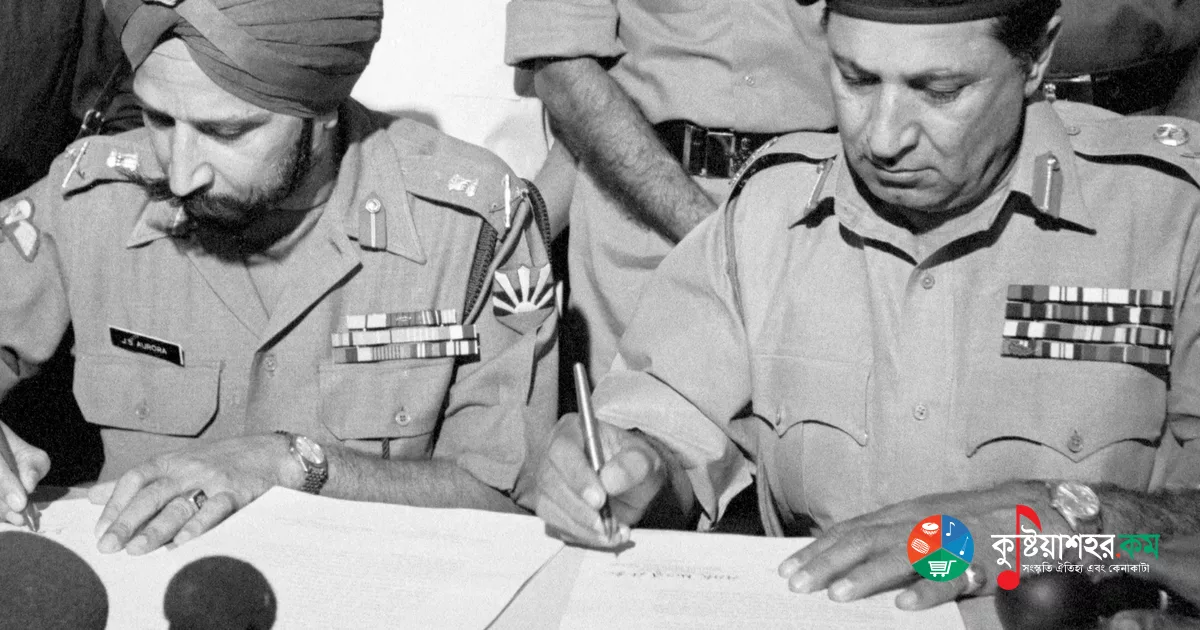
On the afternoon of 16 December 1971, at a table on Dhaka's Ramna Race Course, the head of Pakistan's Eastern Command, Lt. Gen. A. A. K. Niazi, and the commander-in-chief of the victorious joint forces, Lt. Gen. Jagjit Singh Aurora, put their signatures to a one-page English document. With the signing of that document — known as the Instrument of Surrender — nine months of bloody war came to an end and the victory of independent Bangladesh received its formal recognition. Where the surrender took place, exactly when, who signed it and what the document said: this article sets out the answers in question-and-answer form.
Where Did the Surrender Take Place?
At the Ramna Race Course in Dhaka, the ground known today as Suhrawardy Udyan. The place carries a special significance. It was on this very ground, on 7 March 1971, that Bangabandhu Sheikh Mujibur Rahman delivered his historic speech. On the field where the call for the struggle for independence had been heard, nine months later the Pakistani military signed its acceptance of defeat.
The choice of venue was deliberate. Niazi wanted the surrender to take place inside his headquarters; Jacob insisted that it take place in public, before the people of Dhaka. Today the Swadhinata Stambha, the Independence Monument, stands in Suhrawardy Udyan, with the eternal flame, Shikha Chirantan, beside it.
When Did the Surrender Take Place?
There is no dispute about the date — 16 December 1971, a Thursday, in the afternoon. Accounts do differ on the time, and there is a reason for that.
16:31 Indian Standard Time was the time fixed in advance. The heading of the document typed in Delhi itself read "to be signed at 1631 IST" — so Maj. Gen. Jacob records in his memoir. Dhaka local time ran 30 minutes ahead of Indian time, so by Dhaka's clocks the appointed moment was 5:01 in the afternoon; Bangladeshi accounts (Banglapedia, the Liberation War Museum) give this as the time of signing.
The actual signing, however, came a little after the appointed hour. According to Jacob's memoir, when he glanced at the documents at the signing his watch showed 16:55 IST. The preserved original document itself carries no time at all — only the date. What is certain is one thing: the signing took place on the afternoon of 16 December.
Who Signed?
Two men signed the document — one for the defeated forces, one for the victors. Those are the only two signatures on the original instrument.
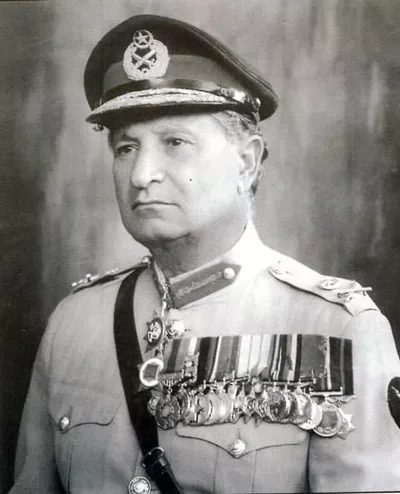
Lt. Gen. A. A. K. Niazi, commander of Pakistan's Eastern Command (Photo: Pakistan Army / Wikimedia Commons, Public Domain)
Lieutenant-General Amir Abdullah Khan Niazi — commander of Pakistan's Eastern Military Command and Martial Law Administrator, Zone B. That is exactly how his designation appears on the document. Pakistan's regular army, its air and naval forces in the East, and the paramilitary forces stationed in Bangladesh were all under his command.
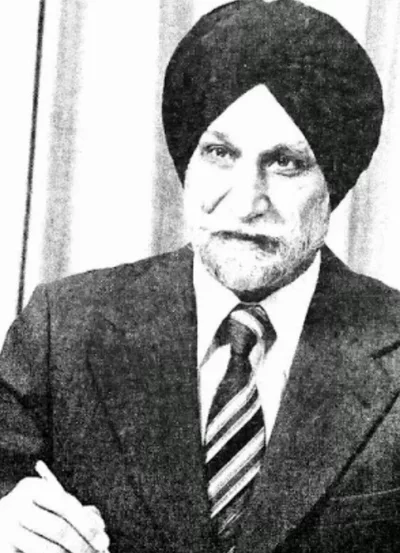
Lt. Gen. Jagjit Singh Aurora; a later photograph (Photo: No username 771 / Wikimedia Commons, CC BY 4.0)
Lieutenant-General Jagjit Singh Aurora — General Officer Commanding-in-Chief of India's Eastern Command and commander-in-chief of the joint Indian and Bangladesh forces in the Eastern Theatre. On the document he is described not merely as an Indian commander but as the commander of the joint forces. This matters, because the surrender was the outcome of the combined military victory of the Mukti Bahini and the allied forces.
Beneath the signatures the designations of both sides are typed; the "16" in the date is handwritten.
- For the victorious joint forces: Lieutenant-General Jagjit Singh Aurora — designated on the document as "General Officer Commanding in Chief, Indian and Bangladesh Forces in the Eastern Theatre".
- For the defeated Pakistani forces: Lieutenant-General A. A. K. Niazi — designated on the document as "Martial Law Administrator, Zone B, and Commander, Eastern Command (Pakistan)".
Who Was Present for Bangladesh?
Bangladesh was represented at the ceremony by Group Captain A. K. Khandker, then Deputy Chief of Staff of the Bangladesh Forces (Mukti Bahini), representing the Provisional Government of Bangladesh. He flew into Dhaka with Aurora. The Liberation War of 1971 was not merely a war between India and Pakistan; it was the struggle of the people of Bangladesh for their independence — and it was in recognition of that truth that Bangladesh's own representative was there.
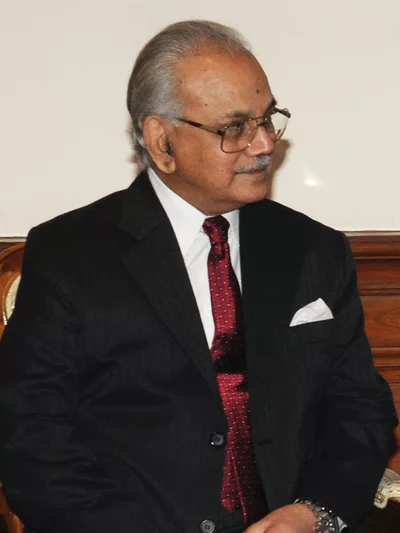
A. K. Khandker; photograph from 2011 (Photo: Prime Minister's Office, India / Wikimedia Commons, GODL-India)
One point needs to be clear, however: A. K. Khandker attended the ceremony, but his signature is not on the original document. The only signatures on it are those of Niazi and Aurora.
What Did the Document Say?
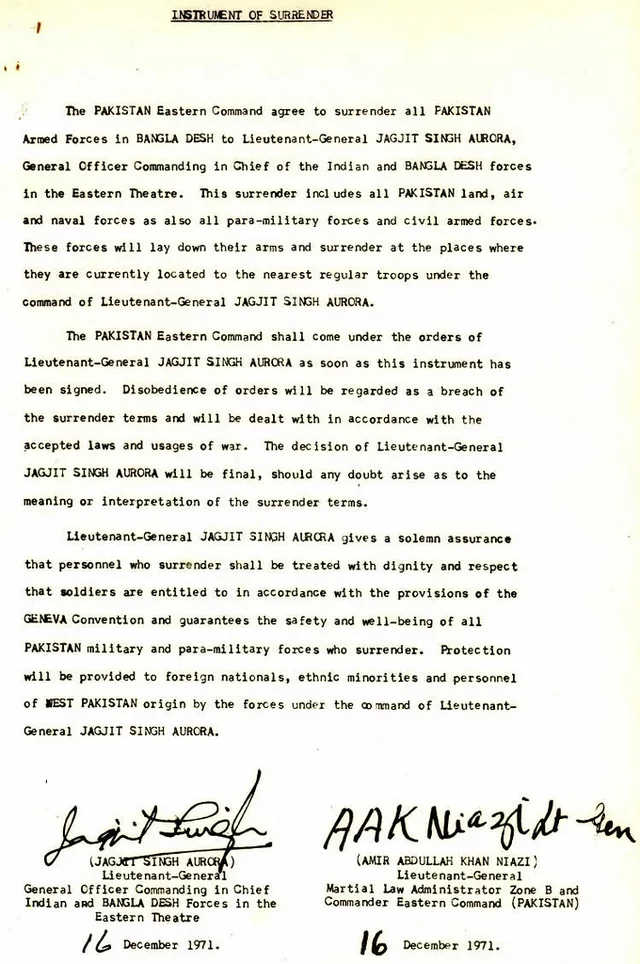
The Instrument of Surrender of 16 December 1971 — a one-page English document, signed at the foot by Aurora and Niazi (Photo: Ministry of Liberation War Affairs, Bangladesh / Wikimedia Commons, Public Domain)
The document's English title is the Instrument of Surrender. It is a single page of just three paragraphs — yet within it is written the end of the war. The draft was written by Maj. Gen. Jacob, and the version typed in Delhi was brought to Dhaka with Aurora. Its main provisions were:
- Surrender of all Pakistani armed forces: Pakistan's Eastern Command agreed to surrender all Pakistani armed forces in Bangladesh — land, air and naval forces, as well as all paramilitary and civil armed forces — to Aurora.
- Laying down of arms: These forces were to lay down their arms where they were located and surrender to the nearest regular troops under Aurora's command. In other words, it covered not only the soldiers in Dhaka but Pakistani personnel scattered across the whole country.
- Compliance with Aurora's orders: As soon as the instrument was signed, Pakistan's Eastern Command would come under Aurora's orders. Disobedience would be regarded as a breach of the surrender terms and dealt with under the accepted laws and usages of war. Should any doubt arise about the interpretation of the terms, Aurora's decision would be final.
- Safety and dignity of those who surrendered: Aurora gave a solemn assurance that those who surrendered would be treated with the dignity and respect that soldiers are entitled to under the Geneva Convention, and guaranteed the safety and well-being of all Pakistani military and paramilitary personnel who surrendered.
- Protection of foreign nationals and minorities: The document also provided for the protection of foreign nationals, ethnic minorities and personnel of West Pakistani origin.
Note that the document speaks not of a ceasefire but of a complete surrender. Jacob's memoir adds a further detail: because the appointed time was written in the heading, the document was later retyped and signed again by both generals — in Calcutta, some two weeks later, by his account. The full text is also preserved in volume 7 of the documentary series "Bangladesh Liberation War: Documents".
What Happened in Dhaka That Day?
The surrender of 16 December was no sudden event. On the evening of 3 December, Pakistan's air strikes turned the India–Pakistan war into a full-scale war; by the second week of December the joint forces of the Mukti Bahini and the Indian Army had encircled Dhaka, and Pakistan's Eastern Command had been cut apart. A ceasefire took effect in Dacca from the evening of 15 December, with a deadline of 9 a.m. on 16 December for the Pakistani forces to surrender. The course of that day ran as follows:
- Around 8 a.m.: Niazi asked for the surrender deadline to be extended by another six hours; the deadline was moved to 3 p.m.
- 9:15 a.m.: India's army chief, Sam Manekshaw, telephoned Maj. Gen. Jacob and told him to go to Dacca immediately and secure the surrender.
- 1 p.m.: Jacob landed at Dacca airport with the draft instrument and met Niazi at his headquarters. He gave Niazi 30 minutes to agree to surrender. With Niazi at that meeting were Rao Farman Ali and Maj. Gen. Jamshed; on the Indian side were Jacob and Maj. Gen. Nagra, and for the Mukti Bahini, Kader Siddiqui.
- Around 4:30 p.m.: Aurora arrived at Dacca airport by helicopter, accompanied by Khandker and senior commanders of the Indian forces. They then set out for the Ramna Race Course.
- After the signing: Niazi signed with a trembling hand and handed over his revolver to Aurora. The crowd packed into the ground erupted in celebration. To save Niazi from the excited mob, Indian officers formed a ring around him, and Nagra bundled him into a jeep and drove him to the Cantonment.
Who Else Was Present?
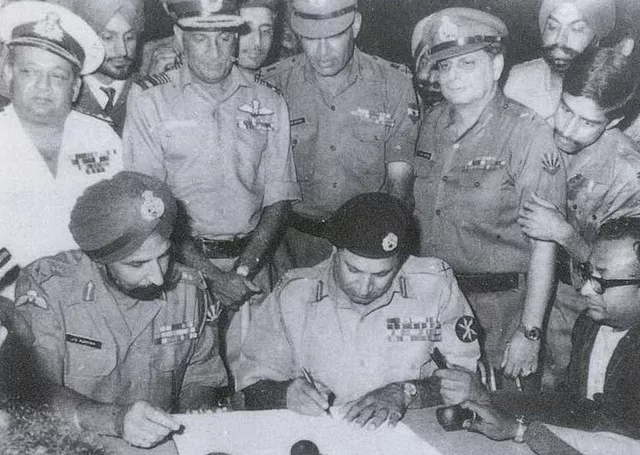
Niazi signing, with Aurora beside him; standing behind them (left to right) Vice Admiral Krishnan, Air Marshal Dewan, Lt. Gen. Sagat Singh and Maj. Gen. Jacob (Photo: Indian Navy / Wikimedia Commons, GODL-India)
Niazi and Aurora were not alone. Military officers of all three sides were present:
- For India: Maj. Gen. J. F. R. Jacob (Chief of Staff, Eastern Command), Lt. Gen. Sagat Singh (commander of IV Corps), Air Marshal Hari Chand Dewan (commander of the Eastern Air Command), Vice Admiral N. Krishnan (commander of the Eastern Naval Command) and Maj. Gen. G. S. Nagra (commander of 101 Communication Zone).
- For Pakistan: with Niazi were Rear Admiral Mohammad Shariff of the Navy and Air Vice-Marshal Patrick Desmond Callaghan of the Air Force.
- For Bangladesh: Group Captain A. K. Khandker.
One thing is worth remembering: being present at the ceremony, conducting the surrender negotiations, and signing the original document are three separate things. Most of those present did not sign the document.
How Many Pakistanis Surrendered?
Around 93,000 people are associated with the surrender — by number of personnel, one of the world's largest military surrenders since the Second World War. But the figure of 93,000 does not mean regular combat troops alone. Of them, an estimated 34,000 to 45,000 were regular soldiers; the rest were paramilitary personnel, government officials and members of their families.
After the surrender they were held in India as prisoners of war, with assurances of safety and dignity under the Geneva Convention. They returned home after the 1972 Simla Agreement and the 1974 Delhi Agreement.
The scale and significance of the surrender are covered in detail in the largest military surrender in South Asian history.
Was It the Surrender of the Entire Pakistani Military?
No. The document speaks explicitly of Pakistan's Eastern Command and of Pakistani armed forces stationed in the territory of Bangladesh. Pakistan's forces in the west were not covered by the instrument; the war with India continued there until India declared a unilateral ceasefire on the western front on 17 December. So it is not historically accurate to describe the surrender of 16 December as the surrender of the entire Pakistani state's military — it was the complete surrender of Pakistan's Eastern Military Command.
Are the Surrender and Independence the Same Thing?
Bangladesh's Independence Day is 26 March and Victory Day is 16 December. 26 March commemorates the declaration of independence and the start of the Liberation War; the Mujibnagar government was formed in April; and the surrender document of 16 December was the formal recognition of that independence's military victory. The document itself was not an instrument of international diplomatic recognition — Pakistan formally recognised Bangladesh in February 1974. Independence, the establishment of the state, international recognition and military surrender are related, but they are not the same event.
The difference between the two days is explained in detail in Independence Day and Victory Day; the full course of the war is traced in the history of Victory Day; and the unfolding of that afternoon is told in the historic afternoon of the surrender.
The Surrender at a Glance
- Date: 16 December 1971 (Thursday)
- Time: appointed time 16:31 IST, i.e. 5:01 p.m. by Dhaka clocks; the actual signing came a little later; the document carries only the date
- Place: Ramna Race Course, Dhaka (today Suhrawardy Udyan)
- Name of the document: Instrument of Surrender
- Signatory for Pakistan: Lieutenant-General A. A. K. Niazi
- Signatory for the joint forces: Lieutenant-General Jagjit Singh Aurora
- Representative of Bangladesh: Group Captain A. K. Khandker (present, but not a signatory)
- Forces surrendering: Pakistan's Eastern Military Command
- Commonly cited number: about 93,000 (of whom 34,000–45,000 regular soldiers)
In Closing
That signature of 16 December was not merely the announcement of a military defeat; it was the document of a new state's victory in fact. Yet to see the history as simply a story of two generals' success and failure is to lose the true significance of the Liberation War. Bangladesh's independence was won through the struggle of its ordinary people, the courage of the freedom fighters, the role of the political leadership and the sacrifice of the martyrs; Indian military support played a crucial part in the final phase of that struggle. For the Bengali nation, 16 December is an unforgotten day in the history of its identity and self-respect.
Deep respect to all martyrs and valiant freedom fighters on the great Victory Day.