বাংলা
 English
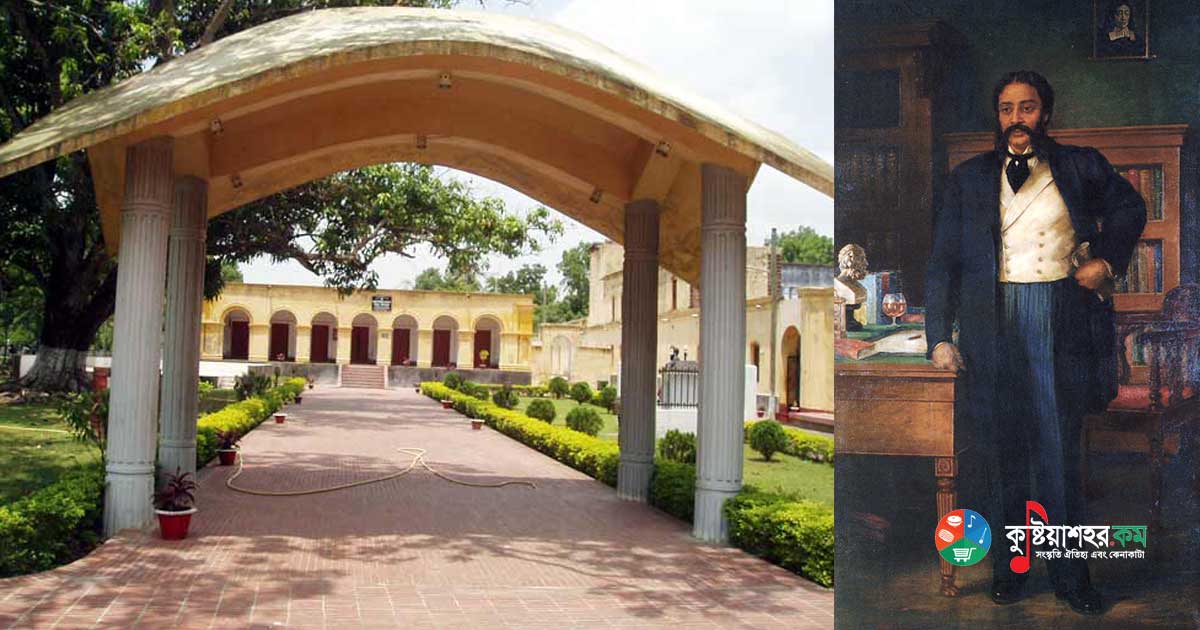
The great poet Michael Madhusudan Dutt (25 January 1824 – 29 June 1873) was one of the greatest Bengali poets and playwrights of the nineteenth century and a writer of farces. He is considered one of the leading figures of the Bengal Renaissance in literature. He is also known as the first rebel poet of modern Bengali literature.
Although born into a noble Kayastha family of the Jessore district of British India, Madhusudan embraced Christianity in his youth, took the name Michael Madhusudan, and, irresistibly drawn to Western literature, devoted himself to writing literature in English. In the second phase of his life Madhusudan was drawn to his mother tongue. It was at this very time that he began composing plays, farces and poetry in Bengali.
Michael Madhusudan was the introducer of the sonnet and the amitrakshar metre into the Bengali language. His greatest achievement is the epic Meghnadbadh Kabya, composed in amitrakshar metre on the story of the Ramayana. His other notable works are The Captive Lady, Sarmistha, Krishnakumari (play), Padmavati (play), Buro Shaliker Ghare Ron, Ekei Ki Bole Sabhyata, Tilottamasambhab Kavya, Birangana Kavya, Brajangana Kavya, Chaturdashpadi Kabitabali, Hector Badh and others. Michael's personal life was dramatic and heavy with sorrow. This great poet died in Kolkata at the age of only 49.
On 25 January 1824, Madhusudan Dutt was born into a noble Hindu Kayastha family in the village of Sagardari in the Jessore district of the Bengal Presidency (in present-day Keshabpur upazila of the Jessore district of Bangladesh). He was the only child of Rajnarayan Dutt and his first wife Jahnabi Devi. Rajnarayan Dutt was a renowned pleader of the Sadar Dewani Adalat of Kolkata. When Madhusudan was thirteen years old, from that time he had to live in Kolkata. He had built a grand mansion in the Kidderpore Circular Garden Reach Road area (now Karl Marx Sarani).
Madhusudan's early education began with his mother Jahnabi Devi. It was Jahnabi Devi who made him well acquainted with the Ramayana, the Mahabharata, the Puranas and the like. His early education began under Maulvi Lutful Haque, the imam of the Shekhpara mosque in a village beside Sagardari. Under the learned imam he studied Bengali, Persian and Arabic. Madhusudan's childhood passed in Sagardari itself.
At the age of thirteen Madhusudan came to Kolkata. After studying for some days at a local school, he was admitted to the then Hindu College (now Presidency University). Madhusudan was a meritorious student. So he soon became the favourite student of the college principal Captain D. L. Richardson. Richardson instilled in Madhusudan's mind a love of poetry. The memory of the love for his homeland of Derozio, a former professor of Hindu College, also greatly inspired him. Besides, his fellow students at college included Bhoodeb Mukhopadhyay, Rajnarayan Basu, Gourdas Basak, Paricharan Sarkar and other prominent figures of the nineteenth century. At the age of eighteen, the ambition of becoming a great poet and of going to England took firm root in his mind.
In 1843 Madhusudan expressed his desire to embrace Christianity to Reverend Krishnamohan Bandopadhyay. Then in the same year, on 13 February, he went to an Anglican church called the Old Mission Church on Mission Row and embraced Christianity. He was baptized by the priest Daltrey. It was he who gave him the name "Michael". Madhusudan came to be known as "Michael Madhusudan Dutt". His conversion created a great stir in society. Rajnarayan Dutt declared his infidel son a disowned son. After embracing Christianity, Madhusudan continued his studies at Bishop's College in Sibpur. There he learned Greek, Latin, Sanskrit and other languages. Although Rajnarayan Dutt abandoned him, he bore the expenses of his studies at Bishop's College. Four years later he stopped sending money. At Bishop's College Madhusudan befriended some Madrasi students. When, after finishing his studies at Bishop's College, Madhusudan tried to find work in Kolkata and failed, he went off to Madras (now Chennai) with those Madrasi friends in search of fortune. It is said that, without the knowledge of his relatives, he sold his textbooks and went to Madras with that money.
Madhusudan could not achieve much success in Madras either. With the help of local Christians and the English, he got a job as an English teacher at a school. But the salary he received did not cover his expenses. So at this time he began writing for English newspapers and periodicals. His poems began to appear under a pseudonym in the Madras Chronicle. He also edited a newspaper called the Hindu Chronicle. But within a short time the paper had to be closed down for lack of money. At the age of twenty-five, amid dire poverty, he composed The Captive Lady, his first poem. His fame spread as a poet and a skilled English writer.
Some time after coming to Madras, Madhusudan married an English girl named Rebecca McTavish. Their married life lasted eight years. Two sons and two daughters of Madhusudan were born to Rebecca. In the last phase of his Madras life, a short time after his divorce from Rebecca, Madhusudan married a young French woman named Emilia Henrietta Sophia. Henrietta was Madhusudan's lifelong companion. Meanwhile, Michael sent a copy of The Captive Lady to his friend Gourdas Basak as a gift, and Gourdas sent it as a gift to J. E. D. Bethune. Reading the work, a captivated Bethune wrote to Michael advising him to return home and compose poetry in Bengali. In 1856 Madhusudan returned to Kolkata. At that time he did not bring his wife with him.
The poet had gone to England to study law, but because of the climate there and the prevalence of racialism he did not stay long in England. Then in 1860 he moved to the city of Versailles in France. But his financial condition was very bad. It was only because of Ishwar Chandra Vidyasagar that he was able to finish his studies in law and come to India. But he never put this education to use in Kolkata; moreover, he died in poverty.
Madhusudan Dutt first entered the arena of Bengali literature as a playwright. While translating into English the play Ratnavali composed by Ramnarayan Tarkaratna, he felt the lack of suitable plays in Bengali dramatic literature. With the aim of filling this lack he became interested in writing plays. In 1859 AD he composed the play 'Sarmistha'. This was, in the true sense, the first original play written in Bengali. In 1860 AD he composed two farces, namely: 'Ekei Ki Bole Sabhyata' and 'Buro Shaliker Ghare Ron', and the full-length play 'Padmavati'. It was in the play Padmavati that he first used the amitrakshar metre. In 1860 AD he wrote in amitrakshar the 'Tilottamasambhab' Kavya. Thereafter, one after another, were composed the epic named 'Meghnad Badh Kabya' (1861), the 'Brajangana' Kavya (1861), the 'Krishnakumari' play (1861), the 'Birangana' Kavya (1862) and sonnets (1866).
Madhusudan Dutt was greatly inspired in his literary life, especially by the literary works of the English poet Lord Byron and by his life. Although the publication of his great creation, the Meghnad Badh epic, and introducing it were not very easy, he nevertheless expressed through the epic a distinct identity for himself in Bengali literature. As part of this he first introduced the Homeric style of writing in poetry. He once said of himself: "I did not find myself successful overnight; the success of this epic has been possible only through many years of hard toil."
Michael Madhusudan Dutt was, all at once, a master of many languages. In childhood his language learning began through learning Persian at the village tol. Besides English, he could speak Latin, Greek, Persian, Hebrew, Telugu, Tamil and other languages with ease. He could even write poetry in Persian and Italian. Besides his mother tongue he knew twelve more languages.
Plays
Michael Madhusudan's appearance in Bengali drama was sudden. In 1852, through the hands of Taracharan Sikdar, J. C. Gupta and Ramnarayan Tarkaratna, the staging of plays on the amateur stage began in Bengal. The plays written at this time were not of very good quality. In 1858, under the patronage of Ishwar Chandra Singh and Pratap Chandra Singh, the zamindars of Paikpara, Ramnarayan Tarkaratna's play Ratnavali was staged at the Belgachhia theatre in Kolkata. Seeing the zamindars spend vast sums of money and enthusiasm on this ordinary play devoid of artistic quality, Madhusudan's educated mind was pained. Thereafter he himself dedicated himself to writing plays. Breaking the convention of Ramnarayan Tarkaratna's Sanskrit dramatic style, he composed the first modern Bengali play following the Western style.
Both the span of Michael Madhusudan's dramatic career and the number of plays he wrote are limited. From 1859 to 1861 — these three years he practised drama. The plays he wrote during this time are: Sarmistha (1859), Ekei Ki Bole Sabhyata (1860), Buro Shaliker Ghare Ron (1860), Padmavati (1860), Krishnakumari (1861). Besides, there is an unfinished play called Mayakanan (1874) from before his death.
Sarmistha - Sarmistha is a mythological play. Composed in 1859. It is the first Bengali play written in the modern Western style. The plot of the play is taken from the story of the triangular love of King Yayati, Sarmistha and Devayani described in the Adi Parva of the Mahabharata. However, although Michael wrote the play in the Western dramatic style, he did not entirely abandon the Sanskrit style in it. The long dialogues of this play, rich in poetry and ornament, the descriptive manner of narrating events, and the use of the prabeshak, the nati and the bidushak are similar to the Sanskrit style. Again, the influence of the romantic stream of English literature is also clear in this play. Although there were flaws and deviations as a first composition, the play was highly appreciated by the English-educated readership of that era. The play was also successfully staged at the Belgachhia theatre.
Ekei Ki Bole Sabhyata and Buro Shaliker Ghare Ron - After Sarmistha, in 1860 Michael composed two farces named Ekei Ki Bole Sabhyata and Buro Shaliker Ghare Ron. These two farces are his two best dramatic works. The subject of the first play was the unruliness of the English-educated new babu class, and the subject of the second was the moral degradation of the traditionalist leaders of society. In this play Michael's powers of observation, his sense of social reality and his skill in composing story, characters and dialogue won special praise. But the subject matter of the plays provoked both the new and the traditionalist societies. So although the play was supposed to be staged at the Belgachhia theatre, in the end it was not. This made Michael very disappointed, and later he withdrew himself from writing farces.
Padmavati - In 1860 itself Madhusudan composed the play Padmavati. This too is a mythological play. But the basis of this play is not entirely Indian mythology. Madhusudan presented the 'Apple of Discord' story of Greek mythology wrapped in the garb of Indian mythology. Juno, Pallas and Venus of Greek mythology became Shachi, Murja and Rati in this play. Helen and Paris became Padmavati and Indranil. When Rati was chosen the most beautiful among the three goddesses, the other two goddesses became angry with Indranil and brought disaster into Indranil's life. In the end, through the efforts of Rati and Bhagabati, Indranil was rescued and he was reunited with his separated wife Padmavati. Although the original Greek story is a tragedy, Michael shaped this play in the mould of an English tragi-comedy, ending in union. The influence of the Sanskrit dramatic manner in this play is small. In plot construction, the presentation of dramatic conflict and the portrayal of characters, Michael matured here compared with before.
Mayakanan - After composing the play Krishnakumari, Michael devoted himself fully to the writing of poetry. Lying on his deathbed in the last period of his life, at the request of Sarat Chandra Ghosh, the leading figure of the Bengal Theatre, he took up the writing of the play Mayakanan. He could not finish the play. It was finished by Bhuban Chandra Mukhopadhyay. This play has no particular artistic value. No trace of Michael's creative genius can be found in it.
Madhusudan Dutt's greatest achievement is the epic named Meghnadbadh Kabya, composed in amitrakshar metre on the story of the Ramayana. As characters there are: Ravana, Indrajit, Sita, Sarama, Pramila and others. He divided his epic into eight-plus cantos and, according to the Sanskrit treatise on rhetoric, also assembled in it the city, the forest, the grove, the mountain, the sea, the dawn, the dusk, the battle, the counsel and the like. But at the end of the cantos he did not use the new metre, nor did he hint at the next canto at the end of each. Yet he had said,
Sing, O mother, immersed in heroic sentiment,
the great song
Yet in the epic the sentiment of pathos triumphed. Meghnadbadh Kabya is not a repetition of the Ramayana-derived story — it is, in the form of a mournful epic of the fate-lashed new humanity of the newly awakened Bengali, an exquisite lyric epic. In this respect Meghnadbadh Kabya is a unique creation in Bengali poetry.
Madhusudan, with astonishing skill of construction, created an epic-worthy poetic form. The significance of this epic lies in the symbolism of the character of Ravana. In the character of Ravana that he created, supreme arrogance did not stand out openly. The epic that he composed by suffusing the Ramayana in the light of his own humanity is really a romantic epic. For this reason, although 'Meghnadbadh Kabya' is epic-like in form, its soul is entirely romantic, and the song of the triumph of life that Madhusudan sang in this epic is not of heroism, but of compassion. The poet, therefore, in Tagore's words,
He has cast a long sigh at the cremation ground of the sea-shore,
concluding the poem.
The composition of poems in the form of letters was first seen in Bengali literature in Birangana Kavya. This work was composed and published in 1862. The work is composed of these 11 letter-poems: Shakuntala to Dushmanta, Tara to Soma, Rukmini to Dwarkanath, Kaikeyi to Dasharath, Suparnakha to Lakshmana, Draupadi to Arjuna, Bhanumati to Duryodhana, Duhsala to Jayadratha, Jahnabi to Shantanu, Urvashi to Pururava and Jona to Niladhvaja. Madhusudan struck at the root of the mythological identity of these women in his epic. He expressed them, in the light of human feeling, through the storytelling of the woman's heart.
Rather than gaining establishment in Madras, the special thing the poet did was to marry a white woman. During his stay in Madras he married an English girl named Rebecca McTavish. His acquaintance with his future wife Rebecca began just after he started teaching at the Orphan Asylum School. This process of the marriage, however, was not very easy. He wrote to his friend Gouri Dash: "There was great trouble in getting Rebecca; you can surely understand that all her well-wishers were against this marriage." Their marriage was solemnized on 31 July 1848. Going abroad and falling ill, finding a job and then marrying this foreign woman — all of this happened within six months of reaching Madras. But their married life did not last long. He had thought that after marriage he would be happy with his beloved Rebecca. But perhaps the Creator had not written happiness in his fate. Various complications and confusions arose in the household. Because of Michael's monogamy, differences with his wife's views began to grow. As a result, within a few years he gave up his relationship with Rebecca. Two sons and two daughters of Madhusudan were born to Rebecca.
In the last phase of his Madras life, a short time after his divorce from Rebecca, Madhusudan married a young French woman named Henrietta Sophia, daughter of some teacher of the Madras Presidency College. Henrietta too was a girl accomplished in every virtue and of refined taste. Henrietta was Madhusudan's lifelong companion. They had a son named Napoleon and a daughter named Sarmistha. Among his descendants is the famous tennis player Leander Paes.
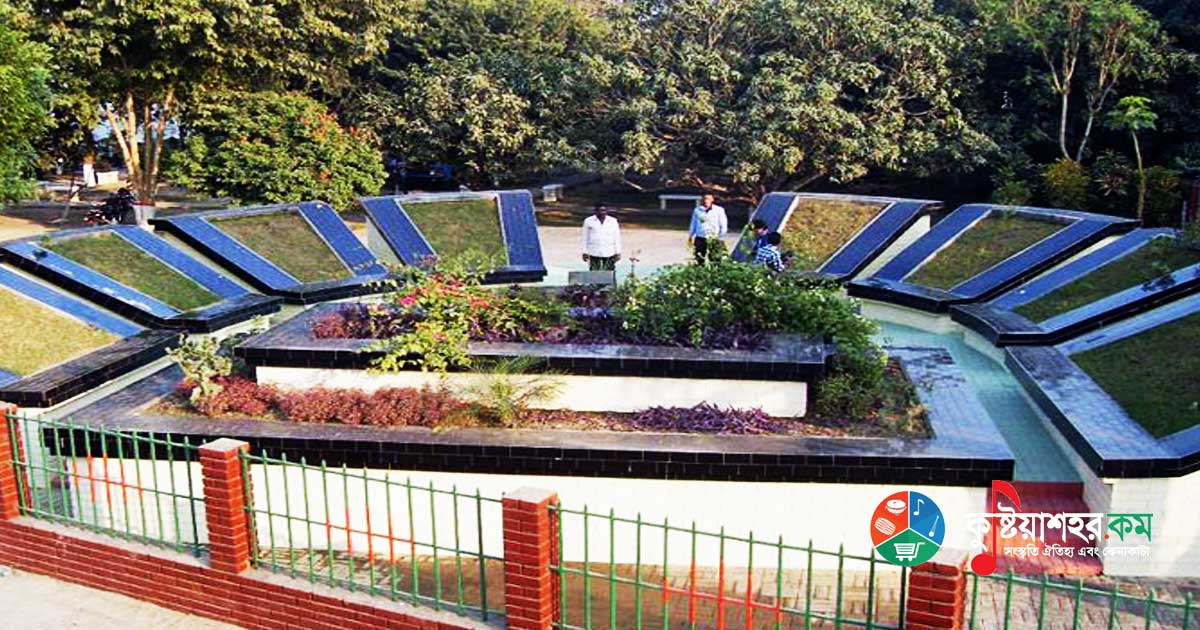
Madhusudan's last life passed through extreme sorrow and poverty. He could not achieve much success in the law business. Moreover, because of his extravagant nature, he also fell into debt. On 29 June 1873 AD he died penniless (in want of money) at the Alipore General Hospital. In the final phase of the great poet's life he left behind an unforgettable series of lines as a mark of his deep love for his birthplace. The following poem is written at his burial place:
'Stand, O traveller, if your birth
be in Bengal! Stay a moment! On this burial ground
(as a child finds rest on its mother's lap
at rest) sleep-wrapped on the earth lies
the poet born of the Dutt family, Sri Madhusudan!
Sagardari in Jessore, on the banks of the Kopotaksho,
his birthplace, and the giver of birth, the great-souled Dutt
named Rajnarayan, the mother Jahnabi'
Literary works
Poetry
- Tilottama Sambhab 1860
- The Captive Lady 1849
- Brajangana Kavya 1861
Epics
- Meghnadbadh Kabya 1861
Sonnets
- Chaturdashpadi Kabitabali 1865
Letter-poems
- Birangana 1862
Plays
- Sarmistha 1859 - the first successful play of Bengali literature.
- Krishnakumari 1861
- Padmavati 1860
- Mayakanan
Farces
- Buro Shaliker Ghare Ron 1860
- Ekei Ki Bole Sabhyata 1860
Translations
- Hector Badh - (Bengali translation of Homer's Iliad) 1862
How to get there:
By road- From Kushtia, crossing Jessore by the Kushtia-Khulna national highway, from a place called Rajar Hat, about 36 km on the Satkhira Road lies the Keshabpur Upazila Parishad. From the parishad, crossing about 16 km from Keshabpur to Sagardari, lies the ancestral birthplace of the great poet Michael Madhusudan Dutt.