বাংলা
 English
In the village of Maizbhandar in Fatikchhari, Chattogram, sits the birthplace of the only Sufi order to have originated in the Bengal region. Every January an Urs festival floods this quiet village with hundreds of thousands of devotees — the fruit of seeds sown by a scholar-mystic who gave up both a judgeship in Jessore and a headmastership in Calcutta for the spiritual path. This is the full history of Maizbhandar Darbar Sharif: its founder Syed Ahmad Ullah (1826–1906), the line of successors, more than ten thousand Maizbhandari songs, and the folk minstrel who wrote the best of them.
Where is Maizbhandar?
The village of Maizbhandar lies in Fatikchhari upazila of Chattogram district, Bangladesh, about 42 kilometres north of the port city. In the early nineteenth century it was a remote hamlet; today its name stands for a Sufi tariqa, a musical genre and one of the largest annual religious gatherings in the country. The darbar complex holds the founder's shrine, a mosque, residential mansions and a pond, and draws pilgrims from far and wide through most of the year.
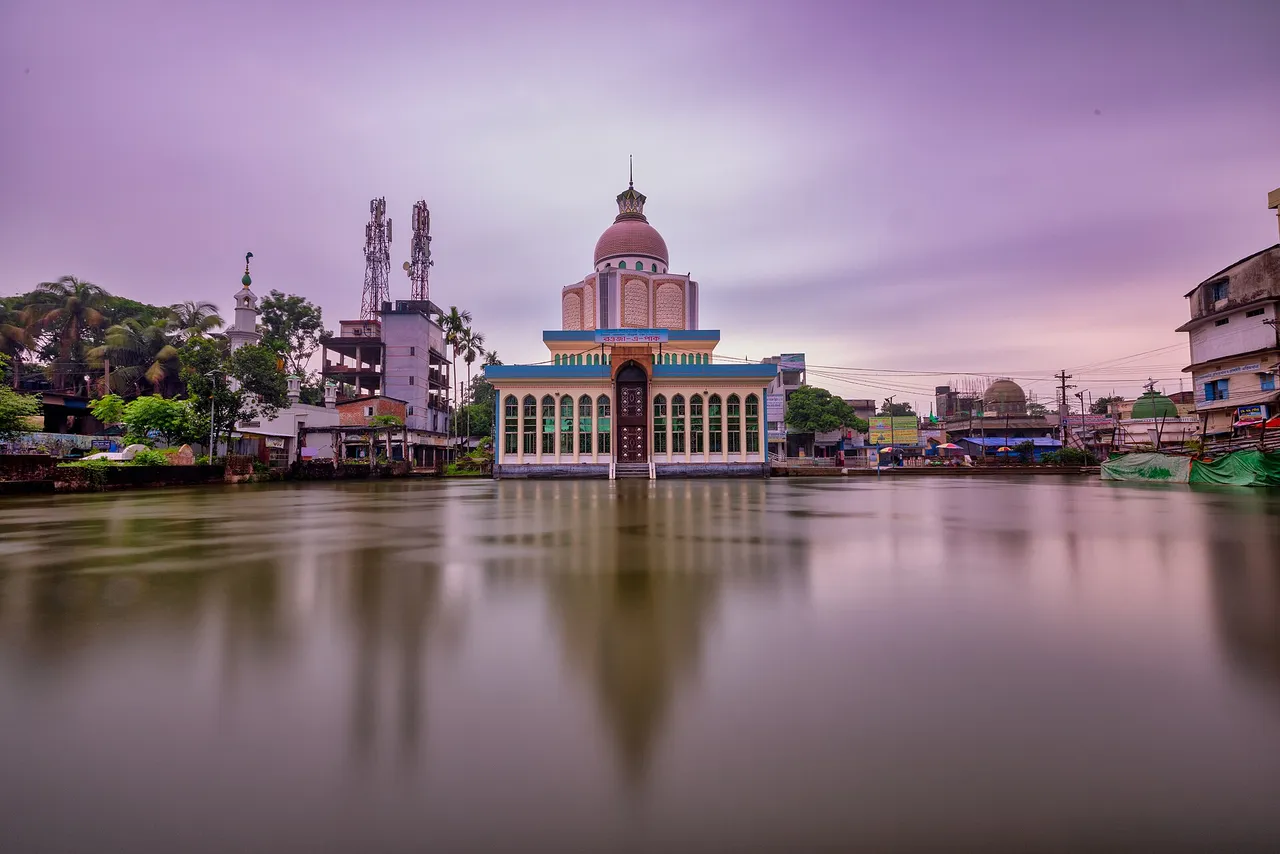
The shrine complex by its pond (Photo: Azimronnie / Wikimedia Commons, CC BY-SA 4.0)
The founder: Syed Ahmad Ullah — birth, lineage and education
Syed Ahmad Ullah was born on 14 January 1826 (1 Magh 1233 of the Bengali calendar) in Maizbhandar itself, to Syed Motiullah and Sayeda Khairunnesa. His forefathers were Sayyids who, tradition holds, travelled from Madinah via Baghdad and Delhi to Gaur, the medieval capital of Bengal. His great-great-grandfather Syed Hamiduddin served as Gaur's appointed imam and qadi; when an epidemic swept the city he moved to Patiya in Chattogram, and his son Syed Abdul Qadir became the imam of Azimnagar in Fatikchhari — rooting the family in this region.
After finishing at the village maktab, Ahmad Ullah enrolled at Calcutta Madrasa (Aliya) for higher education (1260–1268 AH). Fluent in Arabic, Persian, Urdu and Bengali, he mastered hadith, tafsir, fiqh, logic and philosophy, and gained a reputation in his time as an accomplished preacher and orator.
From qazi to Sufi
On completing his studies he joined, in 1269 AH, the judicial service as qazi of the Jessore region under British-ruled undivided India, and topped the munsefi (law) examination while in office. Within a year, however, he resigned to return to teaching — as head teacher of Calcutta's Munshi Bu Ali Madrasa.
Then came the decisive turn of his life: he took bay'ah in the Qadiriyya tariqa under the Sufi master Syed Abu Shahama Muhammad Saleh Qadiri Lahori, who granted him khilafat. He also studied under the teacher's brother, Dilwar Ali Pakbaz Lahori. Before long he withdrew from worldly duties altogether and devoted himself entirely to spiritual life.
1857: from a family home to a darbar sharif
At his pir's instruction, Syed Ahmad Ullah returned to his native village in 1857. His own home gradually became a spiritual darbar as seekers and supplicants gathered, and people came to call it Maizbhandar Darbar Sharif. For nearly half a century he practised devotion and served the people there. He died on 23 January 1906 (10 Magh 1313 BS; 27 Dhu al-Qi'dah 1323 AH) at the age of eighty and was buried at Maizbhandar. Devotees address him by titles such as Gausul Azam, Hazrat Kebla, Bara Maulana, Khatemul Ald and Shai-e-Lillah.
The successors: from Baba Bhandari to the present
Leadership of the darbar passed to the founder's nephew Syed Golamur Rahman (1865–1937), beloved to devotees as Baba Bhandari. His uncle fondly called him "the rose of my garden". Late in life he withdrew so deeply into meditation that he rarely spoke — hence his reputation as a magdub pir. His death anniversary falls on 22 Chaitra (usually 5 April), the date of his Urs.
The most popular twentieth-century successor was Syed Ziaul Haq (1928–1988), Baba Bhandari's grandson. Devotees call him "Biswa Wali" (saint of the world), "Shahenshah" or affectionately Zia Baba; he greatly expanded the order's reach, and his Urs is held each October.
Scholar Hans Harder describes how Maizbhandar's legacy today runs through two family lines — the founder's own descendants (Ahmadia Manzil) and Baba Bhandari's line (Rahmania Manzil) — serving side by side. At present Syed Mohammad Hasan Maizbhandari and Syed Saifuddin Ahmad lead the darbar's activities. The family's standing extends beyond the shrine: Baba Bhandari's grandson Syed Najibul Bashar Maizbhandari chairs the Bangladesh Tarikat Federation, has served as a member of parliament, and heads the Bangladesh Dargah Mazar Federation.
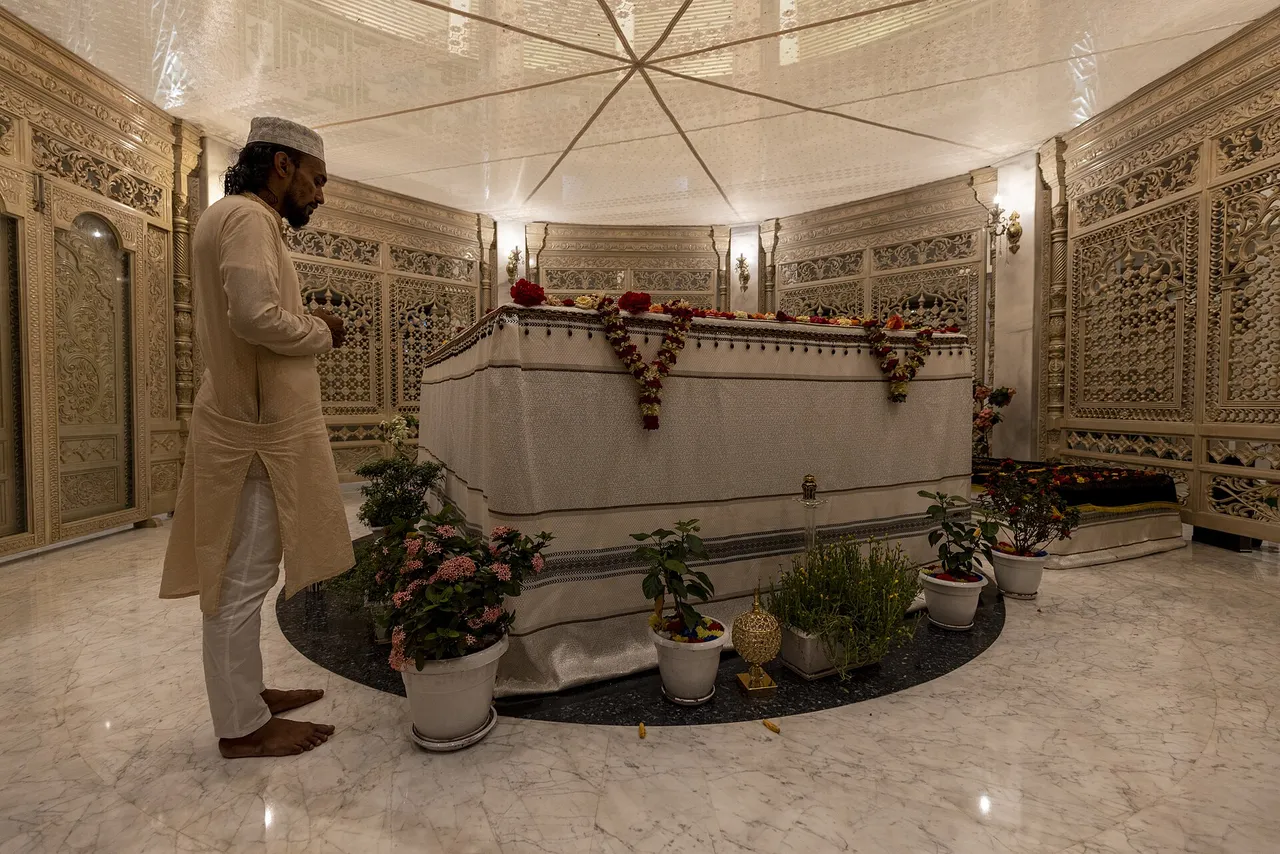
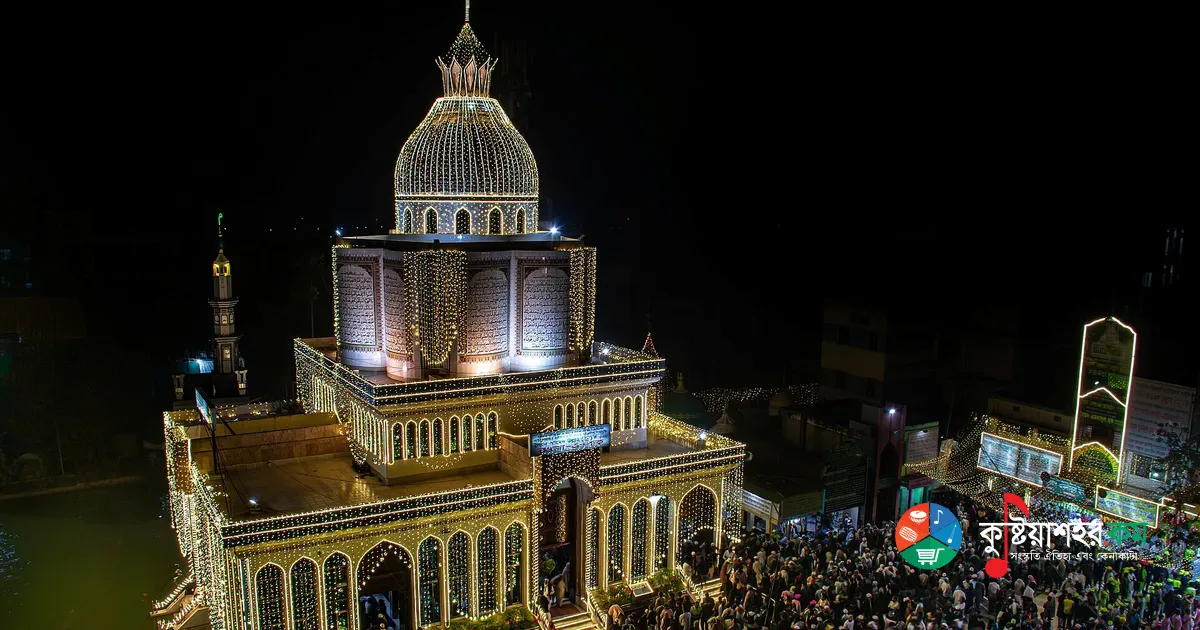
A devotee's visitation at the darbar sharif (Photo: Azimronnie / Wikimedia Commons, CC BY-SA 4.0)
'Vibrant Sufism': what makes the Maizbhandari order distinct
Grown out of the Qadiriyya tradition, the Maizbhandari tariqa is known as the only Sufi order to originate in Bengal. Followers call its approach vibrant Sufism — music as the vehicle of devotion, and spiritual practice woven into ordinary people's everyday lives. Zikr, milad and mystic song are the order's lifeblood. Followers also point to a prophecy attributed to the great Sufi thinker Ibn Arabi (d. 1240) that a great saint would be "born in China" and speak the local tongue; Maizbhandaris read that "China" as Chattogram and see Syed Ahmad Ullah as the awaited saint.
Research reports estimate more than one million followers. What marks the order out most, however, is its spread across every layer of society — from villagers to the urban middle class, with participation of non-Muslims entirely normal; some of the best-known performers on the Urs stage are Hindus.
The Maizbhandar Urs: a fair of hundreds of thousands
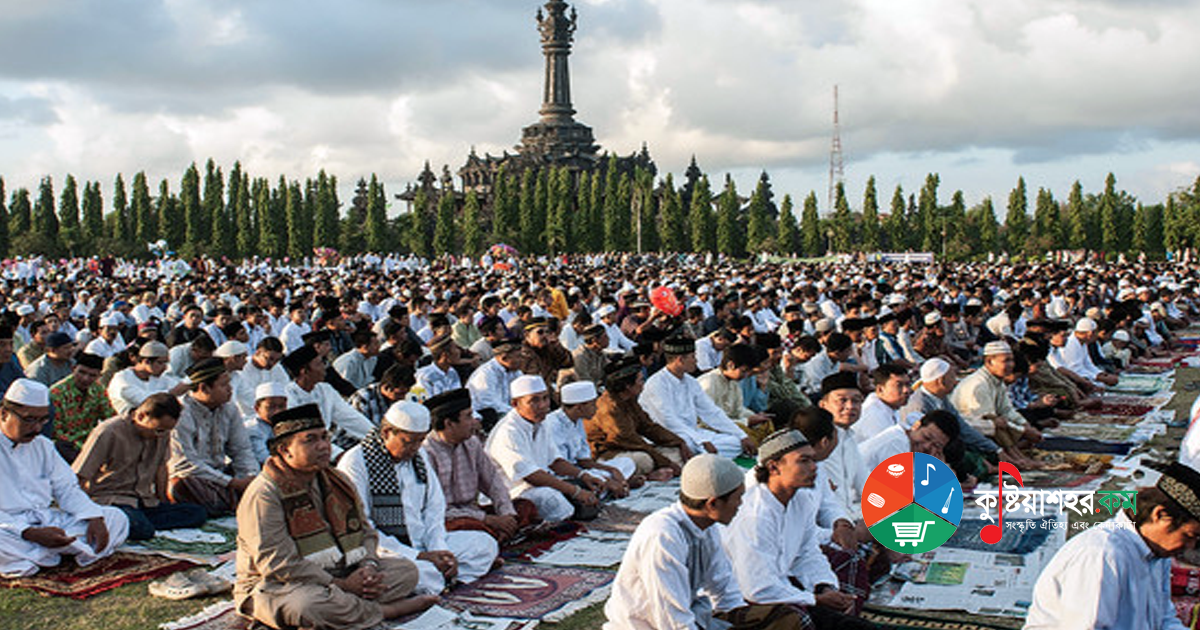
The main Urs, commemorating the founder's death, is held over three days on 8–10 Magh of the Bengali calendar (usually the last week of January). Half a million to six hundred thousand people converge, turning the village into a sea of humanity — some claim it is among the world's largest Muslim congregations. Chants of "Amin, Amin" fill the grounds through milad, zikr, discussion sessions and Maizbhandari song; visitors have ranged from the Chief Justice to foreign ambassadors.
Nor is January the only occasion: Baba Bhandari's Urs falls on 22 Chaitra (early April) and Zia Baba's Urs in October, so several times a year Maizbhandar becomes a fairground of devotees.
Maizbhandari songs and the minstrel Ramesh Shil
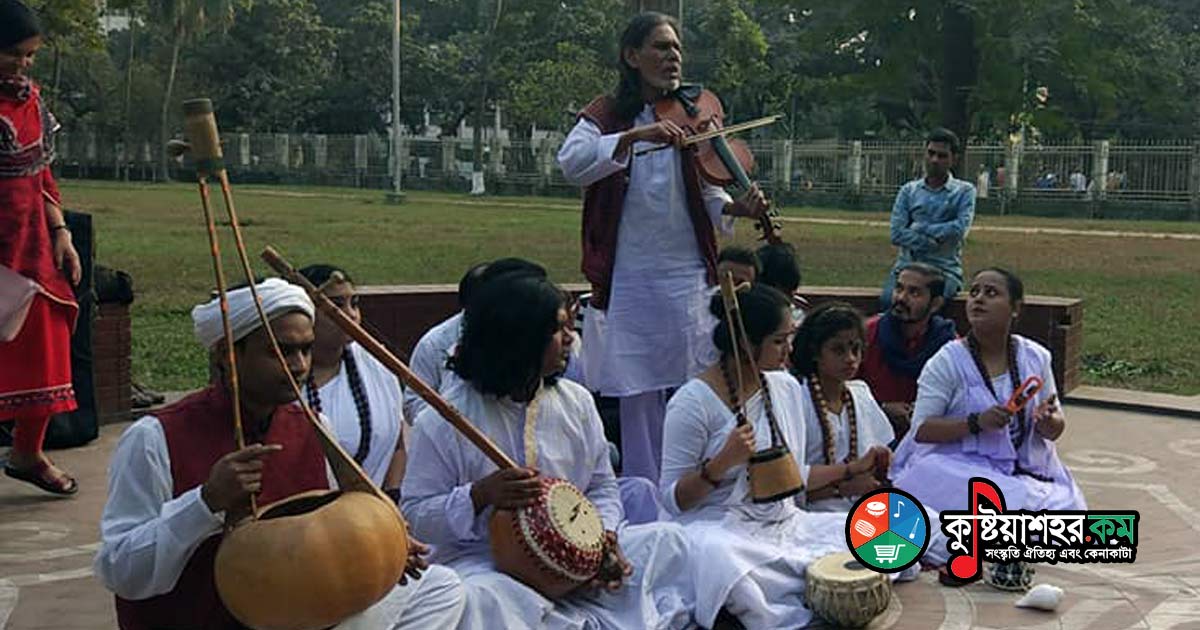
Born alongside the tariqa is a distinct Bengali musical genre — Maizbhandari songs. Researchers count more than 10,000 songs by over a hundred devotee-poets: Syed Abdul Hadi Kanchanpuri, Syed Abdul Gani (Mokbule Kanchanpuri), Bazlul Karim Mandakini, Abdus Salam Bhujpuri, Aminul Haq Dharmapuri, Abdul Gafur Hali, Manmohan Datta and many others. The order is rich in theological writing too — Abdul Gani Kanchanpuri's Urdu work Aina-e-Bari (1915) is regarded as its fullest statement.
Above them all stands kabiyal Ramesh Shil (1877–1967) of Gomdandi village, Boalkhali, known widely as "Ramesh Maizbhandari". Rising from the folk kabigan tradition, he composed roughly 350 Maizbhandari songs across nine collections — Ashekmala, Shantibhandar, Muktir Darbar, Nure Duniya, Jibansathi, Satyadarpan, Bhandare Maula, Manab Bandhu and Eske Sirajia — still sung in the Urs grounds today.
Two ends of mystic Bengal: Lalon and Maizbhandar
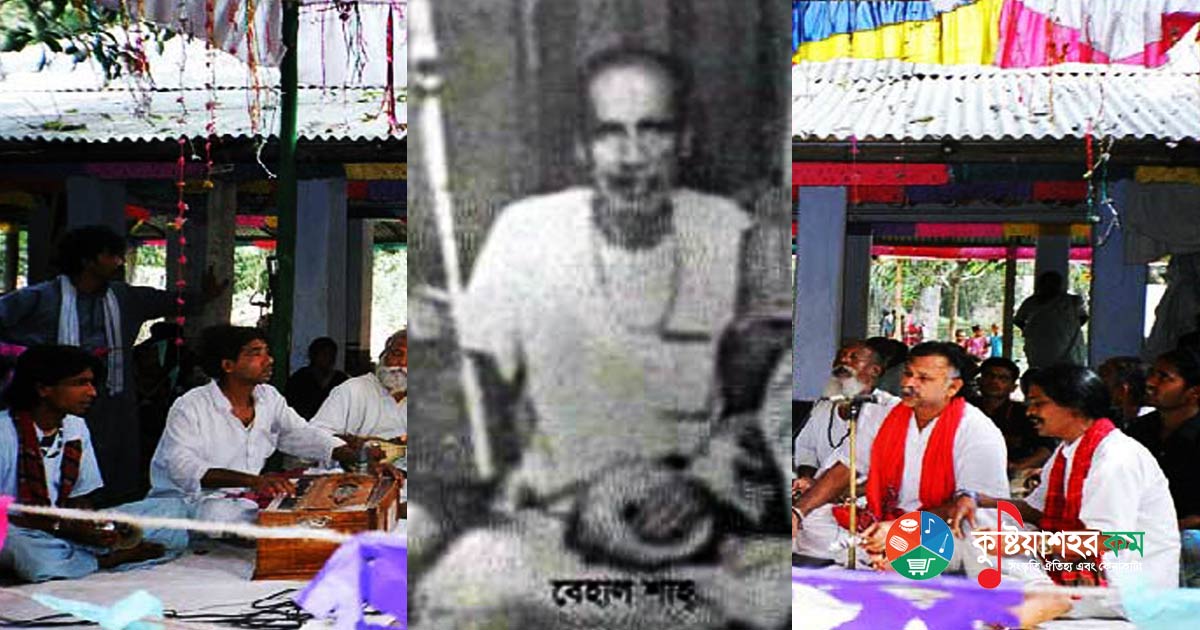
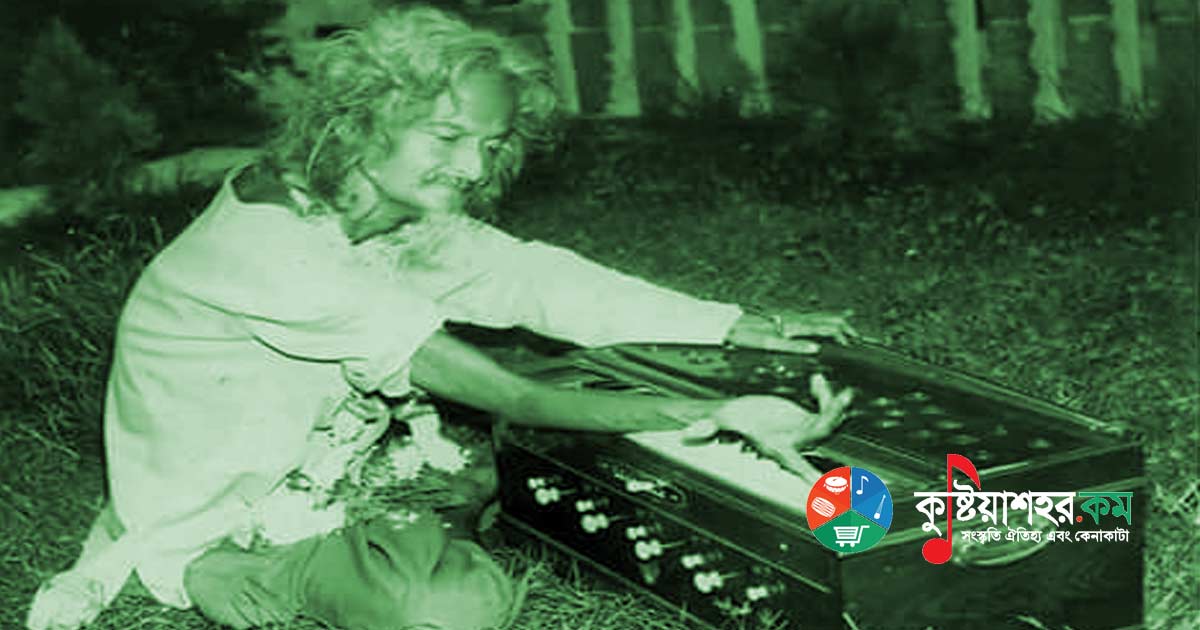
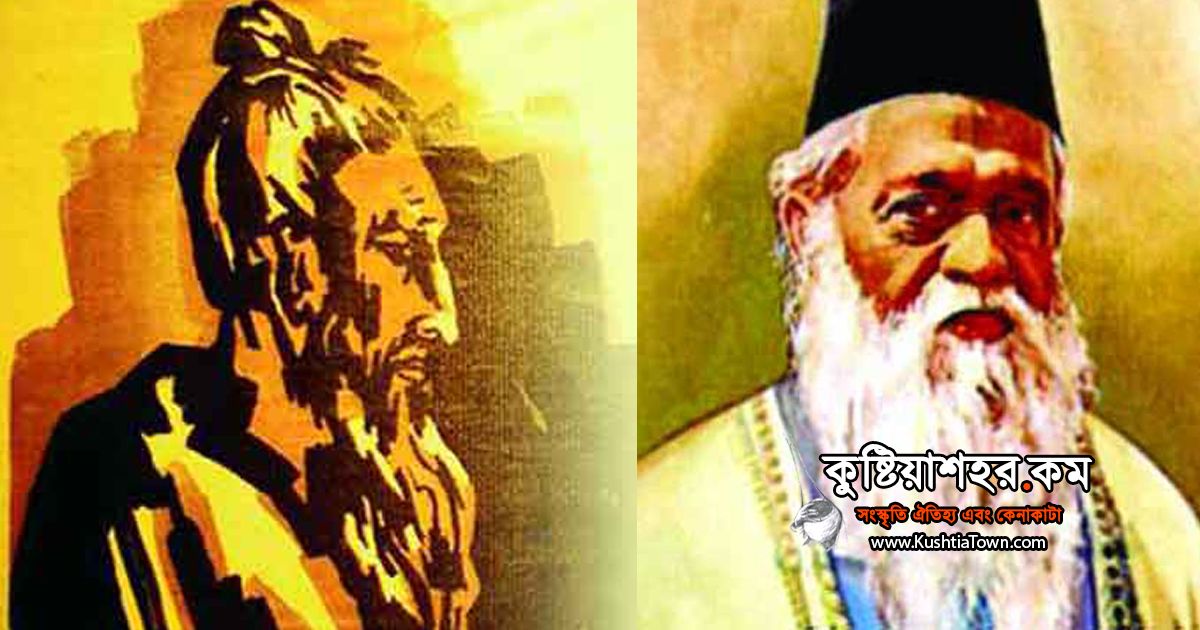
Bengal's mystic sensibility flows through two great parallel streams: the Kushtia-centred world of Lalan's songs, and the Chattogram-centred world of Maizbhandari devotion. Both take music as the vehicle of spiritual practice, and both remain vibrantly alive in the folk mind. Ramesh Shil's life is the proof — a kabigan minstrel who became the formative poet of Maizbhandari devotional music; that shared folk-song world is the thread that ties all of Bengal's mystic traditions together.
Maizbhandar Darbar Sharif at a glance
| Subject | Details |
|---|---|
| Founder | Syed Ahmad Ullah (Gausul Azam); born 14 January 1826 |
| Died | 23 January 1906 (10 Magh 1313 BS) |
| Location | Maizbhandar village, Fatikchhari upazila, Chattogram (~42 km from the city) |
| Founded | 1857 — his family home became a spiritual darbar |
| Tariqa | Maizbhandari (from the Qadiriyya); followers call it 'vibrant Sufism' |
| Main Urs | 8–10 Magh (late January), three days |
| Other Urs | Baba Bhandari: 22 Chaitra (April); Zia Baba: October |
| Maizbhandari songs | 10,000+, by over a hundred poets including Ramesh Shil |
| Followers | Over one million, per research reports |
Sources
- Bangla Wikipedia — সৈয়দ আহমদ উল্লাহ, মাইজভান্ডার দরবার শরীফ, মাইজভান্ডারি গান, রমেশ শীল
- English Wikipedia — Maizbhandari, Gulamur Rahman, Sayed Ziaul Haq, Syed Najibul Bashar Maizbhandari
- Hans Harder, Sufism and Saint Veneration in Contemporary Bangladesh: The Maijbhandaris of Chittagong (Routledge, 2011)
- Prothom Alo — "Fotikchhorir Maizbhandar orse bhoktader milanmela" (January 2017)
- Samakal — "'Baba Bhandari'r orse jonarannyo Maizbhandar" (April 2026)