বাংলা
 English
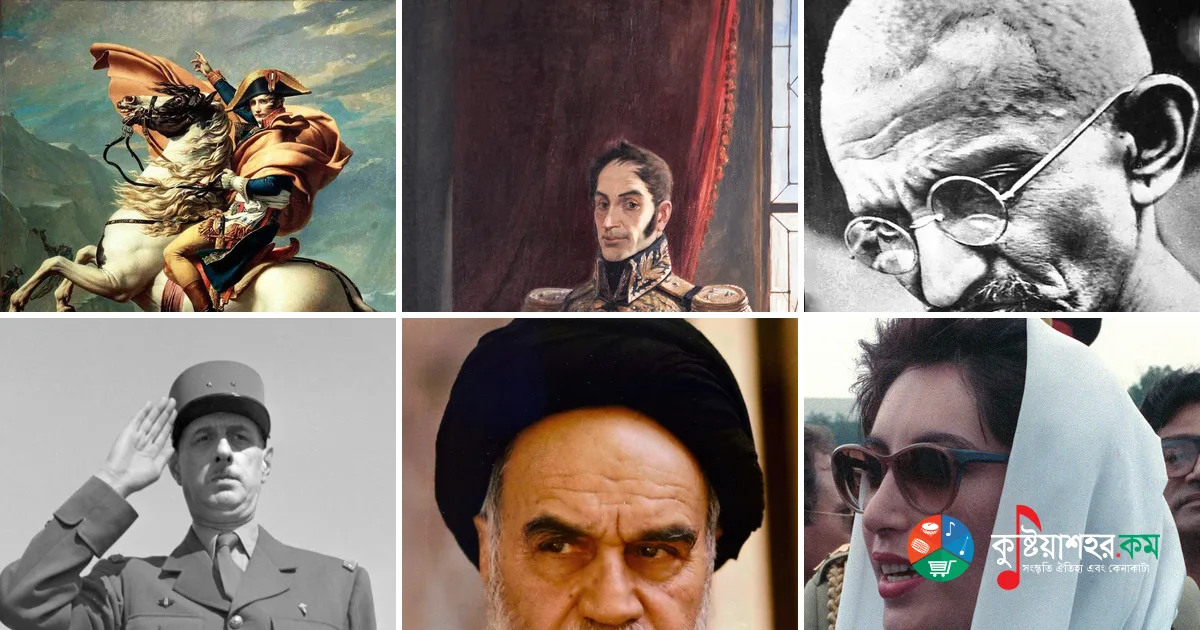
History now and then pushes its leaders out of their own countries—defeat, coups or a ruler’s fear turn exile into their fate. Yet some of them return, and the return itself bends a nation’s course: one becomes emperor for a hundred days, one frees a continent, one lays the foundations of a new state, and for one the season of return turns out to be the last season. Six world leaders’ journeys home—how they left, why they left, how they came back and what followed—are, taken together, a portrait of history itself.
Exile: politics’ oldest weapon
Pushing a leader out of the country is an old way of keeping rivals quiet—if prison is a school, exile is a longer examination. Whether it is a defeated general or a popular agitator, the arithmetic is the same: far away, he cannot reach for power. History has proved, though, that distance does not shrink a leader’s influence—rather it turns the day of return into a crowd’s festival. The six stories below carry six kinds of departure, six kinds of return, and six kinds of ending.
Napoleon Bonaparte: emperor of the Hundred Days
After the dream of conquering Europe collapsed, Napoleon was forced to give up the throne in 1814 and was exiled to the small Mediterranean island of Elba. The island could not hold him: in early 1815 he slipped away by ship, returned to France, entered Paris in March and took back the throne—the restoration known as the Hundred Days. As Europe raised coalition armies, Waterloo delivered the final defeat on 18 June 1815; the second exile was even farther away, on the fog-bound Atlantic island of Saint Helena, where his life ended on 5 May 1821.
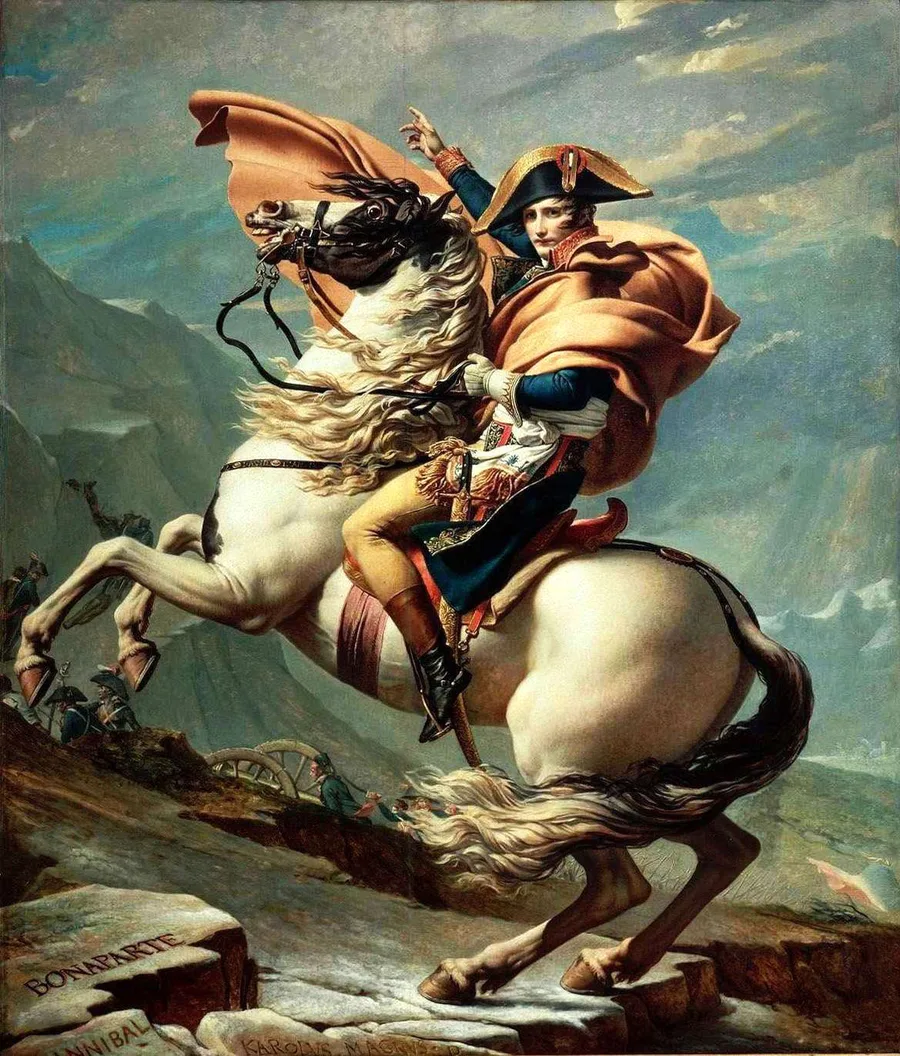
Jacques-Louis David’s "Napoleon Crossing the Alps" (Photo: Jacques-Louis David, Wikimedia Commons, Public domain)
Simón Bolívar: from exile to a freed continent
After a chain of defeats in Venezuela’s independence war, when Spanish forces crushed New Granada in 1815, Bolívar fled into exile in Jamaica—his famous Jamaica Letter, written there, became a synonym of hope against Spain. A friendship in Haiti changed his fortunes: in return for a promise to abolish slavery in Spanish America, the revolutionary leader Pétion gave him arms and money, and Bolívar returned to Venezuela. That return turned the tide—ultimately Bolivia, Colombia, Ecuador, Panama, Peru and Venezuela all broke free of Spain, and he became "El Libertador". His personal ending was sombre all the same: he died in 1830 amid political isolation.
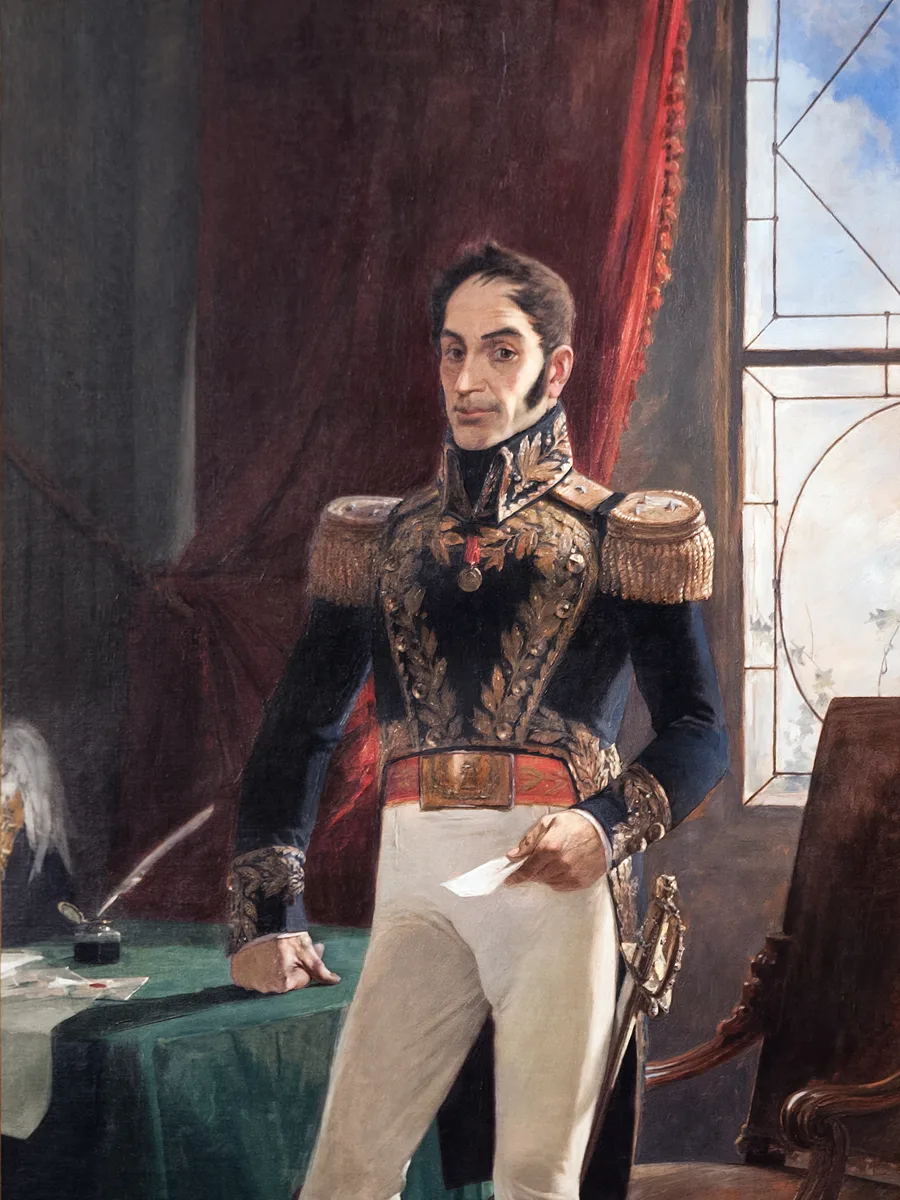
Simón Bolívar painted by Arturo Michelena (Photo: Arturo Michelena, Wikimedia Commons, Public domain)
Mahatma Gandhi: from South Africa back to India
Gandhi’s departure was not banishment but fate—as a young lawyer, on a lawsuit’s business, he sailed to South Africa in 1893 and stayed nearly two decades; non-violent satyagraha was born there too. Returning to India at forty-five, in 1915, he began organising everyone from the peasants of Champaran to urban workers; taking charge of Congress in 1921, he shaped the independence movement up to the 1930 Dandi Salt March. Three decades after the return, British India became independent in 1947—though the wounds of Partition gave him no peace, and on 30 January 1948 he was assassinated.
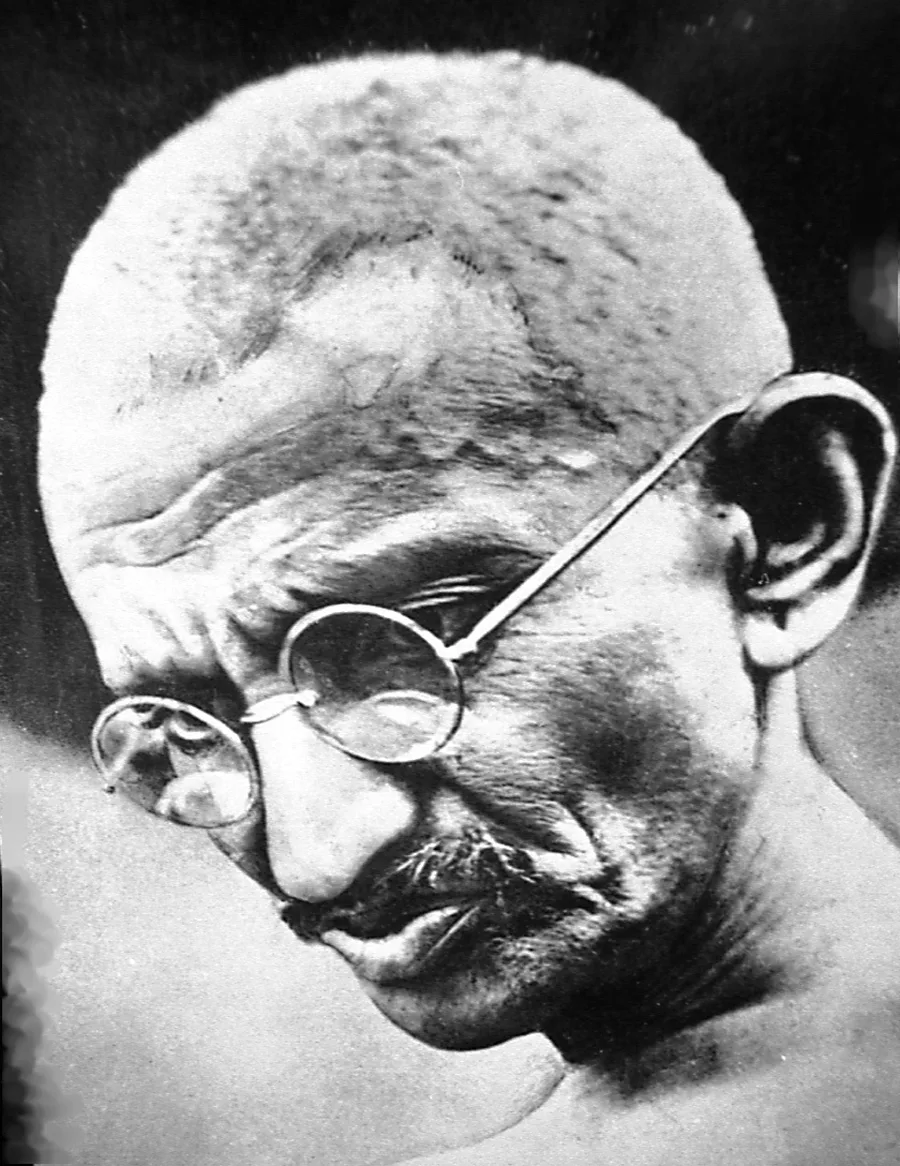
Mohandas K. Gandhi, photographed in 1931 (Photo: Wikimedia Commons, Public domain)
Charles de Gaulle: the London call and the return to Paris
When France was buckling under the German assault of May–June 1940, the young undersecretary for war, de Gaulle, left for London—his 18 June appeal broadcast by the BBC called the nation to keep fighting, and he rose as leader of the Free French. After four years of organising, in June 1944 he became head of the French Provisional Government, and in August he reached liberated Paris—the city that had tried to silence him now marched for him. Later, away from politics, the 1958 Algiers crisis brought him back again—he wrote the Fifth Republic’s constitution and served as president until 1969.
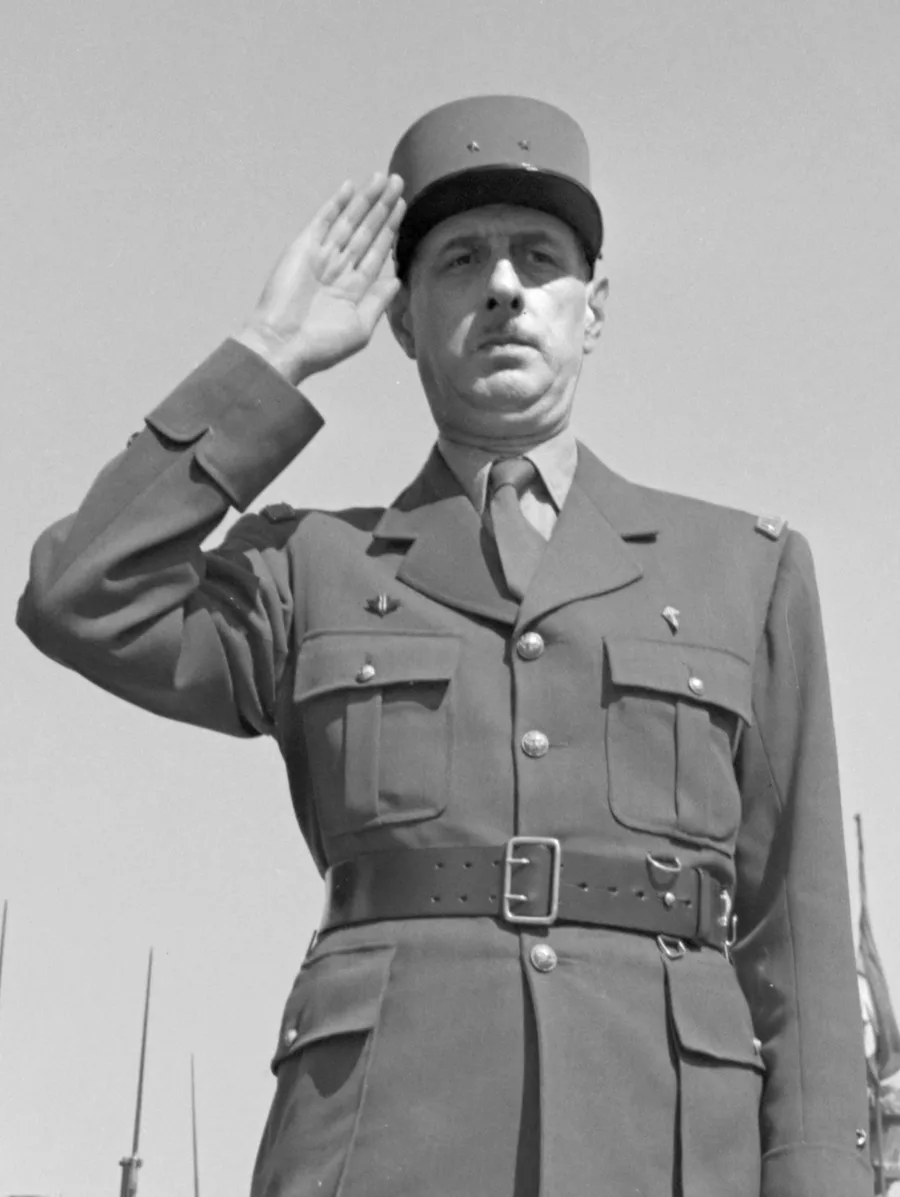
Charles de Gaulle in Tunisia, 1943 (Photo: Wikimedia Commons, Public domain)
Ruhollah Khomeini: from a suburban house to Tehran
For opposing the Shah’s White Revolution, Khomeini was expelled by the state in 1964—first to Bursa in Turkey, then for long years to Najaf in Iraq; under Iraqi pressure in 1978 he moved on to Neauphle-le-Château near Paris. His hard-line speeches were travelling back into Iranian homes on cassettes—the revolution was walking toward this exiled cleric. As the movement won, he returned to Tehran on 1 February 1979, became the state’s de facto head from February and, at the year’s end, the first supreme leader of the Islamic Republic—until his death in 1989.
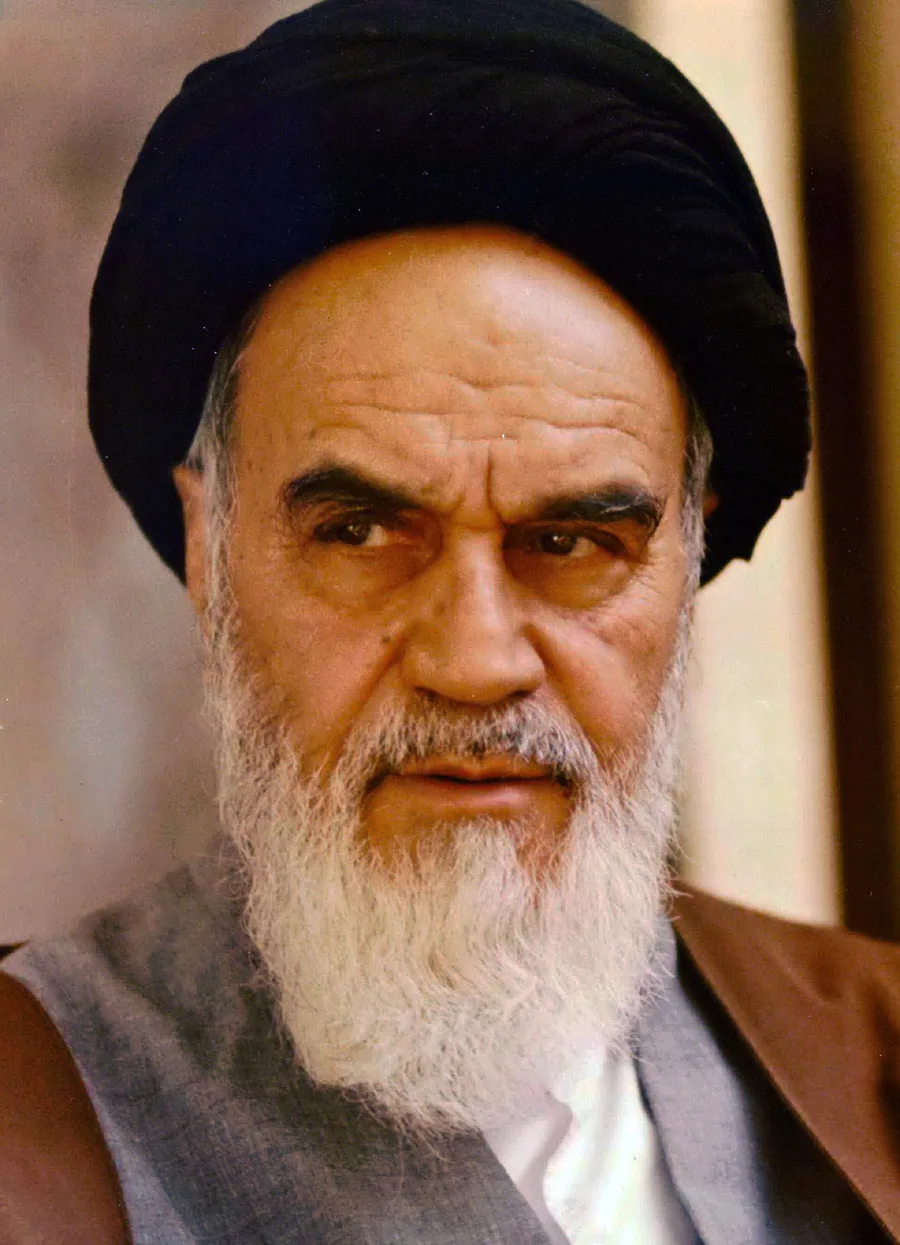
Ruhollah Khomeini, photographed by Ali Kaveh (Photo: Ali Kaveh, Wikimedia Commons, Public domain)
Benazir Bhutto: twice in exile, killed on the last return
After the 1977 coup toppled her father Zulfikar Ali Bhutto, Benazir faced repeated imprisonment under Zia-ul-Haq’s rule; in 1984 she went into voluntary exile in Britain and took over her father’s People’s Party. Her 1986 return to Lahore drew an enormous crowd—and just two years later, in 1988, she became Pakistan’s first and only woman prime minister. Dismissed in 1990, in office again 1993–96, then exiled a second time after the 1999 coup; she returned to the country in 2007—and on 27 December of that very year was killed in Rawalpindi while campaigning. Her story shows that a return is not always a victory.
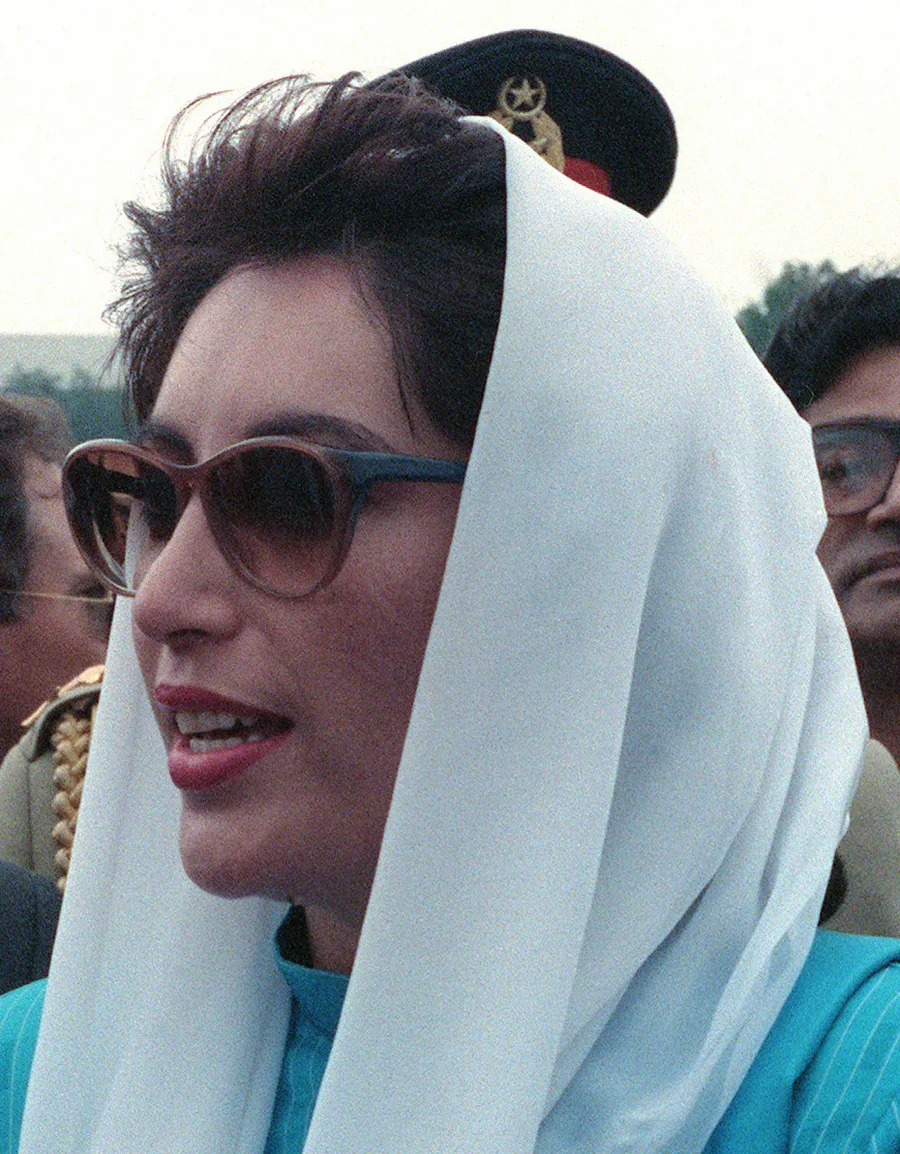
Benazir Bhutto as prime minister, 1989 (Photo: Wikimedia Commons, Public domain)
What follows a return
Placed side by side, these six stories show a pattern: exile is not a leader’s end but, in many cases, the start of a second life—organising from afar, letters, speeches and cassettes shape minds back home. Yet the history after the return stays uncertain: Napoleon’s homecoming summoned another downfall, Gandhi’s and Benazir’s ended in assassination, Bolívar’s victories sank into personal isolation, while de Gaulle’s and Khomeini’s returns built new state structures. The difference lies not in the moment of return but in the mason’s work afterwards. For the ancient layers of Bengal’s own past, see our feature on the Ancient History of Bangladesh.