বাংলা
 English
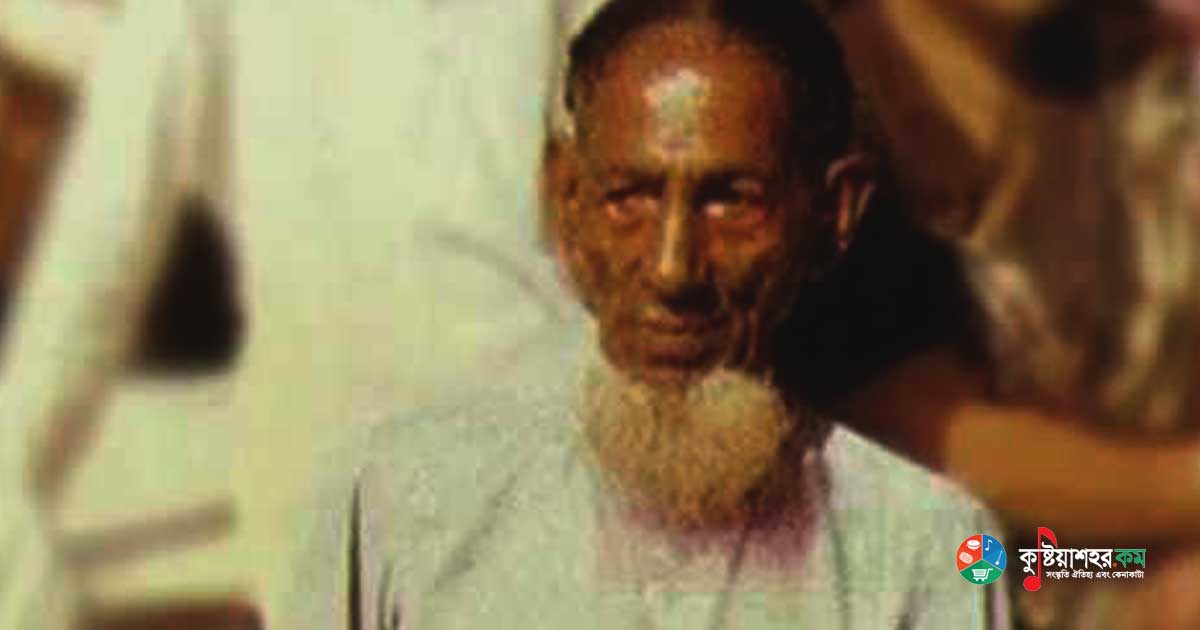
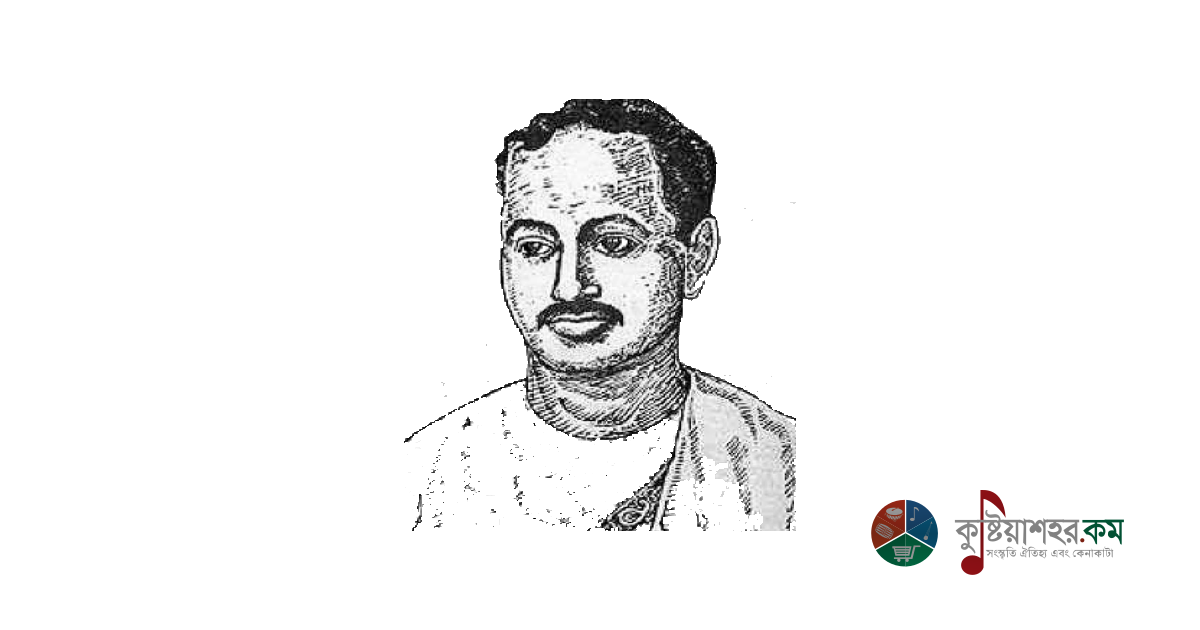
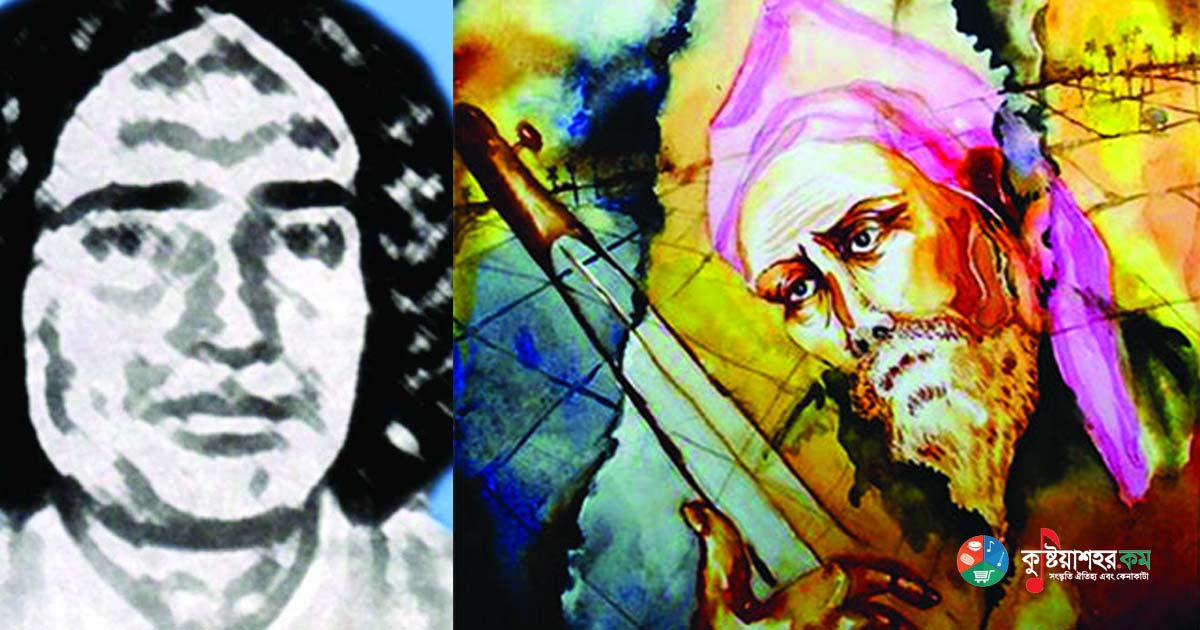
Arjj Ali Matubbar (born 17 December 1900 - died 15 March 1985) was a Bangladeshi philosopher, humanist, thinker and writer. His real name was 'Arjj Ali'. By virtue of being a regional landlord he took the name 'Matubbar'.
He studied for some time at the village maktab, where instruction was given only on the Quran and other Islamic history. Through his own effort and endeavour he acquired knowledge of various subjects including science, history, religion and philosophy. Many-sided enquiries about religion, the world and life emerge in his writings. Of his 86-year life he spent 70 years in the library studying. For the distribution of knowledge, with his earned resources he built up the 'Arjj Manjil Public Library'. He received lifetime membership of the Bangla Academy (1985), the 'Humayun Kabir Smriti Puraskar' (Humayun Kabir Memorial Award) of the Bangladesh Lekhok Shibir (1978) and the honour of the Bangladesh Udichi Shilpigoshthi (Barishal branch) (1982). He breathed his last on 15 March 1985 at the Sher-e-Bangla Medical College in Barishal.
Arjj Ali Matubbar — he was born on 17 December 1900 (3 Poush of 1307 of the Bengali era) in the village of Lamchari of Charbaria Union under Barishal district in the then British India, into a poor farmer's family. His father's name was Entaj Ali Matubbar. His mother was extremely pious. They were five siblings in the family. Arjj Ali Matubbar's real name was 'Arjj Ali'. By virtue of being a regional landlord he took the name 'Matubbar'. Arjj Ali read the 'Adorsholipi' under Sitanath Basak at the maktab run through the mosque of Munshi Abdul Karim of his village. Besides, he received instruction at the maktab on the Quran and Islamic history. Later, with the help of a kind-hearted person, he completed his primary education at school. At the same time he went on learning to read and write through his own dedicated effort. To quench his thirst for knowledge he read all the Bengali books of the Barishal Library like an attentive student. Philosophy was his favourite subject. But there were not enough books in the reading room. Later Kazi Golam Kadir, a teacher of philosophy at BM College, was charmed on seeing his knowledge-laden reasoning, and he made arrangements for books to be lent from the college library. Thus was his mental make-up formed. Through his own effort and endeavour he acquired knowledge of various subjects including science, history, religion and philosophy. Many-sided enquiries about religion, the world and life emerge in his writings.
His working life began with the paternal profession of farming. In the leisure of farm work, doing the work of land surveying, he acquired extraordinary skill in the subtle mathematical and geometrical rules of the amin profession.
In his childhood, after his mother's death, on the charge of taking a photograph of his mother, the village people were not willing to say the janaza prayer for her. In the end, a few men of the house together performed the burial rites of his mother. This incident worked behind Arjj Ali's opposition to religious bigotry and superstition and his becoming a seeker of truth.
Because of financial crisis, Matubbar could not obtain any institutional course or degree. In the gaps of farm work he learned land surveying or the work of an amin. He then took up the work of land surveying as a profession. In this way he accumulated some capital for the agricultural field. Putting his own labour, talent and intellect to work, he improved his financial condition and recovered the lands mortgaged to the zamindars and moneylenders.
Arjj Ali Matubbar married Lalmunnesa on 29 Agrahayan 1329. At the time of the marriage the bride's age was 21 years. They had three daughters: Esharon Nesa, Chholeman Nesa and Fayzonnesa; and one son: Abdul Malek. Later he married Sufia, the daughter of Abdul Karim Mridha of the neighbouring village. In this household they had four daughters: Hazera Khatun, Monowara Khatun, Nurjahan Begum and Bayamma Begum; and two sons: Abdul Khalek and Abdul Barek. He was the father of ten children.
Arjj Ali was essentially a believer in materialist philosophy. He wrote much against ignorance, superstition and religious bigotry. The imprint of free thought and rationalist philosophical wisdom is present in Arjj Ali's writings. Moved by the ideals of human welfare and universal religion, he arranged for the grant of scholarships to poor and meritorious students, the establishment of libraries and competitions of compositions. Besides these, he dedicated his own body and eyes to the service of humanity. Matubbar had friendly relations with many other egalitarian political figures of Barishal, including Professor Kazi Golam Kadir and Professor Muhammad Samsul Haque. He published the account of his beliefs and experiences in several books. Among the books written by him, 'Satyer Shondhan' (The Quest for Truth), 'Srishti Rahasya' (The Mystery of Creation), 'Sijer Phul' and 'Shoytaner Jobanbondi' are notable. The number of manuscripts written by Arjj Ali is 15 in all. Of these, 4 were published in his lifetime. These books are — 'Satyer Shondhan' (1973), 'Srishti Rahasya' (1977), 'Onuman' (1983) and 'Smoronika' (1988). Arjj Ali Matubbar also drew the cover of his first book. He wrote the book in 1952. It was published in 1973 under the title 'Satyer Shondhan'. The book brought him fame in the area as an 'educated person'. In the preface he wrote: "I think many things; my mind is full of questions, but in a scattered way. I then go on writing down the condensation of the questions, not for writing a book but only to remember later. Those questions are embedded in my mind like an infinite sea, and I gradually began to come out of the bounds of religion."
In this book he presents his questions and their rational explanations in 6 classes of philosophical questions. They are:
- First proposition: concerning the soul. There are 8 questions in this part.
- Second proposition: concerning God. There are 11 questions in this part.
- Third proposition: concerning the afterlife. There are 7 questions in this part.
- Fourth proposition: concerning religion. There are 22 questions in this part.
- Fifth proposition: concerning nature. There are 11 questions in this part.
- Sixth proposition: miscellaneous. There are 9 questions in this part.
In the first eight questions he expresses his own attitude. For example - 1. Who am I? (the self) 2. Is life corporeal or unworldly? 3. Are the mind and the soul the same thing? 4. What is the relation of the body or the mind with life? 5. Can we identify life? 6. Am I free? 7. Does the post-mortem soul hold knowledge without a body? And lastly, 8. How does the soul enter the body and leave it?
During the period of the Pakistan government he was criticised and accused for his writings. At that time his writings were banned.
Published Books
- Satyer Shondhane, (The Quest for Truth) (1973)
- Srishtir Rahasya, (The Mystery of Creation) (1977)
- Onuman, (Estimation) (1983)
- Smoronika (1982)
After his death, some unpublished manuscripts were published under the title 'Arjj Ali Matubbarer Rachonboli' (The Works of Arjj Ali Matubbar). Some of his writings were rendered into English, and those were bound in parts by the Pathok Shomabesh. Besides, he has some more published books. They are -
- McGlashan Chula (1950)
Arjj Ali Matubbar passed away on 15 March 1985 (1 Chaitra 1392 of the Bengali year) at the age of 84 at the Barishal Sher-e-Bangla Medical College Hospital. He donated his eyes after death. He made a posthumous donation of his body for use in the education of the students of medicine at the Anatomy Department of Sher-e-Bangla Medical College.
Honours
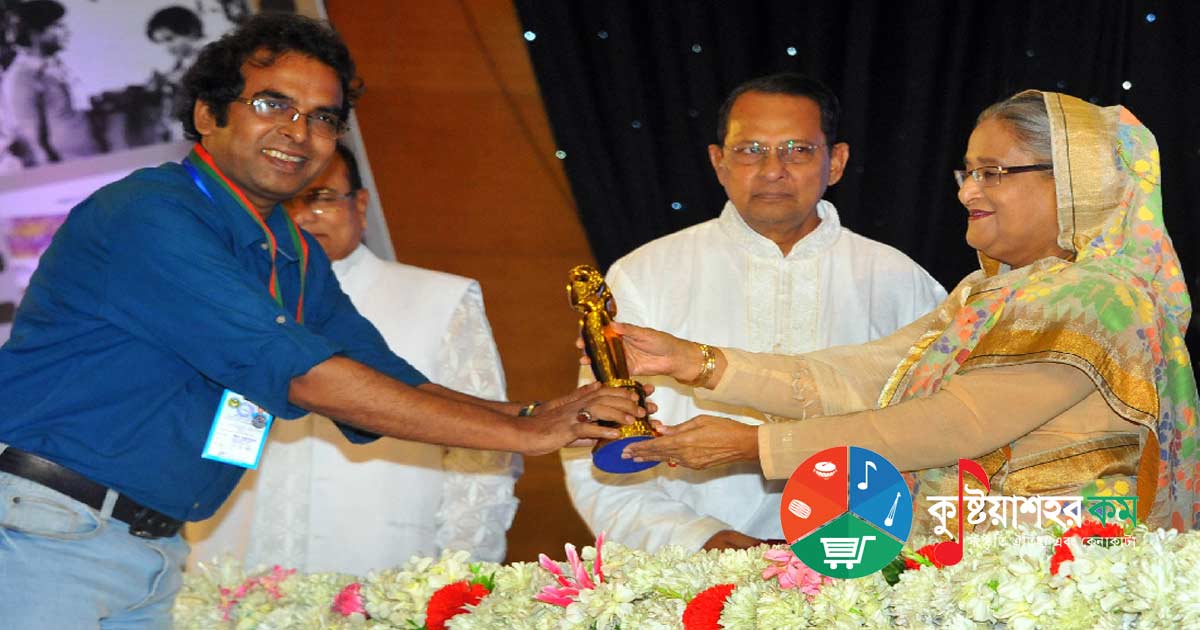
- Lifetime membership conferred by the Bangla Academy and the New Year felicitation on 1 Boishakh of the Bengali year 1392.
- Humayun Kabir Smriti Puraskar (1385 B.)
- Honour as a venerable personality by the Bangladesh Udichi Shilpigoshthi (1392 B.)
- Every year the Bigganchetana Parishad organises the Arjj Ali Matubbar Memorial Lecture in his memory.
Quotations
"There is a degree in the pursuit of learning, but no degree in knowledge; knowledge is degreeless and boundless"
"In the field of the pursuit of knowledge one should be respectful not only to one's own beliefs but to all opinions. Every knowledge-thirsty person needs to gain proper knowledge of all ideas and concepts. It does not do to remain confined within a limited environment. One must go beyond the boundary, step by step. Within this one can gradually transcend oneself."
"If a person feeds a hungry man and also plunders the belongings of a traveller and kills someone else, or gives a house to a homeless person and also sets fire to another's house, then he cannot be called 'merciful'."