বাংলা
 English
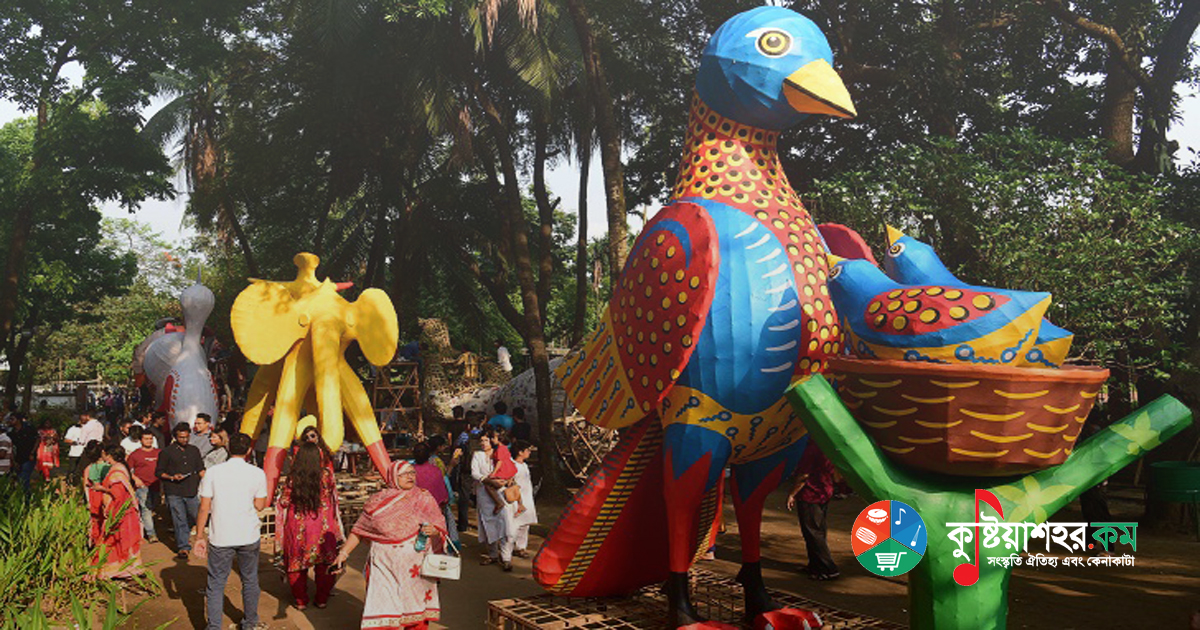
Pohela Boishakh (the 1st of Boishakh, the first month of the Bengali calendar) is the first day of the Bengali era, that is, the Bengali New Year. The day is the traditional new-year celebration day of the Bengali nation. It is observed as the New Year with special festivities in Bangladesh and in West Bengal, India. Bengalis living in Tripura also take part in this festival. Accordingly, it is regarded as a universal folk festival of the Bengalis.
According to the Gregorian calendar, this festival is celebrated in Bangladesh every year on 14 April. The day has been fixed in accordance with the modern Bengali calendar set by the Bangla Academy. In West Bengal, Pohela Boishakh is observed on 14 or 15 April according to the lunisolar Bengali calendar. The day is also observed as a public holiday in Bangladesh and West Bengal. Business people of various levels take the day as an occasion to begin business afresh.
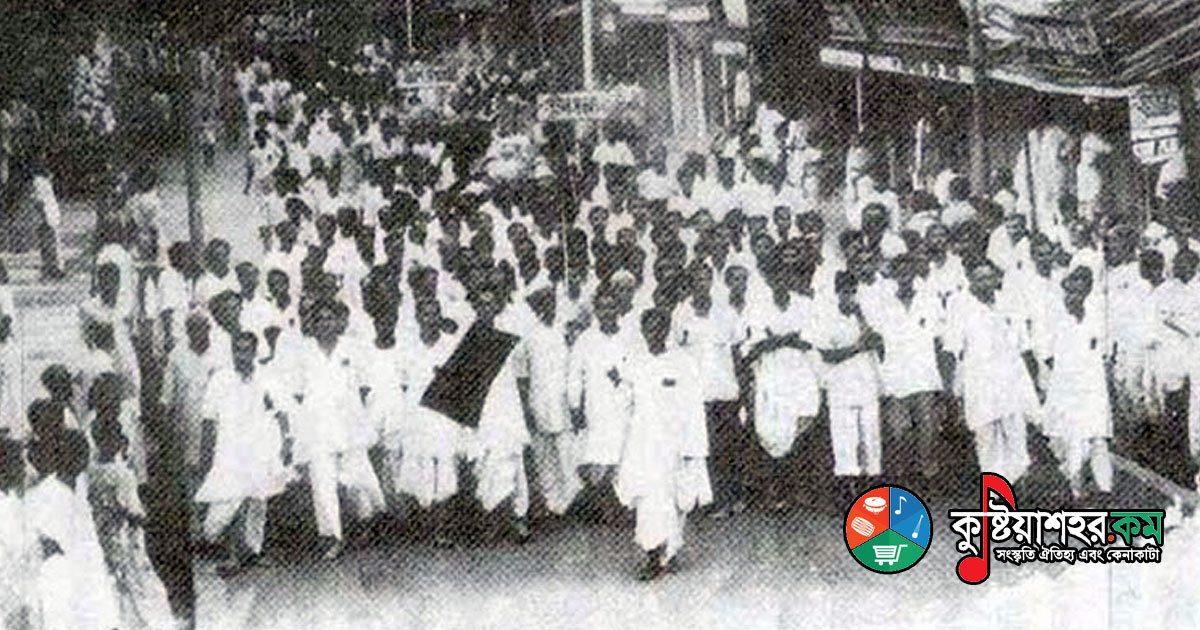
This festival is celebrated through various activities such as processions, fairs, eating panta bhat (fermented rice) and opening new ledgers (halkhata). The traditional Bengali New Year greeting is 'Shubho Noboborsho' (Happy New Year). On the occasion of the New Year, the Mangal Shobhajatra procession is organised in Bangladesh. In 2016, UNESCO declared this festival procession organised by the University of Dhaka an 'invaluable cultural heritage of humanity'.
According to the solar calendar, the twelve Bengali months had been observed from long before. This solar calendar began from around the middle of the month of April in the Gregorian calendar. The first day of the solar year had been observed from long ago as an integral part of the cultures of Assam, Bengal, Kerala, Manipur, Nepal, Odisha, Punjab, Tamil Nadu and Tripura. As the New Year has now become a universal festival celebrated on the occasion of the beginning of a new year, it was not always so. In those days the New Year, or Pohela Boishakh, was observed as an artab festival, that is, a seasonal festival. Its chief significance then was agriculture, because until the age of the application of technology began, farmers had to depend on the seasons.
After the establishment of the Mughal empire in India, the emperors collected taxes on agricultural produce according to the Hijri calendar. But as the Hijri year depended on the moon, it did not match the agricultural harvest. This forced the farmers to pay taxes at the wrong times. With a view to bringing order to tax collection, the Mughal emperor Akbar introduced the Bengali era. He essentially ordered that reforms be brought to the ancient calendar. In accordance with the emperor's order, Fatehullah Siraji, the famous astronomer and thinker of Bengal at the time, framed the rules of the new Bengali era based on the solar year and the Arabic Hijri year. The counting of the Bengali era began from 10 or 11 March 1584. However, this counting method was made effective from the time of Akbar's accession to the throne (5 November 1556). At first this era was named the Fashli San (harvest era), and later it came to be known as 'Bangabda', the Bengali year.
The celebration of Pohela Boishakh began from the time of Akbar. Then everyone was obliged to pay all taxes, dues and customs duties by the last day of the Bengali month of Chaitra. On the following day, that is, on Pohela Boishakh, the landlords entertained the inhabitants of their respective regions with sweets. On this occasion various festivals were organised. This festival became a social event whose form changed and has arrived at the present stage. In those times the main event of this day was the making of a halkhata. By halkhata is meant a new ledger book. In fact, halkhata is the process of formally updating the accounts of the shops on the first day of the Bengali year. In villages, towns or commercial areas — in all places the ledger of the old year is closed and a new ledger is opened. On the day of halkhata, shopkeepers entertain their customers with sweets. This custom still survives to a large extent, especially in gold shops.
News of the modern celebration of the New Year is first found in 1917. That year, praying for the victory of the British in the First World War, arrangements for kirtan and worship were made on Pohela Boishakh. Similar activities are also mentioned in 1938. Later, before 1967, the practice of celebrating Pohela Boishakh with fanfare did not become particularly popular.
The festival of the new year is closely connected with the culture and customs of the rural population. In the villages people rise from sleep at dawn, wear new clothes and go to visit the homes of relatives and friends. Houses are cleaned and decorated quite beautifully. There are also arrangements for special food. In the combined area of several villages, Boishakhi fairs are held on some open field. The fairs feature the marketing of all kinds of cottage-industry products and arrangements of various kinds of pithas (rice cakes). In many places there is an arrangement for eating panta bhat with hilsa fish. One old culture of this day is the organising of rural sports competitions. Among these, boat races, stick play (lathi khela) or wrestling were once prevalent. In Bangladesh, the biggest arena of such wrestling takes place on 12 Boishakh at the Laldighi Maidan in Chittagong, known as the Jabbarer Boli Khela (Jabbar's wrestling).
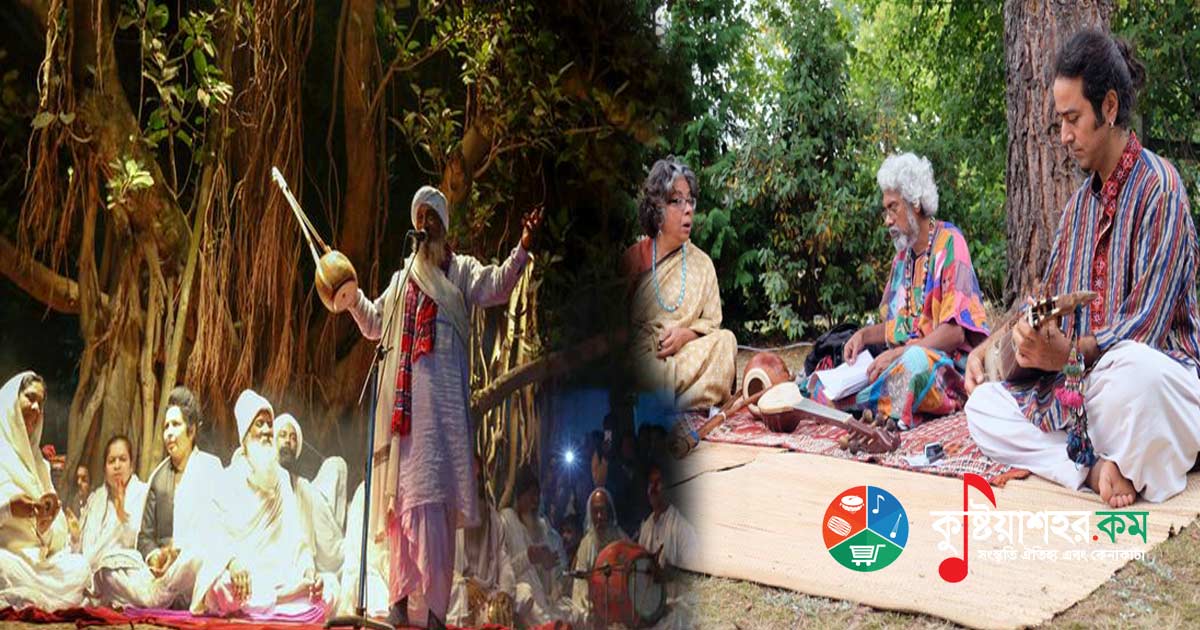
In Kushtia too, this day is celebrated every year in various ways through individual, institutional and government initiatives.