বাংলা
 English
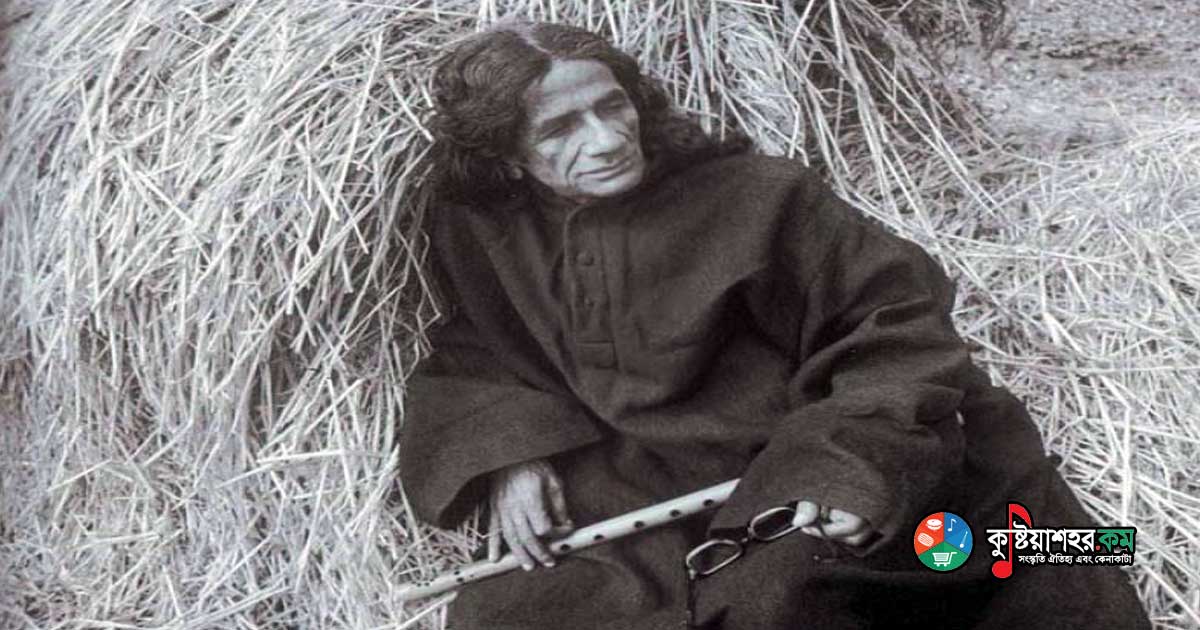
Sheikh Mohammed Sultan (10 August 1923 – 10 October 1994), best known as S M Sultan, was a renowned painter of Bangladesh. He found the central melody and rhythm of his life in the rural life, the peasants and the farming of Bangladesh. The history and heritage of timeless Bengal — rebellion and protest, revolution and struggle, and the story of surviving amid every kind of adversity — influenced his art most of all.
His paintings portray, alongside the fullness and vitality of rural life, the class conflict and the state of the rural economy as well. In his paintings the village emerges as the centre of world civilisation, and the peasant is depicted as the architect of that centre.
He was a seeker of melody and also played the flute. In 1982 the authorities of the University of Cambridge declared him a Personality of Asia.
Sheikh Mohammed Sultan was born on 10 August 1923 in the village of Masimdia in Narail, in what was then East Bengal of British India (present-day Bangladesh). He was born into a poor peasant family. His mother was Moshammad Meherunnesa. His father Sheikh Mohammed Meser Ali was a mason by profession. Farming, however, was his father's main occupation, and alongside it he did masonry work for extra income. Sultan was the only child of the family. In childhood everyone at home called him Lal Mia. Although his family could not afford to send him to school, in 1928 he was admitted to the Victoria Collegiate School in Narail. But after only five years of study he left that school, returned home and began working as a mason alongside his father. At this time the work of raising buildings influenced Sultan, and in the intervals of his masonry work he began to draw. About the shaping of Sultan's character in his boyhood, Ahmad Sofa wrote:
Some people are born whom the bounds of their birth cannot contain — and yet not all of them can be called prodigies. Children of such strange nature are born again and again into the world, who carry a natural urge to break the bonds of their birth. ... Sheikh Muhammad Sultan is blessed with that good fortune, and again, he is cursed with that misfortune.
At the age of ten, while he was studying at school, when Dr Shyamaprasad Mukherjee, son of Ashutosh Mukherjee, came to visit the Victoria Collegiate School in Narail, Sultan drew a pencil sketch of him. Shyamaprasad was particularly drawn to the sketch, and it was through this pencil sketch that Sultan made his first appearance as an artist.
Sultan earnestly wished to learn painting, and if need be he was willing even to go to Calcutta — to earn money there as well as continue his education in the art of painting. But that kind of financial means his family never had. At this point, in 1938, Dhirendranath Roy, the zamindar of his area, took Sultan to Calcutta as his patron. In Calcutta Sultan stayed for nearly three years at Dhirendranath's home and continued his studies.
At that time Sultan came to know Shahed Sohrawardi, the renowned art critic of the day and a member of the governing council of the Calcutta Art School. Sohrawardi began patronising Sultan in every way. His extraordinarily rich library was always open to Sultan. In 1941, despite lacking the required qualifications, Sultan was admitted to the Calcutta Art School. After three years of study there, from 1941 to 1944, Sultan left the Art School.
The regimented life of the Calcutta Art School and the strict codes of institutional practice did not accord with Sultan's life. He was a follower of the Bohemian way of life. In spirit he was free, and by nature he was a wanderer and carefree. He always loved nature with the passion of a romantic poet. And he loathed the mechanical city life just as much. In 1943 he joined the Khaksar movement. Soon afterwards he set out, and much of his time passed wandering along the roads of the subcontinent. It was then the time of the Second World War. Many American and British soldiers were in India. He wandered through towns large and small, painted pictures and sold them to the soldiers. That is how he lived in those days. Now and then his pictures were exhibited too. Through this he gained some recognition as an artist. But because of the aversion to worldly things and the capriciousness in Sultan's character, it was not possible to preserve those paintings. Not even photographs of them can be found today. Besides, he never stayed long in one place. He said:
Everything lies scattered like this from place to place. I went to Srinagar. There was no work there either. While I was in Srinagar, Pakistan came into being. In '48 I came back from there. I could not bring anything back from there. They brought a convoy and left it at the border. On the Pakistan border. All my work was left there. I wandered from country to country. I painted there. And I left it all there and came away.
It is known, however, that at that time he painted nature in its pristine state and portraits. His first exhibition of paintings was held in 1946 in Simla.
In 1947 the British colony was partitioned and Pakistan and India were born. After this partition, S M Sultan returned for some time to his own land, that is, to what was then East Pakistan. After staying here for some days he moved to Karachi. There he worked for two years as an art teacher in a Parsi school. While working there he came to know famous artists such as Chughtai and Shakir Ali. A little before that, in 1950, he had gone to the United States with the aim of joining an international conference of painters. Exhibitions of his paintings were held there in New York, Washington, Chicago and Boston. After that he held an exhibition in London as well. In October 1953 he returned once more to Narail. Some time later he moved to Chachuri Purulia. Clearing the abandoned Kailastila zamindar house there, he founded the 'Nandan Kanan Primary School' and the 'Nandan Kanan Fine Arts School', which later became the 'Chachuri Purulia High School'. With the administration's support the school carried on, but the painting classes came to a stop. Saddened, Sultan returned once again to Narail. Coming back this time, he began working to spread children's education, a cause on which he had many dreams. In his last years he built two institutions of children's education — Shishu Swarga in Narail and Charupith in Jessore.
Much of his time passed in Narail itself. During the period when modern painting was developing in Dhaka, he remained almost unknown to everyone. In the early seventies he was living in Purulia village of Narail district. Until 1976 it was a matter of coming and going to Purulia village. Until 1976 he stayed out of the sight of the art connoisseurs. In the mid-seventies some of his well-wishers brought him to Dhaka. Coming here he painted some pictures. In 1976 the Bangladesh Shilpakala Academy organised an exhibition of these paintings of his. It was through this exhibition that he established himself anew in the world of art. However, from the eighties he had to live again in Narail itself. For the people and children who had taken shelter with him he gave up his own home. Out of his love for animals he built a mini zoo, and entirely at his own expense he built a large boat of beautiful timber for the children as well. His wish was that the children would ride that boat out on a voyage across the sea and find there the materials of artistic practice. Toward the end of the eighties his health began to fail. In 1994 his last exhibition was held at Gallery Tone in Dhaka. That very August his birthday was celebrated with fanfare in Narail. And on 10 August 1994 he passed away at the Combined Military Hospital in Jessore.
In the mid-fifties much important work was going on in the field of modern painting in Dhaka, the capital of Bangladesh. Many artists were appearing there with new styles, forms and media. But S M Sultan stayed on in Narail even then, largely out of the public eye. The reason, of course, was his timeless attraction to rural life and his empathy with it. The character of his art too is to be found in the context of that rural way of life. In the paintings of that time his rural peasants appear muscular and mighty. As the reason he argued:
The people of our country are weak and sickly. The real farmer is very thin; his two cows, his two bullocks — even they are thin... [That in my paintings they are brawny] is a matter of the mind. It is from the heart that I love them in this way, for it is the peasant community of our country that built the British Empire. It is they who supply the wealth. ... And all these zamindars, rajas and maharajas of our country are but few. They are all children of the same nation that lives on agriculture. The massive bodies of the peasants in my gigantic paintings raise precisely this question: why are they gaunt, why are they sickly — they who supply our food, who grow our crops?
In his paintings the rural women appear in tall and well-proportioned figures. He joined strength to the traditional beauty present in women. At the same time, these paintings of his bring out the class conflict of the rural setting and some of the cruel realities of the rural economy. Two of his famous paintings of this kind are: Hottajoggo (Massacre) (1987) and Char Dakhal (Land Grabbing) (1988).
In 1976, at the Shilpakala Academy's exhibition of his works, the glory of his paintings blossomed anew. In these paintings the world's centre is the village, and the peasant, the architect of that centre, is seen seated there in his own glory. The village and its people were the inspiration of his art, and the peasant and the life-consciousness of the peasant were its materials. S M Sultan painted in oil colour and watercolour, and he also made line drawings. For his painting he used the plainest of paper, colour and jute canvas. For this reason the colours of many of his paintings kept spoiling, though he paid little heed to that. While living in Narail he painted many pictures in charcoal, but for want of proper preservation they were lost.
S M Sultan adopted a definition of modernity all his own. He had no real followers who practised art by accepting the same definition. For this very reason no new school arose from the form of modernity he established. Nor did anyone interpret modernity the way he did. Moreover, no artist of that day lived the life of the soil the way he did. Speaking of what his notion of modernity was like, Syed Manzurul Islam, the author of his biography in Banglapedia, wrote:
For him, the non-figurative was paramount. He did not practise modern, abstract art; his modernity lay in the eternal consciousness of life and in being rooted. He did not attach importance to experimentation with form; he gave it to the uprising of the inner strength of human beings, and against the backdrop of the demands of the time he presented the struggle against colonial power and the many expressions of the colonial struggle. This, to him, was 'modernity' — that is, instead of the Euro-centric, urban-bound, machine-bound modernity, he sought, much like the artists of the European Renaissance, the world of human endeavour.
In his last days the artist S M Sultan said:
I am happy. I have no wants. In every way I pass my days in peace. All my needs have come to an end.
S M Sultan breathed his last at the Combined Military Hospital in Jessore at 4:35 in the afternoon on 10 October 1994.
Sultan Complex – Narail
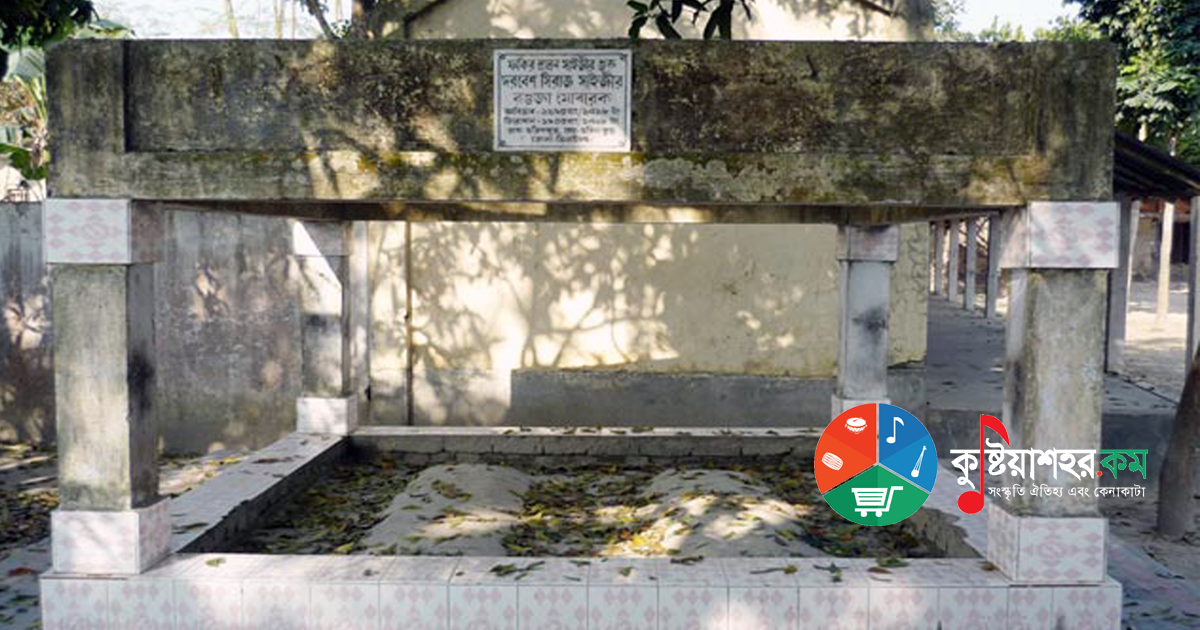
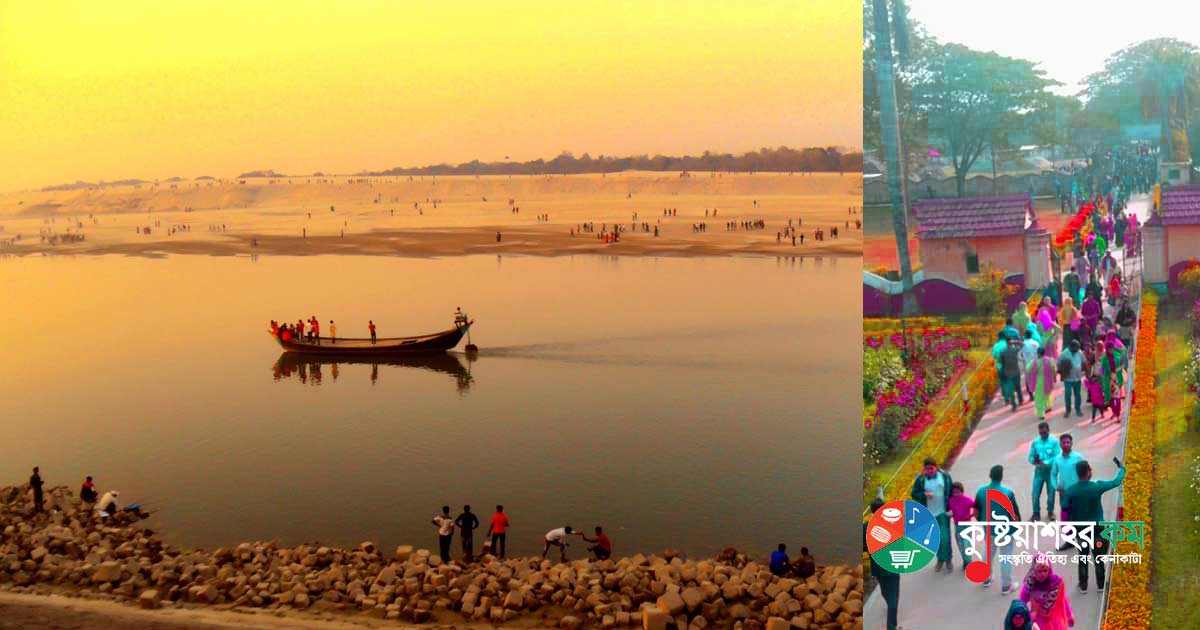
The Sultan Complex has been newly built around the memorial museum entwined with the memories of the world-renowned painter S M Sultan. The complex stands in delightful surroundings in the Masimdia area of Narail town, on the bank of the Chitra river. Built over an area of about 27 acres, the complex is rich with a profusion of rare species of trees. Amid the bird-calling river and the greenery lies the grave of the painter S M Sultan. Just in front of the tomb stands a small part of Sultan's original home. Behind it, in a two-storeyed modern photo gallery, Sultan's artworks and everyday belongings are preserved. The gallery is open every day for viewing his rare works. Wrapped in red ceramics, this complex — its calm, quiet surroundings and its exquisite artworks — has raised the dignity of the Sultan Complex many times over. To teach children painting, Sultan had built on the river a barge called 'Shishu Swarga'. That Children's Heaven built by the artist is preserved beside the complex, on the bank of the Chitra. In the area adjoining the complex, an institution named Shishu Swarga has been founded under the name given by the artist, where small children are taught to paint.
The Sultan Complex has been built so that the memories of Narail's pride, the world-renowned painter S M Sultan, remain forever vivid among the common people and inspire the generations to come.
Visiting hours:
Except on government holidays, the complex is open every day from 9.00 in the morning until 5.00 in the afternoon.
Curator,
Sultan Complex,
Phone-01718384744
How to get there:
It is enough to ask anyone once you reach Narail Sadar — it is located in Narail Sadar.