বাংলা
 English
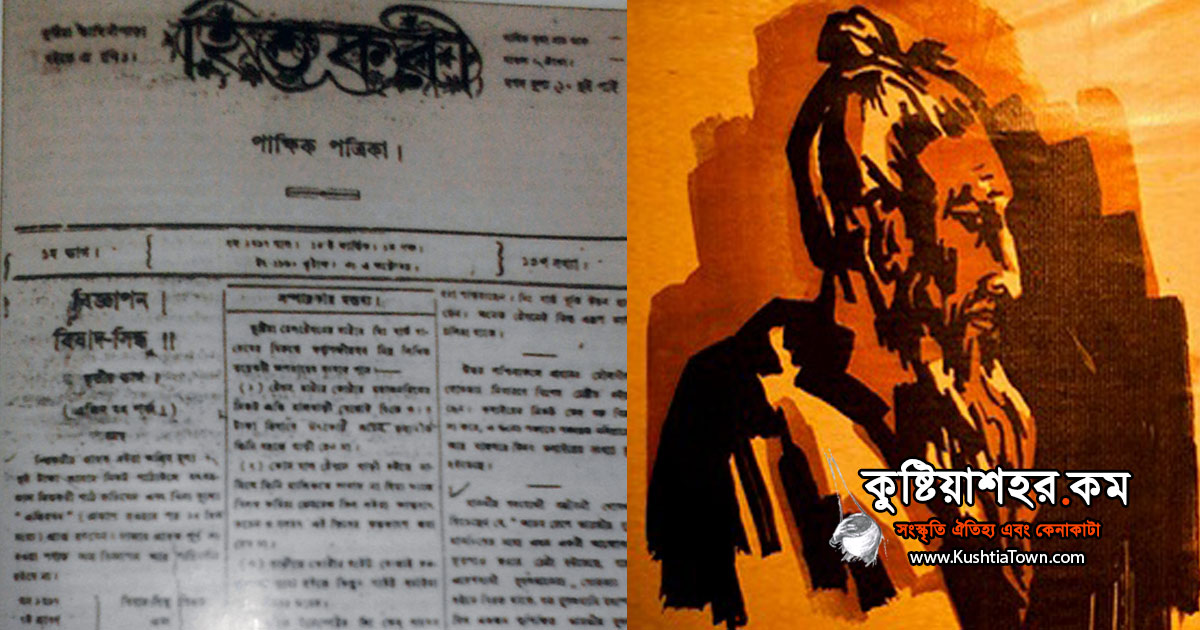
15 Kartik 1297 / 31 October 1890
In this region no one is left who has not heard the name of Lalon Fakir. And not this region only: from Chittagong in the east, Rangpur in the north and Jashore in the south, and far into the west, people in many different parts of Bengal are disciples of this Lalon Fakir. We hear that his disciples number more than ten thousand. We have seen him with our own eyes and, through conversation, have grown deeply fond of him.
Not far from Kushtia, in the village of Cheuria on the banks of the Kaliganga, stands a beautiful Akhra of his. The Akhra has no more than fifteen or sixteen disciples. Of the disciples, two named Shital and Bholai he loved like his own sons. The other disciples he did not love any the less; no special gradation of his love among the disciples was easily noticeable. He lived at the Akhra with his wife. According to the religious tenets of the community, no offspring is born to him. Many of the disciples too have wives, but children are not born to them. This remarkable state of affairs is seen not only among the disciples of this great soul; it is observed in most quarters of the Baul community.
Recently a new community of this persuasion, known as Sadhu-seba, has come into being. The disgrace that we see in the Sadhu-seba and the Baul companies — there is nothing of that sort in Lalon's community. We have learnt on reliable authority that in Sadhu-seba many wicked men join and engage only in vile acts with women, and that seems to be their very purpose. Had there been a true union of views at the root, such depravity would not exist in this community. Transgressing the honour of another is a great sin for them. Still, as with every discipline, it is not impossible that it too may be abused. In the Baul, Sadhu-seba and Lalon creeds, and in a class of the Vaishnava community, a certain secret practice has been going on; and since it prevails in Lalon's company too, the way to begetting children was once closed among them. The elevated state that the term 'Shanta-rati' denotes in Vaishnava scripture, they, not comprehending it, remain engaged in the service of the senses by unnatural processes. On this abominable matter this country is hastening to ruin, and we have no desire to tell the gentle reader more about it.
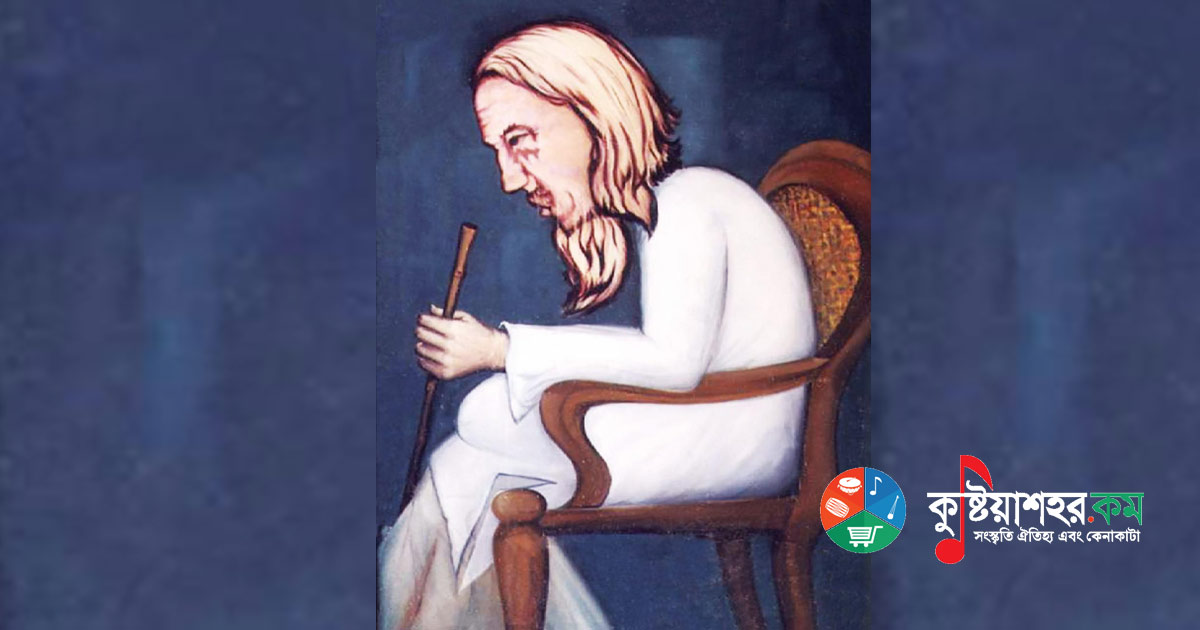
It would not be right to judge fakir Lalon by the views of his disciples and their community. He was far removed from all such base deeds, and he appears to have been conspicuously elevated in his religious life. Fakir Lalon had a great abhorrence of falsehood and deceit. He himself did not know reading and writing, yet hearing the innumerable songs he composed one took him for a most learned pandit. He read no scripture of any kind, yet in religious discourse he appeared a conspicuously learned authority in the scriptures. In true religious practice his inner vision had opened, so nothing of the essence of religion remained for him to learn. Lalon himself adhered to no communal religion, yet people of every religion took him for their own. Because he ate and mixed with Muslims, many took him for a Muslim. Seeing him hold Vaishnava tenets, the Hindus thought of him as a Vaishnava. He did not acknowledge caste distinctions, and seeing his faith in the formless Supreme Being, it is no wonder the Brahmos mistook him for a follower of the Brahmo religion.
But there is no way to call him a Brahmo. He professed a strong guru-doctrine; indeed, his disciples acknowledged no worship superior to his own. One always heard from their lips the word 'Shan'. He did not perform namaz; how then can he be called a Muslim? One may rather call him a novel, caste-less Vaishnava. He leaned more towards the Vaishnava religion and believed in the incarnation of Sri Krishna. Yet the talk of high sadhana that one sometimes heard from his mouth gave rise to much doubt about his views and practice. Be that as it may, he was a profoundly religious man and a sadhu, and on that no one holds any different opinion. Hearing the name Lalon Fakir one may perhaps take him to have been a penniless fakir. In truth that is not so: he was a householder; he had some landed property; his house and homestead were not bad either. His household effects were like those of a middling householder. He died leaving, it is said, about two thousand taka in cash.
By a deed of appointment he had allotted part of his property to his wife, part to his religious daughters, part to Shital, and part for the use of the disciples. In his last days he himself could manage little; it was his disciples who gave him ample help. Once a year, in winter, he held a Bhangara (a great festival). On the occasion over a thousand disciples and people of the community would assemble and hold music and discussion, and his expenses there came to five or six hundred.
It is difficult to find any material for writing his biography. He himself told nothing. His disciples, perhaps held back by his prohibition — or else being simply unacquainted — can tell hardly anything. It is generally known, however, that Lalon Fakir was a Kayastha by caste; the Bhoumik families of Chapra under Kushtia are of his lineage. No relative of his survives. It is said that on a pilgrimage he was stricken with smallpox on the way and was abandoned by his companions. In that near-death state he regained his life through the mercy and shelter of a Muslim, and became a fakir. The mark of smallpox was there on his face.
At the age of 116 he passed away last Friday morning, 17 October, relinquishing his human role. Even at that age he was skilled in horsemanship and rode from place to place. About a month before his death a disorder of the stomach set in, and the joints of his hands and feet swelled with water. In that afflicted state he ate nothing but milk. He wished for fish. Even while afflicted he practised the name of the Supreme Lord as before; now and then he grew intoxicated with song. On talk of religion he would regain his strength anew, forgetting the suffering of his illness. A few songs composed at this time are in our keeping. People of many communities conversed with him on religion and were satisfied.
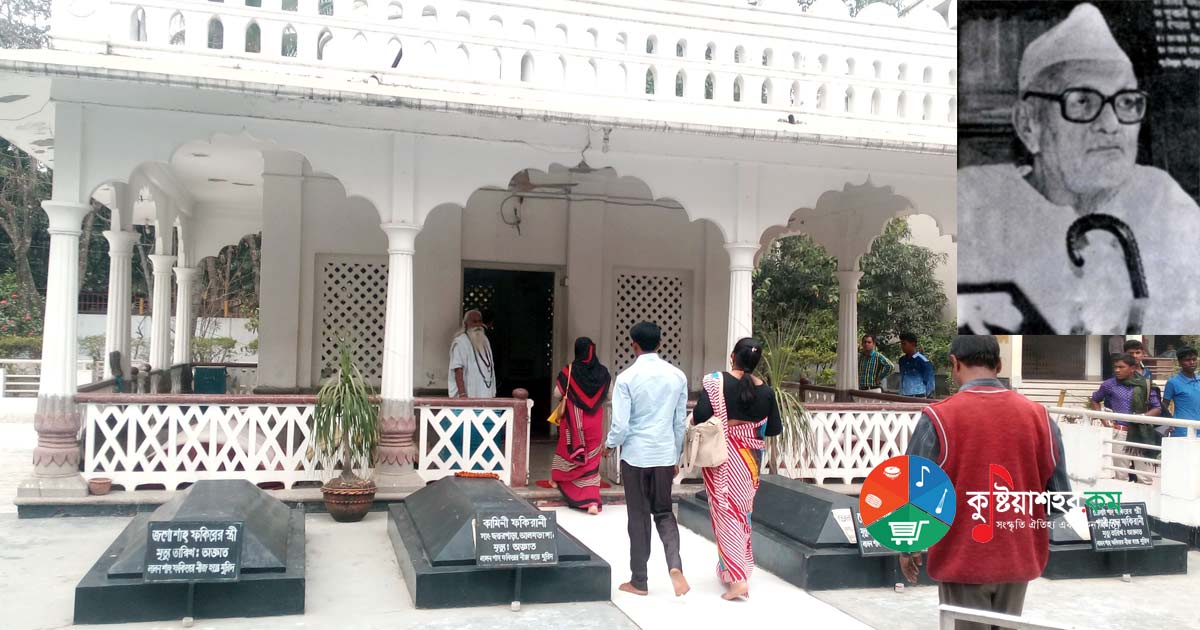
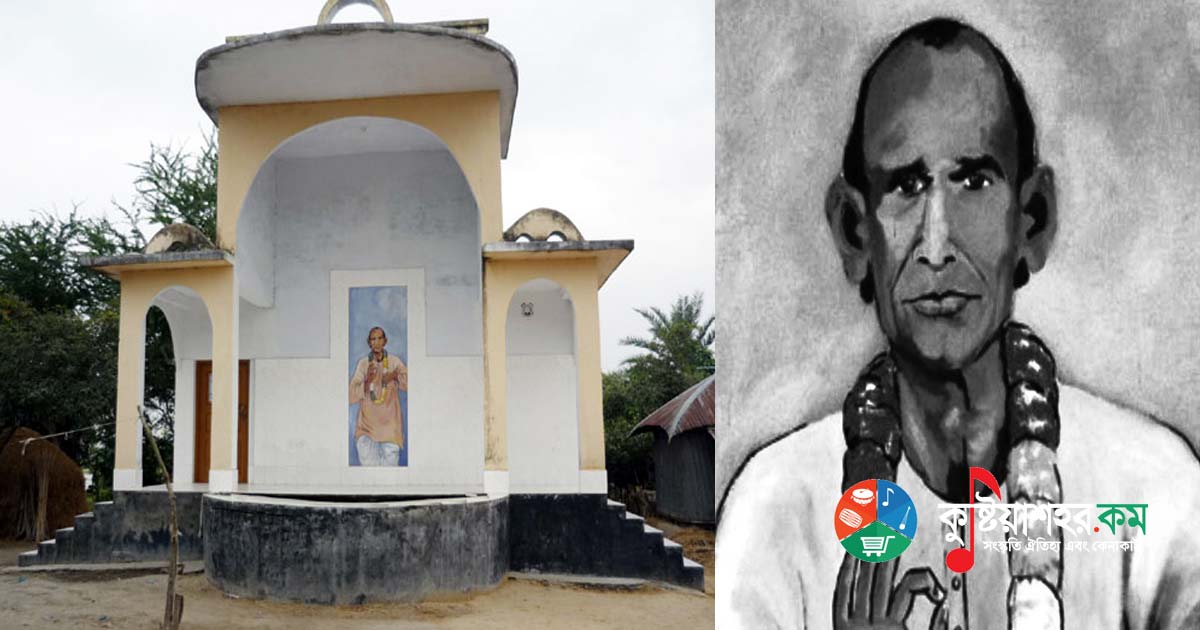
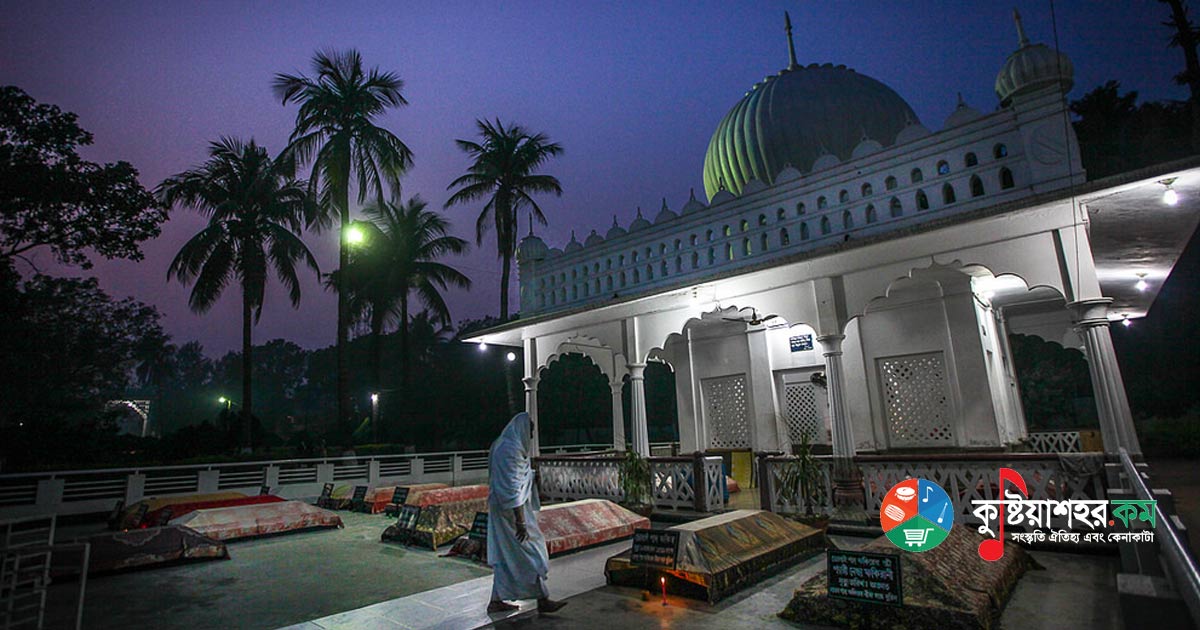
On the night before his death he sang almost till the end, and at five in the morning told his disciples, 'I am leaving.' A little while afterwards his breath stopped. At the time of death it was neither his wish nor his advice that his last rites be performed according to the tenets of any community; hence no maulvi or priest was needed, nor were Gangajal (Ganges water) and the chanting of the name necessary. Kirtan of the Hari-name was performed. In accordance with his own advice, his tomb was built inside a room within the Akhra. No shraddha or the like was to be performed.
For the great festival to be held by the Baul community his circle of disciples used to collect funds. Among the disciples a few such as Shital, Moharam Sha, Manik Sha and Kudhu Sha are good men. I trust their glory will not be spoiled through them; fakir Lalon's innumerable songs are sung everywhere, at all times, and through them his name, religion, views and faith will be widely proclaimed. One of the songs he composed is quoted below —
Everyone asks, Lalon, what caste are you of in this world?
Lalon thinks, what is the form of caste? I have not seen it with these eyes.||
Some wear garlands, some amulets at the throat,
and thereby the castes are spoken of as different.
At the time of going or of coming,
whose mark of caste does it remain?||
If circumcision makes one a Muslim,
what then is the rite for a woman?
The Brahmin is known by his sacred thread as proof,
but by what is a Brahmin woman known?||
Wandering the world, men speak of caste
and take pride wherever they please;
Lalon has wiped that smudge of caste
clean in the sadha-bazar.||