বাংলা
 English
Cloth is one of humanity's basic rights. It was to protect people from heat, cold and shame that they built the textile industry. Hand-woven cloth once met this country's popular demand. In that era grew up the Bengali's proud craft of cotton cloth. In colonial times machine weaving arrived and seized that place. Mills and factories sprang up.
In 1906, during the anti-British movement and the boycott of foreign goods under the Swadeshi movement, with the aim of using domestic goods, small and large mills and factories sprang up in this country; Kushtia's Mohini Mill was the outcome of that current.
Nabakishor Chakrabarty of the village of Elangi under Kumarkhali thana of Kushtia district (then Nadia district) worked at the Kumarkhali silk factory. When his son Krishnalal was working as a police employee at Boalia in Rajshahi, Krishnalal's son Mohini Mohan passed the entrance examination of Calcutta University from Boalia High School in 1857. His lifespan was 1839-1922.
Soon after the Indigo Revolt in Bengal, the Kushtia subdivision was established, and Mohini Mohan took a clerk's job at that subdivision's headquarters office. In 1865, when Mohini Mohan was an employee under W. W. Hunter, author of the famous work The Indian Musalmans (1877), the sahib, seeing his intelligence, advised him to sit the magistracy examination. Mohini Mohan took that examination as expected, passed it, and during 1874-76 became Deputy Magistrate of Faridpur. After finishing government service and retiring, in 1908 he set up a cloth factory south of Kushtia's big railway station under the name Chakrabarty and Sons. Although it was a shareholding company, its authority lay in the hands of the Chakrabarty and Sons agency. It may be noted that long before Mohini Mill's founding, in 1895-96, a business firm called Tagore and Company existed to the north of Mohini Mill, and Rabindranath was one of its shareholders. In 1905 a weaving school was opened there. Among the three shareholders of Mohini Mill, established in 1908, the names of Mohini Mohan, Jagatkishor Chowdhury and Rabindranath appear. In 1912 this company became Kushtia Mohini Mills Limited.
In the 1920s of the last century, Mohini Mill of Kushtia grew bloated on the capital of its surplus profits, and it was from then that worker exploitation began under the rules of a profit-based exploitative society. In the 1930s, through the efforts of activists of the Communist Party, then declared illegal in the subcontinent, the Mohini Mill Yarn Mill Workers Union was formed with the aim of securing the mill workers' demands. Soon after, onto the stage of the mill's labour movement appeared the uncrowned captain, the politically schooled worker leader Comrade Roshan Ali.
It may be noted that Mohini Mohan's maternal home was the family of Ramanand Bhowmik of Muragachha in Kumarkhali thana; his mother's name was Bhagabati. Mohini Mohan was one of their six sons and daughters. Of the four sons of Mohini Mohan and Bhavatarini, the eldest, Satiprasanna, was disowned for opposing the British. The second son, Girija Prasanna, married Lilamayi, daughter of Jagatkishor Chowdhury of Muktagachha in Mymensingh. Of their five sons the eldest was Deviprasad, alias Kanu Babu (1907-67). He lived in the two-storeyed Mohini Lodge north of the mill. Kanu Babu was that grandfather's son's son, in other words his grandson. Kanu Babu was 15 years old when this grandfather died (1922). In 1947-50 the mill's partners, Kanu Babu's uncles and brothers, left for India taking their shares. As a result Kanu Babu became the sole helmsman of the mill. Kanu Babu and Nirupama Devi's only son Subir (Dulal Babu) is now dead; his only son Sudip is heard to be engaged in journalism in Delhi. During the 1965 India-Pakistan war, one of the mill's non-Bengali partners, Chamanlal, left for India. Kanu Babu was placed under house arrest under the Pakistan Security Act, and the government administration took over control of the mill. Kanu Babu died in 1967 while under house arrest; his grave lies in Kushtia's cremation ground.
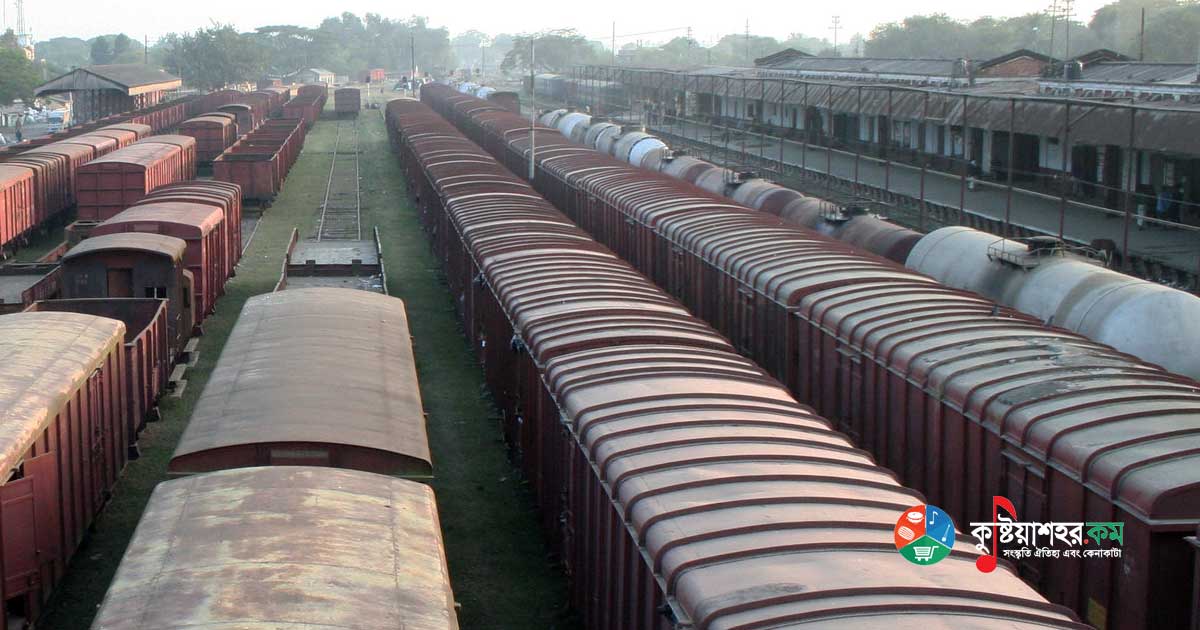
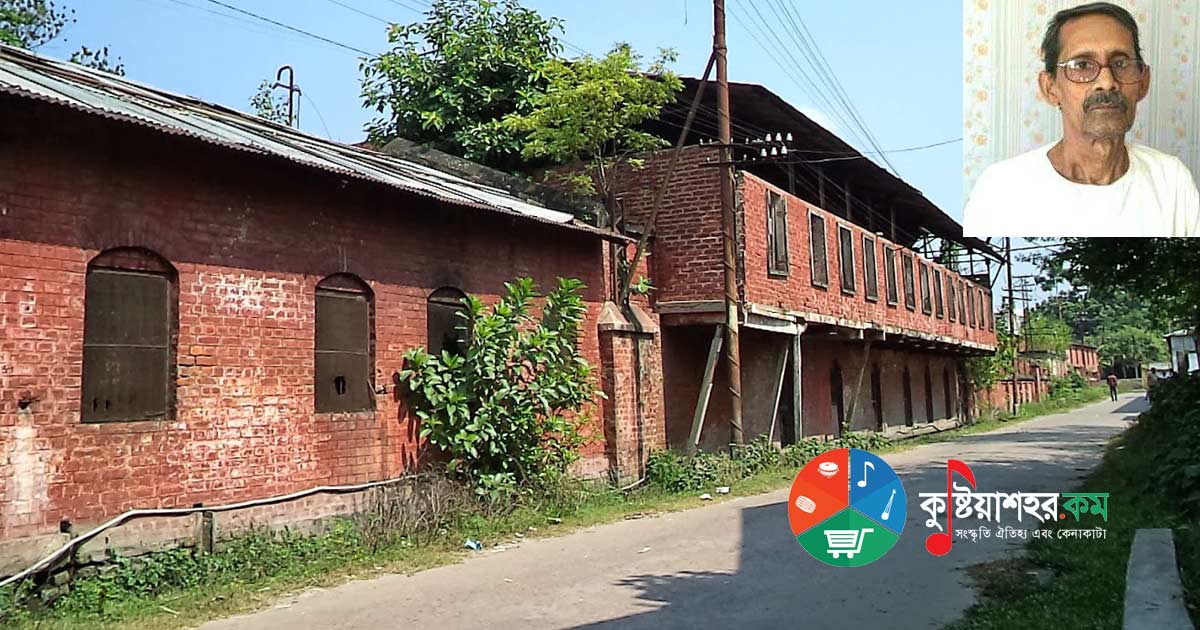
Demand for Mohini Mill's sarees, dhotis and American cloth, and for its yarn, existed in both Bengals. Starting with a few looms, it became a mill of middling quality popular with the people; around this mill, with employment for several thousand employees and food for even more people, grew up the Mill Line, bazaars, a post office, educational institutions, playing fields, a theatre hall, workers' medical care, a hospital, rationing services, a maternity home and the like. Kanu Babu gave financial help to many works of public good in the area; he had special contributions to Kushtia College, the cremation ground and the Lalon Akhra. What was enemy property in 1965 was nationalised by the Bangladesh government in 1972 and counted as vested property. Since then, after many changes of hand, the mill has long lain out of operation (from 01/11/1987). The profitable business establishment that once brought excitement to the area's public life, created an industrial zone, and gave employment to people of every stratum of society is today a mute witness to time.
[Sources: Mohinimohan - a booklet published on the occasion of Mohinimohan's death anniversary; Calcutta University Calendar 1858-59; 138th birth anniversary commemorative volume: Kushtia Pourashava, 2007; Bangladesh Gazette, Additional (Ka schedule), 26 June 2012 (list of vested property); retired senior officers and employees of Mohini Mill, residents of Millpara]
Sources:
Milan Sarkar
Researcher of literature and history;
retired teacher,
Sirajul Haq Muslim High School, Kushtia.
Acknowledgement: Shaibal Aditya