বাংলা
 English
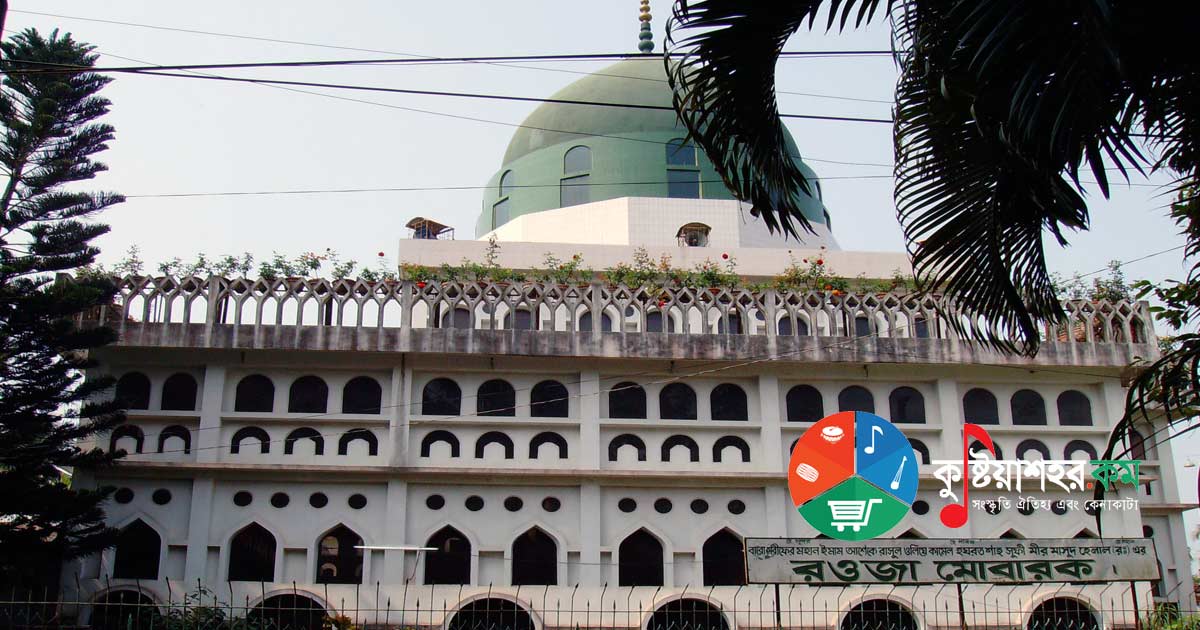
Barosharif Darbar and Jame Mosque was established on Monday, the 16th of Sha'ban 1395 Hijri, corresponding to the 25th of August 1975 and the 8th of Bhadra 1382 of the Bengali calendar.
The Most Merciful Allah, Rabbul Alamin (Lord of the Worlds), perfected the religion of Islam through His beloved Habib, the greatest and final Messenger (peace be upon him). Our beloved Rasul Karim — Rasul-e Maqbul, Sarkar-e Do-Alam, Sardar-e Dojahan — Hazrat Muhammad (peace be upon him) was born and passed away on the 12th of Rabiul Awal, a Monday. Through the Messenger (pbuh), the greatest and final divine scripture, the Holy Quran-ul Karim, was sent down to mankind. On the Day of Judgement too, it is the beloved Messenger (pbuh) who will intercede for us. Therefore, through love for the Messenger (pbuh) and adherence to his ideals, one attains the love of the Messenger, or 'Ishq-e Rasul', and thereby attains stability in the love of Allah, or 'Ishq-e Ilahi'. For that very reason, keeping in view the blessed birth and demise day of the Prophet (pbuh), the 12th of Rabiul Awal, this institution has been named 'Barosharif Darbar'; and as the mosque was established for all prayers including the Jumu'ah prayer, it is called 'Jame Mosque'.
Location of the institution:
This institution is located at R.C.R.C. Street, Courtpara, beside the Court railway station in Kushtia town. The darbar and mosque stand on a total of 50 (fifty) shotangsho of land, comprising the mosque and darbar, the Rawza Mubarak, an ablution area (wuzukhana), a separate darbar for women, a flower garden and a building.
About the founder:
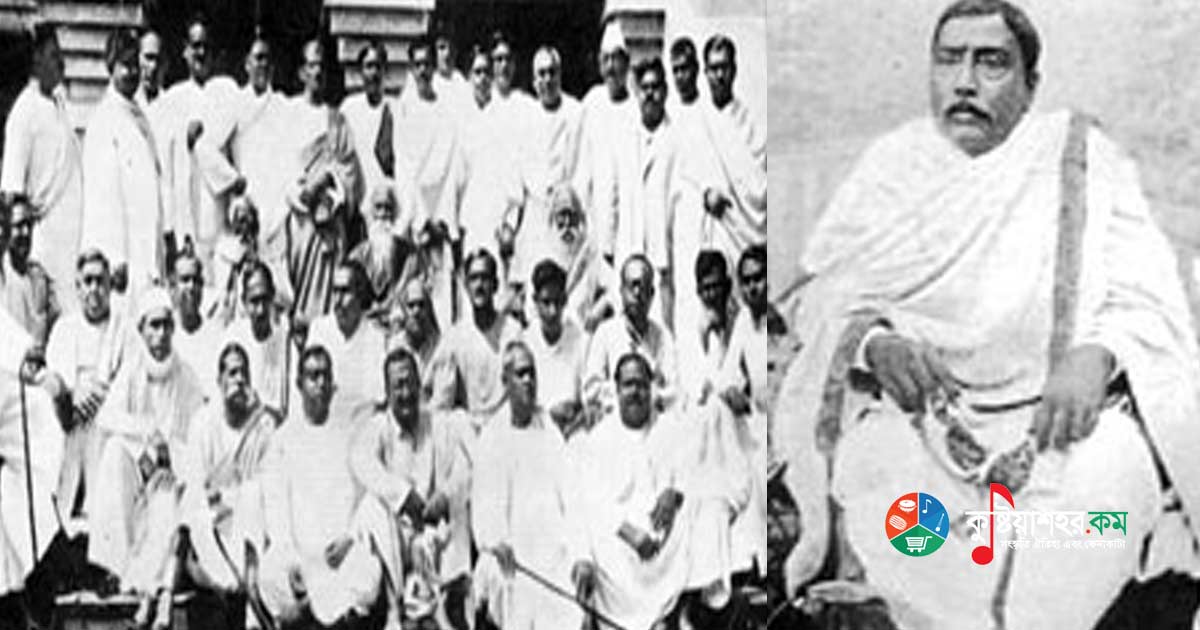
Barosharif Darbar and Jame Mosque was founded by the eminent wali-kamil and devotee of the Messenger (pbuh), Hazrat Shah Sufi Mir Masud Helal (Rh.). He came from a distinguished family of spiritual masters (kamel). His forefather Hazrat Mir Niamat Ali Shah (Zamadar Shah) (Rh.) was a spiritual master of the highest order; his mazar (shrine) is located at Shibnibas in Nadia district of West Bengal, India. From childhood Hazrat Shah Sufi Mir Masud Helal (Rh.) grew up God-fearing and proficient in Islamic practice and creed. His father, Mir Mansur Ali, was a deeply religious man. Under his father's able guidance he matured in Islamic ideals and the provisions of the Shariah.
The early days of his spiritual pursuit were spent in the Madhupur jungles of Mymensingh, in rigorous asceticism (riyazat) and devotion. Later, he took the oath of allegiance (bayat) at the hands of Hazrat Shah Sufi Sheikh Khaliluddin (Ranakharia) (Rh.) in the village of Ranakharia in Kushtia district. At merely 27 years of age he received khilafat (spiritual succession) in the Qadiriya order, and subsequently one after another in the Chishtiya and Naqshbandi Mujaddidi orders as well. Finally, he received the 'Barosharif', that is the 'Muhammadi order', spiritually from our beloved Prophet Hazrat Muhammad (pbuh), and became known as the Imam of this order.
From then on he began taking murids (disciples) into the Muhammadi order and dedicated himself to spreading it. On the blessed 6th of Ramadan 1406 Hijri, corresponding to Friday, 16 May 1986, at the time of Subh-e Sadiq, he passed away (Inna Lillahi wa Inna Ilaihi Raji'un). His Rawza Mubarak now stands at Barosharif Darbar in Courtpara, Kushtia town.
Aims and objectives of Barosharif Darbar and Jame Mosque:-
(a) Research on the religion of Islam and Hazrat Muhammad (pbuh) and the propagation of his ideals.
(b) To practise, express and develop Islamic Shariah and spirituality on the basis of the Holy Al-Quran and the Sunnah of the Messenger (pbuh), and to create a suitable environment for worship, asceticism and spiritual devotion. (c) To walk along the path shown by the Messenger (pbuh) and to establish his ideals and the path he showed in individual and social life.
(d) Research on the great Imam (Rh.), founder of Barosharif Darbar, on his ideals, and the propagation of Barosharif, that is, the Muhammadi order.
(e) Through Barosharif, that is, the Muhammadi order, to refine people's souls and, by bringing the nafs or animal instincts under control, to mould them into true and complete human beings.
(f) To convey the message (dawat) of Barosharif, that is, the Muhammadi order, to people of all classes in Bangladesh and throughout the world.
(g) To provide excellent medical care to the destitute and helpless.
(h) To give illiterate people basic literacy and make them knowledgeable in religious and spiritual wisdom.
(i) To make destitute, poor and helpless individuals self-reliant workers through vocational training, establish them in society, and at the same time give them religious education.
(j) To arrange education, shelter and sustenance for orphaned and poor children.
(k) To organise unemployed and poor people of various ages in society and, through vocational training, establish them in society as self-reliant individuals.
(l) To set up educational institutions, laboratories and libraries in order to spread the light of knowledge among people.
(m) To take all steps conducive to implementing the above objectives.
Management of the institution:-
During the lifetime of Hazrat Shah Sufi Mir Masud Helal (Rh.), the great Imam of Barosharif, that is, the Muhammadi order, he formed a committee to run the darbar and Jame Mosque and himself served as its chief adviser. After his passing, a constitution was drawn up in line with his thinking. That constitution was approved at the general meeting of the darbar's murids on 31 August 1993, corresponding to 12 Rabiul Awal 1413 Hijri. Under the constitution, the committee formed by the great Imam (Rh.) was designated a permanent committee, and an executive committee, elected every three years by the darbar's murids in accordance with the constitution, manages the darbar and Jame Mosque. Besides the central darbar sharif at Courtpara in Kushtia, branch darbars are in operation in Narayanganj, Dhaka, Jessore, Chuadanga and Dinajpur, and at Sirajnagar, Bahirmadia, Farakpur Kaipal and Dalua in Kushtia, as well as at Bagdia in Shantipur of Nadia district in West Bengal, India. An advisory council and a patron council have been formed from persons elected by the executive committee. Imams have also been appointed to run the branch darbars.
Barosharif Darbar as a training centre of Shariah and Ma'refat:
Barosharif Darbar and Jame Mosque was established as one of the spiritual centres for learning Shariah, Tariqat, Haqiqat and Ma'refat in the light of Islam — the Quran and the Sunnah.
For training in spiritual education, it is extremely necessary for every person's nafs to be purified — that is, to attain purity of the nafs (tazkia-nafs). In other words, unless the nafs is made pure, submissive and refined by subduing the evil traits of lust, anger, greed, arrogance, envy and hatred, and of show (riya), by following the rules of tasawuf through ascetic practice (riyazat), by turning away from the world (tark-e dunya) and making the nafs obedient to Islamic discipline, the provisions of the Shariah are not willingly observed by the nafs. An unpurified nafs bewitches and misleads a person and makes him a follower of Satan and base desire. As a result, the soul or ruh becomes shrouded in darkness and turns diseased, lustful and impure. At that point a person cannot properly observe Allah's ordinances, nor can he follow the Sunnah of the Messenger (pbuh) or his ideals. Hence one must wage jihad against this rebellious and unpurified nafs and bring it under control. This jihad is expressed in the noble Hadith as 'Jihad-e Akbar' or the greater jihad. Through this jihad, and by purifying the nafs in the fire of asceticism and devotion, one must acquire excellent character, creed and conduct — in short, the merciful disposition of Allah Ta'ala. By observing the Shariah one must attain the 'love of the Rasul'. For that reason, at this spiritual centre people are given the training needed to mould themselves as mumin — acquiring the truthfulness of detachment from the world and purity of the nafs (tazkia-nafs), becoming fit to receive and preserve spiritual grace — so that human life becomes meaningful and people are moulded into complete human beings.
Funds and financial matters:
Barosharif Darbar is run through the subscriptions and donations of its murids, muridans, asheqs and devotees, both at home and abroad. For financial discipline and transparency, a finance committee has been set up, along with provisions for internal and external audit.
Characteristics of the Muhammadi order, that is, Barosharif:
In this darbar and Jame Mosque great importance is laid on the acts of worship described in Islamic Shariah, such as salat (prayer), siyam (fasting) and so on. Special emphasis is also placed on special devotions for spiritual and inner development.
Both the birth and the demise of our beloved Messenger (pbuh) fell on the 12th of Rabiul Awal, a Monday. Therefore, to create love for Allah through love for the Rasul, on the 12th of every lunar month arrangements are made for voluntary worship and fasting, and a special milad mahfil is held at dawn and a general mahfil after the Isha prayer.
Three major events of the year are observed with special importance. Foremost among them is '12 Rabiul Awal, or Eid-e Miladunnabi, or Fateha Sharif'. The 6th of Ramadan is observed as 'Urs Mubarak', the demise day of this darbar's founder [the great wali-kamil, devotee of the Rasul, Hazrat Shah Sufi Mir Masud Helal (Rh.)]. The 16th of Sha'ban is observed as the darbar's 'coronation day' or founding anniversary. Every Monday and Tuesday a milad mahfil is held after the Isha prayer; on these two days the murids observe voluntary fasts for controlling the nafs and for worship.
Since special emphasis is laid on it'kaf for spiritual development by enhancing concentration and attentiveness, arrangements exist for individual and collective it'kaf. As no Islamic worship is possible without learning the Holy Quran, emphasis has always been placed on Quranic education. There is a regular completion (khatam) of the Holy Quran, and Quran classes for young boys and girls are running.
Since the Messenger (pbuh) gave up comfortable sleep at night, praying tahajjud and engaging in various devotions, special importance is given to the practice of tahajjud prayer and nightly worship. Arrangements are made for deep-night worship both individually and collectively.
Since success in worship is impossible without reciting darud and salam upon the Messenger (pbuh), and stability in the love of Allah cannot be attained without winning the Messenger's love, emphasis has been laid on the recitation of darud and salam.
Laboratory, library and social welfare:
The founder of this darbar, the great Imam (Rh.), had established a small Islamic research laboratory and library. For lack of space the laboratory and library could not be kept running; there are plans to resume them in the future. He wished to establish educational institutions, madrasas and hospitals; there are plans to build such welfare institutions in the future. He used to arrange board and lodging for poor and meritorious students along with general and Islamic education. Through this process a number of boys have already completed their education and established themselves in their careers. There are future work plans for an Islamic research centre, vocational training and social welfare activities.
Characteristics of the azifa:
The characteristic of the azifa of Barosharif, that is, the Muhammadi order, is that this azifa specially incorporates the famous and highly esteemed suras of the Holy Quran — Sura Fatiha, and portions of Sura Baqara, Sura Yasin and Sura Ar-Rahman. Following this portion is included the 'Darud-e Taj', known as the 'crown' (taj) of the darud sharifs. After that comes the message of welcome, expressing the congratulations, joy and greeting proclaimed by creation on the occasion of our beloved Messenger's (pbuh) arrival in this world. Before the zikir begins, the fundamental creed of Islamic faith — the Kalema Tayyib — is recited, giving overt acknowledgement of Islamic faith with the mind and the tongue.
Then comes the portion of zikir, qiyam and salam. Through zikir, qiyam and salam, deep love and respect for the Messenger (pbuh) is expressed.
The essence of the azifa:
The meaning or essence of the Barosharif azifa cannot be expressed in few words. Within this azifa lies the process of drawing near to the great Allah, Rabbul Alamin, through love for the Messenger (pbuh), with complete faith in Islamic creed and belief. Since the azifa begins with the suras of the Holy Quran, the attributes of Allah, Jalla Shanuhu — His essence (zat), qualities (sifat), creatorship, lordship, oneness and uniqueness — are expressed. By uttering the Kalema Tayyib, 'La ilaha illallahu Muhammadur Rasulullah', with the tongue and the mind before the zikir, the declaration of Islamic faith and tawhid is clearly expressed. Nearness to the great Allah is the chief goal of human birth; the path (tariqa) to that nearness is 'Muhammadi', that is, love for the Messenger (pbuh). For that reason this azifa embeds the means of winning the Messenger's love through darud sharif. Beginning the zikir with the recitation of the Kalema Tayyib carries a great significance: full acknowledgement of Islamic faith even in the field of spiritual worship. Through the zikir, one of the aims is to purify and strengthen the soul, win the Messenger's love and attain stability in the love of Allah. Finally, the azifa concludes with salam to the Messenger (pbuh) and a supplication (monajat) at the court of the great Allah, Rabbul Alamin.