বাংলা
 English
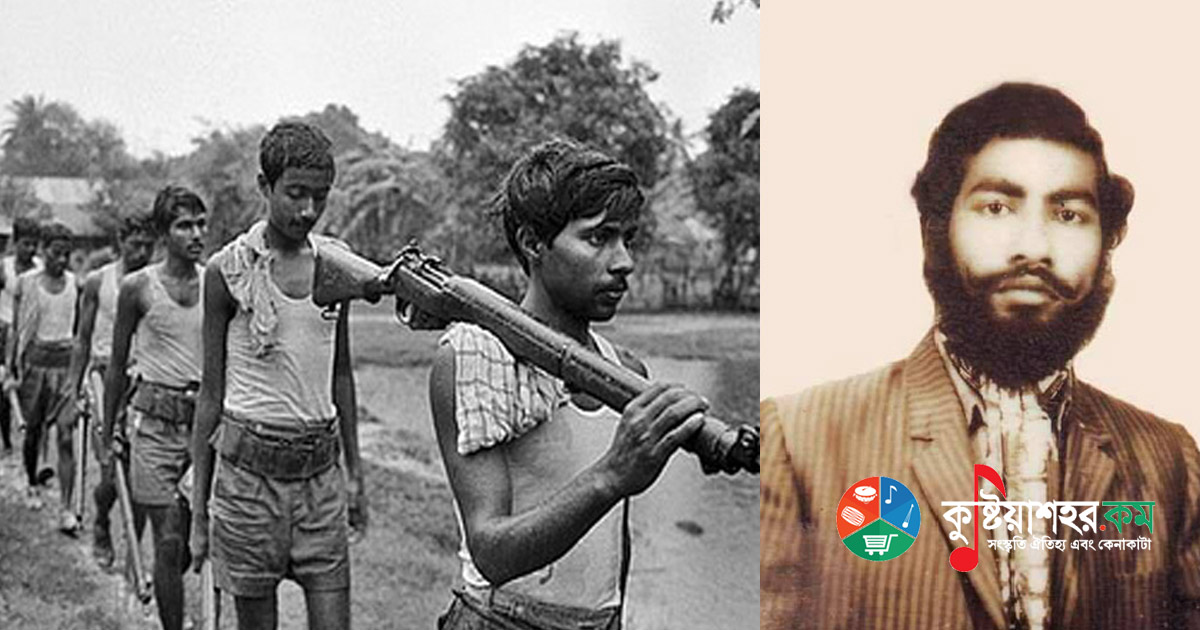
‘Courage, in essence, comes from hatred.’ Many things are turning in my head. How did these very ordinary, simple village people of this Bengal find the courage to fight against a well-trained army equipped with heavy weapons? And again and again the freedom fighters themselves give almost the same answer: ‘Courage, after all, comes from hatred!’
"That boundless courage comes from hatred. It is because of the discrimination and exploitation that went on over us for so long that this hatred exists."
On the night of 25 March 1971, a group of members of the 27th Baluch Regiment of the Pakistan army, led by Major Shoaib, took up position in Kushtia town late at night. The group numbered about 200 soldiers.
As soon as word spread of the Pakistani soldiers' arrival, people began fleeing in all directions. At the time the office of No. 4 Wing of the EPR was in the Chuadanga subdivision of greater Kushtia. Its commander was the Bengali Major Abu Osman Chowdhury. His deputy was the Bengali Captain A R Azam Chowdhury (Bir Bikram, later Colonel), and there was the Punjabi Captain Mohammad Sadeque. All the company commanders were Bengalis. Under the wing were five companies and a support platoon. They had light anti-tank guns, 3-inch mortars, machine guns, LMGs, rifles and ammunition. And they had Chinese-made automatic rifles, but they had no live rounds for them.
On the night of 25 March Abu Osman was at the Kushtia Circuit House with his wife and daughter. On the morning of 26 March, dodging the Pakistani soldiers, he left for Chuadanga. On arriving there he took Azam Chowdhury with him and revolted. Later a meeting was held at the office of the subdivisional administrator. Present at it were the local Awami League leaders, including Dr. Ashabul Haque Joardar of Chuadanga, elected members of the national and provincial assemblies, and civilian officials. Taking a glowing, hard oath to confront the well-equipped Pakistan army for the sake of Bangabandhu's historic call and the liberation of the motherland, they formed an advisory council, making Ashabul Haque the head of the civil administration and Abu Osman the head of the armed forces.
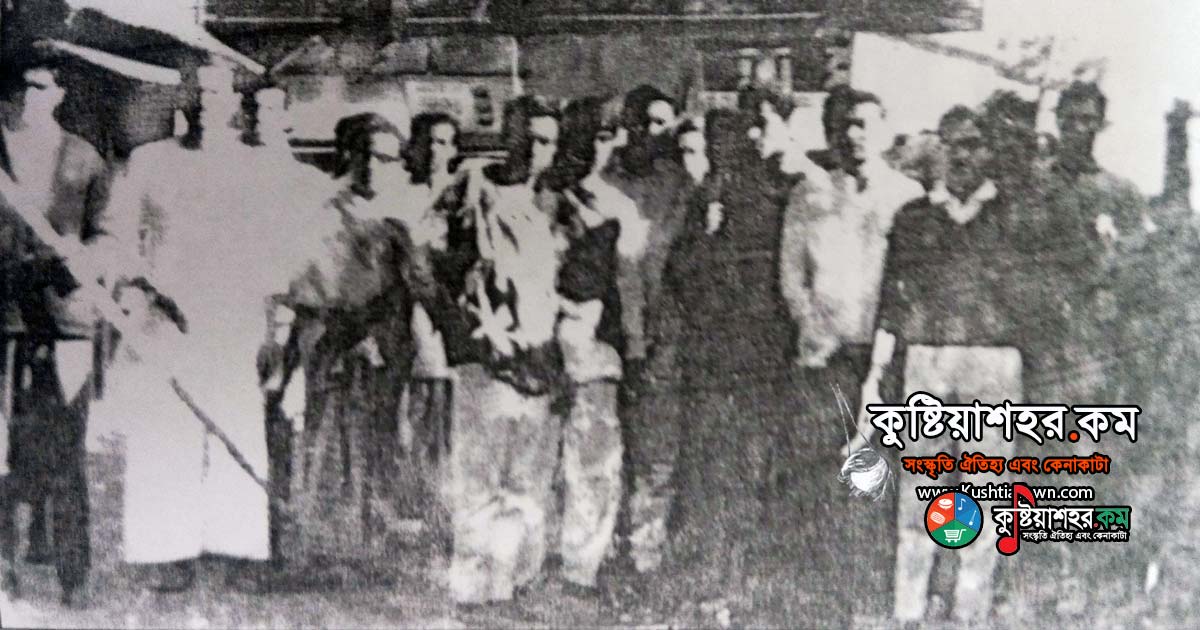
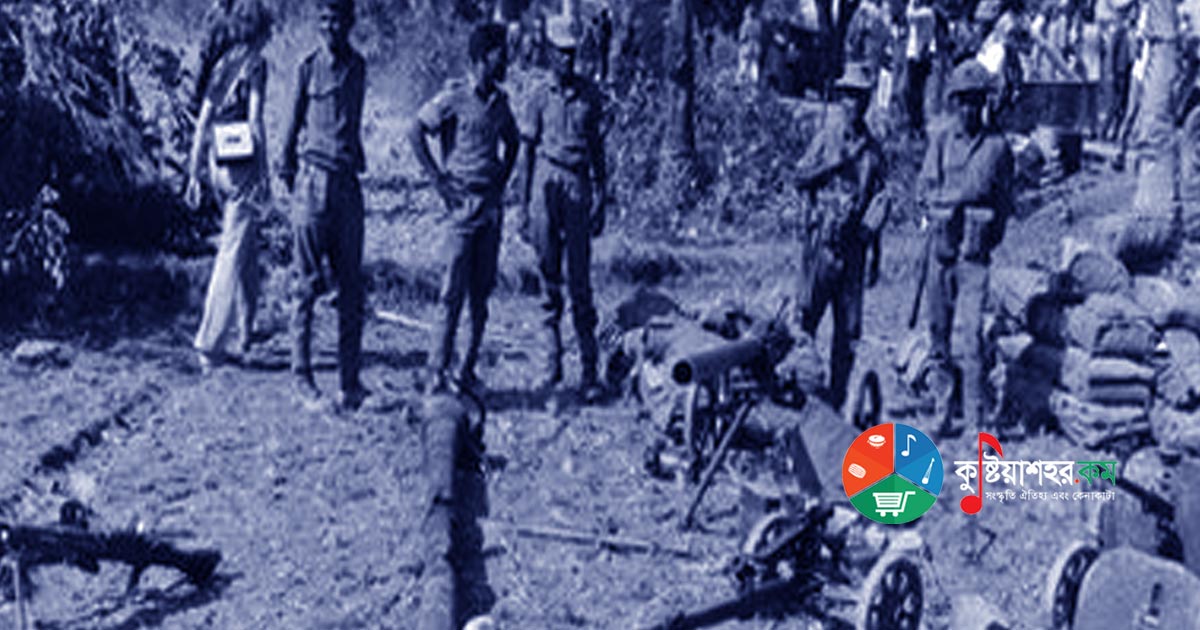
After the decision to attack Kushtia, thousands of students and ordinary people, armed with nothing but shields, brickbats, spears and bows and arrows, prepared to join the battle alongside the EPR forces. The local Ansar, Mujahid and police were also incorporated into the EPR forces. With the help of the local telephone department, a 'field exchange' was also set up in the open fields of Poradaha. A medical team was formed as well, for the proper treatment of resistance fighters wounded in the battle zone. The main control room was opened in the Chuadanga town hall, and another control room on the ground floor of Motiram Agarwala's house. Split into three groups, the resistance fighters attacked Kushtia. One group, led by Subedar Abdul Matin Patwari, attacked the Pakistani soldiers at the police line from the third floor of a house at Mazimpur, to the south-west of the police line. After a while, about a company of Ansar and Mujahid from Meherpur also joined them. Another group, led by Azam Chowdhury, attacked the Pakistani soldiers stationed at the Kushtia Zilla School. The third group, led by Naib Subedar Maniruzzaman (Bir Bikram, later martyred in another battle), attacked the Pakistan army's wireless team at Mohini Mills. The attack began at about four in the dawn of 30 March. Under the resistance fighters' gunfire and the united "Joy Bangla" slogans of the assembled people, the Pakistani soldiers became disoriented and utterly terrified.
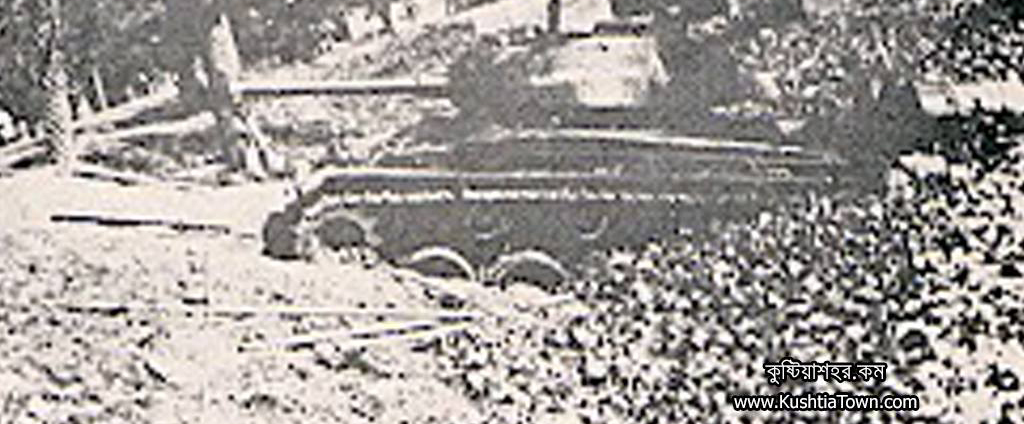
In this situation the surviving Pakistani soldiers tried to regroup at the Zilla School, abandoning the police line and the wireless station. Many soldiers were killed even as they fled. By midday, except for the Zilla School, every Pakistani position in the Kushtia area had come under the full control of the area's resistance fighters. At dawn on 31 March the resistance fighters attacked the Zilla School again, but under the continuous bombardment of the Pakistanis' heavy weapons they could not raise their heads and push forward. At the end of a full day of fighting, about fifty Pakistani soldiers were still alive. In the darkness of night they fled towards Jhenaidah in two jeeps and two 'Dodge' vehicles. With extreme cunning, another group of resistance fighters had already laid an ambush in the Chourhas area on the outskirts of the town and near a bridge at Shailkupa in Jhenaidah. They destroyed the bridge and, by a clever trick, smeared tar on a bamboo mat and laid it over the gap, so that it looked just like a paved road. As the Pakistani soldiers fled at high speed towards Jessore, two of their vehicles fell right down into the gap of the bridge.
The resistance fighters were ready in advance. Major Shoaib and several Pakistani soldiers were killed on the spot. The rest were wounded and fell into the hands of the villagers, and most of them were killed. The few who survived were sent, wounded, to Chuadanga.
And this is no filmy fantasy; it is the real and unique common history of the resistance battle of Kushtia, the district of the provisional capital of the then Mujibnagar government and of the sunrise of independence.
A few years ago a film was made on this historic event, and the film's name is "Battle of Kushtia, or the Kushtia Resistance".
Author: Munshi Tarikul Islam – renowned media and development worker.