বাংলা
 English

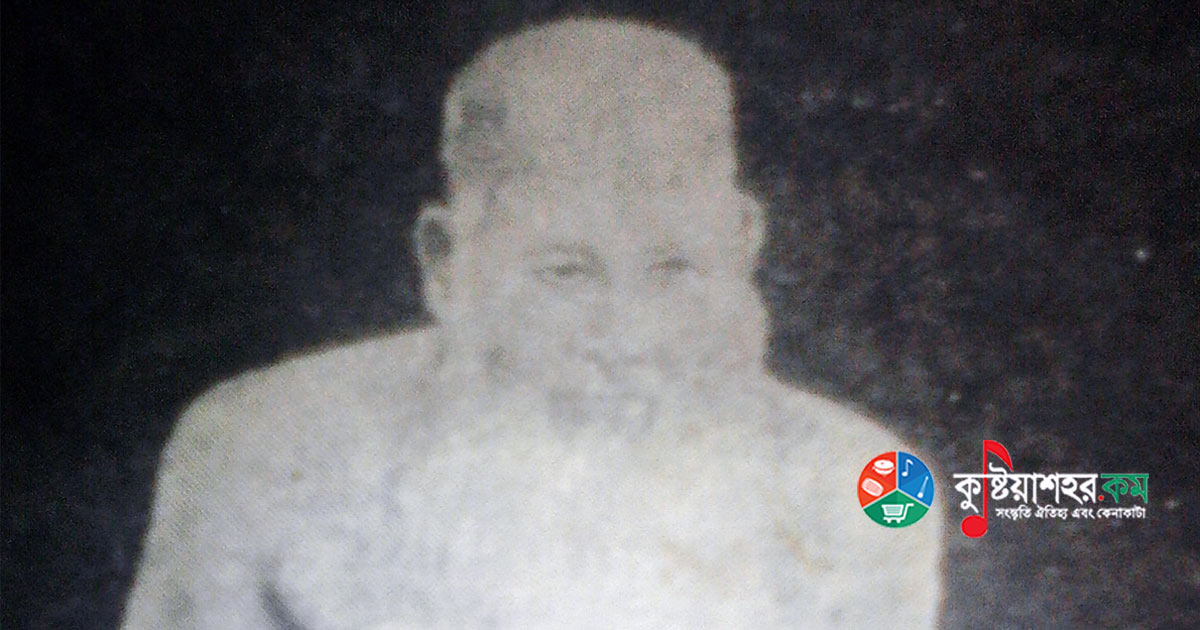
In 1898, in the then Nadia—present-day Kushtia District—he was born into the distinguished Sarkar family at Philipnagar Islampur village of Daulatpur Thana. His father was Mr Jahir Uddin Sarkar and his mother Mosa Rabeyzan. He was widely known in the area as a religious, public-spirited individual.
From childhood Mr Rahatullah Sarkar was talented. His education began at the village primary school. Later, in 1914, he passed the matriculation examination under Calcutta University in the first division from the local Juniadah High School. He then earned a graduation degree with distinction in 1918 from Rajshahi Government College under Calcutta University. An independent-minded man and an opponent of colonial rule all his life, Mr Rahatullah did not take up government service under the then British government; instead he joined the Sourabjee Group as a manager. It was while working for this organization that he began taking part in politics and in social-service activities.
Among his many acts of service, in 1925, with the assistance of Hakim Khan Kalimuddin of Dinajpur Sadar subdivision, he carried out philanthropic work at Parbatipur in the name of Mr De A I C, the then Magistrate of Dinajpur District. He also extended support to the establishment of the N.N. Girls' High School and contributed to the founding of Parbatipur Degree College. Besides setting up educational institutions, he gave full support to the creation of various social-service institutions. Among these institutions were mosques, madrasas and an orphanage. The founding of two mosques at Parbatipur New Market bears bright testimony to his works. An uncompromising secularist all his life, Mr Rahatullah Sarkar helped establish temples, cremation grounds and the like for the followers of other religions.
He was one of the founder-patrons of Milan Mondir, an institution of Parbatipur's industry, literature, culture and sports in its day. In the 1930s, at the call of Sher-e-Bangla A. K. M. Fazlul Huq, he plunged into active politics. He played an important role in forming the Krishak Praja Party under Sher-e-Bangla's leadership. A companion of the persecuted, oppressed and destitute, Mr Rahatullah Sarkar also played a special role in introducing the Tenancy Act and the Loan Arbitration Board as a member of the Bengal Legislative Council in 1934. During the famine of the fifties in Bengal, he set up langar khana (gruel kitchens) and stood by the starving people walking the road to death. Devout yet non-communal and open-minded, Mr Rahatullah Sarkar formed the Parbatipur Anti-Riot Committee during the communal riots of 1946. Thanks to his tireless efforts, communal harmony in Parbatipur was never broken.
At the time of the Partition of the country in 1947, Mr Rahatullah made extraordinary efforts in favour of the formation of a free Bengal under the leadership of Huseyn Shaheed Suhrawardy, Sarat Bose and Abul Hashim. After the Partition, Mr Rahatullah fell into the clutches of the then autocratic rulers, and for this he had to endure persecution at various times.
In 1954, in the then East Bengal, he took an active part in forming the United Front against the autocratic Muslim League under the leadership of Sher-e-Bangla, Maulana Bhasani and Shaheed Suhrawardy. As the representative of the Krishak Sramik Party, he won the highest number of votes from East Bengal as the United Front's nominated candidate. When the government was formed in 1954 under Sher-e-Bangla's leadership, and after its dismissal and the revocation of Section 92-A, a ministry was formed under the leadership of Mr Abu Hossain Sarkar, and he was appointed Parliamentary Secretary for the Ministry of Commerce, Labour and Industry in that ministry.
When Ayub Khan imposed military rule in 1958, Mr Rahatullah protested against the military regime, and as a result he was persecuted. In 1969 he provided leadership in the anti-autocracy movement. During the 1970 elections he gave full support to the pro-independence party. In 1971 he took an active part in the Liberation War; consequently the occupying forces set his 'Parbati' residence on fire. During the Liberation War, as an organizer of the war, he organized the freedom fighters. After the war he returned to Parbatipur and devoted himself to the work of rebuilding the war-ravaged country.
On 18 October 1982 Mr Rahatullah Sarkar passed away at the age of 84 due to old age.
Rahatullah Sarkar had two brothers and one sister. Ahad Ali Sarkar had two sons and six daughters. Rahatullah Sarkar's 8 sons and 2 daughters were:-
- 1. Nurul Majid, Chief Inspector, Jute. Buried at the Kushtia municipal graveyard; he had one son.
- 2. Abdur Rashid, a successful businessman; he had four daughters and one son.
- 3. Abdur Rabi, F.R.C.S., a doctor, living in London; he had two daughters.
- 4. Abdul Khalek, a businessman; he had three daughters and one son.
- 5. Abdul Hamid, Director, Environment Pollution Control.
- 6. Abdur Jalil, M.A., B.A. (Honours), LL.B., DC Taxes, Chairman of Petrobangla, Member of the Revenue Board; he had two sons.
- 7. Firoz Kabir Mukul, M.A., B.A. (Honours), Additional DIG (Retired), Police; he had one son.
- 8. Ehsanul Karim; he had one daughter. Daughters: (1) Hasina Islam, (3) Firoza Begum.
Enayetullah Sarkar and Mofizuddin Sarkar were the family's earlier ancestors, eight generations back.
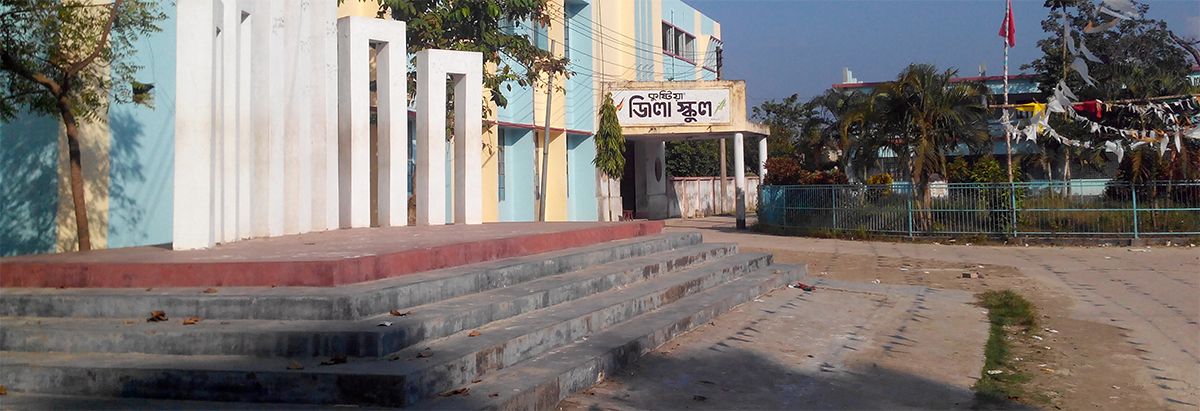
After being elected from the United Front in 1954, he raised the problems of Kushtia in parliament, and much of this was implemented. In Parliament he said that Kushtia District, recently upgraded from a subdivision to a district, had no hospital for proper treatment, no government high school for the education of male and female students, no police lines, no court building and no circuit house. He took effective measures to realize these demands. Earlier there had been no road from Kushtia to Pragpur; there was a road from Kushtia to Bheramara. In Parliament he proposed building a metalled road from Pragpur to Bheramara and secured the funds. He had the proposal for an embankment to protect Kushtia town included in the ministry's budget. Mr Rahat Ullah Sarkar was a student of Juniadah High School.
After being elected a member of parliament, he donated a large sum of money for the development of that school. He turned the Philipnagar madrasa into a high school. For the convenience of the people he set up hat-bazaars on his own land. Beside his own house he built a pucca mosque with his own funding—at that time the only pucca mosque in this region. He set up the Mothurapur telephone exchange. During his time in power he secured employment for many people of his area.
Mr Rahatullah Sarkar's son A. H. M. Firoz Kabir Mukul took part in the Liberation War at Bangabandhu's call during the war and fought many battles under Khaled Mosharraf in Sector 2. He passed the BCS in the first batch and joined the Bangladesh Police force. His only son Aburahat Morshead Kabir Sudipta is a final-year Bar-at-Law student in London.
Khurshid Anwar, son of Nurul Majid, is serving as a Deputy Secretary of the Government of Bangladesh and writes for The Daily Star and New Age.
The late Hasina, the first daughter, holds a PhD degree, and the other three daughters hold master's degrees. Dr. M. A. Bari's first daughter is an FRCS, and the second daughter is a pharmacist with a master's degree. Abdul Hamid's son Rubait Rahat is a senior official of M.B. Bank, while the other is pursuing his studies.
Abdul Jalil's two daughters: Kumkum Jalil, M.B.A., is an official at a senior position in a bank, and the second daughter is studying medicine.
Dr Taiyab Uddin Sarkar, son of Chini Ullah Sarkar, served continuously for thirty years as president of the Philipnagar Union Board; his power and influence extended from Rayta to Mohishkundi. He conducted all the arbitration of this region himself, and everyone accepted his verdicts. Abdus Sattar Sarkar had four sons: Sajjat Sarkar, Rezaul Haque Sarkar (a teacher), Altab Sarkar (a teacher) and Sirajul Islam (Assistant DC Food). Rezaul Haque Sarkar had three sons: engineer Zakir Hossain Sarkar, Director of Build Trade; Abu Jafar Sarkar, Chief Administrator of Build Trade; and Jamil Hossain Sarkar, Chief Accounts Officer of Build Trade. Zakir Hossain Sarkar's son is Sarkar Khalid bin Zakir; Abu Jafar Sarkar's sons are Sarkar Abu Arafat and Sarkar Abra; and Jamil Hossain Sarkar's son is Jishan.
Enayet Ullah Sarkar had two sons, Mofiz Uddin Sarkar and Kalim Uddin Sarkar. Nazrul Islam Sarkar, son of Kalim Uddin Sarkar, served with integrity as an A.G.S.A.S. officer and is now engaged in the legal profession. His elder son Sarkar Jahir Md Firoz is an electronics engineer, and his younger son Sarkar Jahirul Islam Jamir is an NGO Coordinating Officer.