বাংলা
 English
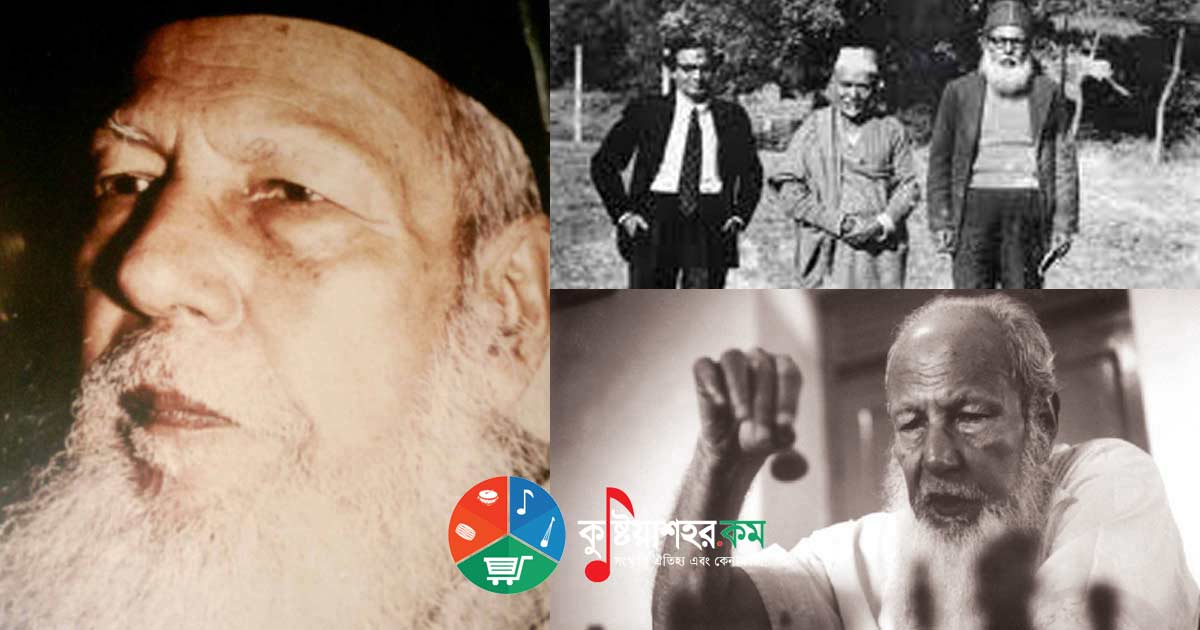
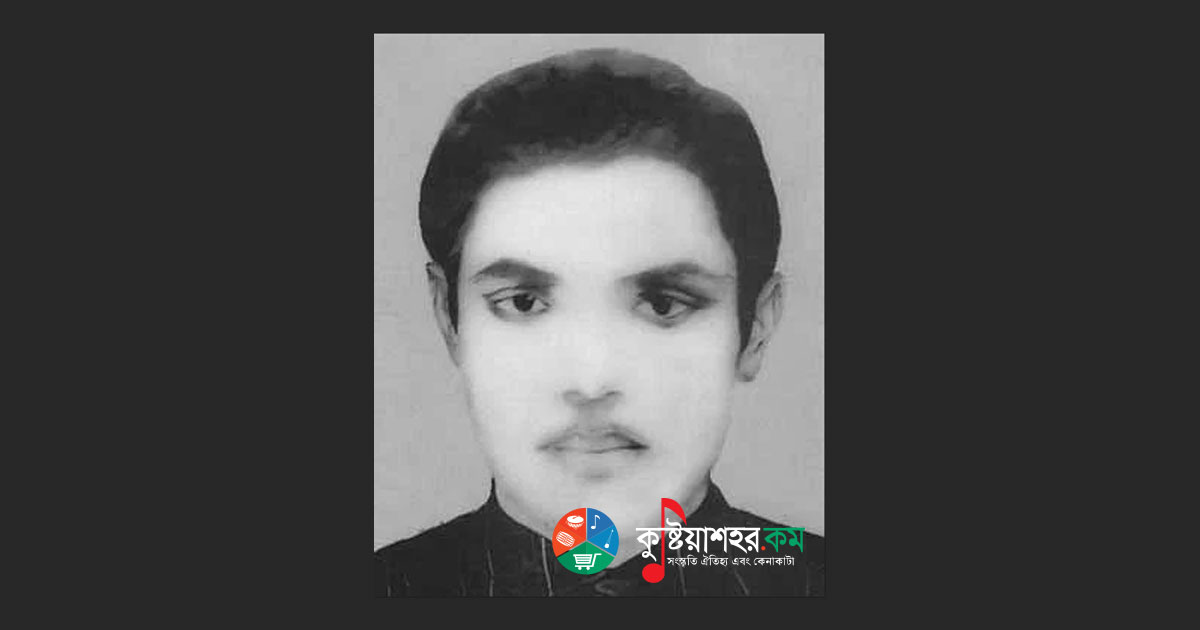
Kazi Motahar Hossain (born 30 July 1897 – died 9 October 1981) of Laxmipur village, Kumarkhali thana, Kushtia (then Nadia) district. A Bangladeshi statistician, scientist, litterateur and educationist.
The ancestral home of Kazi Motahar Hossain is at Bagmara village in Pangsha upazila of the then Faridpur district, now Rajbari. But he was born on 30 July 1897 at his maternal uncle's home in Laxmipur village of Kumarkhali thana in Kushtia (then Nadia) district. His father, Kazi Gouhar Uddin Ahmad, was an amin of the settlement department. His mother's name was Tasirunnesa. He spent his childhood in Bagmara village.
In 1921, while he was studying in the MA class, he was married to Sajeda Khatun, daughter of Mohammad Fayzur Rahman, a resident of Taltala in Calcutta. They had four sons and seven daughters. Among them are Sanjida Khatun, Fahmida Khatun, Mahmuda Khatun, Kazi Anowar Hossain, Kazi Mahbub Hossain and others.
Kazi Motahar Hossain's education began in Kushtia itself. As a meritorious student he passed the lower primary in 1907 and the upper primary in 1909 with scholarships. Passing the matriculation examination from Sengram Secondary School in 1915, he was admitted to Presidency College, Calcutta, where he had Prafulla Chandra Ray as a teacher. He sat the higher secondary examination at Rajshahi College in 1917. In 1919 he stood first in the BA examination with honours in physics from Dhaka College in the Bengal and Assam zone and received a monthly scholarship of 30 taka. Among his teachers at Dhaka College, notable were Walter Allen Jenkins and Padmabhushan Bhupati Mohan Sen. In 1921 he passed the MA in physics from Dhaka College under the University of Calcutta, standing first in the second class; it may be noted that no one obtained first class that year. In 1938 he obtained a diploma degree in statistics from the Indian Statistical Institute. Simultaneously, he obtained an MA degree in mathematics from the University of Calcutta, and in 1951 he obtained a PhD in statistics from Dhaka University. His research topic was 'Design of Experiments'. In his doctoral thesis he introduced a new theory called 'Hussain's Chain Rule'. Indeed, he was the first recognised statistician of the then East Bengal (present Bangladesh).
In 1921, while still a student at Dhaka College, he began work as a demonstrator in the physics department of Dhaka University, and in 1923 he was appointed an assistant lecturer in the same department. On Kazi Motahar Hossain's own initiative, the MA course in statistics was introduced at Dhaka University in 1948, and he joined this new department. He also taught in the mathematics department from 1949 to 1959. In 1951 he became a reader in statistics and in 1954 a professor. He retired from Dhaka University in 1961. He worked in the statistics department as a supernumerary professor from 1961 to 1964. He was the first director of the Institute of Statistical Research and Training, established in 1964. In 1969 Dhaka University appointed him an honorary (Professor Emeritus) professor.
Language Movement:
Believing in non-communal ideals, he wielded his pen to build a strong foundation for the country's education, literature and culture in that light. He played an important role, through various activities, in favour of making Bengali the state language. When the movement arose in East Bengal in the fifties and sixties demanding the introduction of the Bengali language at all levels of education, he was one of its firm patrons. He gave impetus to these movements by delivering speeches, issuing statements and publishing essays. Kazi Motahar was also a forceful supporter of the movement for the growth of Bengali nationhood that took place in East Bengal in the sixties centring on the Six Points of the Awami League led by Bangabandhu Sheikh Mujibur Rahman.
In 1961 he played a courageous role in Dhaka in celebrating the Tagore birth centenary in the face of opposition from reactionary intellectuals. In 1967, when Pakistan's ruling clique took the step of stopping the broadcast of Tagore songs on radio and television in order to belittle Bengali culture, he too lodged a protest against it.
He was a member of the Bengal Spelling and Script Reform Committee. In 1957 he became president of the Kagmari cultural conference convened by Maulana Bhasani. In his private life he was an intimate friend of Kazi Nazrul Islam. Nazrul affectionately called his Motahar 'Motihar'.
Works:
In 1926, together with Kazi Abdul Wadud, Syed Abul Hossain and Abul Fazal, he formed the ‘Muslim Sahitya Samaj’. For a time he edited the periodical ‘Shikha’ on behalf of this organisation. He was a founder of the Bangla Academy. Kazi Motahar Hossain wrote many books and essays on science, literature and culture. His books include Sanchayan (1937) (a collection of essays), Nazrul Kavya Parichiti (1955), Shei Path Lakkhye Kore (1958), Symposium (1965), History of Mathematics (1970), Alokbijnan (1974), Nirbachito Probondho (1976) and Plato's Symposium (translation, 1965), among others.
Honours:
In 1960 the Pakistan government honoured Professor Kazi Motahar Hossain with the title of Sitara-e-Imtiaz. He received the Bangla Academy Award for essays in 1966, and in 1979 the Independence Award for his contribution to science and technology. In 1974 the Dhaka University authorities honoured him with a DSc degree for his contributions to science and the arts. In 1975 the government of Bangladesh honoured him as a National Professor.
The Science Annex Building of Dhaka University has been renamed the Kazi Motahar Hossain Bhaban.
Chess:
In 1925, in connection with the organising of the All-India chess competition, a close friendship grew up between him and the poet Kazi Nazrul Islam. As one of the greatest chess players of the subcontinent, he was the undisputed champion in undivided Bengal and East Pakistan from 1929 to 1960.
He is recognised as a chess player of international renown. He is honoured as the pioneer of the game of chess in Bangladesh. Remembering his unique contribution to the game, the Kazi Motahar Hossain Smriti International Chess Tournament is regularly organised by the Bangladesh Chess Federation.
He died in Dhaka on 9 October 1981.