বাংলা
 English
Bheramara is widely known as one of the most important upazila headquarters in Bangladesh. The Bheramara upazila headquarters is located 23 kilometres north-west of the Kushtia district town. On its 153.72 square kilometres of land, the Bheramara upazila is home to 175,480 people, of whom 90,700 are men and 84,780 are women.
To the north-east of the upazila, over the Padma river, stand the twin wonders of beauty — the Hardinge Bridge and the Lalon Shah Bridge. Mirpur upazila of the district lies to the south-east, Daulatpur to the west, and Kushtia Sadar upazila to the east. The Bheramara Upazila Parishad is formed of one pourashava (municipality) and six unions. It has 81 villages and 43 mauzas. Formerly known as a thana, Bheramara was recognised as an upazila on 7 November 1981. After Kushtia itself, Bheramara's fame has spread to every corner of the country and the world. Here are the country's largest Ganges-Kobadak Irrigation Project, the 60 MW power plant, the Hardinge Bridge — the 11th largest railway bridge in the world and the largest in the country — and the naturally parallel Lalon Shah Bridge, the country's second largest road bridge.
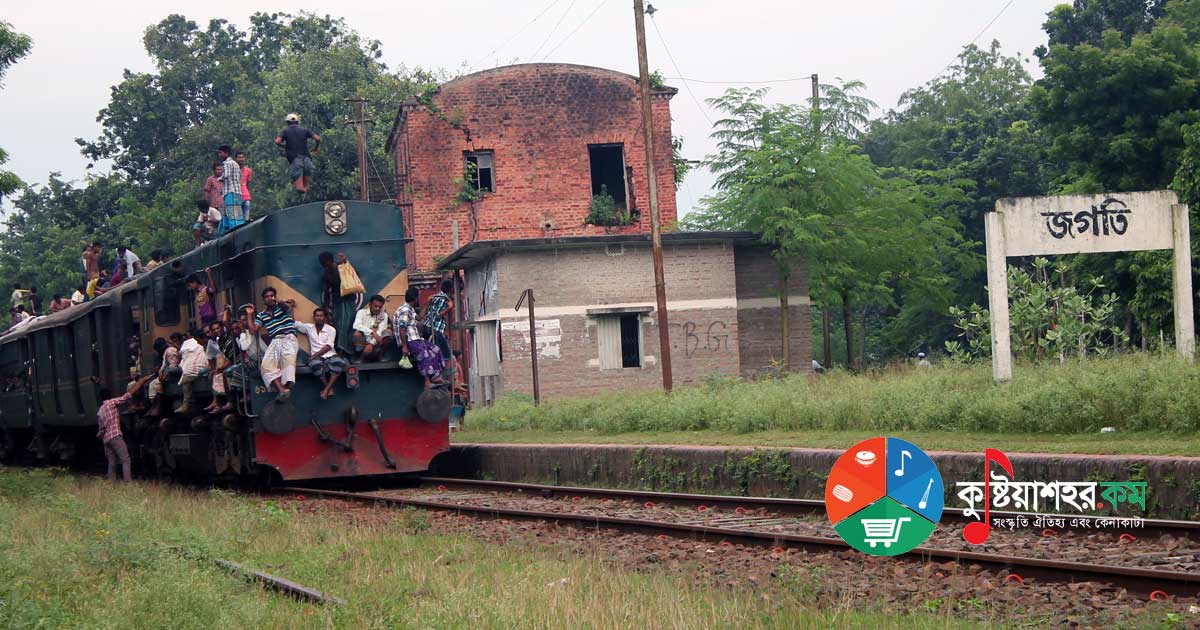
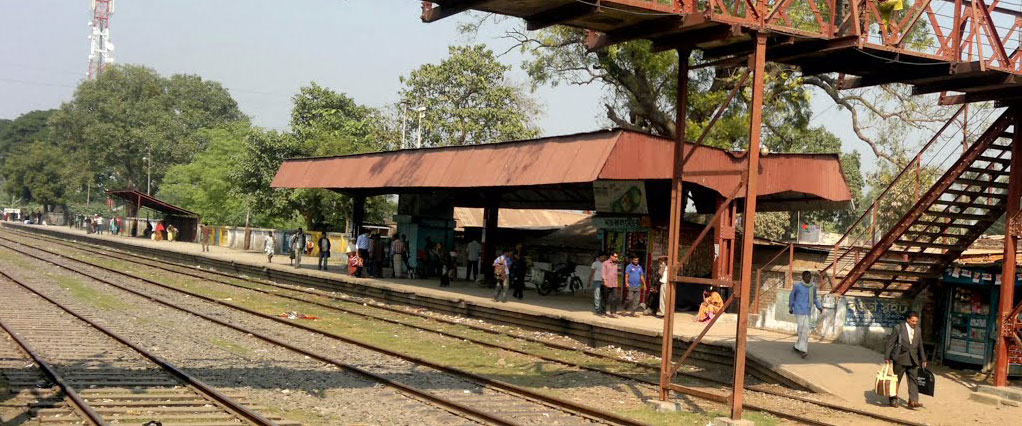
There are also the mazar sharif of Hazrat Solaiman Shah Chishti and the Three-Dome Mosque, famed as the invisible mosque. No definite history of the naming of Bheramara upazila is known, though various tales circulate by word of mouth and in the urban and rural areas. It is known that in the past large numbers of sheep were reared in the Bheramara area. During the British era, while a train was passing, more than a hundred sheep grazing together near Bheramara station fell under the train and were cut to death. At that time the name Bheramara was coined from 'bhera' (sheep), in order to preserve that heritage.
Tourist Attractions:
Bheramara has attractions and heart-pleasing places. The Padma river is the country's only twin beauty, and the two parallel bridges stand over this river in Bheramara. Lush greenery surrounds the Hardinge Bridge and the Lalon Shah Bridge. The Padma river lies to the east. The west bank between the two bridges is the Bheramara area of Kushtia. The waters of the mighty Padma rush from one side to the other. Standing on the long embankment faced with concrete blocks, one can hear the sound of this current. The environment of the area is extremely wonderful and captivating. On top of that, the Lalon Shah Bridge creates a natural scenic view. There are also the country's largest Ganges-Kobadak Irrigation Project and the Bheramara 60 MW power plant, among others. The upazila has three historically important mazars and the Three-Dome Mosque, famed as the invisible mosque. Hundreds of thousands of devotees and aspirants come here every year.
Ghoresha Mazar:
The shrine is located 3 kilometres west of the upazila headquarters, in Dharmapur union. Every year large crowds of devout people gather here for the waj mahfil.
Solaiman Shah Mazar:
The shrine of Solaiman Shah is located on the bank of the Padma river, 5 kilometres north-east of the upazila headquarters, in Makarimpur union. Every year hundreds of thousands of devotees and aspirants arrive at the waj mahfil from different places at home and abroad.
Dharmapur Mazar:
The Dharmapur Mazar was built during the British era with small bricks. Some ancient relics can also be found at the shrine.
Three-Dome Mosque:
It is located at a place called Satbaria in Dharmapur union. It is said that once upon a time, in a single night, seven invisible (gayebi) mosques were built on earth, said to have been made by the angels. At that time, that three-domed mosque ended up unfinished in the Satbaria area. It is known to many as the Invisible Mosque.
Hardinge Bridge:
Construction of the Hardinge Bridge, the 11th longest in the world and the country's largest railway bridge, was completed in 1915. On 4 March 1915 it was auspiciously inaugurated by the then Viceroy Lord Hardinge, and the Paksey bridge was named Hardinge Bridge after him.
Considering easy communication between Kolkata and Delhi with the eastern states of undivided India — Assam, Tripura, Nagaland — and the north-east, the government of undivided India proposed building a bridge over the Padma river in 1889. Survey work for the bridge over the Padma began in 1909. In 1912, when it became necessary to build protective embankments on both banks of the vast Padma to protect the bridge, guide banks were constructed extending 4 to 5 miles upstream. The main construction of the bridge began in 1912. At that time, overcoming the swift current of the open, tempestuous Padma, 12 wells were sunk.
Standing on 15 spans, this bridge is 5,894 feet long. Each span weighs 1,250 tons. Besides the 15 spans, the bridge has additional land spans of 75 feet at each end. After the relentless toil of 24,400 workers over 5 long years, the bridge was completed in 1915. At the time, building it cost 3 crore 51 lakh 32 thousand 164 taka, the greatest expenditure of that era. Of this, 1 crore 80 lakh 54 thousand 796 taka went for the spans, 5 lakh 19 thousand 849 taka for installing the land spans, 94 lakh 87 thousand 346 taka for controlling the river's flow, and 71 lakh 55 thousand 173 taka for the railway lines on both banks.
Lalon Shah Bridge:
The Lalon Shah Bridge is Bangladesh's second largest road bridge. Built over the mighty Padma river, this 1,786-metre-long bridge with two 7.5-metre lanes has established direct road links between Bangladesh's south-western and north-western regions. The bridge has a total of 17 spans — 15 of them 109.5 metres long, and the two spans at either end of the bridge 71.75 metres each. The main bridge, including the divider, is 18.03 metres wide. On both sides of the divider there is a 7.5-metre-wide two-lane carriageway for vehicles moving in opposite directions, along with 1.00-metre footpaths with railings. Piles of 3-metre diameter and 91.00 metres or more in length, 64 in number, are among the bridge's notable features. This bridge's deck is the world's longest continuous deck. There are dual two-lane roads at both ends of the bridge. The approach roads built under the project — 10 kilometres on the eastern side and 6 kilometres on the west — have been linked to the N74 national highway.
The estimated cost of the project was about 1,065 crore taka. To implement the project, the Japan Bank for International Cooperation provided a loan of about 820 crore taka; the remaining 245 crore taka came from the Government of Bangladesh. The Government of Bangladesh took up the project in 1993-94, and after its feasibility study, design and construction, the bridge was opened to traffic on 18 May 2004.
Ganges-Kobadak Irrigation Project:
The country's largest Ganges-Kobadak Irrigation Project is located in Bheramara. Under this project, 197,500 hectares of land in four districts of the southern region receive irrigation facilities. As a result, target-level food grain production on cultivated land is achieved every year.
The cultivated land of millions of farmers of Kushtia, Jhenaidah, Magura and Chuadanga districts comes under this project. The project has 12 subsidiary pumps along with 3 main pumps. At present the project is in a sorry state. Owing to shortage of water and low voltage of electricity, the project frequently fails to provide irrigation to the fields. The pumps need a minimum of 12.6 metres of water to run. Mainly for lack of water, the pumps have become ineffective. The GK irrigation project was taken up in 1954. Completing the first phase of the project in 1970 and the second in 1983 cost 73 crore 89 lakh taka. Among the project's works, the construction of a cross dam on the Sagarkhali canal is notable. While the first phase was under way, the dam was built and the Ganges irrigation canal for the project was created.
60 MW Power Plant:
Bheramara has the traditional 60 MW power generation plant. With its 3 units, this power plant carries considerable weight in easing national power shortages. The three gas-turbine units generate 55 to 57 megawatts of electricity every day, playing an important role in the present power crisis. These oil-driven units consume 25 thousand litres of diesel per hour — that is, one wagon of diesel per hour.
Beyond the country's south-western region, the Bheramara power plant plays an extremely important role in overcoming load-shedding and low voltage in the northern region too. In 1976, units 1 and 2 of Bheramara's traditional power plant began production, and unit 3 came into production in 1980. The operating capacity of these gas-turbine units has been capped at a maximum of 20 years. Yet units 1 and 2 have been running for 29 years and unit 3 for 25. The plant is currently in a decrepit state.
The Liberation War of 1971:
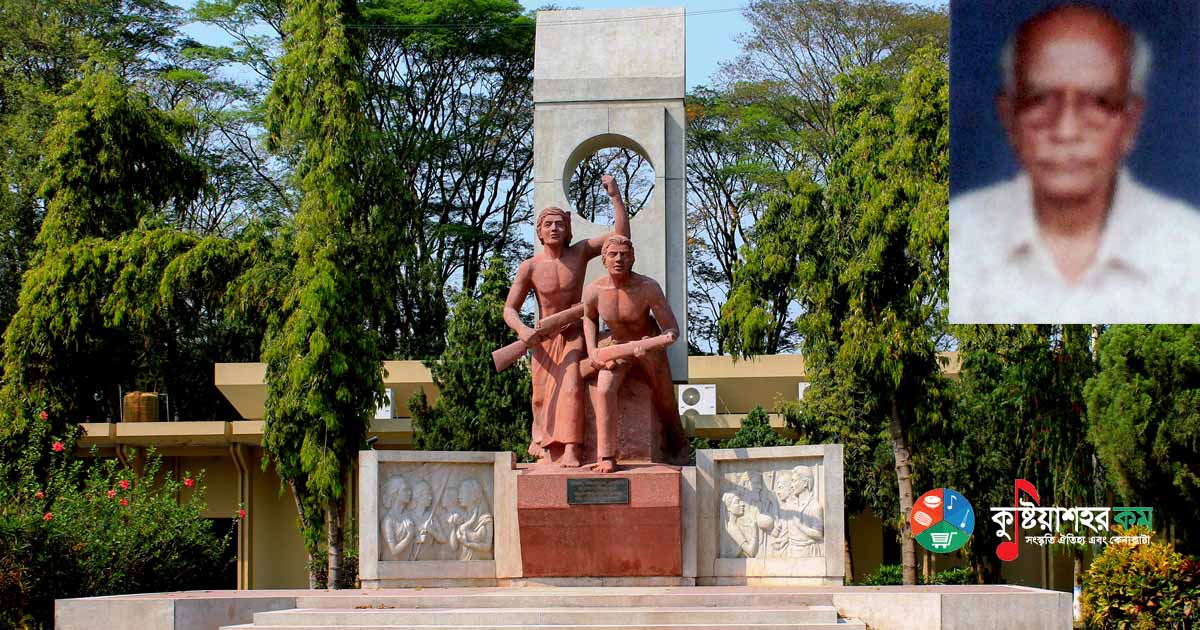
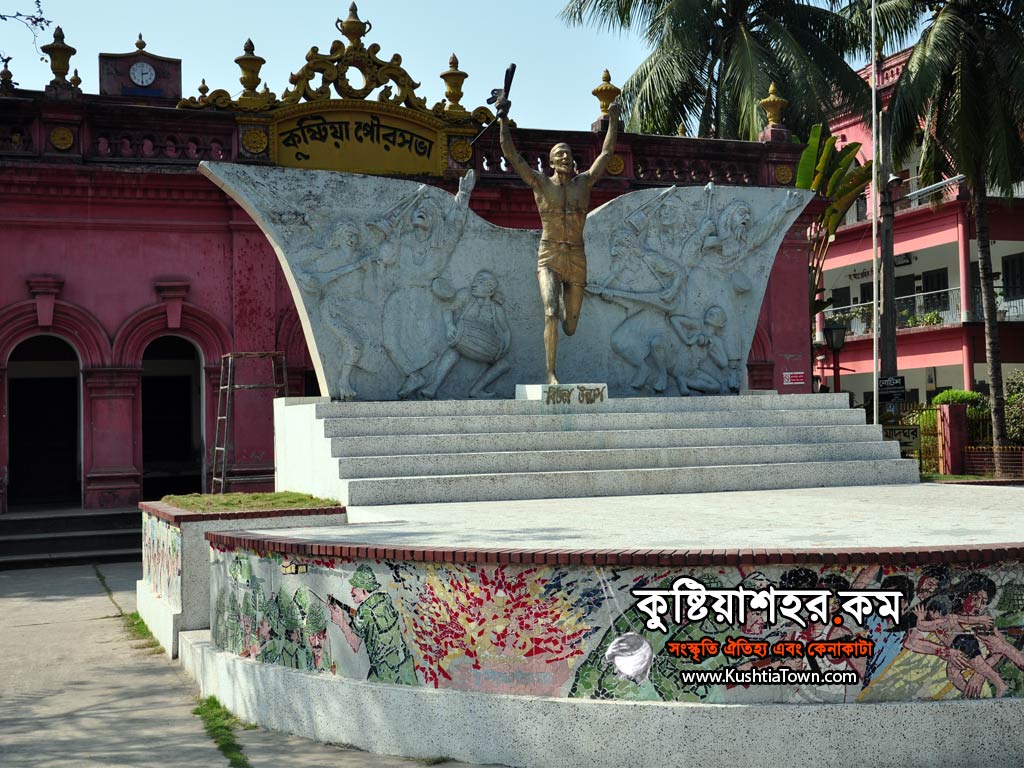
During the Liberation War, the brave sons of Bheramara played a bold role. The history of that time is regarded as a history of pride for the people of Bheramara. The last battle of Kushtia district, indeed of Sector 8, was fought at Bheramara. During the war the Pakistani army brutally killed thousands of women, men and children of the area and left the bodies on the bank of the Padma river. Razakars seized ordinary people and took them to the Pakistani army camps, where they were tortured in many ways. The Pakistani army fell victim to the freedom fighters' guerrilla attacks several times. After Bangladesh became independent, human skulls and bones were seen lying in various graveyards, crop fields and ditches. Bheramara is a land entwined with many memories of that time. During the war, a girder of the Hardinge Bridge was damaged by a bomb dropped by the allied forces in resistance. The very purpose of damaging the bridge was to collapse the communication system. In this war, more than 200 brave Bengalis of Bheramara fought an armed struggle. Of them, 8 freedom-loving Bengalis embraced martyrdom fighting on the front line. They are martyrs Jasim Uddin, Rafiq, Chand Ali, Nazrul Islam, Gias Uddin, Lutfor Rahman, Shahajan Ali and Fazlul Haq.
Traditional Betel Leaf:
Betel leaf has been cultivated in Bheramara since the most ancient times. As the days passed, betel cultivation grew ever larger. At present, betel leaf from Bheramara meets the demand of the 10 districts of the south-west as well as about 40 districts of the country, including North Bengal. Not only that — Bheramara's betel leaf is exported as far as Pakistan, and betel leaf also earns Bangladesh a great deal of foreign currency.