বাংলা
 English
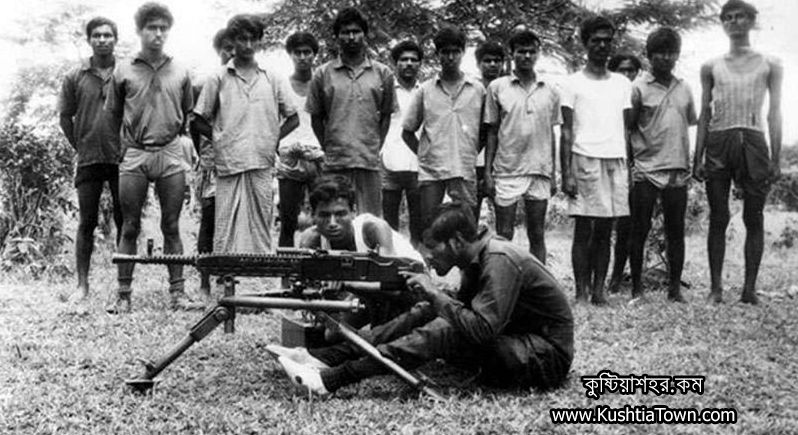
On 8 December the Mirpur, Bheramara and Daulatpur thanas of historic Kushtia were freed of the Pakistani occupying forces. It is a memorable day in the history of the Bengalis and of Bangladesh's great Liberation War. On 8 December 1971, through countless sacrifices and endurance, Mirpur Thana of Kushtia District found its place in the pages of history as the day it was freed of the Pakistani occupiers.
On 31 March 1971, led by Aftab Uddin Khan, president of the then Chhatra Sangram Parishad, more than a hundred freedom-aspiring students and public leaders took an oath at the mosque adjacent to the Post Office on present-day College Road.
After the resistance battle was lost at the Kushtia Police Lines in the late night of 30 March, and a fierce attack was launched against the Pakistani occupying forces at the District School, the Pakistani forces, realizing certain defeat, sought help from the Jessore cantonment. But when the signal came that no help would be sent from there, the Pakistani occupying forces fled in the darkness of night in three vehicles, firing their guns as they went towards the Jessore cantonment.
At that time two Pakistani vehicles fell into a trap dug by the freedom fighters near Garaganj in Jhenaidah District, and the soldiers in the vehicles were killed at the hands of the ferocious freedom fighters of that area. The other 6 members of the Pakistani forces kept fleeing from the District School towards Mirpur at dawn. They first came under fierce resistance in the field of Mashan Bazar, but in the firing of the Pakistani soldiers, Dr Abdur Rashid, Hilman, Gopal Sheikh, Ashraf Ali and Sonaullah of Mashan were martyred.
In Kamarpara of Mirpur Thana there was again a battle between three scattered Pakistani occupiers and the local freedom aspirants. In this battle Sepoy Mohiuddin of Mirpur Thana was martyred. On the other side, those 3 members of the Pakistani forces were also killed.
It may be noted that the Mirpur Upazila Martyrs' Memorial has been built beside the grave of martyred Sepoy Mohiuddin. On 15 April the Pakistani forces again began taking up positions at various places in greater Kushtia District. The Pakistani forces set up a strong base in the area of the then Thana Council building of Mirpur Thana (the present Upazila Parishad compound area). Here a Pakistani militia force of 250 men took up position heavily armed. The Pakistani forces also set up a base at Amla Degree College.
As the Pakistani forces and their cohorts organized themselves again, thousands of people - men, women, children, young and old - began taking refuge in the neighbouring country of India.
On 16 April a Youth Camp was opened at Karimpur in India. In this camp the freedom-aspiring people stayed to prepare for the Liberation War and to undergo advanced training. Those who played an active role in setting up the camp included the former chairman of the then Mirpur UP Alhaj Abdul Jalil, the late Abdul Wahed, Jalil Ahmed Khuku, Anwar Bhasani, Golam Kibria, Aftab Uddin Khan, Rahan Ali, Kubbat Ali and Billal Hossain.
In overall charge of the camp were the then MP (later MCA), chairman of the Zonal Command Council of the south-western region - the late former MP Abdur Rauf Chowdhury (MCA) and Golam Kibria (MCA).
After being recruited from that camp to the Jamshedpur camp in India, the freedom fighters were sent to Chakulia in Singhbhum District of Bihar province for advanced training.
At the Chakulia advanced training centre Aftab Uddin Khan, now convener of the Mirpur Upazila Freedom Fighter Command, served as platoon commander. After completing the advanced training, he entered the interior of Bangladesh, having been appointed group commander of E-9 from the Shikarpur Freedom Fighter Action Camp in India.
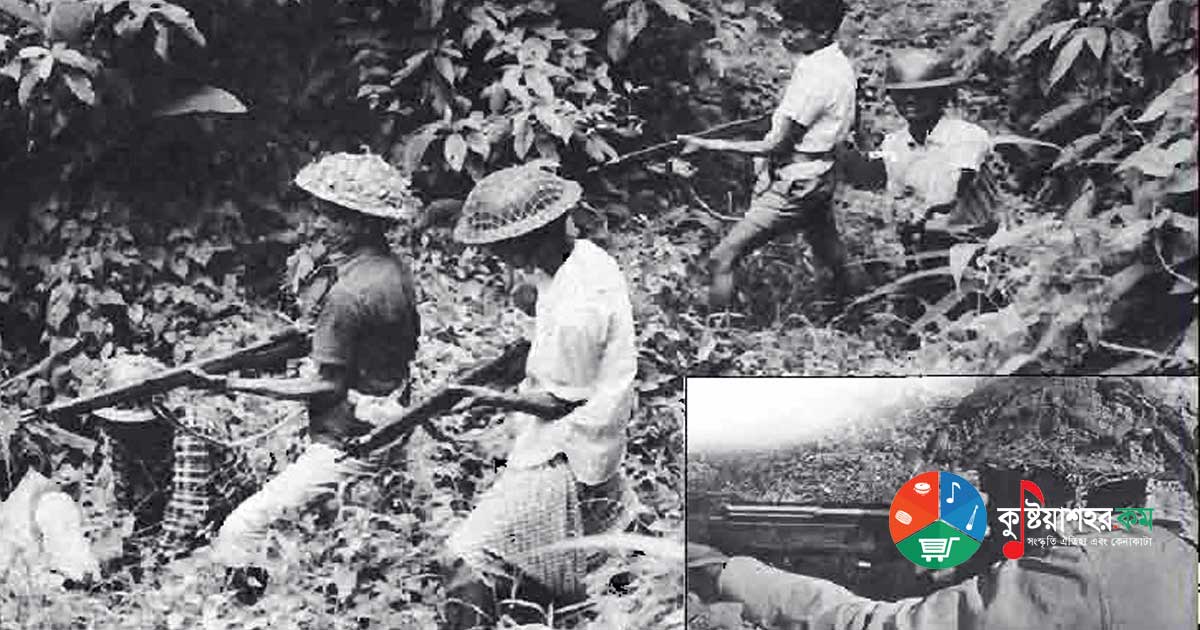
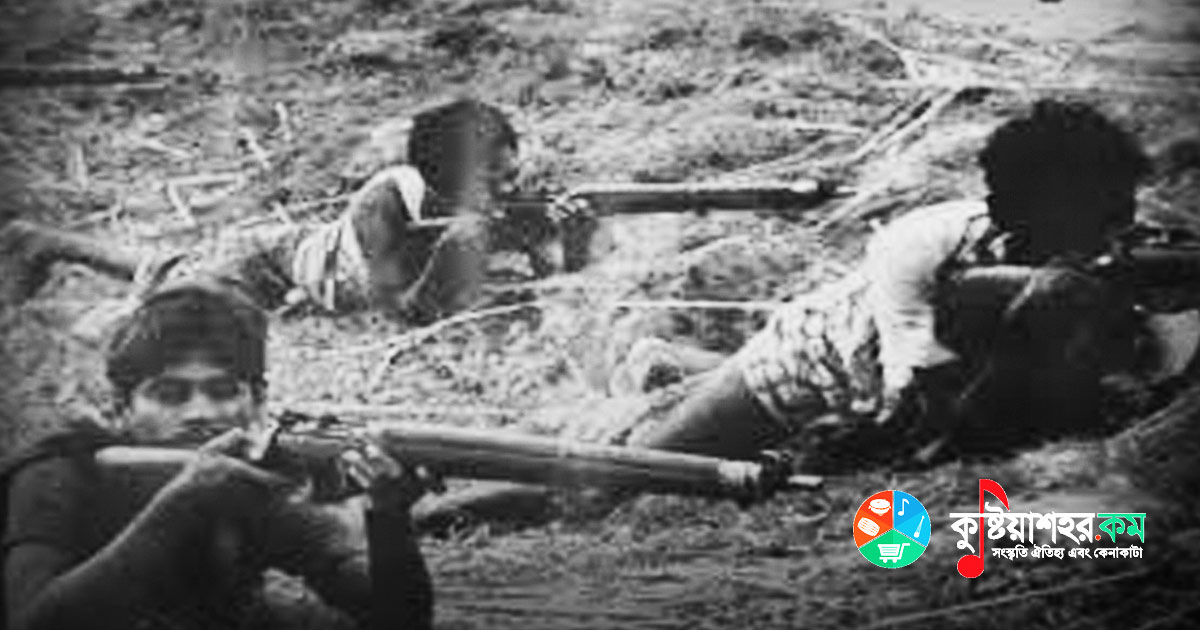
On 26 November, in Sherpur village under Daulatpur Upazila of Kushtia District, the largest guerrilla battle of Kushtia District took place. Commander Aftab Uddin Khan and Assistant Commander Jalilur Rahman led this battle.
On the night of 25 November Commander Aftab Uddin Khan took up position at Senpara with a group of about a hundred well-equipped freedom fighters. The Pakistani forces got wind of the matter, and in the middle of the night they set Sherpur on fire and began firing recklessly. On learning the position of the Pakistani forces, the freedom fighters swiftly consolidated their position on the bank of the Sagarkhali river, midway between the Mirpur and Daulatpur thanas. At 3 a.m. they began advancing steadily to confront the Pakistani forces.
At 5 a.m. on 26 November the two sides confronted each other, and after six hours of fierce fighting the Pakistani forces were forced to retreat. In this battle 60 Pakistani soldiers were killed, and a freedom fighter named Habibur Rahman of Sherpur was martyred.
Besides, Hera and Azizul of the same village were seriously wounded, and Commander Aftab Uddin Khan, along with many other freedom fighters, was wounded.
With the cooperation of Mujib Bahini Commander Nazmul Karim Sufi and Group Commander Habibur Rahman, Idris Ali set up a strong camp of the freedom fighters at the old government primary school of Paharpur. The Kushtia sub-sector commander, the then Lieutenant Khandkar Nurunnabi, visited the camp on the ground and gave his approval.
At dawn on 7 December an operation was launched from the Paharpur freedom-fighter camp and the Amla area was freed of the Pakistani occupiers. That night the freedom fighters took up position in Sultanpur village, in the area adjacent to the house of the late Abul Hossain Joardar. The Pakistani forces' strong base lay very close to the freedom fighters' position. After the Sherpur battle word had spread in the area that a thousand freedom fighters were stationed in the region. Coming to know of the freedom fighters' position in Sultanpur village, the Pakistani forces began fleeing in the darkness of night. While fleeing, they burned all the documents of the Mirpur Thana (police outpost).
At dawn on 8 December Commander Aftab Uddin Khan, with 170 freedom fighters, raised the national flag of independent sovereign Bangladesh at Mirpur Thana with a gun salute. Afterwards 65 collaborators and Razakars of the Pakistani occupying forces surrendered at the Paharpur freedom-fighter camp.
When the news that Mirpur was freed of the occupiers spread through the area, thousands of men and women of all ages took to the streets that day in 1971, rejoicing.
On the same day, 8 December 1971, the freedom fighters, defeating the Pakistani occupying forces with the help of the allied forces, freed Bheramara of Kushtia from the enemy. On this day, under the leadership of Major Abu Manjur, commander of Sector 8, and District Commander, brave freedom fighter Rashedul Alam, they split into two groups and at around 7 in the morning engaged the Pakistani occupying forces in a frontal battle at Farakpur in Bheramara. In this battle, which lasted about 7 hours, 8 Pakistani soldiers were killed. Immediately after the battle about 50/60 Razakars were killed by the freedom fighters' bullets. On receiving news of this event, the morale of the other members of the Pakistani forces stationed at Bheramara broke, and before evening they fled from Bheramara across the Hardinge Bridge towards Ishwardi. That night freedom-loving people and freedom fighters entered Bheramara in groups. They gave themselves over to the joy of victory.
Meanwhile, on the morning of 8 December, as the Pakistani occupying forces were leaving Daulatpur at Allar Darga, they fired at the freedom fighters, and the brave freedom fighter Rafik was hit by the bullets and martyred. Daulatpur was then declared freed of the occupiers by the then freedom-fighter Sub-sector Commander Major Nurunnabi. Thus, on 8 December, after a long nine months of armed struggle, Daulatpur Thana of Kushtia too was freed of the occupiers. On this day in 1971, freeing Daulatpur of the enemy and flying the victory flag at the thana premises, the freedom-aspiring brave sons of the soil proclaimed their message of victory.
To free Mirpur, Bheramara and Daulatpur of the occupiers, 16 battles, large and small, took place between the freedom fighters and the Pakistani occupying forces, including frontal battles. In these battles hundreds of men and women were martyred, including 35 brave freedom fighters. The biggest battle took place at the Dharmadaha Bangari field of the upazila. In that battle about three hundred and fifty Pakistani soldiers were killed. Three brave freedom fighters and three members of the Indian allied forces were martyred.