বাংলা
 English
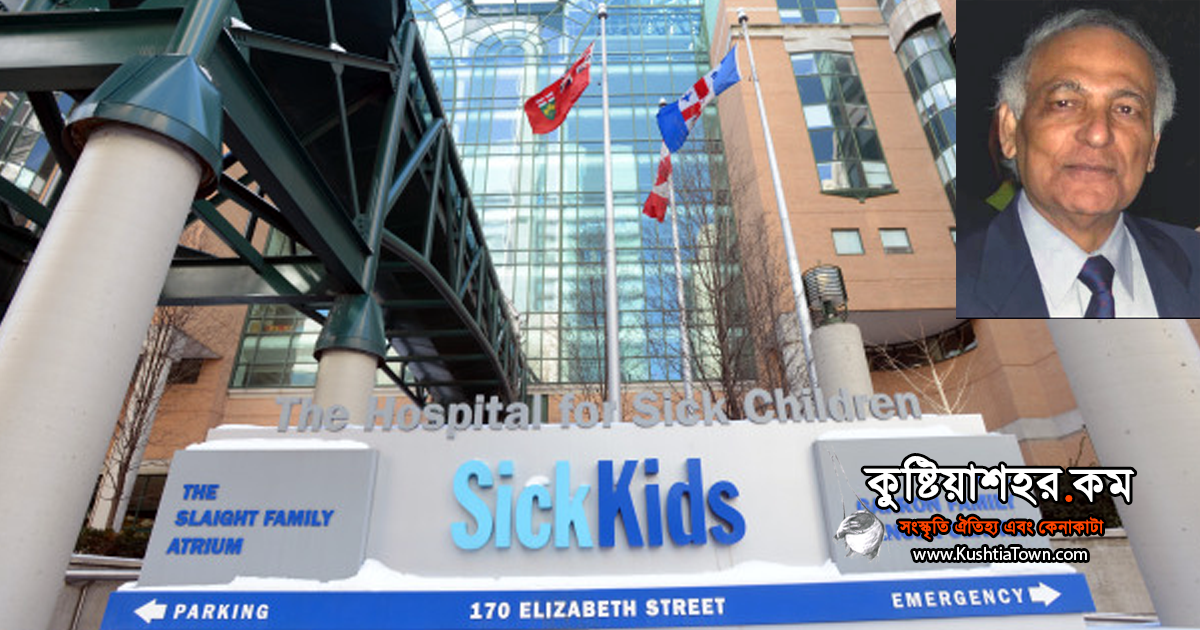
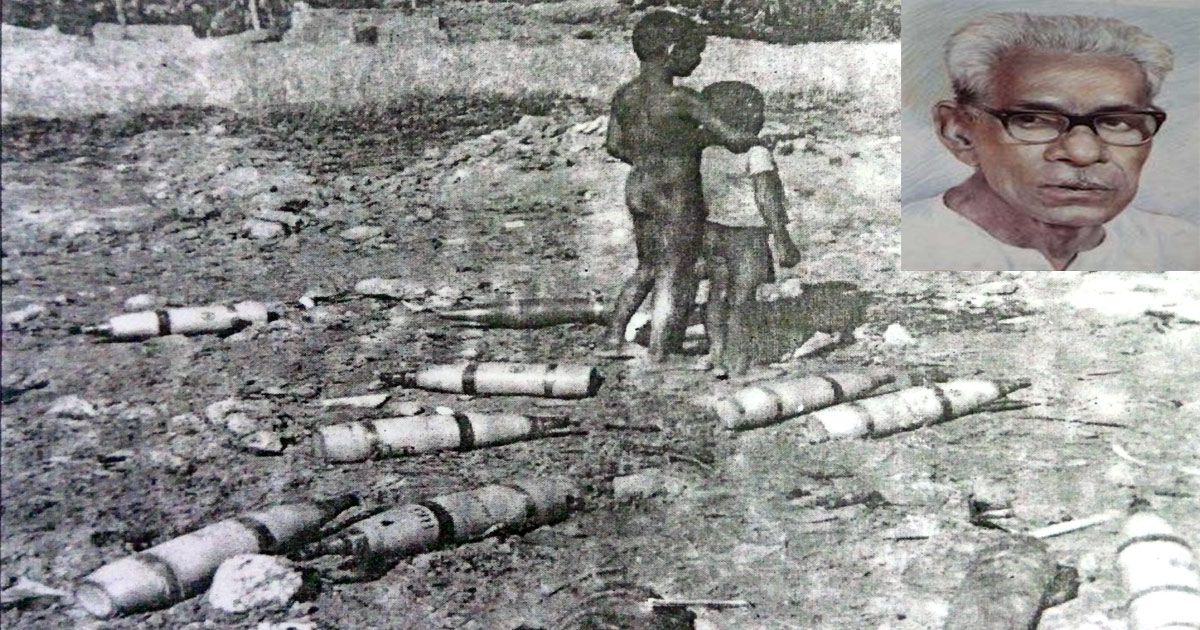
Professor Bibuvhendra Sarkar (B. Sarkar) was born in Kushtia district. His ancestral home was in the village of Gobra Chandpur in Kumarkhali. Behind the Kushtia court station — where the present-day Hotel Arafat stands — was his father's house, and it was there that he was born in his childhood. He began his education at the Mission School.
After the partition of the country in 1947 his family moved to India, and it was there that he received his early education. In India he left proof of his talent one after another, winning various scholarships and prizes. In 1959 he left India for higher studies and set out for America. In 1964 he earned a PhD in biochemistry from the University of Southern California. In recognition of his exceptional merit, the University of Southern California also awarded him the 'Blue Key' award.
At the age of just twenty-eight he became an assistant professor at the University of Toronto in Canada and played a major supporting role in raising funds from the hospital's own resources for the Hospital for Sick Children, the largest children's hospital in the world. Very quickly he rose to a full professorship, and for three long years he served as director of the Hospital for Sick Children.
Professor Sarkar served as a visiting professor at the University of Paris in France, the University of Cambridge in England, the University of Manitoba in Canada, and the University of Fudan, Delhi, Shanghai and Ionian in Greece, among other universities. In England he was honoured with the position of Member of the High Table at King's College, Cambridge.
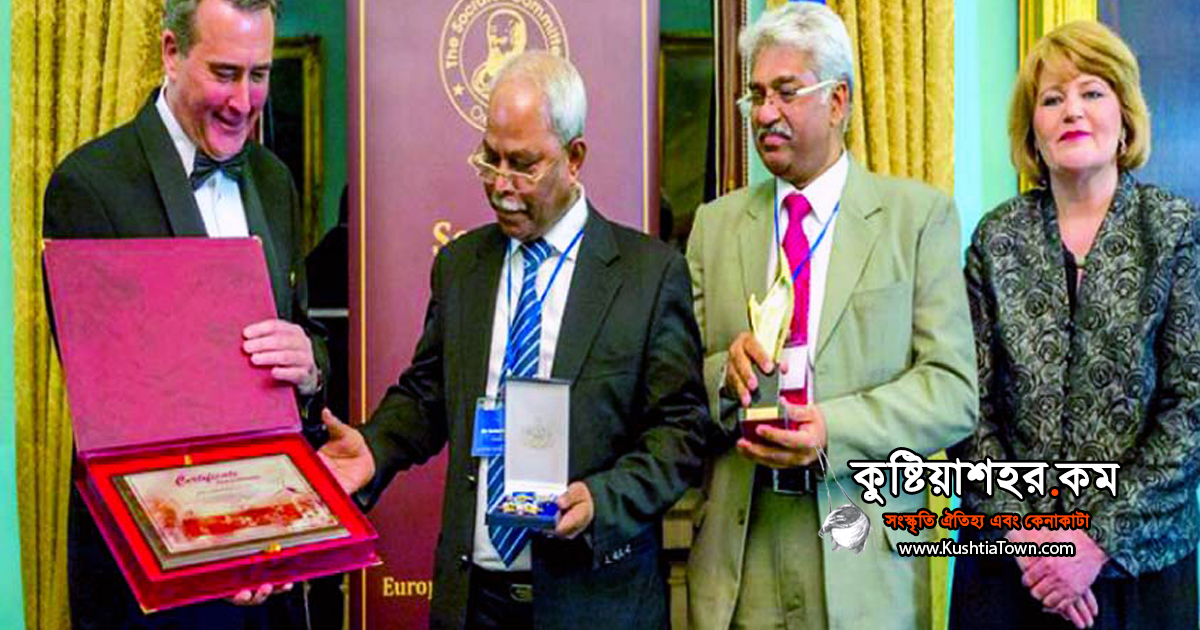
In 1977 he received the Nazild Foundation Award of England from England. In 1998 he took charge of running the Advanced Protein Centre and established and ran a high-quality biotechnology centre in Canada.
In 1996, while attending a scientific conference in Calcutta, he learned of the arsenic contamination in Bangladesh. He immediately changed his programme and came straight to Bangladesh. After nearly fifty years, this was his return to his birthplace — to Kushtia.
In Kushtia district he searched out his old home and the memories of his boyhood, and he visited his own school, the Mission School. He went into the villages to stand beside the arsenic-affected people. The horror of arsenic, which descended like a curse upon the poverty-stricken people of rural Bengal, troubled him deeply. Returning to Canada, he held wide-ranging discussions on the issue with the Western countries, built public opinion, and in consequence an extensive debate arose throughout the world about arsenic-affected Bangladesh.
He then formed an international research team, and under his leadership produced an extremely important map showing the presence not only of arsenic but of twenty-nine metals in all, by means of which the affected areas have been identified. Among the most severely affected areas is Kushtia.
It is worth noting that, although this vast undertaking could have cost millions of dollars, Dr Sarkar and his international team of scientists completed it entirely at their own expense. For Bangladesh this was a great sacrifice on their part. Although Dr Sarkar had grown up amid Western comforts from his boyhood, he began working in the dust and mud of Bangladesh's villages — on its paths and in its fields. Walking at times, riding a van at others, he never felt the slightest hardship in carrying out his scientific work, nor ever a moment of doubt. Bangladesh lives in his heart, and so does Kushtia, his birthplace. In mind and spirit he is a child of Kushtia.
Two extremely important pieces of research mark his long career: he is the discoverer of the treatments for Wilson's disease and Menki's disease. For this, he was specially invited to the Nobel Symposium in Sweden in 1982 to present his research. Standing to speak in Alfred Nobel's former residence, he thought: I, a boy of Kushtia — how far have I come today, and how did it happen? He is the one who adorned anew Kushtia, the capital of literature and culture. A son of Kushtia, with the dust and grit of Kushtia on his body, he is today a distinguished scientist known across the world. More than sixty postdoctoral scientists around the world were trained by him in his own laboratory.
In early 2007 he came to Kushtia, partly for a visit and partly to see the arsenic-affected mothers. In fact, in May 2007 the Third International Conference on Metals and Genetics was held in Toronto, and it was dedicated to him. He has two children, Paul and Uma. About twenty years ago Sarkar's wife passed away, and since then he has shouldered the role of both mother and father for the children. Paul is now an engineer working in America, while Uma serves at the U.N. in the position of Coordinator of Asia & Pacific about child labour & education.
Those whom the Creator loves are given the service of creation in their hands. Professor Sarkar is a unique personality adorned with every virtue. From painting pictures and singing songs to playing the piano — there is hardly anything he does not know. And he has a vast, wonderfully tender heart. Emotionally he is one hundred per cent Bengali. The professor's father was a lawyer, a man deeply devoted to literature, well educated and of refined taste. His mother was an independent-minded, heroic woman — the late Sucheta Sarkar. Taking part in the anti-British movement, she lay down on the road in front of the Kushtia Mission School and astonished everyone; she was beaten by the British loyalist forces.
The world-renowned Rabi Tagore was a frequent visitor to their house. With forebears so distinguished, Sarkar can in no way think of himself as apart from the people of Kushtia. Bangladesh lives in his heart; Kushtia lives in his heart. He wishes to take a direct part in the development of Kushtia. May such days come again and again in the future — may the people of this region prosper through active cooperation in his presence — and may many, many new faces, the standard-bearers of a new day, grow up again and again in the lap of this treasure-rich land.
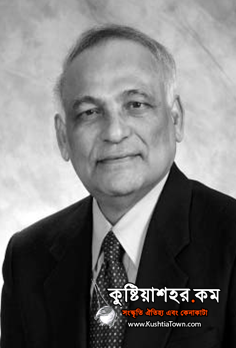
Discoverer of the treatment of Wilson's disease and Menki's disease.
The Hospital for Sick Children
Committee Member, Global Child Health
SickKids International
Research Institute
Committee Member
SPARC BioCentre
Senior Scientist Emeritus
Molecular Structure & Function
University of Toronto
Professor Emeritus
Biochemistry
Other Positions
Andrew Sass-Kortsak Award
Chairman
Courtesy of Dr Fatema Ashraf