বাংলা
 English
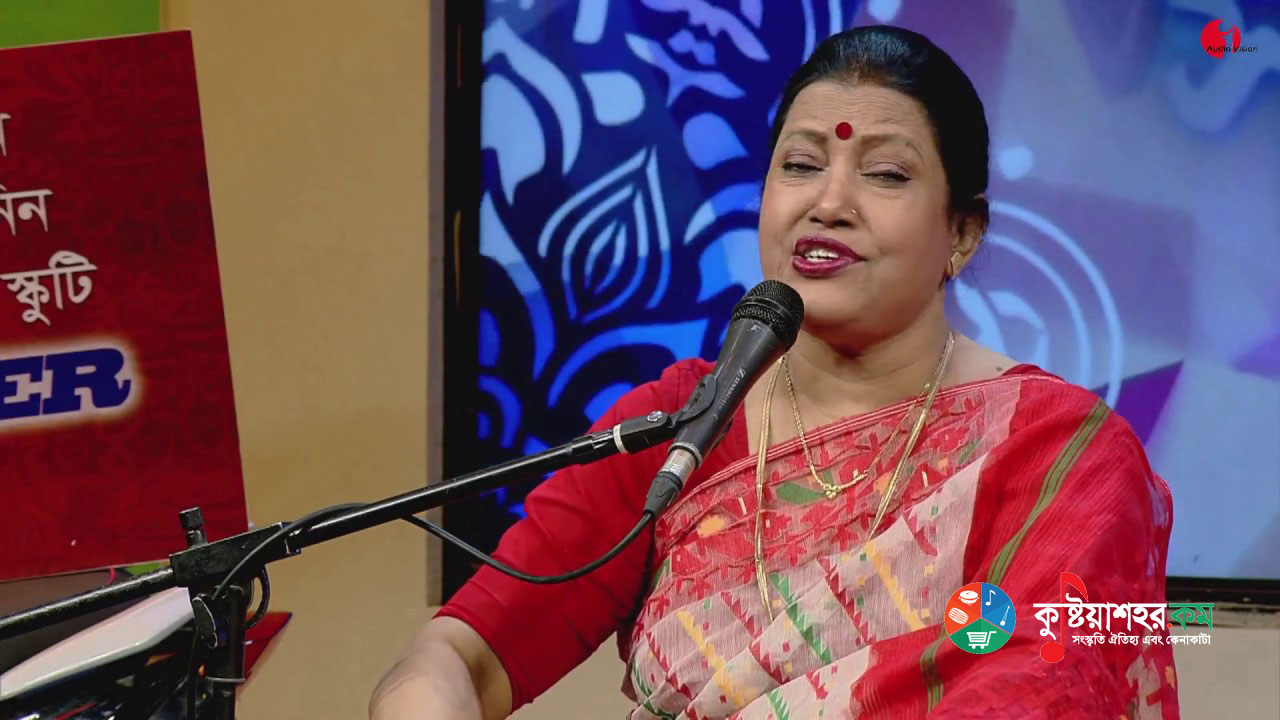
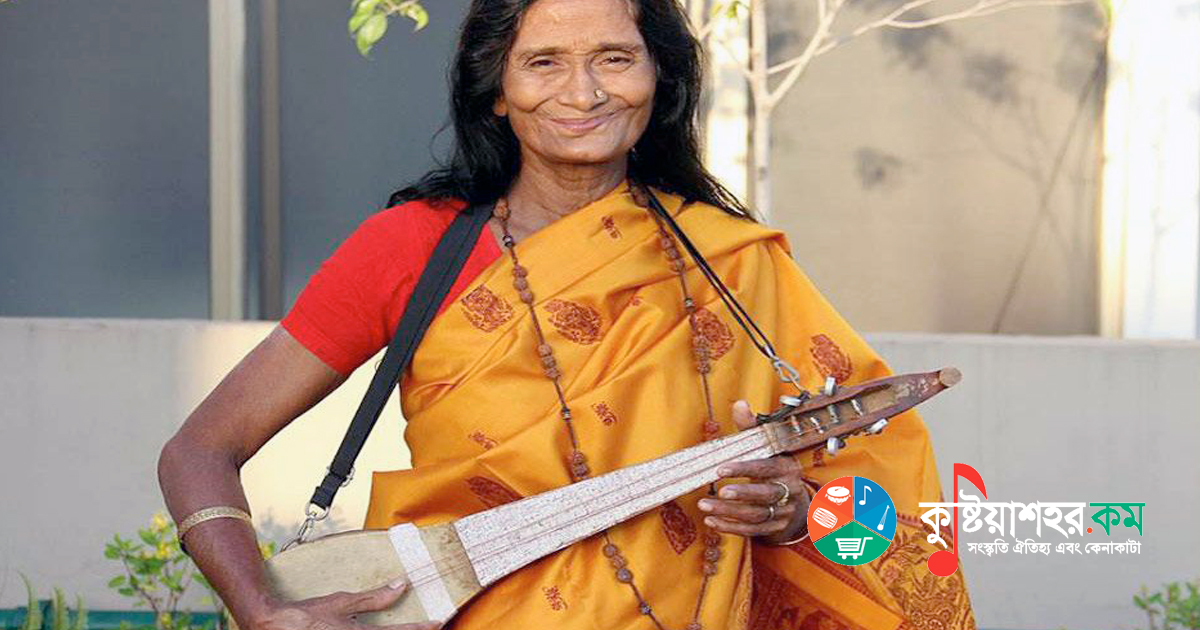
Farida Parveen (born 31 December 1954): for a long time in Bangladesh, Lalon songs and Farida Parveen have been two mutually complementary and inseparable names. When the songs of Lalon Saiji come up, the voice and melody that first ring in the mind and ears of the Bengali is certainly that of Farida Parveen.
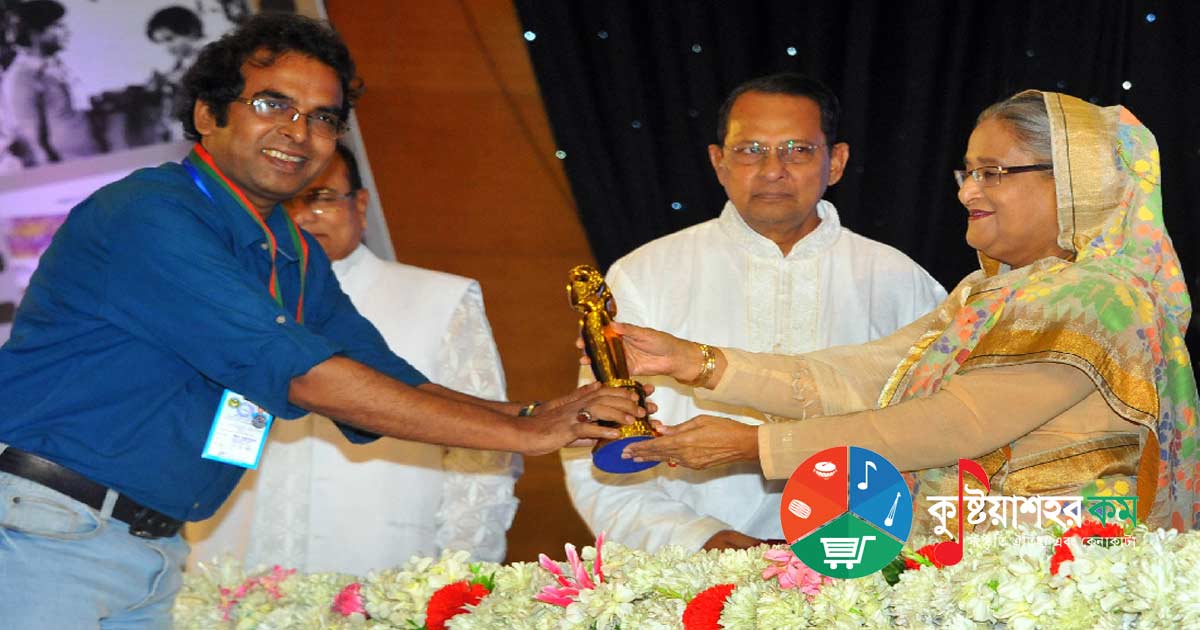
For a long time she practised the songs of Lalon sitting in the distant town of Kushtia, and from there came her establishment. Apart from Farida Parveen, our country has no other example of anyone living in a distant small town establishing singular importance in a special field of music such as Lalon songs. During her stay in Kushtia, in recognition of her special contribution to Lalon songs, she received the Ekushey Padak of the Government of Bangladesh in 1987, and by singing the song 'Nindar Kanta' in the film 'Ononto Prem' she received the National Film Award in 1993.
Birth and family identity: This incomparable and unmatched voice artist of Lalon songs, Farida Parveen, was born on 31 December 1954 in the village of Shaonl of Singra thana in Natore district. Shaonl is a part of Kalam, one of the largest and most beautiful villages of Bangladesh. It is said that even today there is no village as beautiful as Kalam in the whole of the northern region. In this connection Farida Parveen quotes a rhymed proverb current in that region — 'To see a beel, go to Cholon; to see a village, go to Kalam.' In that beautiful countryside she was born.
Childhood: In her childhood Farida Parveen was of a lively nature. Almost all the time she would run, jump and play about. Between her paternal grandfather's house and her maternal grandfather's house there was a river. That branch of the Atrai was named Gur. Crossing that river, the girl Farida would on most days go from her grandfather's house to her maternal grandfather's house. And beside her maternal grandfather's house there was a huge beel (marsh). So even after crossing the river she had no leisure. Together with her maternal cousins, her playmates of girlhood, she would go to that beel to pick shapla (water lilies). Not only that — small dinghy boats would be in the beel. Riding in those boats, Farida and the others would usually bring shapla from the beel. Besides this, the girl Farida would go with her companions to see birds' nests and to roam about from field to field. In very hot weather, Farida would spread a mat under the mango orchard of her maternal grandfather's house and lie with her maternal cousins. At that time Farida was the only child of her parents. Again, from childhood she would sing a little, which is why her maternal uncles and aunts loved her very much.
When Farida Parveen was in the village in her girlhood, song would always be on her lips, whatever song it might be. From childhood Farida liked the songs of Sandhya Mukhopadhyay. At that time she did not even know that she was Sandhya Mukhopadhyay. But switching on the radio and listening to her songs she would shiver with emotion. Farida would notice Sandhya's pronunciation on the radio. Today's Farida Parveen acknowledges that in pronunciation she is an inheritance; listening and listening she learned that pronunciation. At that time there was a programme of modern songs on the Akashbani radio at half past eight in the morning. One day, while listening to the radio, the girl Farida caught Akashbani. Then she understood nothing of the matters of music. Later she learned that in that Akashbani programme where she heard modern songs, Ustad Ali Hossain would play his sanai (shehnai). That extraordinary melody would charm Farida. In those days such a thing also happened in Farida's life that, listening to songs, she burst into tears, and she wept even while longing to sing. The melody would from the very first fill Farida with emotion; it created resonance within her.
Farida's eldest maternal uncle was a great devotee of song. He did not sing, but wherever there was a musical gathering, he would surely go. Since the houses of Farida's maternal and paternal grandfathers were adjacent to a Hindu community of some influence, her maternal uncles had friendship with them. At that time, out of regard for religion, there was not much superstition in anyone; rather, the friendship was so great that they would come to the house of Farida's maternal uncles, and if there was an occasion her maternal uncles would go to their house. Sometimes uncle would perhaps bring a harmonium from somewhere and say — 'Let me see, Farida, sing a song.' At once Farida would sing with joy. When Farida went to her maternal grandfather's house, after evening a musical gathering would be held spreading a mat in the courtyard. Hearing Farida's song, her eldest maternal uncle would say, 'I have never seen another voice like my Farida's. You see, Raufa (Farida's mother was the youngest of all; he would address her by her mother's name) — my Farida is going to be something.'
On holidays Farida's favourite place was the maternal uncles' mango orchard; Farida would go to play in that orchard. On the other hand, if she did not go to the beel she did not feel well. And if there was no water in the beel she did not feel well. So the beel must have water all twelve months of the year, because in that water shapla blooms. In between, she studied somewhat at the village school.
However, Farida Parveen's growing up was not entirely uninterrupted in the village. Because her father worked in the medical service, and owing to his job transfers, Farida too had at various times to go with the other members of the family to different places. For this reason the imprint of various places fell on Farida's upbringing.
Educational life, institutional education: Farida Parveen's school life passed in various towns. However, her school life began in Magura. Then, one after another, she studied at Kushtia Government Girls School, Mir Mosharraf Hossain Girls' School of Kushtia and Meherpur Government Girls School. She passed her matriculation from Mir Mosharraf Hossain Girls' School. Then in her college life she studied in Kushtia. In 1974 she passed HSC from Kushtia Girls College, and from the same college, under Rajshahi University, she passed her honours in 1976-79.
Training in music: Farida Parveen's initiation into song took place in Magura district. That was around 1957-58, when Farida was a girl of only four or five. At that time in Magura Ustad Kamal Chakraborty gave Farida her initiation into song. Afterwards, wherever she lived, she regularly took training in song from various persons. When she came from Magura Girls School to Kushtia Girls School, Ustad Ibrahim was the music teacher of her school. Hearing Farida's song, he advised her to learn classical music. Then she was a student of class three. In accordance with Ustad Ibrahim's advice, Farida began to learn classical music from him. Later, growing a little older, she learned classical music from the then music masters of Kushtia — Rabindranath Roy, Motalab Bishwas and Osman Gani. After practising classical music with the tanpura for about six or seven years, she began to learn Nazrul songs. Her first guru in Nazrul songs was Ustad Abdul Kader of Kushtia. Afterwards she also learned Nazrul songs in Meherpur from Mir Muzaffar Ali. It was from Ustad Mir Muzaffar Ali that she first learned the task of rendering Nazrul's songs on the harmonium and by voice with the help of notation. In 1968 she was selected as an enlisted Nazrul song artist of Rajshahi radio.
After the independence of Bangladesh came Farida's connection with the songs of Lalon Saiji. At that time she lived in Kushtia. There their family friend was Guru Moksed Ali Sai. In 1973, learning the song 'Satya Bol Shopothe Chol' from him, Farida took training in the songs of Lalon Saiji. Later, after the death of Moksed Ali Sai, she received education in Lalon songs from Khoda Box Sai, Brojen Das, Behal Sai, Yachin Sai and Karim Sai.
Career: Farida Parveen's career is full of music. Not only Lalon's songs; at one and the same time she sang modern and patriotic songs. The modern, patriotic or Lalon Sai's songs sung by Farida Parveen are equally popular. Whenever the occasion of observing any national day comes — Independence Day, Victory Day, the observance of the 21st and so on — the song 'Ei Padma, Ei Meghna, Ei Jamuna-Surma Nadir Tote' is heard everywhere in this country as a matter of course. Again, when the subject of modern songs comes up, the people of this country recall in one breath the two songs sung by Farida — 'Tomra Bhulei Gechho Mallikadir Naam' and 'Nindar Kanta Jadi Na Bindhil Gaye Premer Ki Sad Achhe Bolo'. But, above all, the chief identity of Farida Parveen with all the people of Bangladesh is as an artist of Lalon songs. It is because of her singing that Lalon's songs are today so dear to us all.
After independence Farida Parveen came to Dhaka. A transcription service began with her songs. Moksed Ali Sai was at the Swadhin Bangla Betar Kendra. He asked Farida to sing some of Lalon's songs in Dhaka. At his request she then sang the songs 'Khachar Bhitor' and 'Barir Kachhe Arshinagar'. At that time she would come from Kushtia, learn Lalon's songs from Moksed Ali Sai and keep on recording in the transcription service.
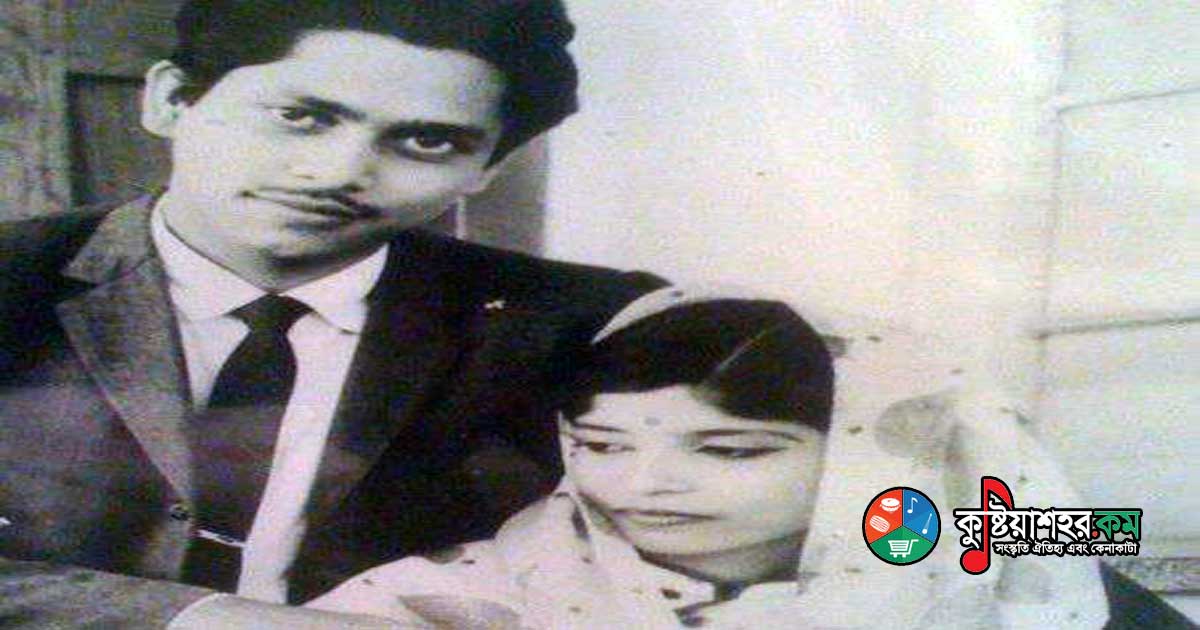
Family life: Farida Parveen's husband is the renowned lyricist and singer Abu Zafar. Farida Parveen is the mother of four children. There is one daughter, Jihan Faria, and three sons — the eldest son Imam Nimeri Upal, the middle son Imam Nahil Sumon, and the youngest son Imam Nomani Rabbi.
Field-based contribution: Farida Parveen's contribution to popularising the message and melodies of Lalon Saiji's songs in Bangladesh is universally acknowledged. Now not only in Bangladesh, but at the court of the world too she is devoted to the work of propagating Lalon Saiji's message and melodies. She has already performed Lalon songs in Japan, Sweden, Denmark, Canada, Australia, America and England, among many other countries.
Honours, recognition and felicitations: In recognition of her special contribution to Lalon songs, Farida Parveen received the Ekushey Padak of the Government of Bangladesh in 1987. Beyond this, performing music in the full-length Bengali film 'Andho Prem', she achieved the National Film Award in 1993 as the best singer.
Albums of Farida Parveen's songs:
- In 1976 a long-play record came out under the name 'Ochin Pakhi'. Sponsored by Shrotar Ashor (Listeners' Assembly) (the present ACI company)
- 'Lalon Giti' from the Don company
- 'Laloner Gan' from Sargam
- A cassette combining patriotic, modern and Lalon songs from Doyel Products
- Lalon's song 'Amare Ki Rakhben Guru Charone' under the banner of Arshinagar
- 'Shomoy Gele Sadhon Hobo Na' from Bengal Foundation
- 'Asha Purno Halo Na' presented by Abul Ulaya
- Abul Ulaya is bringing out an album named 'Live Concert in Japan'
- Tumor Moto Dayal Bondhu Ar Pabo Na
- Shomudrer Kulete Boshe
- Hit Songs of Farida Parveen: Millennium / Bohudin Halo Bhengechi Ghor
- Live Concert in France