বাংলা
 English
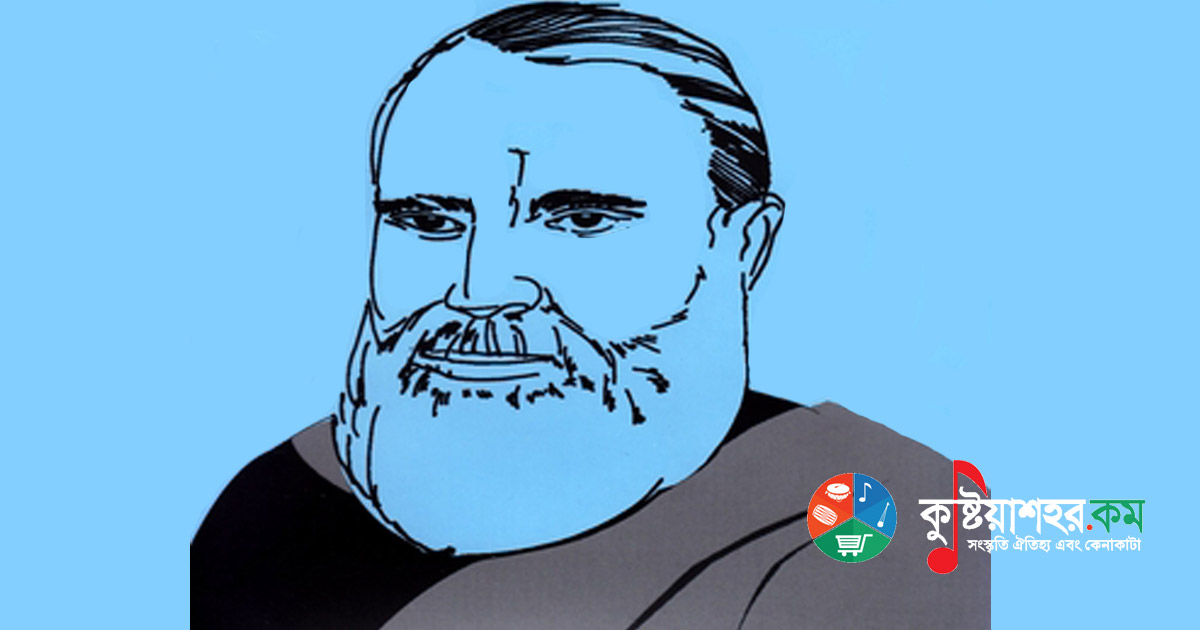
His literary life was disinterested. He was not directly involved in political or social movements. He fought in the battle of the pen like a fearless soldier.
Mir Mosharraf Hossain, one of the literary figures of the nineteenth century, kept aloof from the political scene and wrote literature at his own sweet will. Nothing of the political consciousness of that era — from the 'Mohammedan Literary Society' through the 'Bangiya Mussalman Sahitya Samiti', from the Wahhabi movement to the Partition of Bengal — could stir Mir Mosharraf Hossain. His literary life was disinterested. He was not directly involved in political or social movements. He fought in the battle of the pen like a fearless soldier. No Muslim prose artist had managed that before him. The Bengali Muslims just could not tear themselves away from puthi literature.
Some critics hold that Mir Mosharraf Hossain's 'Bishad Sindhu' is merely a transformation of this and other such puthis into sadhu language. Others have looked at his literature from a different angle, saying that he was the inheritor of the artistic sensibility of Michael and Bankim. The Hindu icon of nineteenth-century Calcutta culture gave birth to an inevitable reaction in two forms. One was of the pedantic kind — influenced by urbanity and given to rationalism. The second current was more emotional, simple and rural. Both currents exist in Mir Mosharraf Hossain's writing. He was averse to narrow nationalism, and it is the generous voice of humanity and his disinterested devotion that have granted him the glory of an eternal artist. In a critic's words: 'It seems this artist belonged not to the clamor but to solitude, not to society but to life, not to establishment but to the throne of the heart.' According to Dr. Nilima Ibrahim, the number of Mir Mosharraf Hossain's books ranges from twenty-five to thirty-six, but our misfortune is that we are not acquainted with all of his writings. Some critics even say it cannot be stated with certainty whether all his writings have been printed.
In the enrichment of Bengali drama, Mir Mosharraf Hossain's contribution is noteworthy. A good number of plays bear witness to his dramatic genius — such as Basanta Kumari, Jamidar Darpan and Er Upay Ki, besides several farces and musical dramas. Bhai Bhai Eito Chai, Eki, Fans Kagoj, Tala and others are his plays or play-like compositions. Among them the two plays Basanta Kumari and Jamidar Darpan hold special preeminence. The play 'Basanta Kumari' was composed against the backdrop of various problems of the society of that time, such as polygamy, child marriage and an old man taking a young wife. Mir Mosharraf Hossain composed 'Basanta Kumari' resting on fantasy, yet the picture of reality blossoms in it. He has portrayed the havoc that envy, hatred and greed create in life. The king of Indrapur lost his wife in old age. He had no wish to marry a second time. The royal minister misled him. The king's wish was to seat the prince on the throne and retire. But the crafty minister reflected that if the prince ascended the throne, his own usefulness would be at an end. By a stratagem he did not let the king give up the throne; rather he so melted the king's heart that the thought of marrying a second time came into his mind. All of it was the minister's intrigue. He said to the Maharaja:
'What is it, Maharaja? What are you saying? What age are you of? Is your hair turning grey? Why, I cannot see a single one turned.' At the minister's instigation the Maharaja married a young woman named Rebati. He was enchanted by the new queen's love. But Rebati could not love the king; she moved toward an illicit outcome. Enchanted by Prince Narendra's looks, she fell for him and offered her love to Narendra. Meanwhile, at the svayamvara assembly 'Basanta Kumari' herself garlanded the prince. When Narendra returned home with his wife, Rebati turned ferocious. When her wicked proposal was rejected by the prince, Rebati complained about him to the king.
'Maharaja, it is too dreadful a thing. I can hardly bring myself to say it. Death would be better for me. Such is the deed of a son. All I ever became is his stepmother.' On Rebati's false instigation, the king ordered his innocent son to enter the blazing fire. Basanta Kumari became a sati with her husband. Later the king recovered Rebati's love letter, read it and realized the truth, and struck off the head of the disgraced Rebati with a blow of the sword.
The play's prologue is framed much in the manner of Sanskrit drama. Whatever of plot and style there may be, its vivid imagination and power of moving appeal have brought it luster and sweetness. Many believe its story bears resemblance to J. C. Gupta's play 'Kittibilas', written twenty-one years earlier. Though the play is named Basanta Kumari, it revolves around Rebati. The complexity, greed and cravings of Rebati's character have become the play's theme; a dramatic analysis of a complex character of society is the substance of the play, and for that reason the playwright gave it the second name 'Bridhasya Taruni Barsha'. Though the play's ending carries no ideal, the playwright has developed its artistic being. In the cleverness and coherence of its dialogue the seed of the playwright's artistic genius has sprouted. Considering and analyzing various aspects, critics may not call it a successful play, but the author's purpose was fulfilled. He has portrayed a picture of the society of that time flawlessly. Still, one thing cannot go unsaid: instead of rice on an earthen plate, the playwright dined on a silver one — for the play was composed about kings and maharajas.
'Jamidar Darpan' is Mir Mosharraf Hossain's second play. In fashioning it the playwright showed his success; he has sculpted society like an architect. This play can be compared with Dinabandhu Mitra's 'Nil Darpan'. Its theme is the oppression by the zamindar class. Real forms of human character are found in this play — judge, magistrate, police, inspector, lawyer, mukhtar, barrister, all are representatives of the society of that time. In Jamidar Darpan the artist is not anxious to reveal his hidden truth; his subject was social problems. He has made heart-touching the very heartlessness of the relationship between ruler and ruled. As the purpose of Nil Darpan was to expose the indigo planters, so Mir Mosharraf Hossain's aim with the zamindars was analogous. Within the compass of Jamidar Darpan he has portrayed the story of the zamindars' oppression and exploitation of weak subjects. Pointing at the zamindars of Bengal, Bankim Chandra said: 'The enemy of the living is the living; the enemy of man is man; the enemy of the Bengali peasant is the Bengali landlord.' That is what one observes in 'Jamidar Darpan'. The author himself said: 'Just as one sees one's own face in a mirror and judges its good and bad, another's face cannot be judged so well. A zamindar therefore need not take great pains to paint the picture of a zamindar; seeing one's own face oneself is enough. On that consideration I present Jamidar Darpan before you. If you wish, look at the face...' The characters came alive as living, breathing characters representing the character of the profligate zamindar. The English doctor and judge are emblems of shameless, irresponsible government officials. Jitu Molla and Haridas Bairagi are schemers and false devotees. This play has proverbs and sayings; the artistic quality of its language can be observed.
'Er Upay Ki' was published in 1875. The problems of the contemporary age are depicted in it. This short play is written about wives who fell victim to the cruelty of the drunkard, immoral husbands of that era. Bringing the husband back to the right path, and what way there may be to escape their cruel reactions — that is the theme of the play. To bring her drunkard husband to the straight path, the heroine (Radhakanta's wife) Raymoni is disguised as a secret lover. Doctor Kazi Abdul Mannan says: 'The drunkard, brothel-frequenting husbands of that era, who were said to be worse than monkeys — Mosharraf Hossain has suggested a method of bringing them to the right path. What a wife of the Kali age can do to escape the cruel neglect and heartless humiliation of a profligate husband is also depicted in it.' In truth, it was from the fine thought of bringing the immoral profligate babus of society back to the right path that the playwright built this play. To give the turbulent people of society a little punishment and then replant them in the garden of the household — that was Mir Mosharraf Hossain's purpose. Its language is offensive to the ear — words like magmagi and bhatar are useless in literature, but in the nineteenth century they were used in farce-like compositions. Bearing financial loss and the burden of censure, the playwright composed these works; here he has taken up the effort of reforming the profligate character and bringing peace to the household. That drama is the mirror of society is understood by reading Mir Mosharraf Hossain's plays. In Mir Mosharraf Hossain's plays the influence on shaping society was greater than their literary value.
Source: Akhtar Hamid Khan – Daily Sangram.