বাংলা
 English
To discuss the early-phase initiatives and contributions of the Bengali Muslims in the editing, publication and running of periodicals, one must also recall the history of the beginning of literary practice in the modern age of that society. Like literature, the Bengali Muslim's debut in publishing periodicals too was belated, and its cause is tied to the same thread.
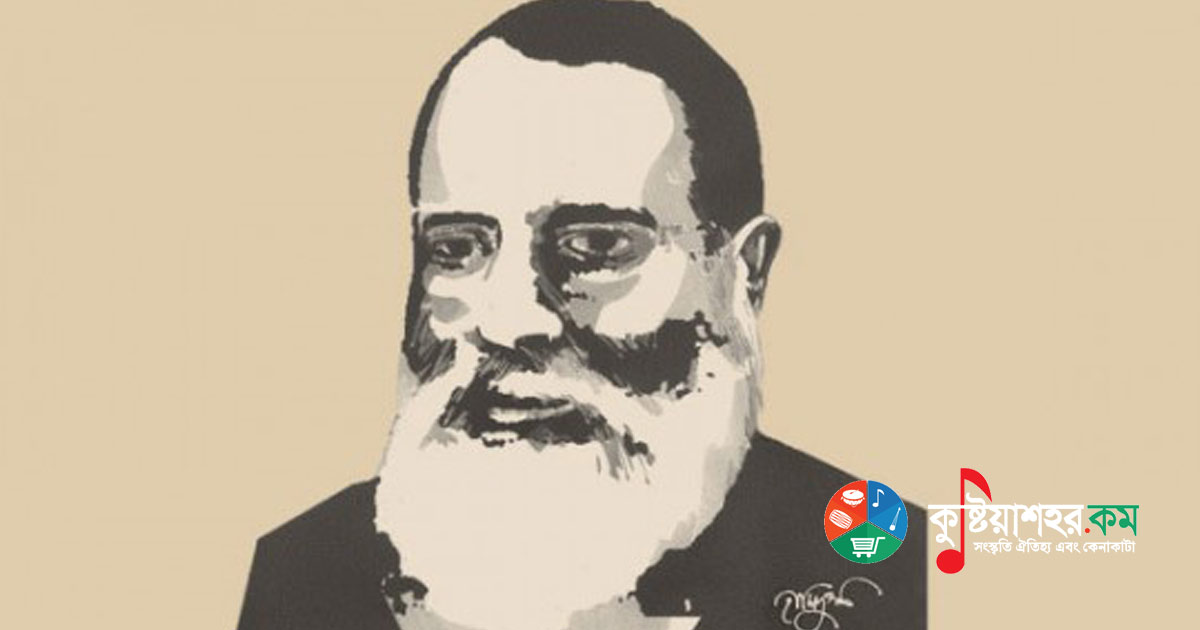
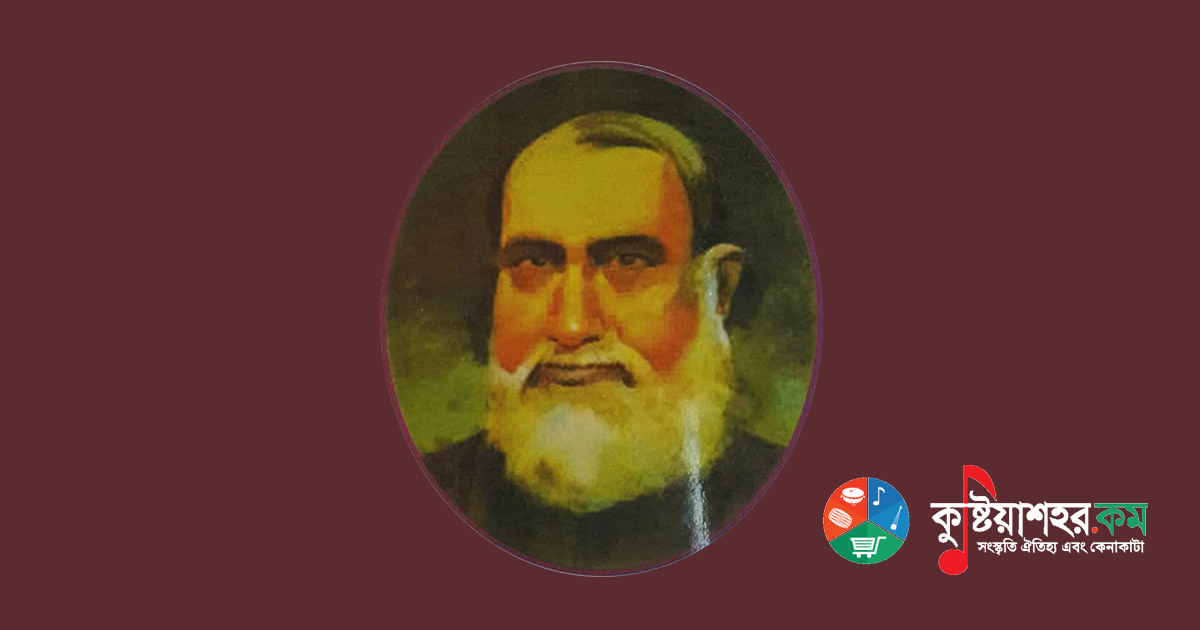
Mir Mosharraf Hossain (1847-1911), creator of classic literature like Bishad Sindhu and Jamidar Darpan, was an important writer of the nineteenth century. The successful beginning of the Muslim endeavor in modern Bengali literature was made by him. A man of many-sided artistic personality, Mosharraf was the chief cultural mouthpiece of the newly risen Muslim middle class. A free mind, a generous artistic vision, social consciousness, a non-communal spirit — as these marked his life and literary practice, so they were reflected equally in the field of running periodicals. The connection between Mosharraf's literary life and his journalistic work and periodical editing is extremely deep. As in literature, so in the Muslim initiative in publishing periodicals his role was that of a pioneer.
In both these spheres — literary practice and journalism — Mir Mosharraf Hossain received direct inspiration and patronage chiefly from Kangal Harinath Majumdar of Kumarkhali, editor of Grambarta Prakashika, and along with him from Bhobonchandra Mukhopadhyay, assistant editor of the Kolkata paper Sangbad Prabhakar. It was under the encouragement and supervision of these two learned directors of periodicals that Mosharraf had his initiation into journalism. Mosharraf recalled in his autobiography Amar Jiboni (1908-10):
The editor of the Sangbad Prabhakar of Calcutta was the venerable Babu Rampran Gupta, the younger brother of Ishwar Chandra Gupta. With the assistant editor Bhobonchandra Mukhopadhyay there was as much correspondence and looking after as could be. I wrote many news items for their paper, and they kindly printed them. They had assigned me — 'our Kushtia correspondent'... I wrote the news plainly. Bhobon Babu would cut and trim it and make it fit for publication... At that time the Grambarta Prakashika was published in Kumarkhali, close to my home. Grambarta's editor, the venerable Babu Harinath Majumdar, loved me like a younger brother. I too honored him like an elder brother; week after week I wrote news in Grambarta, and in Prabhakar too... Meanwhile Harinath Babu on this side and Bhobon Babu in Calcutta began correcting my humble writings and publishing them in Prabhakar.
This account belongs to 1865. In this way he became interested in and experienced with journalism and news periodicals. Later this apprenticeship in newspaper editing was of particular help to him. Nine and twenty-five years afterward two papers were published under his editorship: Ajijan Nehar (1874) and Hitakari (1890). Besides, he was connected with Kohinoor and several other papers as a member of director boards, adviser or writer.
In the field of publishing periodicals, Ajijan Nehar was Mosharraf Hossain's first endeavor. About the inspiration and planning of publishing the paper Ajijan Nehar, Mosharraf informs us in his unpublished autobiography:
My brothers were studying at Hooghly College. We have a house in Chinsurah; I went to and from Chinsurah from time to time. One day, sitting at the Bandha Ghat in Chinsurah, I pondered various matters over the flowing waters of the Ganges... On the other bank was the house of Bankim Chandra, the famous writer of Bengal. One day, a little before evening, I saw Bankim Babu crossing eastward from Bandha Ghat on a small boat, with one attendant. He was going home from the Hooghly criminal court; he made this crossing every day. With me were several other Muslim students. Grieving that the pursuit of the Bengali language was utterly absent in our community, he said that it was a matter of great regret that our community had no Bengali newspaper.
As a fruit of this thought, the monthly Ajijan Nehar was published from Chinsurah under Mosharraf Hossain's editorship at the initiative of some enthusiastic Muslim students of Hooghly College. As part of its preparation, an advertisement about the publication of this paper under the title 'Ajijan Nehar' by 'some Muslims' of 'Hooghly College' was carried in Grambarta Prakashika (16 Choitra 1280). It announced that this monthly would be published 'from the coming Baishakh' and that writing to Mir Mosharraf at the Lahinipara address in Kushtia would bring the paper.
This paper was named after Mir's first wife Azijan-nesa. Some necessary information is found in the contemporary papers and periodicals in the discussion of Ajijan Nehar. As the paper is rare, the advertisements, news, reviews or comments in articles of contemporary periodicals, and Mosharraf's own statements, are the main source of forming an idea about it; for samples of the news, editorials, essays and articles published in this paper are no longer readily available.
The following discussion about Ajijan Nehar was published in Kangal Harinath's Grambarta Prakashika (Asharh 1281):
'Ajijan Nehar', a fortnightly paper edited by Muslims. We have received three issues of it in succession. Its writers are known to us; this is not their first burst of energy, but daring to run a paper is new for them. Though an obstacle to its attaining the serious purpose with which they have taken up the pen is visible, it is not a matter of despair to hope that some part of it will be rebutted by Ajijan Nehar. The few proposals published in it must be acknowledged as very valuable fruits for the Muslim community. We have read the proposals attentively and are highly pleased. The language is exceedingly charming. One does not think it written by a Muslim; indeed we would advise yielding to it the dexterity of pen of many a modern Hindu writer...
In a letter by a reader under the pseudonym 'Sripu-' published in the Education Gazette (1 May 1874 / 19 Baishakh 1281), this 'monthly newspaper' is praised with the remark: 'See... how capable the Muhammadans have become in truly relishing the honeyed Bengali language.' The following week, in the discussion of the Ajijan Nehar in the Education Gazette (8 May 1874), it is stated more explicitly:
We have lately received two new weekly papers. One is named National Budget,... the other Ajijan Nehar. Some Muslim youths of Hooghly College have begun publishing it. Neither its price nor the time of its publication has yet been fixed. The publishers have written: 'This time no price could be fixed at all; if we see the readers' encouraging letters and the customers' numbers increase, we wish to publish it fortnightly from the next month.' The special point about this paper is that though written by a Muslim it bears not the faintest scent of Mussalmani Bengali; it is written in the manner of pure Bengali. There is no doubt the writers deserve encouragement. We wish both papers well.
Somprakash (18 May 1874), another leading paper of that era, welcomed the advent of this Ajijan Nehar in very brief words:
Ajijan Nehar. It is a new newspaper. Its special mark is that it is edited by some Muslims. Reading the paper we have been delighted. Its language is superior even to that of many a learned editor. With all our hearts we pray that the paper may improve day by day.
In the Sadharani weekly of Chinsurah (25 Joishtho 1281), welcoming the publication of Ajijan Nehar under the heading 'A New Paper', it is remarked:
Ajijan Nehar has appeared as the mouthpiece of the Bengali Muslims; a matter of great delight. Every community should have its own separate paper, especially since the number of Muslims in Bengal is not at all small: in their own Bengali, Hindus number 1,81,00,438 and Muslims 1,76,09,135; so in their own Bengali the Hindus and Muslims are nearly equal. Yet hardly any Muslim speaks a word, which must be called a matter of resentment. At last the Muslims will wield their own tongue. One thing: two Bengali Hindu writers too have appeared in Ajijan Nehar as agents; in our view it would have been better if that were not so. We trust the publishers will consider the matter a little. Be that as it may, it is our earnest wish that Ajijan Nehar endure forever. The Muslim students of Hooghly College are publishing it; Ajijan Nehar is altogether a compatriot of ours. May such generous-hearted compatriots prosper.
But soon after this felicitation, Sadharani (29 Asharh 1281), raising the charge of a disordered taste against the Ajijan Nehar, published a satirical, adverse criticism:
Ajijan Nehar. We are indeed well-wishers of this novel paper; otherwise a second review of a newspaper in Sadharani would not have been possible. Ajijan Nehar is gradually turning into a flock of birds. The paper has received four issues; in the meantime there have appeared in it a cockatoo, a bulbul, a tailorbird, a dak-crow, a myna and a parrot; not content with displaying an aviary pure and simple, Ajijan shows in the Nawab of Lucknow's artificial hill paired snakes; in the meantime they have brought out earthworms, and presumably will bring out snakes in time.
Setting aside ridicule we ask, why such taste in the editor of a novel paper? This taste is perverted.
The real cause of Sadharani's anger remained quite unclear to us.
Until now, chiefly the Education Gazette, Somprakash, Sadharani and Grambarta Prakashika were the main sources of ideas about the Ajijan Nehar. But a good while ago, Mosharraf Hossain's discovered unpublished autobiography, his self-written life-account and diary yield some notable information about Ajijan Nehar. On this basis a clear idea can be formed about the paper's naming, purpose of publication, time of publication, interval of publication, duration, cause of its closure and so forth. As a result, the opportunity has come to reconsider and revise many of the predecessors' opinions, conjectures and conclusions about the Ajijan Nehar.
Mosharraf's adverse notion and displeased attitude toward his wife Azijan-nesa were never concealed. He did not feel the least hesitation in telling even the domestic fact that this first wife had made his life unbearable with quarrels and disputes. As married life became unbearable, he found the impulse for a second marriage too. After living together for as long as thirty-two years, Mosharraf in the end even divorced his first partner. Yet the naming of the paper after this 'heart-burning' wife remains mysterious and astonishing. From his unpublished autobiography it is known (this account is taken from Shamsuzzaman Khan's article: Sochitro-Sondhani, 18 February 1979): 'First wife Azijan-nesa... the paper Ajijan-nahar was published in this wife's name.' Hinting at the significance of the naming, Mosharraf said:
What is the reason for the paper's name being Ajijan-nahar? To this day nobody knows the naming. As the time has come, I publish it. 'Ajijan-nahar' — carrying the sense of 'beloved day', it was written at the head of the paper:
Behold the beloved of the destitute with gracious eyes forever.'
There are differences of opinion about the publication interval of the Ajijan Nehar. True, Mir's own statements are largely responsible for this confusion. He identified this paper at times as 'fortnightly', at times as 'monthly'. Brajendranath Bandopadhyay called it a 'monthly', while Abdul Gafur Siddiqi called it a 'weekly' and Ali Ahmad, following Grambarta, called it 'fortnightly'. True, in the advertisement published in Grambarta the paper was said to appear as a 'monthly'. In the Education Gazette Ajijan Nehar was first introduced as a 'monthly' and again, a week later, as a 'weekly'.
The publication of the Ajijan Nehar created a special reaction in Bengali society, especially in Muslim society. About this Mosharraf informs us in his unpublished autobiography:
After my grandmother's ascent to heaven, on the 1st of Baishakh of the year 1281 I published a Bengali monthly named 'Ajijan Nehar'. This Bengali paper of the Muslim society was the first published in Bengal. The Bengali Muslim society did not know, did not understand, what a newspaper was. When the first part appeared there came a great stir: spending one's own household's money, what is the good of sending such a newspaper to another's house? Is everything written true? Where does it get so much news? Be that as it may, whoever began saying whatever, I kept listening with ears pricked. I steeled my mind: I shall not be shaken; what is resolved is fixed. In the first part the two essays 'Suchona' and 'Ki Likhi' were published.
While Mosharraf was at Hooghly, the Ajijan Nehar was published from Chinsurah. But from his unpublished autobiography it is known that he ran the paper from Lahinipara itself: 'Within two years I went neither to Calcutta nor to Krishnanagar; sitting at home I remained engaged in the conduct of the Ajijan Nahar paper.'
News is found that the paper ran for about two years. It may be surmised that in the first phase of the paper's publication from Chinsurah, Mosharraf was there; then he returned to Lahinipara and from there carried out the paper's work. Perhaps he had occasionally to go to Chinsurah.
It was chiefly for want of cooperation and patronage that the paper's publication stopped. Along with it, the indifference and internal conflicts of the paper's directors were not less responsible, as is known from Sadharani (2 August 1874). Mosharraf too wrote something of all this in his unpublished autobiography:
For the first two years a fair amount of money was collected from the Ajijan-nahar. After that I too lost heart. The writing no longer went with the enthusiasm of before. Nor could the price be collected... the debts of the press, the debts for paper fell upon me in plenty. I found no patron; nor were there people to write. Meanwhile my revered Harinath Majumdar helped me specially. As my evil times had come, it was as if a pain in his head. The disease of migraine arrived. He stopped, in a manner, from the work of writing.
Even after that he tried to publish the paper, but for lack of money it failed. He said:
'The paper has closed. As much money as is owed to the press where I used to print — I had it printed at the Hooghly Bodhodoy press; for want of money the printed sheets remained lying in that very press.'
An inkling of how long the Ajijan Nehar ran is found in the article 'Hitakarir Atmokotha' (Hitakari's Self-Account) published in the Hitakari paper (10 Baishakh 1298): 'From the creation of the Kushtia subdivision down to this day three papers have been published under this Hitakari. First the Grambarta Prakashika, then the Ajijan-nahar. The Ajijan-nahar ran for two years...'
According to Anisuzzaman's list, news of three Muslim-run papers before Mosharraf's Ajijan Nehar is found: Samachar Sabharajendra (weekly, 1831), Jagoddupidok Bhaskar (weekly, 1846) and Faridpur Darpan (fortnightly, 1861).
Though some hold that the owner-printer-publisher of the Persian-Bengali bilingual Samachar Sabharajendra was Sheikh Alimullah, as editor the name of Durlabhchandra Chattopadhyay is found in government records. Jagoddupidok Bhaskar was a 'very short-lived' paper. Though advertised for publication, there is doubt whether the Faridpur Darpan ever appeared at all (Muslim Banglar Samayikpatra, Dhaka, 1376).
Perhaps because of consideration of recognition and reader popularity rather than the order of publication time, Ajijan Nehar is generally mentioned as the first successful endeavor in the pursuit of Muslim Bengali periodicals. In the Hitakari (30 Ashwin 1298) it is said that among 'Bengali newspapers written by Muslims' the Ajijan Nahar was the first to be published. Akshaykumar Maitreya (1861-1930) too commented that the Ajijan Nehar alone was 'known as the very first among papers edited by Muslims' (Prodeep, Poush 1308).
Though short-lived, the Ajijan Nehar was honored in its own time. This paper made its debut with the ideal of social welfare. That the purpose of this paper was to awaken consciousness of social problems and to remedy them is known through the discussion in Grambarta Prakashika (June 1874). The experience of editing the Ajijan Nehar served Mosharraf well later in the field of running periodicals.
Hitakari is the second paper edited by Mir Mosharraf Hossain. Sixteen years after the publication of Ajijan Nehar, Mosharraf took the initiative to bring out a new paper again. In Hitakari's inaugural issue (1st part, 1st issue: 15 Baishakh 1297) various information about the paper's publication is found. Through this source the opportunity is also gained of a correct and clear idea about Hitakari's time of publication. It is said: 'O! Thou of infinite power, the Merciful, the Gracious, ocean of grace, friend of the world, Lord! Taking Thy infinite qualities as refuge and aid, Hitakari was published on the 15th of Baishakh of the year 1297.'
Hitakari — this paper proved the aptness of its name by following the ideal of public welfare. Its purpose and policy are clearly stated:
All words in which lies the hope of the good of the public at large — all such words are published in Hitakari. Nothing is published targeting any party of caste or religion. (Hitakari, ibid.) From this statement the generous opinion, universal attitude and neutral standpoint of Hitakari can be known.
Hitakari was printed at the Kumarkhali Mathuranath press and published from Lahinipara, Kushtia. The paper's compositor and publisher were respectively Rajonikanta Ghosh and Debnath Biswas. The price of each issue was two paise and the annual price including postage was two taka. No one's name was printed as editor. But from Mir's unpublished self-written life-account it is known that he 'became editor of the paper named Hitakari on the 15th of Baishakh of the year 1297.' Other information and the paper's internal evidence also support this statement.
From all this information it can be said without doubt that it was Mir Mosharraf Hossain who was always the editor and owner of the Hitakari. But in the Tangail phase, for strategic reasons, Moslemuddin Khan had to be given the charge of acting editor. And the initiative to publish Hitakari in joint editorship with Roushan Ali Chowdhury in Hitakari's last phase, for whatever reason, did not succeed. But before Hitakari finally closed, it was published from Kumarkhali for quite some time for the last time, and there, with Mosharraf's express permission, Jotiprashad Sanyal had to appear as editor. But in the end both the ownership and the editorial rights of Hitakari were Mosharraf's own.
Though Hitakari made its debut as a fortnightly, because of reader demand in its second year it began to be published as 'dashahik' or 'dashhik' (that is, every ten days). Except for this change there was no alteration in the paper's price, compositor, publisher, printing house, agents or any other policy statement.
Hitakari made its debut with the ideal of honest and objective journalism for the good of the subjects. A clear statement of the paper's purpose, aim and standpoint is found in the paper authorities' statement (Hitakari, 10 Baishakh 1298):
Hitakari was not published for the gain of twenty taka. Finding no means of earning a livelihood, this crooked and intricate path has not been resorted to. I shall speak justly, I shall say; I shall abide in truth, I shall surely join in the work of the public good. We have been saying from before that we belong to no community; we belong to all. We have no single eye: where there is injustice, there we are; where there is oppression, where there is iniquity, there our word is! We do not expect praise, nor do we hope for financial help; therefore we have no cause for fear. At the first inauguration we said: our first worshipped god, and after Him the king — let there be no customer, let the public not read Hitakari, no matter. Only him, by informing whom the country will benefit, oppression and iniquity will lessen, injustice will receive due judgment — only him shall we inform. And to the honored men of the country who have hearts, we shall appear as a gift. And what fear, what apprehension?
What is to be noted here is that on the question of loyalty and obedience to the king Hitakari could neither deny nor transcend its age. That is why Hitakari chiefly adopted the endeavor of remedying the problems of society and the people through supplication and petition at the king's door.
About a year after the paper's publication, Hitakari's directors acquired this experience: that running a paper independently and neutrally is extremely difficult. Despite manifold crises, problems and mutual divisions and conflicts, Hitakari appealed to all for unity and amity before their good sense and conscience. Along with it the pledge of birth was voiced again. In an 'editorial comment' of Hitakari (20 Bhadro 1298) these matters are presented as if a birthday report:
The burden with which Hitakari has presented itself before the public and the path and manner in which it is moving, in those its gaining of influence is not easy. Here is a Hindu's paper, there a Brahmo periodical, there the mouthpiece of Muslim society; each speaks for the other. Sweet to hear, straight in course; no obstacle, no impediment at all. The doing of good to all — to the public — is Hitakari's chief purpose. And to utter the removal of that difference of attitude is a kind of madman's wanderings. Still, if without outright cutting and battering, brotherlike, each but once casts a sardonic glance at the other, Hitakari's life is fruitful, its birth successful. Looking in all directions, saving one's own head, counting the knife among oil and ghee, establishing amity and increasing the attitude of affection is a very difficult task; nay, Hitakari has not the power to move a hair's breadth from the bounds of the neutral. Therefore of caste-communal-religious excitement of any kind, of any base creature, even of uttering one syllable in the nineteenth-twentieth, Hitakari has not the power. There is no occasion to earn applause. The aid is God, the trust is God. And the grace of the readers — of the company's group that runs a Bengali newspaper in the mufassil, a particular one -.
In an unenthusiastic, unpatronized and hostile society Hitakari's path was not smooth. Enduring much opposition and adverse criticism it had to maintain its existence. In some cases this criticism took the form of hostility, crossing the bounds of decorum. The judge of Kushtia's small court was Bordoprosonno Som. As news of various complaints against him was published, the enraged judge publicly in court reviled the Hitakari paper as a 'bottom-caressing paper' and disparaged and humiliated the paper's assistant editor, the lawyer Raicharan Das. The matter did not end here — against Raicharan Das the judge even filed a case. Then, showing fear and temptation, 'a secret proposal came to Hitakari to write in the judge babu's favor; all in vain' (Hitakari, 20 Bhadro 1298). For its concern for the welfare of society and progressive role Hitakari sometimes had to incur the displeasure of people of conservative mentality. Because it supported the consent law, many customers severed relations with Hitakari and some, excited, even wrote abusive letters (Hitakari, 20 Baishakh 1298). Despite such reactions the Hitakari authorities did not hesitate to pledge and uphold free expression of opinion and a fearless role.
True, alongside censure and criticism, the sincerity of sympathetic people toward Hitakari is also found. By fearlessly publishing the grievances and complaints of the rayat-subjects and the faults, deviations and disorders of the administration, Hitakari abided in the performance of its proper social duty — in the letter of 'a certain customer' (Hitakari, 30 Joishtho 1298) such praise is heard:
Even before, in several issues, the public's hostility toward Hitakari has been expressed. Why Hitakari falls upon that man's poisonous eye I understand nothing at all... Hitakari, taking the path of justice, has dedicated its life to the vow of serving people. The oppressor's oppression, protest against injustice, support of justice, well-wishing thought for the people of the homeland — these very things do we see in Hitakari... It must be called the great fortune of Kushtia that a paper of high and generous opinion like Hitakari has been published, telling the country's griefs to the public and to the authorities.
Against Hitakari there arose the complaint that in letters sent under 'such and such proposal no. 2 there were Mussalmani words in the news'. Giving it a reasoned reply Hitakari (20 Bhadro 1298) commented: '...we join the brother language with the mother tongue... in the union of languages love grows. That too is not among our small fortunes.'
'In the second year Hitakari was shifted to Tangail' — this information presented by Brajendranath Bandopadhyay (Bangla Samayik-potro, vol. 2, Calcutta, 1359) is not correct. Up to the second year Hitakari was published from Lahinipara itself. In truth 'for various reasons' in the third year Hitakari was shifted to Tangail. At the beginning of this phase too it is quite clear that Mosharraf was Hitakari's editor. In Tangail Hitakari was printed at the Ahmadi press of the noted writer Abdul Hamid Khan Yusufzai. Later Mosharraf became the owner of this press. From Mir's unpublished diary it is known: 'There is no job; with only the press and the Hitakari paper do I remain.'
Explaining the cause of Hitakari's shifting from Lahinipara to Tangail and the resulting problem of regular publication, Mosharraf in a signed advertisement refers to himself as 'editor and owner' (Hitakari, 10 Joishtho 1299). The Mir researcher Ashraf Siddiqi informs that in the issue of 10 Bhadro of 1299 there were printed in Hitakari the names of Moslemuddin Khan as editor and Sadhu Sarkar as compositor. In that issue the name of Kushtia's Raicharan Das is found as before as assistant editor and agent. The proof that Mosharraf was the director of the paper as editor is found within the paper itself. Many domestic news items of the quarrels of the Delduar zamindar house were published in the paper. Mosharraf was then manager of the Delduar estate. Besides, some government officials of Tangail too had turned adverse toward Mir for various reasons. For all these reasons editing the paper under his own name was not safe for him; so he entrusted the charge of editing to his trusted Moslemuddin Khan — Ashraf Siddiqi's this notion seems reasoned indeed. How long Hitakari ran in this phase is not exactly known. But it may be surmised that with Mir's leaving Tangail this phase ended too. In the later period, under Moslemuddin Khan's editorship, some believe the Hitakari paper was published afresh under the name Tangail Hitakari. True, no proof is found for this conjecture. But in the sixties, under the editorship of Mirza A. M. Abdul Hai, a fortnightly named Hitakari was published (16 October 1962) as 'mouthpiece of the Tangail subdivision Basic Democracies'. Later the paper was transformed into a monthly, and in this phase the paper's identity used to be printed as — 'Monthly Hitakari (established 1892 – Mir Mosharraf Hossain)'.
Seven years after leaving Tangail, Mosharraf again took the initiative of publishing the Hitakari with the cooperation of S.K.M. Mohammad Rousan Ali [Roushan Ali Chowdhury], editor of Kohinoor. At the end of an advertisement-booklet published before the beginning of the second year (1306) of the Kohinoor paper an advertisement about the republication of Hitakari is printed. It states: ''Hitakari' from the auspicious Baishakh of the year 1306 shall come out in a new manner, pure and precise, in the true Mussalmani way.'
From this advertisement of publication in a new body in the 4th year one may surmise that in the 3rd year Hitakari ran in Tangail for about a year. True, no information or proof is found that seven years after Hitakari's publication in Tangail the Hitakari paper was published in a new phase from Pangsha 'in a new manner, pure and precise, in the true Mussalmani way'. But it is evidenced that in that very year (1899) the Hitakari paper was published under the supervision of a Hindu director and editor.
Definite news of the fourth-year Hitakari paper of 1899 (Bengali 1306) being published as a fortnightly is found from the letter-copy book of 1307 of the Mathuranath press of Kumarkhali founded by Kangal Harinath. In this phase Hitakari was printed at the Mathuranath press of Kumarkhali. In the report sent to the Inspector General of Registration, Bengal by Kunjalal Das, compositor of the Mathuranath press, among the books and papers printed in 1899 is mentioned: 'Fortnightly newspaper Hitakari, 11 issues'. In this same year 4 parts of the Kohinoor paper too were printed from this press. Whether the Hitakari of this phase was the fruit of the joint initiative of Mosharraf Hossain and Roushan Ali Chowdhury is known from none of the sources — Mosharraf's diary, the Kohinoor paper or the letter-copy book of the Mathuranath press. But from the letter-copy book of 1307 of the Mathuranath press quite a few other important pieces of information about the Hitakari paper are found.
That the fifth-year Hitakari of the Bengali year 1307 (1900 AD) too was printed at the Mathuranath press, proof is found from this letter-copy book. The fifth-year Hitakari was published from the month of Baishakh of 1307. Nabdipchandra Pal, noted physician, honorary magistrate and poet of Kumarkhali, was connected with Hitakari. From the letter of Kunjalal Das, compositor of the Mathuranath press, written to him, an inkling of the preparation for publishing the fifth-year Hitakari in the new phase is gained:
Unless I receive the joint order-paper with the venerable editor and owner of Hitakari, if I go to print Hitakari from my press I shall have to be liable under the 'Press Act'. Therefore the submission: henceforth, if the copy of Hitakari has to be given or corrected, the signature of a duly empowered person is necessary. The venerable Joti Babu [Jotiprashad Sanyal] is not known as editor or owner; therefore his signature is not lawful. If I must take his signature, he must be known in that manner; otherwise, printing such an irresponsible paper I shall be endangered. Out of this fear I have informed you of everything. Do act quickly and constrain me. (Letter no. 10: 8 Baishakh 1307)
From this letter it is quite clear that not Nabdipchandra Pal nor Jotiprashad Sanyal, but a third person was the editor and owner of Hitakari, and he was Mir Mosharraf Hossain.
In a letter of 30 Baishakh of 1307 Jotiprashad Sanyal is mentioned as Hitakari's editor. It seems that by then he had received due permission from the paper's real owner to perform the duty of editor. In this letter the compositor Kunjalal Das informs of the press's inability to print the Hitakari paper at the Mathuranath press (Letter no. 28: 30 Baishakh 1307). True, immediately after, in another letter of the same date by Satishchandra Majumdar, eldest son of Kangal Harinath and owner of the press, that decision was withdrawn. From the letter it is known that 'certain sorrowful things about Kangal Harinath having come to hearing, out of the emotion of the minds of the owner and the press's workers was such a letter written'. On the question of preserving the paper's original press-copy at the press house, at one time a difference of view arose between the press and the paper authorities. To remedy the matter from the press's side, the advice and guidance of Harinath's two literary disciples Akshaykumar Maitreya and Jolodor Sen were sought.
In this phase, in the fifth year of publication, there is proof in this letter-copy book that Hitakari was published up to the end of 1307. The worm-eaten last letter of this book too (Falgun 1307) is Hitakari-related. Here Jotiprashad Sanyal's identity is found as Hitakari's acting editor. In more than one letter there is the mention that the owner and the [charged] editor were different persons. But whether Hitakari's publication continued in the next year, that is 1308, the opportunity to know is not found in any source.
From before, the dues of the Mathuranath press for printing Hitakari lay with Mir Mosharraf Hossain. For collecting the arrears of Kohinoor-editor S.K.M. Rousan Ali, demand letters were sent repeatedly from the press, and in one of them the mention is found. The intolerant and vexed press director states in harsh words:
For twenty-seven/twenty-eight years the press has been at work, but down to this day money has not had to be collected by complaining in people's names. With one Mir Mosharraf and with you one has to deal — he is presumably of one and the same nature. (Letter no. 64: 22 Asharh 1307)
Though exact information is not gained, the possibility of Hitakari's publication after 1307 cannot be dismissed outright in various considerations. But this much can be said with certainty: in these five years — 1297, 1298, 1299, 1306 and 1307 — Hitakari ran, though not uninterruptedly. But whether in these six years — 1300 to 1305 — Hitakari's publication was completely stopped or came out irregularly, that information is unknown. Besides, this riddle too has not been solved: why, instead of coming out in the preannounced joint editorship 'pure and precise in the true Mussalmani way', was Hitakari published under the supervision of a Hindu editor! It is quite clear that in Hitakari's final phase Mosharraf, battered by the crisis of livelihood, had not much interest-enthusiasm or any active role in the paper's affairs, though on paper he alone was the paper's owner.
Hitakari is an important paper of the last decade of the nineteenth century — of independent character and different temper. In a caste-hostile, intolerant social environment Hitakari was published with a neutral standpoint and an attitude of communal amity. Accepting financial loss, group enmity and social adversity, the paper played an admirable role in the reflection of social crises and problems, public welfare and the formation of public opinion. As the writer Mir Mosharraf Hossain realized from the heart that one's own community can be attended and duty-bound to, yet another community too can be made one's own and bound in affection — so his paper Hitakari too, from first to last, proclaimed that very message of union.
In Hitakari chiefly were published local-national-miscellaneous-foreign news, letters of the afflicted people's wants and complaints, editorial comments and sub-editorial articles, and sometimes even literary compositions. In these compositions the writer's name was generally not printed. But in the light of the language and choice of subject it can well be surmised that the writer of many of these unsigned compositions was Mir Mosharraf Hossain, and in some cases the name of the paper's co-editor Raicharan Das also comes up. Mosharraf was a writer of generous mind and opinion; in many of his writings is found the mark of deep attention to homeland and society. A non-communal spirit is another special quality of his character; in the papers he ran the direct presence of these qualities is found for natural reasons. How Mosharraf's thought and consciousness found expression in his various writings or comments in the Hitakari paper has been specially explored with investigative vision by the Mir researcher Shamsuzzaman Khan ('Mir Mosharraf Hossain: Notun Tothey Notun Bhashye', Dhaka, 1410). On the whole, in the various articles, news or editorial comments published in the Hitakari paper is reflected the picture of the Bengali's society-culture, hardship-sorrow, problems-complaints and manifold crises of livelihood. Through Hitakari one finds the intimate acquaintance of late-nineteenth-century Bengal's society-economy-education-politics-religion-language-literature.
Modeling himself on Grambarta Prakashika and inspired by Kangal Harinath, Mosharraf published Hitakari. The village paper Grambarta was truly the symbol of the hopes and aspirations of the rural people. When this paper's publication stopped, the villagers deeply felt its want. The papers and periodicals later published from this region could not be a true substitute for Grambarta. In a letter published in Mir Mosharraf's Hitakari (26 August 1891) in the name of the 'Palli Bashi Praja', a letter-writer, comparing Hitakari with Grambarta and stating the demands and expectations of the rural people from this paper, wrote:
It is today some years that the voice of the Grambarta has fallen silent. By the influence of Grambarta's fresh pen the oppression of this region's police, judges, magistrates, municipal commissioners, zamindars and the like had assumed calm. That in publishing accounts of all these oppressions Grambarta's life often fell into manifold dangers needs no mention; it is awake in the hearts of all in this province... Therefore our submission: since the voice of the Grambarta has fallen silent and Hitakari has arisen, we the rural residents [ask you to] strive, as our griefs were discussed so sharply in Grambarta and made known to the king, to have our griefs so discussed and removed... Before, whenever I suffered, I went so many times weeping to the door of the Grambarta, the fellow-sufferer in the poor man's grief, sharer in his weeping. In its own piteous voice the editor wept so many weepings for us before the king, before the zamindar; but now to whom shall I go?... Seeing Hitakari again in Grambarta's place we shall forget the want and hardship of Grambarta.
Despite manifold problems and limitations it must be admitted that Hitakari fulfilled much of the expectation of the 'Palli Bashi Praja' — the public.
In the history of Bengali periodicals — especially in the field of the Bengali Muslim's endeavor — the Mir Mosharraf Hossain-edited and -run Ajijan Nehar and Hitakari have special importance and significance. The initiative-taking and role-play of these two regional papers in welfare-oriented outlook, creating public consciousness and protecting the interests of rural people became the ideal and inspiration of some papers and periodicals of that time and after. Unbiased and honest journalism, the endeavor of public welfare, the thought of rural development, an even-handed standpoint irrespective of community, criticism of government-administration-zamindar as needed, and fearlessness in free expression of opinion gave the Ajijan Nehar and Hitakari papers and their owner-director Mir Mosharraf a distinct standing.
Both the Ajijan Nehar and Hitakari papers are now exceedingly rare. Among those who have composed the history of periodicals and written about Mir Mosharraf Hossain, not one in this age has had the fortune even of seeing the Hitakari paper, let alone the Ajijan Nehar — not even Brajendranath Bandopadhyay. Our knowledge of the Ajijan Nehar is therefore chiefly dependent on the papers of that era. In their light we get some idea of this paper's characteristics and standpoint: a. wish for the good of society, b. fondness for the Bengali language, c. Hindu-Muslim amity, d. correction of mistaken notions about nationality. In Grambarta Prakashika (Asharh 1281), welcoming this paper's welfare-seeking purpose, it is said that through the Ajijan Nehar something of social problems 'will be rebutted', especially 'it must be acknowledged as a most valuable fruit for the Muslim community'. At the very beginning of his appearance as a writer, Mosharraf received the praise and welcome of Hindu-run papers and periodicals for practicing 'pure Bengali language', and in the case of his first edited paper he earned that same recognition. About the language of the Ajijan Nehar, Grambarta (Asharh 1281) noted: 'The language is exceedingly charming; one does not think it written by a Muslim; indeed we would advise yielding to it the dexterity of pen of many a modern Hindu writer.' A letter-writer in the Education Gazette (1 May 1874) was delighted to see that the Bengali Muslim 'has become capable in truly relishing the honeyed Bengali language'. In the same paper (8 May 1874) it is again said that though Muslim-run, in language there is 'not the faintest scent of Mussalmani Bengali; it is written in the manner of pure Bengali'. Somprakash too (18 May 1874) said in the same strain: 'Its language is superior even to that of many a learned editor.' Mosharraf was always in favor of communal amity and unity — in running periodicals as in literature. Though the Ajijan Nehar was a Muslim-run paper, the Hindu community too had connection and participation in it. From Sadharani (8 June 1874) it is known: 'In Ajijan Nehar two Bengali Hindu writers too have appeared as agents.' The involvement of Hindu society in running the second paper Hitakari was still greater.
Being rare, today's reader has no opportunity to taste any composition of the Ajijan Nehar. Only a very little portion has been preserved, thanks to the Education Gazette (11 December 1874) — a part of a composition of the Ajijan Nehar being quoted in the article titled 'The Muslims of This Country Too Are Bengalis'. That passage deserves acceptance as the signature of a courageous and correct decision against the negative attitude and prevailing prejudice on the question of the Bengali Muslim's national identity and mother tongue:
We have acknowledged in the newspaper with unsealed voice: we are Bengali, Bengali is our mother tongue — do we dishonor ourselves? In whatever country one dwells generation after generation and uses the native language of that place, identifying oneself as of that place — that is not a matter of dishonor; on the contrary, for stalwart men to dissemble about their own homeland of old and use their distorted language is a breeder of mockery. Nor is this a small mystery: if, hating one's true motherland, one can identify oneself as a dweller of the west, we consider it glory... Be that as it may, we are not dishonored by being called Bengali...
A hundred and forty-one years ago such a confident utterance in the voice of any representative of the confused, conservative Bengali Muslim society on the question of homeland-mother tongue-nationality will seem almost impossible and unimaginable. In this respect Mosharraf must be remembered among the Bengali Muslims as the first spokesman of Bengal's language-based nationalism. Later, in his run paper Hitakari and in literary practice, on the questions of communal amity, social consciousness, fondness for country and language Mosharraf grew more learned and mature — firmer in understanding, belief and consciousness. In close analysis it can be said on this reckoning that perhaps the chief and first debt underlying all this was to the periodicals he ran.
Information: Abul Ahsan Chowdhury