বাংলা
 English
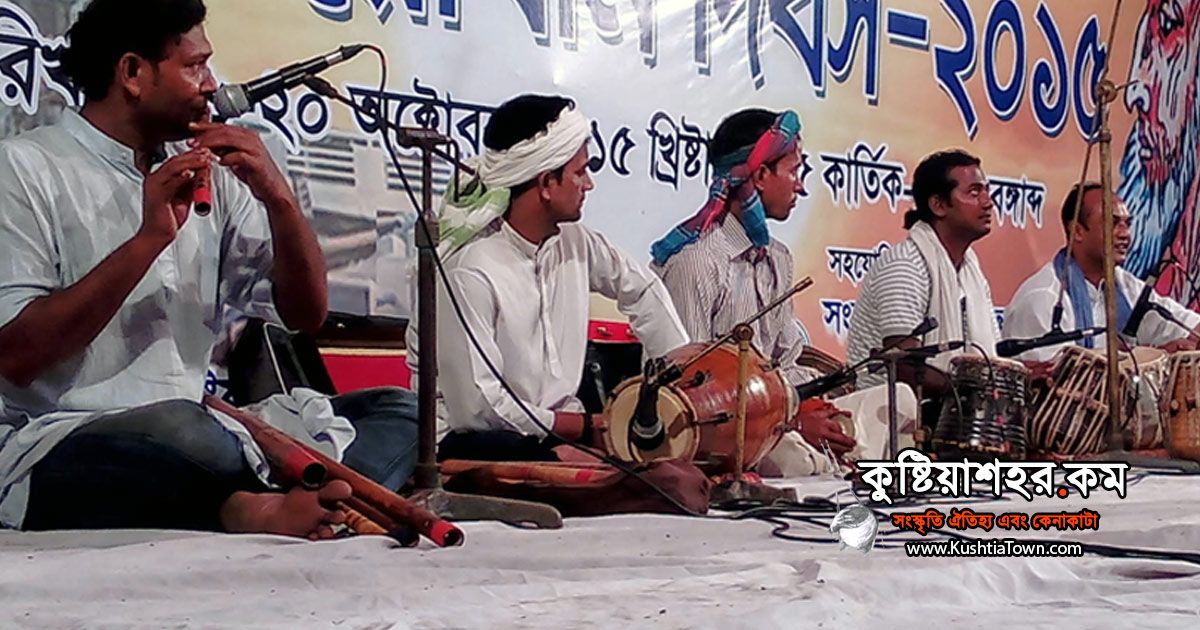
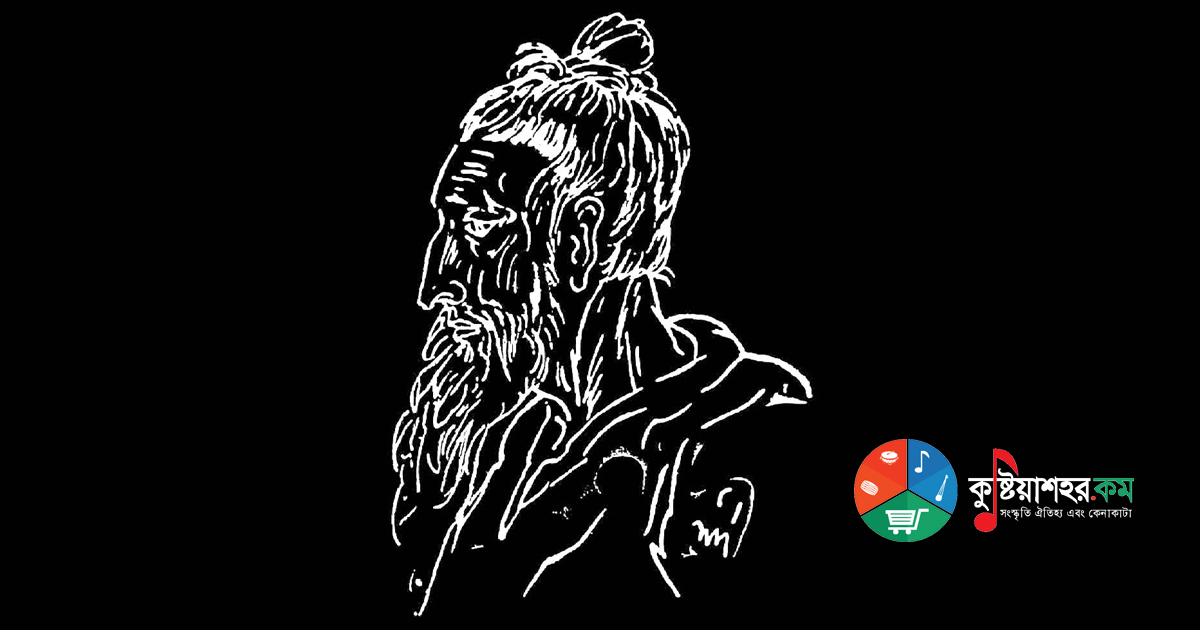
The Bauls do not believe in writing their songs down. Wandering here and there they shape their songs and gain unearthly experience.
The word 'Baul' is a Bengali corruption of 'baura' or 'baula'. In North India 'baula' is used for people of the mad sort; in the Bhojpuri regional language the verb form of the word for madness is 'baurana'. Measured against the standards of their own tradition, the Bauls were dissenters — and for that very reason they came to be known as Baul, the unbalanced ones.
For ten years Lalon went on composing his songs without a break, and he never looked back to polish them. Nor did anyone record them. Nothing of his was ever printed in his lifetime. The work of collecting his songs began only after Lalon's death. To this day many of his songs remain unpublished, and many, many more have probably been lost forever. No reliable manuscript of Lalon's songs has ever been found; what is found are copies, or copies of copies. The celebrated Bengali writer Annadashankar Ray, tracing the source-streams of Baul sadhana, has shown that Islamic Sufism, Hindu Vaishnavism and the Buddhist Sahajiya practice — these three currents came together and merged in the Baul stream. The mention of the Rasul (pbuh), the Prophet, Allah and the formless Supreme in Lalon's songs is a reflection of the Sufi influence.
Or else
She has no hands, no feet, no shoulders, no head
The influence of the Vaishnav stream in Lalon's songs is seen in the mention of Gora — that is, Chaitanya Mahaprabhu — and of Krishna. 'Kala', the Bengali counterpart of the word 'Krishna', recurs again and again in his songs. The song below is one of Lalon's most graceful and most moving songs:
I cry, Mother, holding your feet
I shall steal butter no more
Of these three streams of religious thought that bore upon Lalon, the strongest is the Sahajiya path — the way of seeing and perceiving the Supreme within man himself. Sometimes Lalon called that Supreme the "Man of the Heart", sometimes 'the unknown bird', sometimes "the unacquainted man", sometimes the unattainable moon. According to the Sahajiya ideology, through searching within himself man can come to know God; and on the whole, it is through loving human beings that God is found. No one but Chandidas has proclaimed this belief in so beautiful a way:
above all stands man, and above him there is none
This relation of man and God is scattered through the verses of Lalon's immortal songs:
the Man of my heart?
Or,
finds fulfilment in every endeavour
Or,
Or in this song –
yogis and sages, for four ages,
have wandered the world in search of him
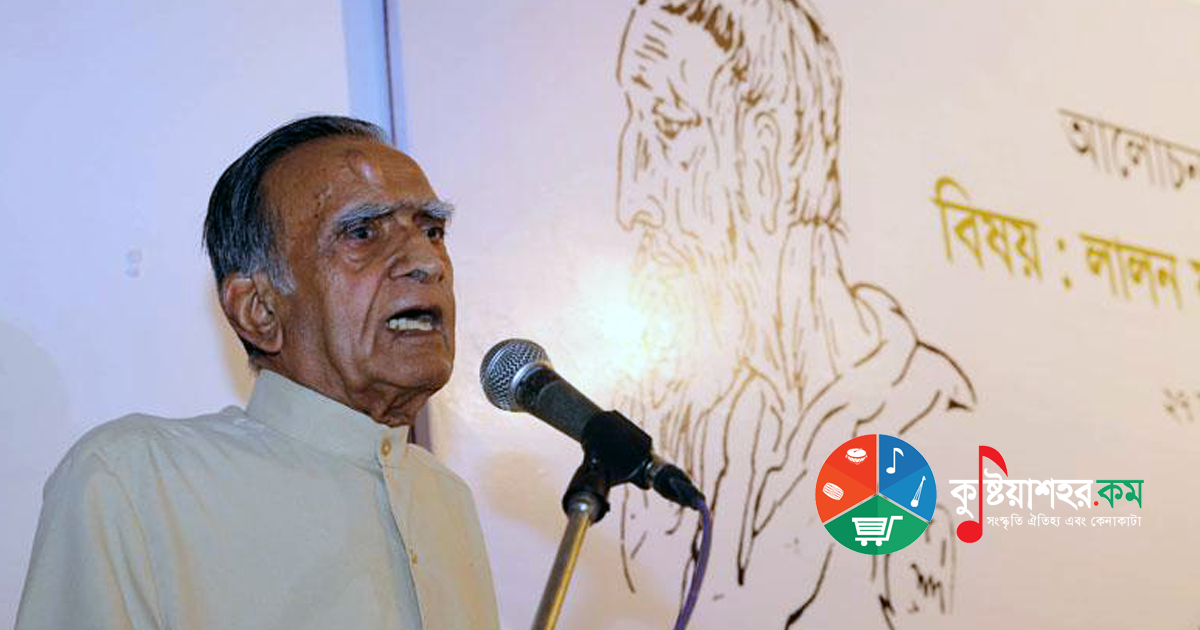
The Bauls played a great role in the reform of society as well. Annadashankar Ray wrote:
Their sadhana is not religious but human. The sages seek a close bond with the Supreme Soul, yet are indifferent to the world beyond. They feel no burning desire to enter heaven, nor are they afraid of hell. This body, this life and this earth are the whole world of their songs.
He wrote further that just when a renaissance was arising among India's educated classes, another movement had at that very moment begun within the hearts of the village people. History has paid no attention to the relation between these two streams of the Indian renaissance. The day this unwritten part of history is recorded, there will be room to see Lalon in his true context.
Annadashankar Ray said further that the influence of this renaissance of Lalon's within the heart of the Bengali people is no less than the influence of Raja Rammohan Roy.