বাংলা
 English
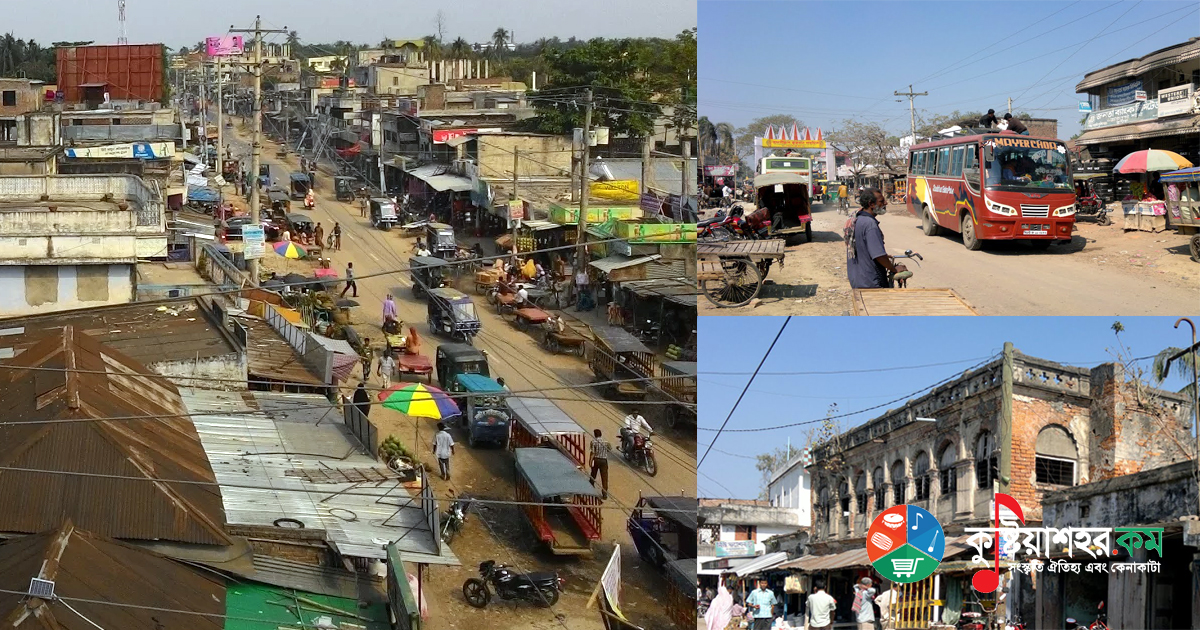
"I want to spend the last days of my life in Kushtia." The words were those of the renowned writer Annadashankar Ray — and not only his: many poets, writers and luminaries have said the same. Around the soil and the people of the ancient land of Kushtia they have written many stories and tales.
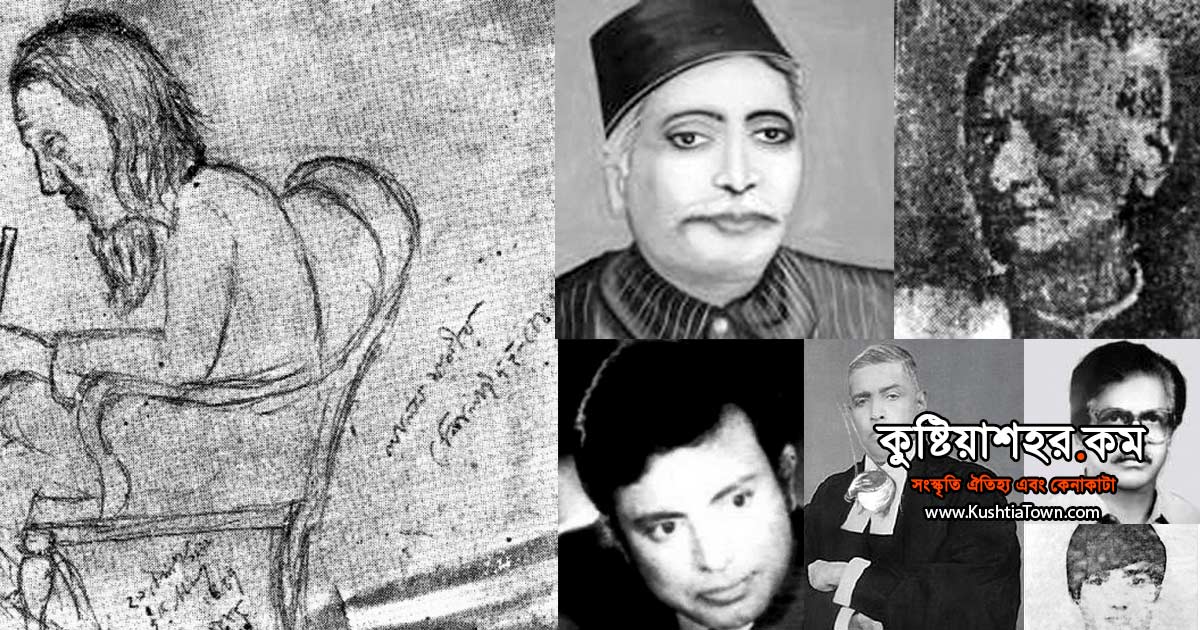
The vast land of Kushtia, washed by the Padma and the Gorai, is steeped in ancient heritage. It is one of the great seats of Bengali literature and culture, entwined with the memories of the world poet Rabindranath Tagore, the mystic poet and Baul emperor Fakir Lalon Shah, the great writer Mir Mosharraf Hossain, Kangal Harinath, Jaldhar Sen, Akshay Kumar Maitreya, the poet Azizur Rahman, the zamindar Pari Sundari, a pioneer of the indigo resistance movement, Dr Radha Binod Pal — chief justice of undivided India, vice-chancellor of Calcutta University and a protesting voice against the atomic bombing of Hiroshima — the noted prose writer and poet Dand Ali, and countless other renowned poets, writers and great personalities. Much of the soil of this district and many of its people are immensely proud of the sacrifices, endurance and service given in the anti-British movement and the great liberation war.
Swadeshi revolutionaries such as Bagha Jatin, Saroj Acharya, Atul Krishna, Sunil Sengupta, Jyotish Chandra and Atmahari remain memorable and cherished for their selfless service to the country and the motherland. Alongside the Swadeshi movement, Kazi Miazan was a pioneer of the Wahhabi movement, Afsar Uddin Ahmed of the Khilafat movement, Shamsuddin Ahmed of the peasant-tenant movement and Professor Abdus Sattar of the Khilafat movement.
The people of Kushtia played a leading role in national movements on various issues — the language movement of 1952, the mass uprising of 1969 and the bloody liberation war of 1971. Because of their unforgettable role in the liberation war, greater Kushtia holds a place of distinction in the region's overall history. The establishment of the wartime provisional capital at Mujibnagar in Meherpur of greater Kushtia has placed this district on the seat of glory. Because of the unique contributions of countless poets, writers, artists, craftsmen and painters, Kushtia has earned fame across the country as the cultural capital. Of the 19 districts of post-independence greater Bangladesh, present greater Kushtia was the 18th. After the partition of the country in 1947 it became part of East Bengal as a Muslim-majority area. Before partition it was part of undivided Nadia district. At that time Nadia district had 5 subdivisions: Krishnanagar, Kushtia, Meherpur, Chuadanga and Ranaghat.
After the creation of Pakistan, an independent district named "Kushtia district" was formed comprising Kushtia, Meherpur and Chuadanga. Initially the district as a whole was named 'Nadia', while the Nadia portion of West Bengal in India was called Nabadwip. Later complications arose in administrative work and in correspondence, and so the Nadia of Kushtia was renamed Kushtia district. Kushtia's history is therefore very ancient. Kushtia first became a subdivision in 1860.
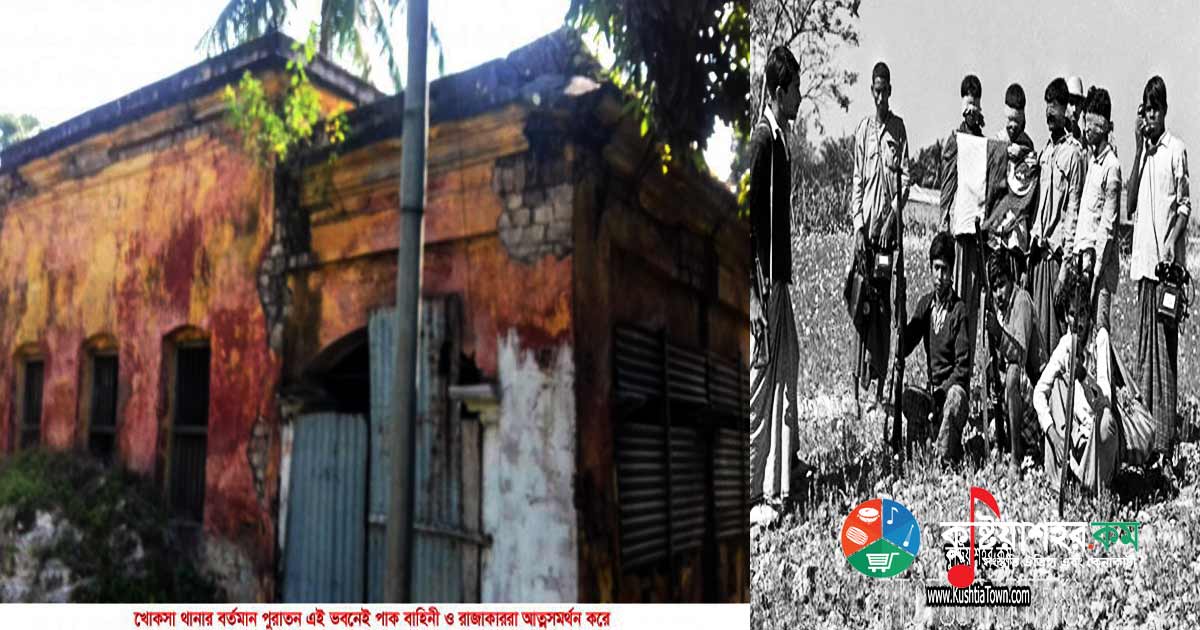
In 1725 Kushtia was under the Natore zamindari, and it came to be known as part of the civil administration of the Rajshahi fouzdari of Kandanagar pargana. Later, in 1776, the British East India Company brought Kushtia under Jessore district, but in 1828 it was placed under Pabna district. In 1861, because of the Indigo Revolt, the Kushtia subdivision was established, and in 1871 the Kushtia subdivision, comprising the Kumarkhali and Khoksa thanas, came under Nadia. Before the partition of the subcontinent, Kushtia was a subdivision of Nadia district. The district of Kushtia emerged in 1947. At that time Kushtia district was made up of 3 subdivisions: Kushtia, Chuadanga and Meherpur. Then in 1984, when Chuadanga and Meherpur became separate districts, the present Kushtia district was formed with the 7 thanas of the Kushtia subdivision.
Regarding the naming of this ancient land as Kushtia, it is said that the word Kushtia comes from the word "kushte". There are several arguments about the naming of Kushtia. A section of the people of this district still refer to Kushtia as "Kushte". In the view of many, the name originated from "kushta"; as "kushta" grew in great abundance in this region, the name may have arisen from it.
Hamilton's Gazetteer mentions that the local people called it Kushti, and hence the name became Kushtia. According to some, Kushtia was named after the French word "kushthah", meaning an island of ashes. The town of Kushtia grew up around the Kushti port in the time of Emperor Shah Jahan. According to Syed Murtaza Ali, the word Kushtia derives from the Persian kushtah or kusta. In the view of many, the name originated from the wrestling sport — kushti, then Kushti and finally Kushtia.
Dr Mufti Syed Nazrul Islam has said that Kushtia comes from the word "kastia". The word kastia is of the Churuni tongue, and kastia means the sleeping place of the oli, the saints. Because oli and auliya, pir and buzurg, lived in this district, it was named Kushtia district after kastia.
In the reign of Emperor Shah Jahan this place grew up as a river port. In the days of the East India Company, Kumarkhali in Kushtia was famed as a river port, and for this reason many relics of ancient civilisation remain at Kumarkhali. Asia's largest textile mill, the Kushtia Mohini Mill, along with textile mills and quite a few other factories, also grew up here.
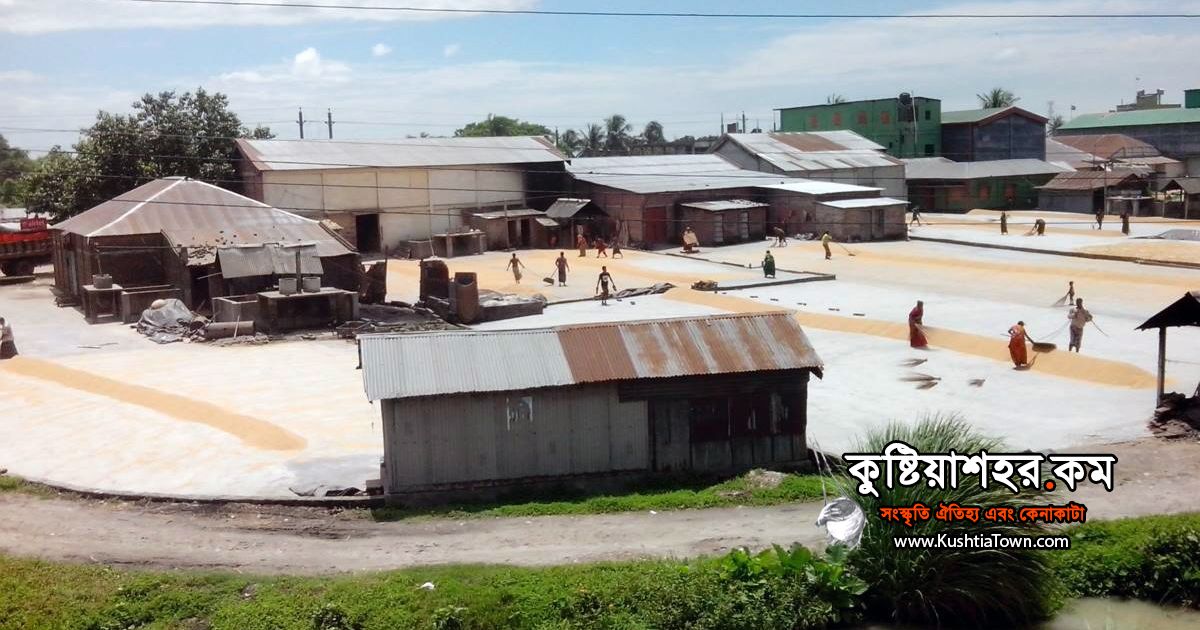
The district is a hub of rail and road communication. The Poradah railway junction, the first railway junction established in Bangladesh, did much to advance rail communication. The direct movement of the Dhaka–Calcutta Express over this railway junction was a milestone in rail communication. Because of the improved transport system, the country's second largest cloth market has been established at Poradah in the upazila, and since the days of British rule it has become an important hub of trade and commerce in Bangladesh. Because of its rice market, the high-quality rice exported from this upazila is renowned at home and abroad.