বাংলা
 English
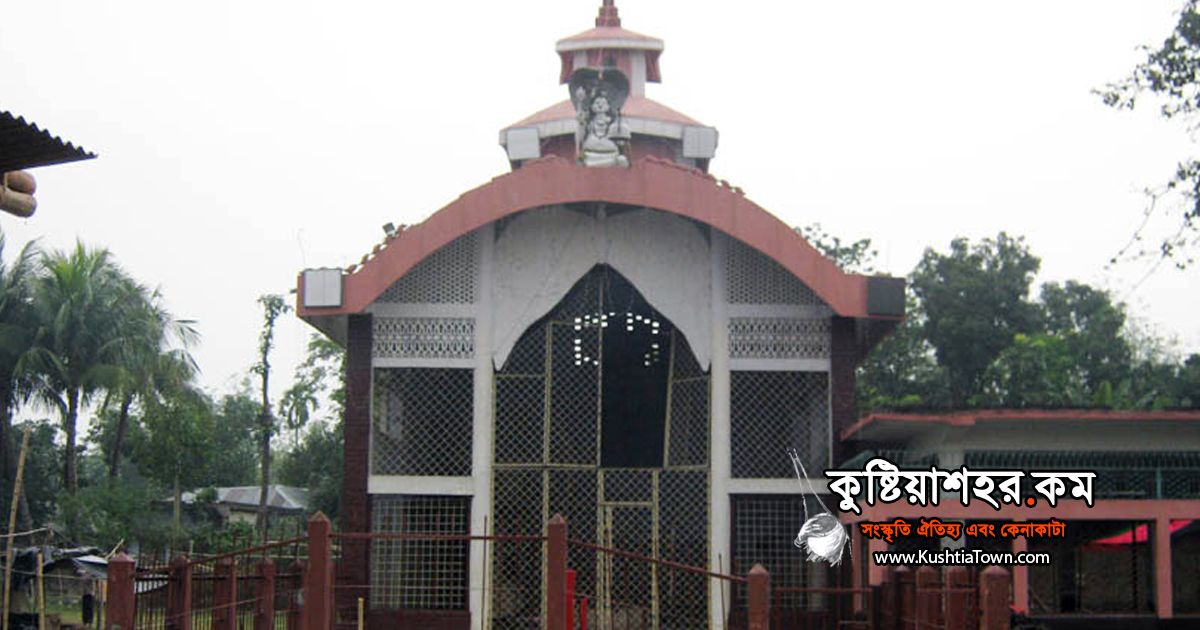
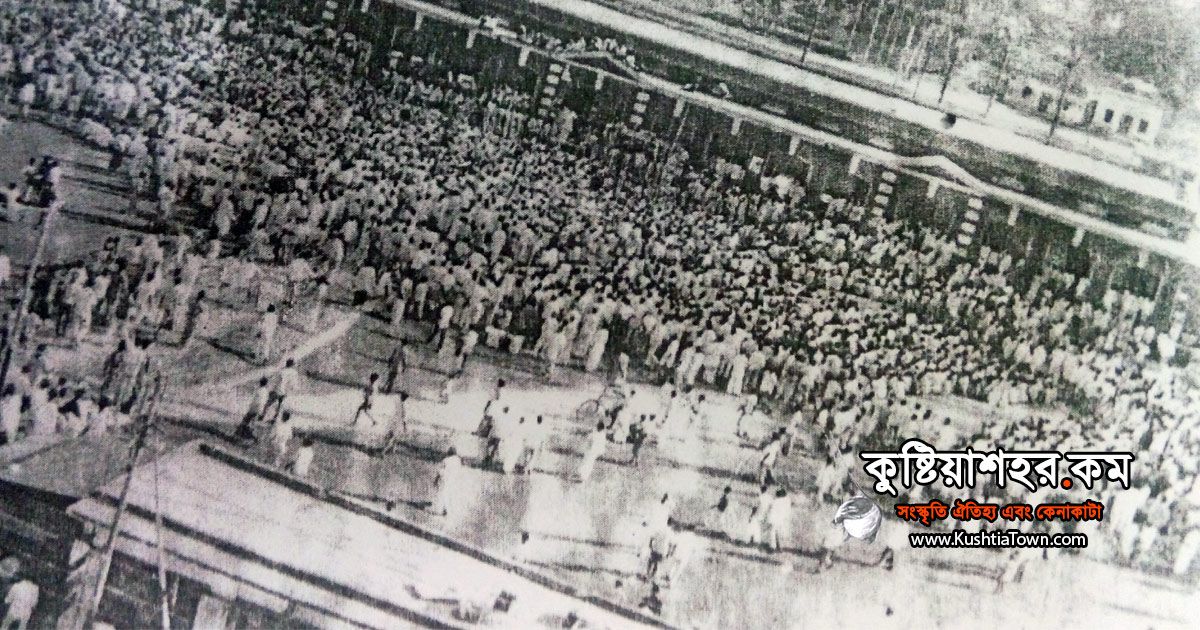
The Kali Puja temple at Khoksa in Kushtia is a place of Sanatani devotion and a religious tourist centre for the people of the area, including the Hindu community, free of religious and caste discrimination. Around the annual Puja and fair a special kind of atmosphere is created among local people of all classes and professions. The rituals of the Puja begin on the Amavasya (new-moon night) of Magh. For the occasion a magnificent Kali idol of dazzling beauty, with a huge body seven and a half cubits long, is made. By family tradition the local idol artists Sukumar Biswas and Nimai Biswas, along with their three assistants, have been making the idol. On the occasion of the Kali Puja a fair is held for a fortnight on the temple grounds. Nearly fifty thousand people from home and abroad gather at this fair.
There is no exact history of when Khoksa's traditional Kali Puja began in the remote past. However, Ramadeb Tarkalankar, the seventeenth ancestor of the present worshipper Sri Probodh Kumar Bhattacharya, was the first worshipper of this Puja. From this it is estimated that the age of Khoksa's Kali Puja is about five and a half hundred years. By popular account, the self-effacing tantric sadhu began this Kali Puja at a spot on the bank of the Gorai river overgrown with a species of tree called khoksa and devoid of human habitation. When the son of a certain zamindar was bitten by a snake, he was taken to this sadhak for treatment. Laying the patient at Kali's feet, the sadhu cured the zamindar's young man through his austerities. Hearing the news, the zamindar was filled with devotion to Kali, and on the tantric sadhu's instruction he built an idol of Kali seven and a half cubits long and began the first Kali Puja here on the tithi of Maghi Amavasya. And from that began Khoksa's Kali Puja. At the end of the buffalo sacrifice, a pair of goats was offered in honour of Bhayebnath, zamindar of Pangsha, and Thakur of Shilaidaha. In that stream of tradition, goats brought by devotees in fulfilment of their vows are still sacrificed, from home and abroad.
Khoksa's Kali Bari - a witness of time:
A daily-worship temple surrounded by a huge pair of banyan and pakur trees. Kept here is the block of black stone obtained from the Gorai river by Indu Bhushan Deb Ray, Raja of Naldanga. It is a relic of the Buddhist era. The shape of this stone block is much like a chowki. The black stone block is worshipped all year round. Noteworthy is the woven mat seat for the worship of Shiva Thakur, made of brass sheet, 27 inches long and 4 feet wide. The former Puja temple, having been swallowed by the mighty Gorai river, was moved to the present site in Bengali year 1341. At the annual Puja temple, every year on the tithi of Maghi Amavasya, the Kali idol seven and a half cubits long, together with a Kali idol of clay and straw twelve and a half cubits long, is immersed at the end of the Puja. A Nat temple is being built here - a temporary rest house for worshippers and sightseers coming to the annual Puja and fair, and the office of the Puja committee. In front of the temple lies the road, and to the west stretches a field up to the Gorai river. This is the fairground. Every year this Puja is held on the same tithi in the traditional manner. A month before Maghi Amavasya the frame of kadamba wood is made. In this very frame the idol of straw and clay is worshipped annually. In the zamindar days the fair here ran for more than a month.
At the very start of the Kali Puja the practice of buffalo and goat sacrifice, symbols of wrath, was introduced. In the beginning the number of goat sacrifices was undetermined. On the day of the annual Puja, in the first watch, after the Chandi recitation, one goat was sacrificed for the Chandi. In the last watch of the day, after the Devi was raised to the seat, five goats were sacrificed for the five branches of Ratan Babu, zamindar of Narail, and thereafter came the buffalo sacrifice sent by the Raja of Naldanga. Then a pair of goats was sacrificed in honour of the Shilaidaha zamindari estate. Goats brought by devotees in fulfilment of vows continued to be sacrificed until the Puja and fair of Maghi Saptami. This practice of buffalo and goat sacrifice, the vehicles of wrath, still continues today in the mould of that era of rajas and zamindars.
After the abolition of the raja-zamindar system, the spread of Khoksa's Kali Puja and of the rural fair declined to a large extent. After the architectural temple of the Nawab era collapsed into the bed of the mighty Gorai river in Bengali year 1340, the Kali temple was rebuilt the following year, 1341 Bengali, through the efforts of the local Hindu community. Meanwhile several initiatives have been taken around the Kali Bari. After the tin-roofed four-pillared house of daily worship on the bank of the Gorai river was swallowed by the river bed, the newly built modern Puja temple and the administrative office of the management council now grace the scene. Although the Nat temple is under construction, the religious and servitors' ashram has not yet seen the light of day.
One day a huge buffalo attacked a certain scholar, an ancestor of the present worshipper, whereupon the scholar slew the buffalo with the Chandi grasped in his hand. When the incident came to the notice of the Raja of Naldanga, he granted 14 bighas of land to each of the four branches of this Brahmin family of miraculous power, and 12 bighas each, as chakran service land with the opportunity of enjoyment free of rent, to the mason, washerman, barber, garland-maker, bhuimali, dhaki (drummer) and cleanliness-keeper connected with building the frame associated with the Kali Puja, along with 16 bighas of land to meet the Dipanwita expenses during the seven days of the annual Puja. The Kali Puja fair was relocated and an extensive renovation programme was adopted. After the present Puja committee and the leading people of the area took over responsibility, on the Amavasya tithi of 28 Agrahayan 1389 Bengali the foundation stone of the pucca construction of the annual Puja temple was laid, and a comprehensive programme of building a cultural quadrangle for teaching poetry, grammar, logic and Smriti, a religious library, a servitors' building for devotees arriving at daily and annual Puja times, and a boundary wall for the Kali Bari was adopted. But as problems of many kinds remained, only the work of building the annual Puja temple, the cultural quadrangle building and the rest house for visitors has been completed.
No history of the tradition-rich Khoksa Kali Puja temple and religious tourist centre has yet been written. But the proper preservation and expansion of the Khoksa Kali Puja temple and religious tourist centre have become the demand of the times.
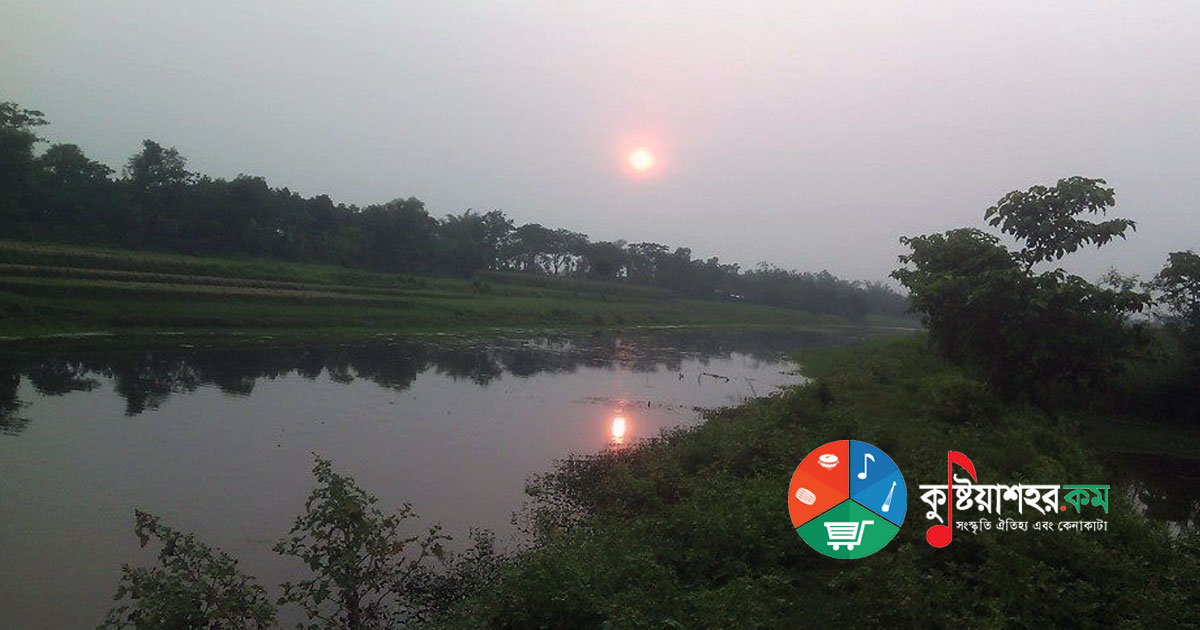
Location: on the bank of the Gorai river, adjacent to Khoksa bazar