বাংলা
 English
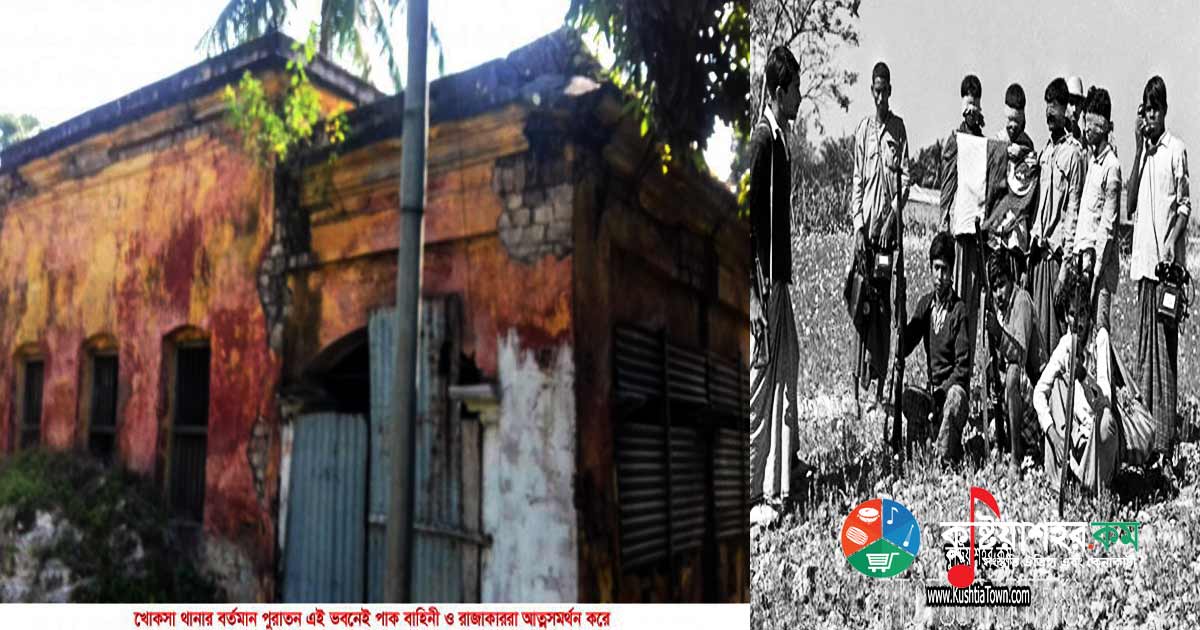
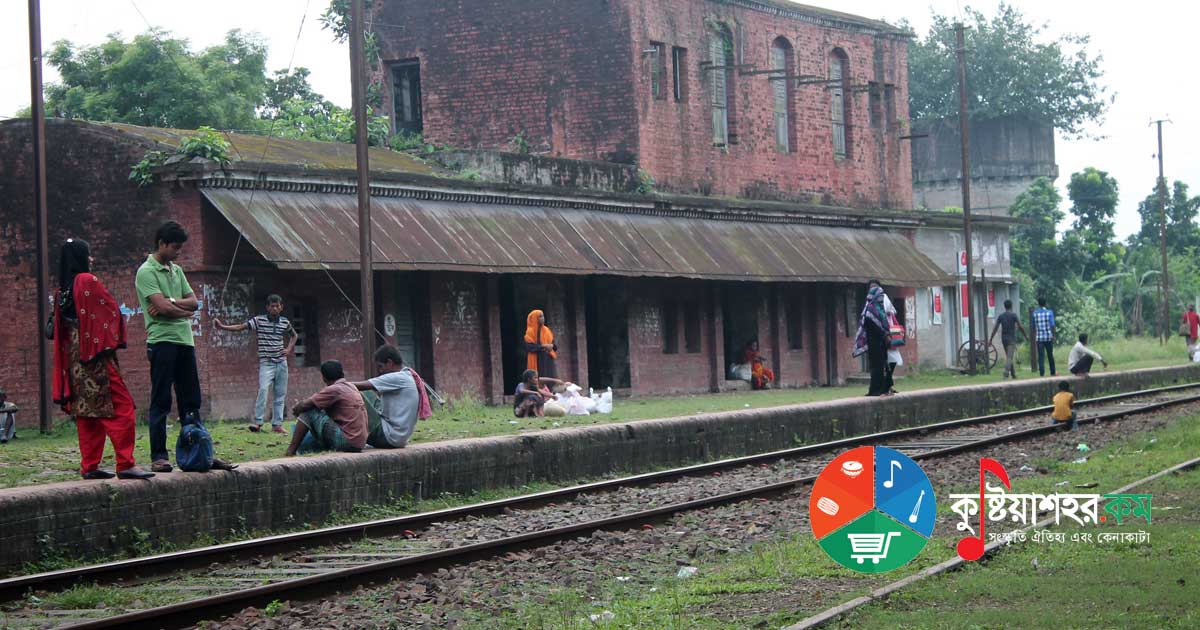
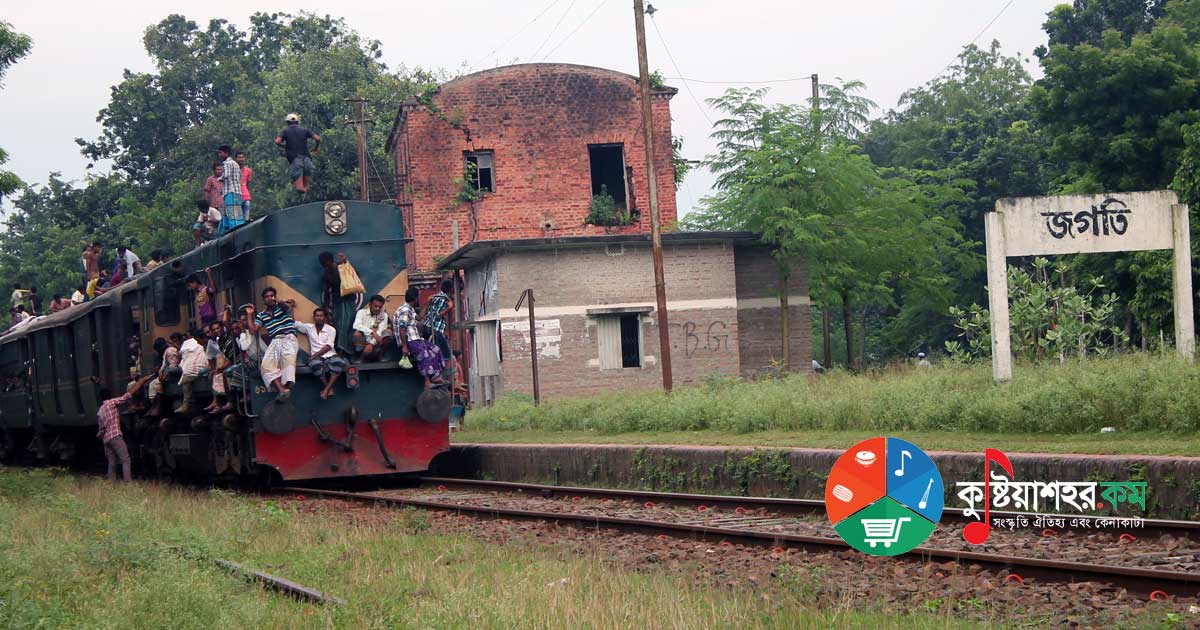
The country’s first railway line, from Sealdah to Kushtia, was opened in 1862. Jagati Railway Station is Bangladesh’s very first railway station. As an old station it has never been touched by development. For lack of repair, the station’s old buildings have collapsed one after another, and the government land has fallen into ruin.
According to sources, Jagati railway station was established in 1862. Being the first station at that time, it became the central hub of the coming and going of all people. Because of the crowds, Jagati became commercially a hub of import and export. The station depended on fuel for its engines; two large water tanks still stand on either side of the station. To handle the crowds, at one time 26 railway officials and staff were posted here. Now there are only 3. For lack of manpower, the station's operations have broken down. Passengers are suffering harassment in various ways. With no repairs for a long time, the station's beauty has been ruined. Since train passengers get no facilities, hardly anyone goes to this station any more. The station's repair is urgent. Although rail communication has become popular for travel, the century-old traditional Kushtia-Bheramara-Rayta Ghat railway line is being destroyed through carelessness and neglect. For lack of repair, the stations have fallen into decrepit condition.


On the other hand, there is the old Rayta line. This line was built during the British period; it was laid in 1916. The train that ran from Rayta-Damukdia was also named the Rayta train. Even three decades ago this line was quite busy. But after showing losses, the railway authorities shut that line down. With the line closed, the standard of living of the local people has come to a virtual standstill.
In the nineteenth century, various railway companies of England began operating small railway sections in the different provinces of India. In the beginning, railways were run only for economic purposes. A company named Eastern Bengal Railway first laid railway in Bangladesh. The Eastern Bengal Railway Company opened the broad-gauge (5 feet 6 inches) railway section from Calcutta to Ranaghat on 29 September 1862, and the railway section from Ranaghat to Kushtia on 15 November 1862. The section up to Goalanda was opened on 1 January 1871. From 1874 to 1879, to deal with famine, the Northern Bengal State Railway opened the section from Sara to Siliguri in metre gauge (3 feet 3.38 inches). This company also opened the metre-gauge sections from Parbatipur to Dinajpur and from Parbatipur to Kaunia. On 1 July 1884 the Eastern Bengal Railway came under government management, and on 1 April 1887 it was merged with the Northern Bengal State Railway.
On 1 January 1915 the Bheramara-Shakole section, including the Hardinge Bridge, was opened. In 1914 the metre-gauge section from Shakole to Santahar was converted to broad gauge, and in 1924 the section of about 96 kilometres from Santahar to Parbatipur was converted from metre gauge to broad gauge.
In 1926 the metre-gauge section of about 137 kilometres from Parbatipur to Siliguri was converted to broad gauge. In 1916 the Bheramara-Rayta broad-gauge section was opened. In 1928-29 the narrow-gauge section from Teesta to Kurigram was converted to metre gauge. In 1930 the Abdulpur-Amnura broad-gauge section was opened. The Bahadurabad-Jamalpur Town metre-gauge section was opened in 1941. In 1897 the Darshana-Poradaha section was upgraded from single line to double line. In stages, the Poradaha-Bheramara section was upgraded in 1909, Bheramara-Ishwardi in 1915 and Ishwardi-Abdulpur in 1932. For lack of repair, these lines are in a deplorable state.
Bangladesh's first railway station: Jagati Station