বাংলা
 English
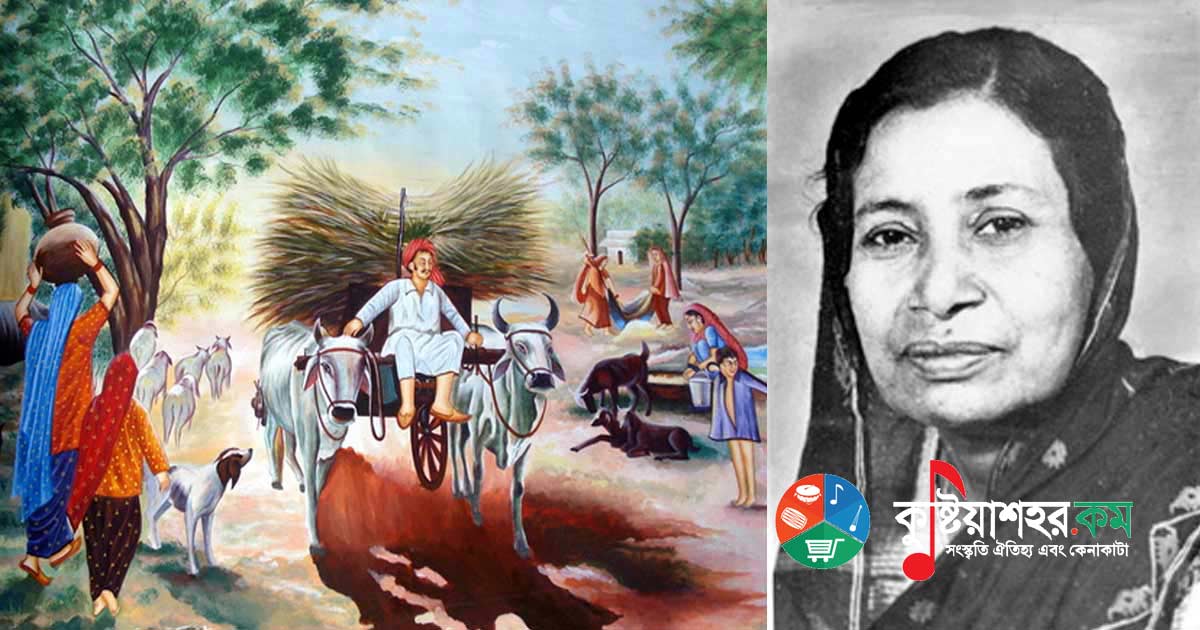
Mahmuda Khatun Siddika (born 16-12-1906, died 02-05-1977) was a litterateur. Her ancestral home was the village of Niamat Bari in Kushtia district. She was born in Pabna. Her father, Khan Bahadur Mohammad Solaiman, was a divisional school inspector, and her mother, Syeda Rahatunnesa Khatun, was devoted to literature and music. Mahmuda was the second of six sisters and one brother. In the poems and fairy tales she wrote in her adolescence her name appears as Sree Rokibunnesa Mohammada Khatun; at that time her nickname was Batashi.
Mahmuda Khatun Siddika was one of the Bengali Muslim women poets. Among the Muslim women poets of Bengal in the early part of the twentieth century who have won immortality in history, the poet Mahmuda Khatun Siddika is one — she had the privilege of the direct company of the poet guru Rabindranath Tagore and of Sarat Chandra Chattopadhyay. Although Mahmuda Khatun was religious and a disciple of the pir of Kolkata, she was always a protester against superstition, purdah and illiteracy. She was the first among Bengali Muslim women poets to write poetry in the sonnet form and in prose verse. Nearly 80 years ago Mahmuda Khatun Siddika's first book of poems, Posharini, was published. Before her Parashmani, no book of poems by a Bengali Muslim woman poet had been published.
Mahmuda Khatun's formal education went only up to the sixth grade. As an adolescent she was drawn to painting. Later she earned diplomas in health care and cookery. The family environment was favourable to her literary pursuits. The popular fiction writer Mohammad Najibur Rahman was her home tutor. Kaikobad's Ashrumala and the works published in the literary periodicals of her time influenced her, and her experience of travel inspired her deeply. From childhood she lived with her father in different parts of Bengal. For a time she stayed in Jalpaiguri and Darjeeling, and she also travelled to Delhi, Agra, Ajmir and other places.
Mahmuda Khatun Siddika was one of those who secured women's place in the social awakening of Bengali Muslims in the twentieth century. In this respect she belonged to the line of the renowned Rokeya Sakhawat Hossain, Shamsunnahar Mahmud and Sufia Kamal. Although she was not highly educated in formal terms, with her creative mind and intellectual vision she established herself firmly in the society of her time.
Mahmuda Khatun published three books of poems: Posharini (1338), Mon O Mrittika (1960) and Aranyer Sur (1963). She also wrote some essays and short stories, but these were not published as books. She wrote chiefly poetry. Driven by innate inspiration, Mahmuda Khatun wrote poems continuously, and these were published in the periodicals of her time. Her poetic talent may not have matched her professional renown, but her devotion and endeavour placed her in a definite seat among the followers of Tagore.
Mahmuda Khatun also composed some poems in the sonnet form and in prose verse. Nature and environment, and man and society, recur again and again in her poetry, and at times topical issues became the subject of her poems. The havoc of the two world wars made her a believer in the inevitability of peace, and so she called for peace in a resounding voice. Since poetry was for her 'the pure utterance of the heart', her own poetry too was original and flowed along a placid course.
On Rabindranath Tagore she wrote in her memoirs:
'... I took the world poet's feet in my hands and saluted him. When I rose from my salute, he raised both hands above his head, closed his eyes and prayed for a long while. I watched in amazement as light began to radiate from his whole body. Then he seated me beside him and began to tell stories. "I am amazed that you have come out of purdah. Look, just as plants cannot grow or bear good flowers and fruit without the sun's rays, so a person cannot grow complete without the light and air of the outside world. The lotus rises above the mud to receive the sun's rays; otherwise it could not receive them. And therein lies its worth."'
Nasiruddin wrote: 'The poet was married in childhood, but her married life was very much like a dream. She did not go to her husband's home and did not enjoy married life. Everyone knew her as a lifelong maiden.'
Mahmuda Khatun took part in many literary gatherings, and she had the good fortune of being blessed with the affection of Rabindranath Tagore, Sarat Chandra Chattopadhyay and Kazi Nazrul Islam. Leading a rich cultural life was a notable aspect of her life. In 1967 the Bangla Academy awarded her its literary prize, and in 1977 the Government of Bangladesh honoured her with the Ekushey Padak. Mahmuda Khatun Siddika died in Dhaka on 2 May 1977.