বাংলা
 English
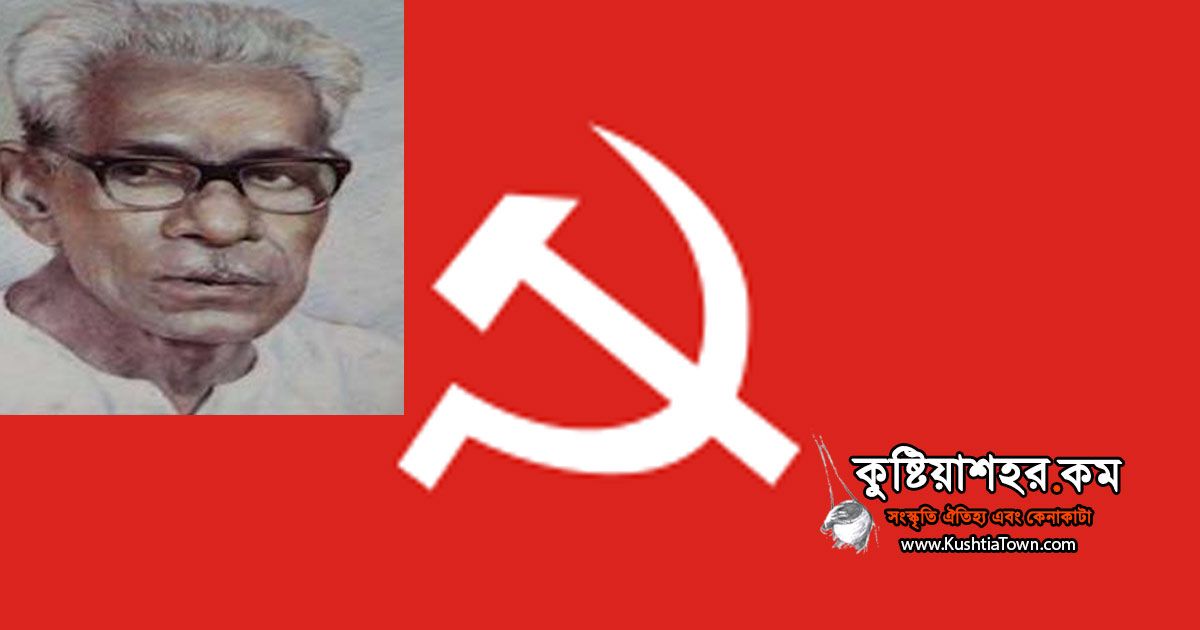
More than Sheikh Roushan Ali's personal life, it was his political life that mattered most. When a politician reaches a certain height, his personal life pales beside his political life — this becomes clear simply by analyzing that political life. No part of his life was for himself; all of it was devoted to the country, the nation, and the oppressed, destitute, persecuted and exploited communities.
The year 1933. The Communist Party was banned at the time. To organize the workers of Mohini Mill, the communist leader Nityananda Chowdhury came to Kushtia from Burdwan. Leaders of the town such as Punya Pal, Bhobesh Ghosh, Sudhir Sanyal, Shiben Roy, Dhiren Bhattacharya, Amritendu Mukherjee and Suresh Roy began to become active in workers' organizations. Those who came to work in the town during the thirties were Niharendu Dutta Majumdar, Nepal Nag, Nripen Sen and others. Sheikh Roushan Ali became entangled in the struggle to build workers' organizations, and gradually his faith in Marxism and Leninism grew firm. Thereafter, after many tests and on the basis of secret information, he was given membership of the Communist Party in 1937.
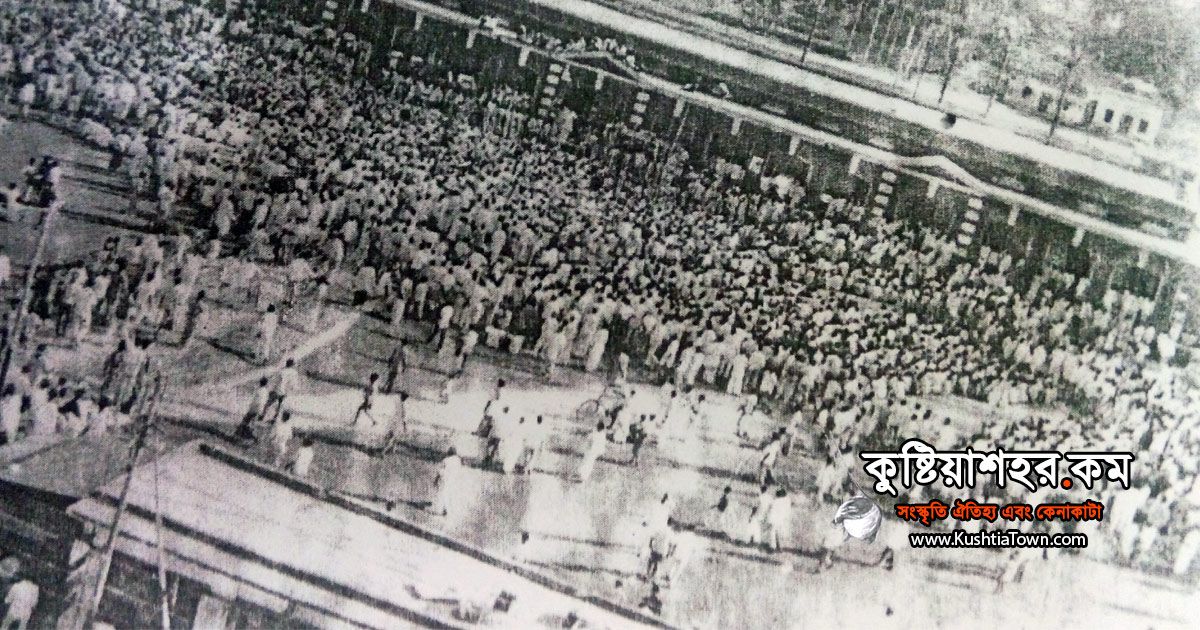
Meanwhile, in 1934, thanks to Roushan Ali's tireless efforts, the 'Mohini Mill Sutakal (Yarn Frame) Workers' Union' was founded. This workers' organization began to raise its voice in demanding the workers' release from oppression, job security, and the establishment of their rights. From November 1934 the long-accumulated resentment of the workers began to erupt. The owners used to deduct a compulsory subscription from every worker. Thousands of workers could not accept this injustice. They protested on behalf of the union. Processions, meetings and movements began. When the owners launched an armed attack, the workers' leader Jamir Uddin was martyred, and Julfikar and Omar Ali were seriously wounded in the same attack. Roushan Ali led this movement. He quickly arranged for the injured to be sent to Kolkata for proper treatment. After long treatment they recovered and returned to Kushtia.
The year 1936 was the brightest chapter of Roushan Ali's political life. The movement began early in the year. The owners filed a case naming Roushan Ali as the principal accused. When the police came to arrest the accused, the workers put up resistance. Several demands were raised on behalf of the union. When the owners took an inflexible stand on the demands, the workers went on a long strike in 1937. The movements grew stronger, and after a strike that ran continuously for 2 months and 10 days, the owners were forced to accept the workers' demands. Roushan Ali was at the head of the leadership of all these movements. From March 1938 the Mohini Mill ran in full operation. News of the success of this movement spread to different parts of India. Sheikh Roushan Ali became a legendary workers' leader. For almost the entire decade of the forties he held the responsibility of general secretary of the Majdur (Workers') Union. Alongside organizing workers, he also built various professional organizations.
In 1939, for the 'crime' of leading a strike movement, Roushan Ali lost his job along with 800 workers. After that, in the mill area, he opened a tea stall together with his younger brother Sheikh Abdul Gani [Tuna Mia]. When the roar of the Second World War shook the whole world, its impact fell on Kushtia town and the industrial area as well.
The forties were the hardest period of Roushan Ali's political life. He always had to remain busy with the people's work. For many days he had to live half-fed and unfed. During this time famine spread across the whole country. In the midst of all this he was arrested. While he was in jail his wife Golapi Nesa died. In 1943 his mother and father died 13 days apart. No death could halt his struggle-filled life. He accepted everything as natural and normal events. Family calamity never seemed to him an obstacle. He devoted himself to working people with unstoppable momentum.
In 1943 famine struck all of Bengal. Thousands of people were dying without food. Roushan Ali could not bear this suffering of the people. With his band of activists he went begging from door to door. Then with that money he ran soup kitchens (nongorkhana) for the hungry. He took firm steps against moneylenders and hoarders.
Toward the end of 1944 normal conditions began to return to the country. India's independence movement was steadily gaining strength. When communal riots broke out in Bengal in 1946, Roushan Ali tried to resist them with his band of followers. Under his leadership several peace processions and meetings were held at that time. In the election of 1946 he traveled village to village with the candidate nominated by the Communist Party. As the peasants' Tebhaga movement took root, Roushan Ali declared his solidarity with it. On 14 August 1947 the country was partitioned on the basis of the two-nation theory. Bengal was divided in two, and East Bengal, under a new identity, became East Pakistan. On 6 March 1947, through the Calcutta Congress of the Communist Party of India, the Communist Party of Pakistan was born.
Sajjad Zaheer was given the responsibility. In 1947 the party's regional committee was formed. Its secretary was Khoka Roy, and the other members were Moni Singh, Nepal Nag, Foni Guha, Sheikh Roushan Ali, Munir Chowdhury and Chittaranjan Das. But around the mid-thirties the Kushtia subdivision Communist Party had grown up under Roushan Ali's leadership. After the establishment of Pakistan he was also in charge of the party's district committee. He had to carry this responsibility until the very moments before his death. He is the only leader who led the party for more than half a century.
Click to read Comrade Roushan Ali Was a Labor Leader