বাংলা
 English
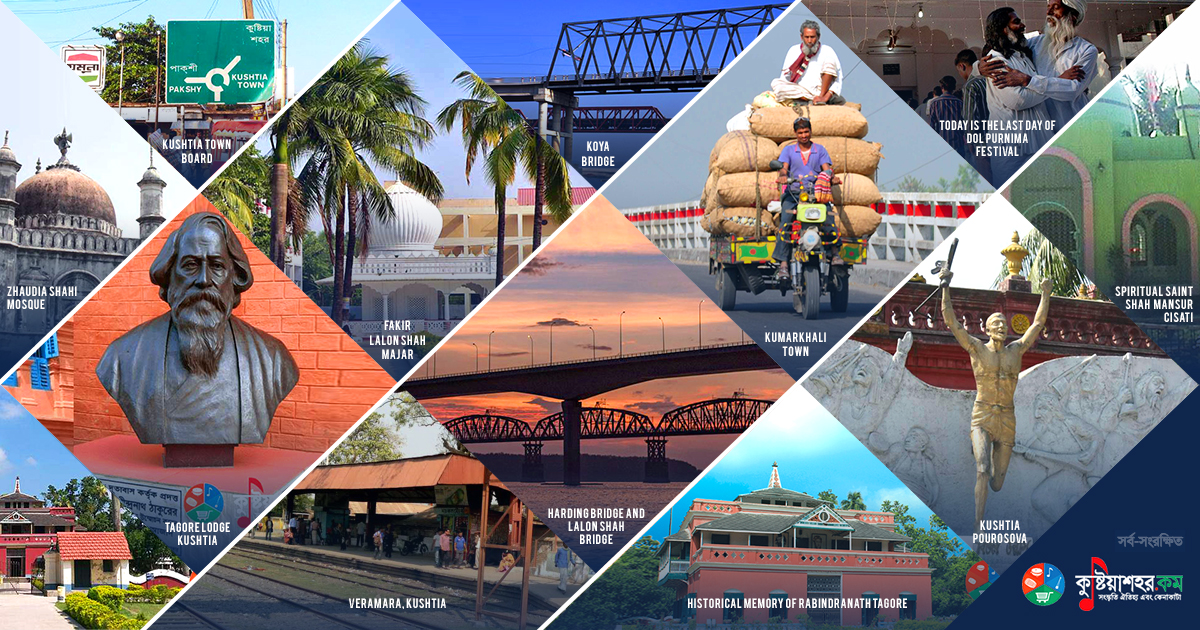
The Kushtia Shahi Mosque has carried the signs of the region's rich cultural heritage since the Mughal era. Kushtia is the birthplace of many historic figures, including Mir Mosharraf Hossain (1847-1912), Bagha Jatin (1879-1915) and Lalon Fakir (1774-1890). The Nobel laureate poet Rabindranath Tagore lived for part of his life at Shilaidaha in this district and composed some of his memorable poems while living there. During British rule, however, Kushtia was not a separate district — it was part of Nadia district (now in West Bengal). The Kushtia pourashava (municipality) was established in 1869.
What history reveals is that this district was prosperous from the Mughal era onward. A river port improved the district's standard of living during the reign of Emperor Shah Jahan. Although the port was used extensively by the British East India Company, it was the indigo planters and traders who began settling here. A rail link with Calcutta was built in 1860, and British India made the town an attractive location for mills and factories, developing Kushtia (then in Nadia) as its capital there. Added to these were the Jagneswar Engineering Works (1896), Renwick and Company (1904) and the Mohini Mills (1919).
In 1860 the Indigo Revolt spread across the province of Bengal. Pari Sundari, the indigo rebel of Kushtia district, was one of the pioneers of this movement, and she inspired all the indigo farmers of Kushtia to refrain from paying taxes to the government. Later, with the publication of the Indigo Commission Report, an act prohibiting the coercion of farmers into indigo cultivation and its measurement was passed, bringing the movement to an end.
At the time of the partition of India in 1947, Kushtia was made a separate district, formed of the Kushtia Sadar, Chuadanga and Meherpur subdivisions. Kushtia town became attractive for development in 1954, with the headquarters of the Ganga-Kapotaksha project (also known as the GK project) and a number of government offices. The GK project was born in 1962-1963, and a large surface irrigation system was put in place under this project along with the first crops.
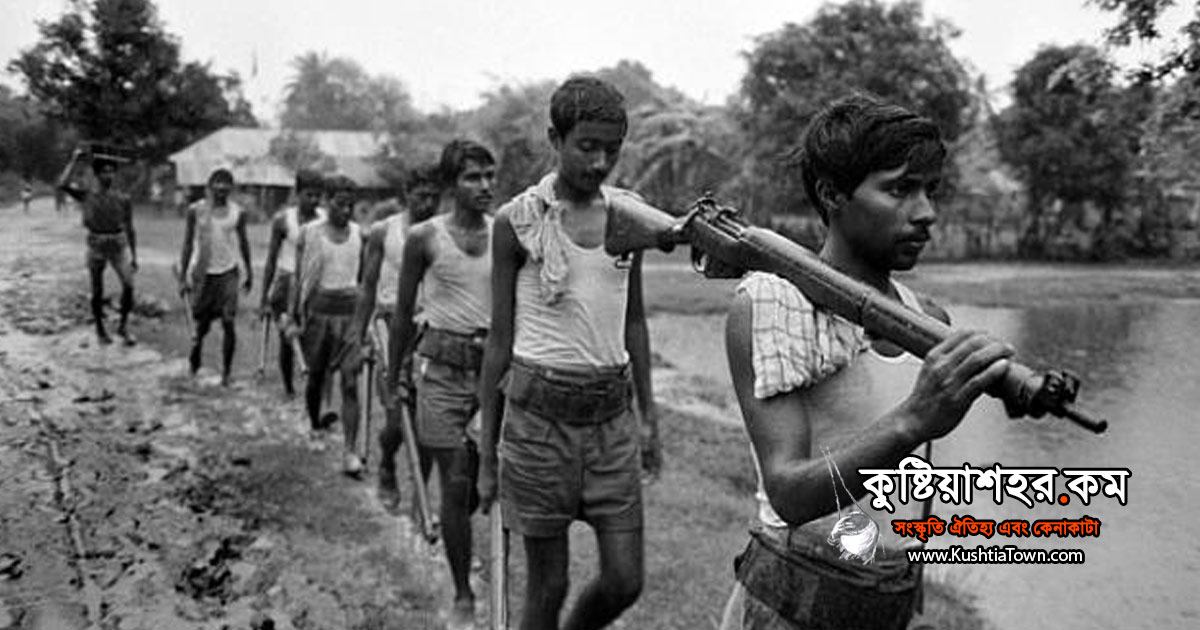
Kushtia district made a notable contribution to Bangladesh's war of independence. A 147-strong company of the 27th Baluch Regiment of the Pakistan Army reached Kushtia from its base in the Jessore cantonment on 25 March 1971. They first seized the local police station and set up a camp there, but soon met considerable resistance from a group of police, Ansar, students and local people. On 1 April the Pakistani army was completely overpowered, and the liberation forces took control of Kushtia after defeating them. Later, on 17 April 1971, the government of Bangladesh in exile formally made the proclamation of independence at Baidyanathtala. Subsequently, fighting between the Pakistan army and the freedom fighters took place at many places in the district, including Bangshitala in Kumarkhali upazila and Daulatpur upazila.
After the independence of Bangladesh, various development projects were undertaken in Kushtia district. The foundation stone of the Islamic University, at Dulalpur under Shantidanga in the area of the Kushtia and Jhenaidah districts, was laid on 22 November 1979. However, in 1982 the university was shifted to Gazipur, and student admission began during the 1985-82 period. Later, in January 1990, the university was shifted back to its original site at Shantidanga-Dulalpur. In 1984, two upazilas of Kushtia — Chuadanga and Meherpur — were made separate districts.