বাংলা
 English
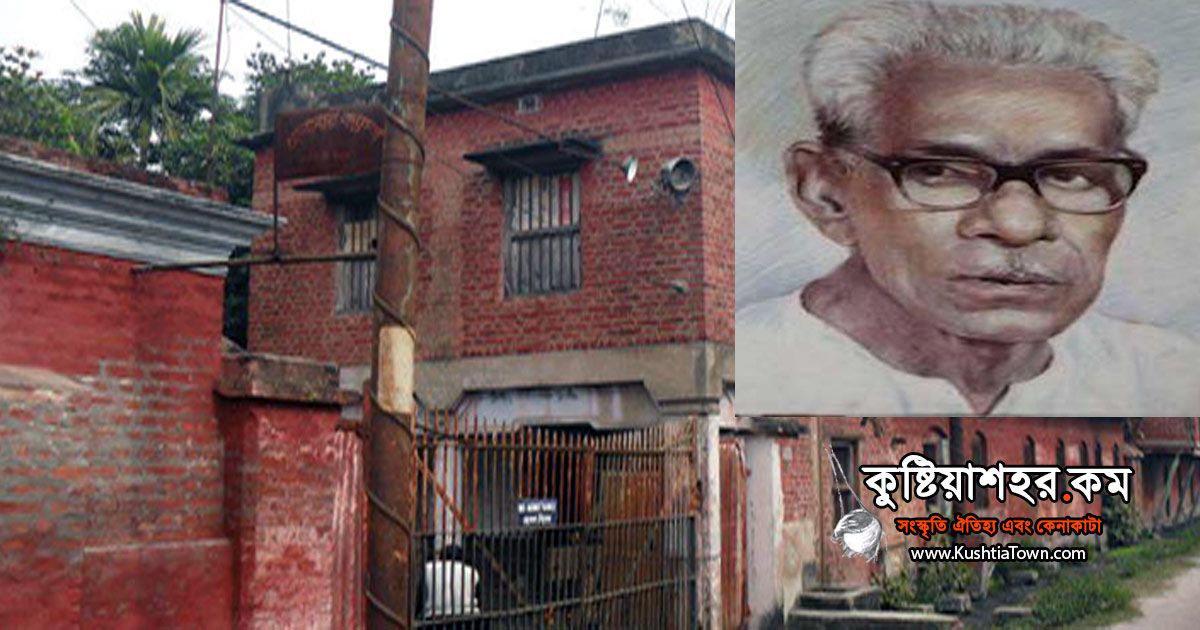
In 1948 Roushan Ali was forced to go underground. From then on he stayed in Dhaka and carried on the party's work. At that time differences arose within the party because of the adoption of a left-adventurist line. Then, in 1949, by the decision of the party, a three-member provincial committee was formed with Comrade Sheikh Roushan Ali as its secretary. With him were Altaf Ali and Abdul Bari. Later, when Roushan Ali was arrested, Altaf Ali took over the responsibility of the party.
At the conference of 1951 a committee was formed with Moni Singh as secretary, and Sheikh Roushan Ali was among the members of that committee. Toward the end of 1949 he was arrested from Chuadanga. After being imprisoned continuously for nearly 7 years, he was released in August 1956. After the creation of Pakistan, police attacks on communist leaders increased enormously. Comrades Garisullah Sardar, Hanif and Shiben Roy were arrested at that time. Communist leaders including Comrade Roushan Ali and Sudhir Sanyal went underground. On 24 April 1950 the Pakistani ruling clique carried out a gruesome massacre in the Khapra Ward of Rajshahi Jail.
Armed police shot dead the innocent, unarmed political prisoners. Those who were martyred that day were: [1] Delwar Hossain, a railway worker from Damukdia village of Kushtia, who was arrested in 1949. [2] Hanif Sheikh, a worker of Mohini Mill in Kushtia town, who lost his job for the crime of forming a trade union and was one of the organizers of the railway workers' union. [3] Anwar Hossain, a school student from Khulna. [4] Bijon Sen, a leader of the Rajshahi party, arrested in 1948. [5] Sudhir Dhar, whose home was in Dhaka, a railway workers' leader. [6] Sukhen Bhattacharya, whose home was in Mymensingh, and [7] Comparam Singh, whose home was in Dinajpur, one of the leaders of the Tebhaga movement. The injured were: [1] Avron Singh, Dinajpur, [2] Domaram Singh, Dinajpur, [3] Kali Sarkar, Dinajpur, [4] Khabir Sheikh, Dinajpur, [5] Dr. Ganesh Sarkar, Dinajpur, [6] Bhujen Palit, Dinajpur, [7] Satyen Sarkar, Kushtia, [8] Garisullah Sarkar, Kushtia, [9] Sudhir Sanyal Nandi, Kushtia, [10] Lalu Pande, Naogaon, [11] Sitangshu Maitra, Rajshahi, [12] Hirendra Sengupta, Jessore, [13] Abdul Haq, Jessore, [14] Prosad Roy, Pabna, [15] Aminul Islam Badsha, Pabna, [16] Babar Ali, Pabna, [17] Fatick Roy, Bogura, [18] Satya Bhattacharya Bachchu, Bogura, [19] Shyamapada Sen, [20] Ashu Bhardwaj, Faridpur, [21] Animesh Bhattacharya, Sylhet, [22] Ananta Dev, Sylhet, [23] Priyabrata Das Manju, Sylhet, [24] Abdus Shahid, Barishal, [25] Sadananda Das, Barishal, [26] Ramiduddin, Barishal, [27] Madhab Dutta, Jalpaiguri, [28] Nurunnabi Chowdhury, Burdwan, [29] Abul Mansur Habibullah, Burdwan, [30] Bankim Chattopadhyay, Barishal, [31] Nasir Uddin Ahmed, Dhaka, [32] Paritosh Das Gupta, Khulna, [33] Motilal Barman, Dinajpur, and [34] Parimal Dasgupta, Barishal.
On receiving the news of the armed police attack on Rajshahi Jail, Roushan Ali was deeply wounded in spirit. Together with his comrades he observed a protest hunger strike inside the jail itself.
From inside the jail he reflected on the Language Movement. He often used to say: no one can stop a nation that can shed blood for its language. This nation will surely be free one day. His firm belief took real shape in 1971.
In 1953, when the Pakistan government announced elections to the provincial assembly, the name of Comrade Roushan Ali began to be spoken of first and foremost as the candidate from Kushtia. But because of the opposition of some communal parties within the United Front, it was not possible. However, as the dearest friend of the working people, Syed Altaf Hossain received the nomination as the United Front candidate, and he won by a huge margin of votes. Comrade Roushan Ali's tireless labor in that election remains etched in the memory of today's politicians. In August of 1965, after long imprisonment, Roushan Ali was released. Again, in January of 1957, he was arrested. Meanwhile, under the leadership of Maulana Abdul Hamid Khan Bhasani, the progressive democratic forces formed the National Awami Party [NAP]. As soon as he came out of jail, Roushan Ali joined the NAP. The anti-Ayub Khan movement began. In 1962 he began working in support of the students' education movement.
Toward the end of the sixties, when division and hesitation appeared in the international communist movement, the NAP too split into two. Giving his support to the ideals, strategy and position of the Communist Party of the Soviet Union, he joined the NAP led by Professor Muzaffar Ahmed. When Bangabandhu Sheikh Mujibur Rahman declared the Six Points, the charter of the Bengali nation's liberation, Roushan Ali, on behalf of the Communist Party, declared solidarity with the Six Points and with the 11-point program of the Student Sangram Parishad.
Bowing to the intense mass movement of 1969, President Ayub Khan finally handed over power to his successor General Yahya Khan and shamelessly withdrew. Under the pressure of popular demands, General Yahya Khan announced the general elections of 1970.
Sheikh Roushan Ali was given the NAP's nomination for the Kushtia seat of the provincial assembly. His electoral symbol was a hut. He was defeated by the Awami League candidate Advocate Ahsanullah. Roushan Ali, the leader of the people, accepted the verdict of the people. As the political situation in the country grew hotter in the period after the election, he held several meetings with his party's leaders and activists. He always used to say that a war was coming — a war for our very existence, a war for liberation. In this war we would be the victors. He always advised everyone to remain alert.
In the second week of March, to prepare for the war, he formed a group of 50-60 students, workers and political activists in a mango orchard of Thana Para. The leadership of this group was given to Syed Jahed Rumi, a young leader of the Chhatra Union. He was certain that the talks between Bangabandhu and the Pakistanis would fail and that war was inevitable; therefore preparations had to be made. The MNA of Kushtia at the time was Barrister Amir-ul-Islam, and the MPA was Advocate Ahsanullah. Because the barrister was then in Dhaka, the main responsibility of the district fell upon Ahsanullah. However, he too remained in constant touch with Roushan Ali.
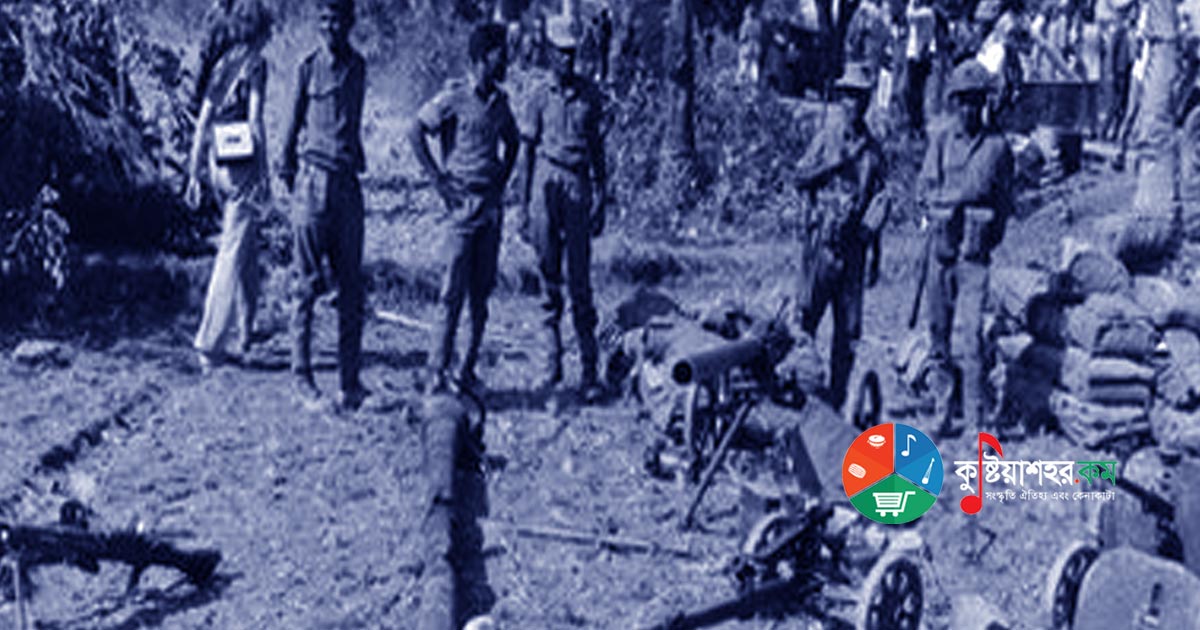
Then came that black night, 25 March 1971. Around 11 o'clock that night, soldiers of the Baloch Regiment entered the town from the Jessore cantonment and took up positions at the police lines, the district school, the thana, the wireless office and the telegraph office of Aruapara. In the meantime, people created countless barricades on different roads of the town. The next morning, 26 March, the Pakistani soldiers imposed an indefinite curfew.
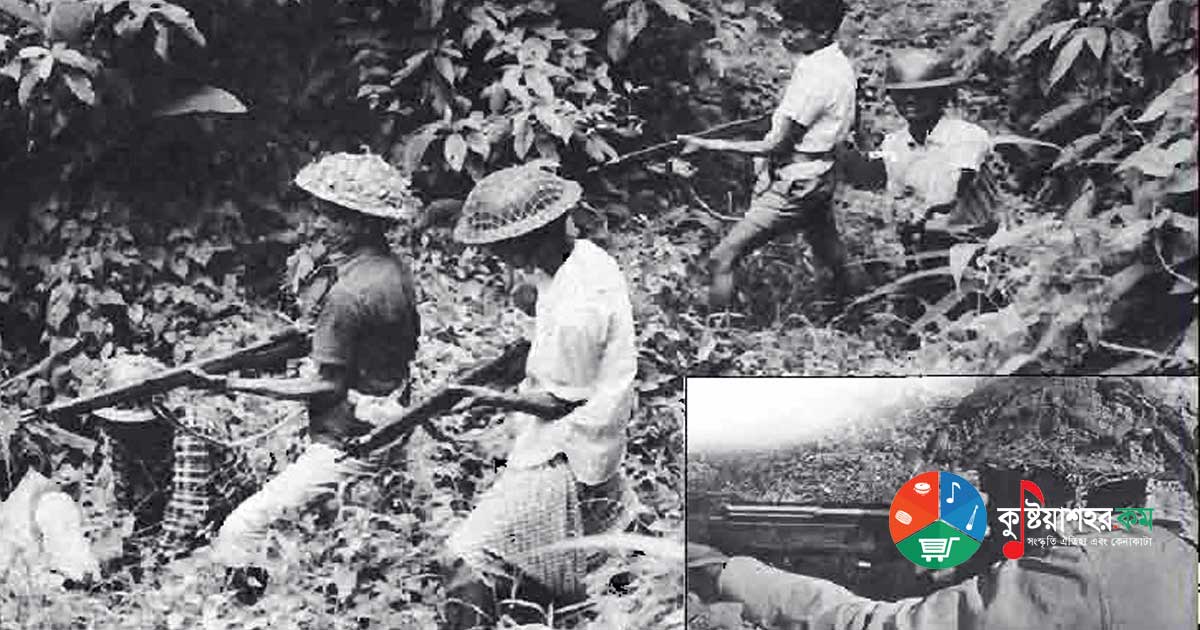
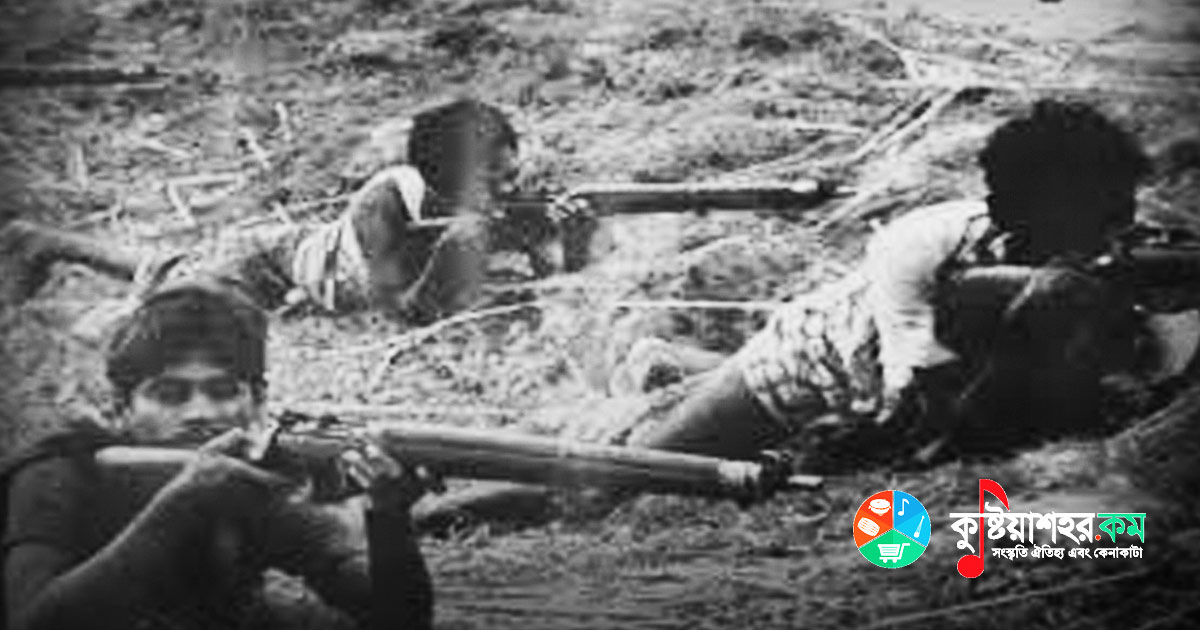
From various border areas the EPR, police and Ansar gathered and began preparing to attack. Under the leadership of the Awami League and the Chhatra League, the freedom-loving people began to unite. They decided to launch an armed attack against the Pakistani forces. Meanwhile, the group that had been formed under Roushan Ali's leadership — bringing together the progressives of the NAP, the Chhatra Union and other students, workers and politicians — also began planning organized attacks on the Pakistanis. He worked as a bridge between these two groups. Although the groups were separate, decisions were being made jointly. At 4:30 in the dawn of 30 March, planned attacks were launched on the bases of the Pakistani army stationed at various places. The main leadership of this battle was held by Major Abu Osman Chowdhury, sector commander of the EPR Chuadanga sector.
Meanwhile, the armed force formed with the activists of the NAP and the Chhatra Union under the leadership of Comrade Roushan Ali launched armed attacks on the thana and the telephone office. Ordinary people too soon gathered and joined the people's war. Alongside these groups, a vast force formed through the coordination of the leaders of the Awami League and the Chhatra League also took part in the battle. By the morning of 31 March the Pakistani troops had been defeated by the valiant Bengalis. Kushtia was temporarily freed of the enemy.
Click to read Comrade Roushan Ali and the War of Kushtia