বাংলা
 English
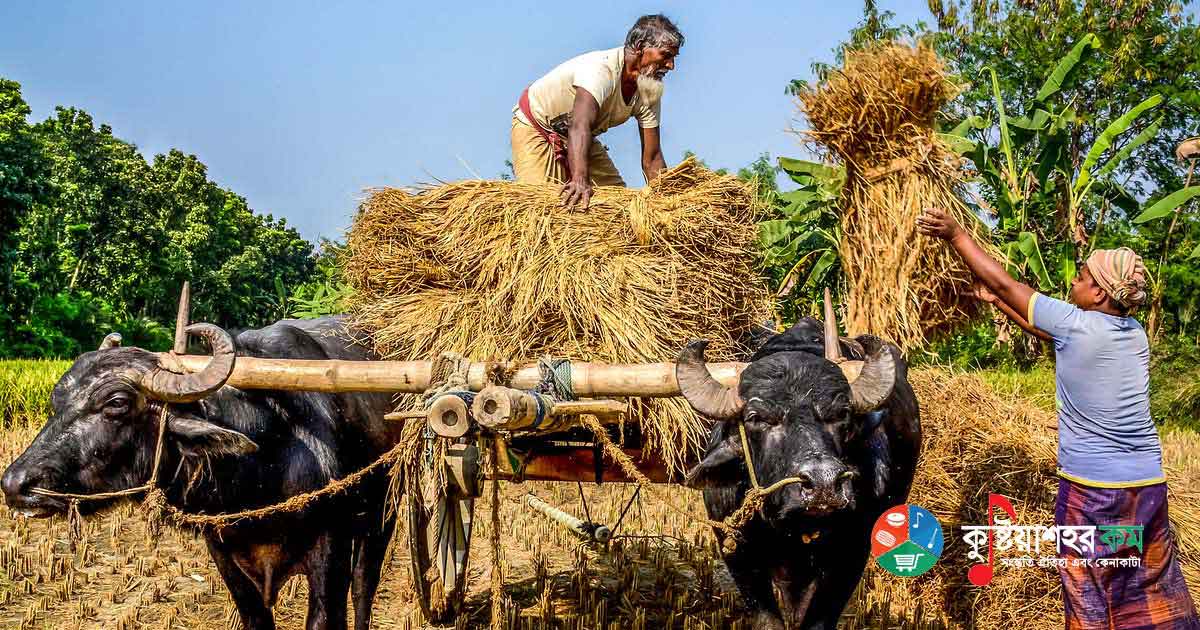
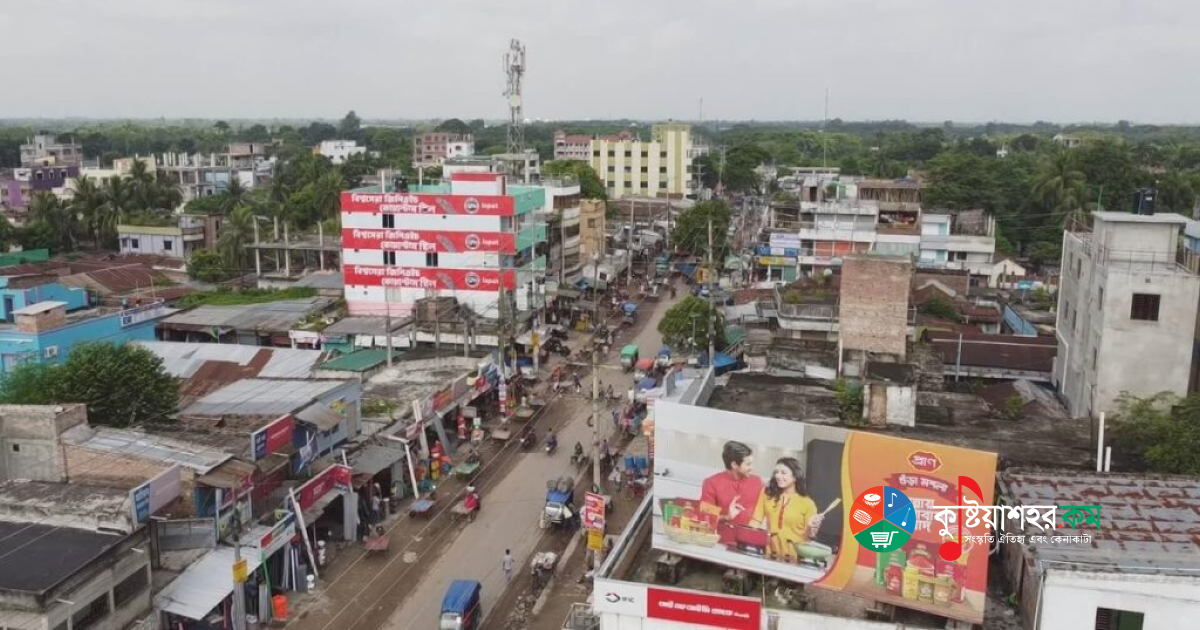
Home to the happiest people in Bangladesh and its 13th largest city is Kushtia town. The people of Kushtia are capable of producing every crop. The Kushtia region is full of rivers and streams, khals and beels, haors and baors, and various water bodies. And for that reason fish farming, too, shows great success.
At present the Kushtia region is also full of industrial establishments. Various Kushtia-made goods have conquered Bangladesh and reached different corners of the world. Because Kushtia's natural environment is pure, many people of talent have grown up here from the very beginning. The people of Kushtia's role in various social movements is highly praiseworthy, and for this many have received awards.
The urbanisation of Kushtia essentially began with the arrival of the indigo planters. In 1860 a direct railway line was laid linking the town with Kolkata (then the capital of the East India Company). For that reason the area was then considered an ideal place for industry. In that era were founded Yajneshwar Engineering Works (1896), Renwick, Yajneshwar & Co. (1904) and Mohini Mills (1919). At the partition of India in 1947, Kushtia emerged as a separate district. Its subdivisions were Kushtia Sadar, Chuadanga and Meherpur. In 1954 the headquarters of the Ganges-Kopotakkho Project was established with the then SDO Maulvi Abdul Bari Biswas at its head. Besides this, after a number of other government offices were set up in Kushtia, the town began to develop again.
The main rivers flowing through Kushtia are the Padma, the Gorai, the Mathabhanga, the Kaliganga, the Kumar river and the Dakua Khal. The district's average maximum temperature is 37.8°C and its average minimum temperature is 11.2°C. The annual average rainfall here is 1,467 mm. Kushtia district is divided into 6 upazilas, 7 thanas, 5 pourashavas (municipalities), 57 wards, 70 mahallas, 71 union councils, 710 mauzas and 978 villages. The population of Kushtia district is 1,713,224, of whom 50.86% are male and 49.14% female. Of the population, 95.72% are Muslim, 4.22% Hindu and 0.06% followers of other religions.
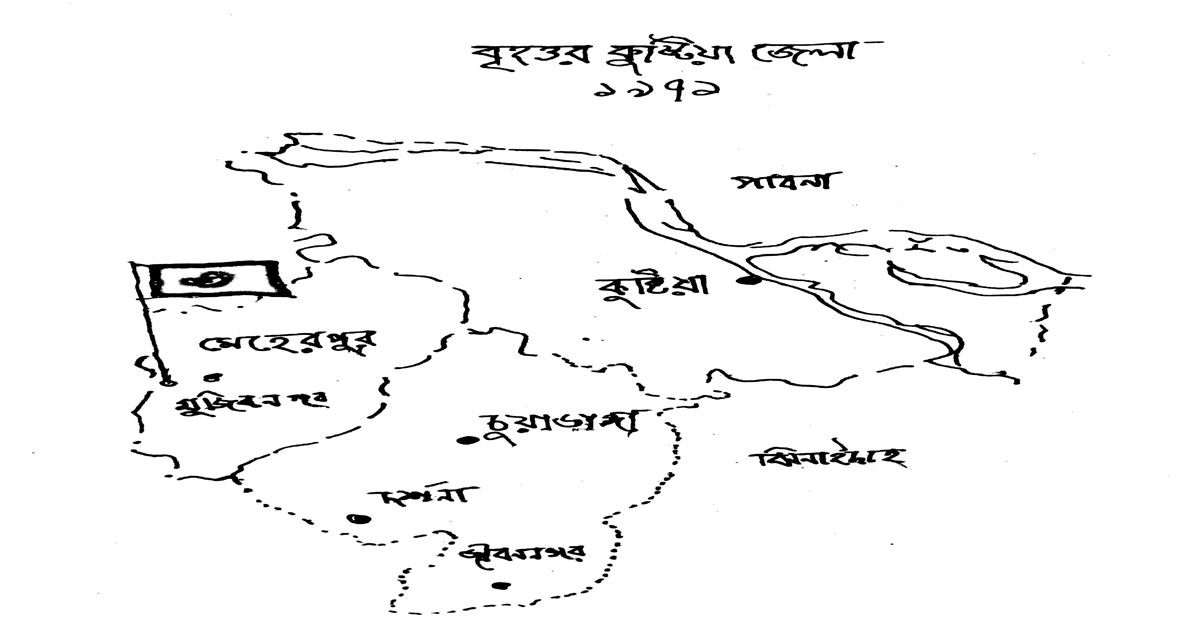
From a historical point of view, Kushtia is a large district formed out of several subdivisions, each of which later became a district. Yet to the people of the three districts — Chuadanga, Meherpur and Kushtia — greater Kushtia is not merely a past, but something more. It is worth mentioning specially that the spoken language of the original inhabitants of this region and of the undivided Nadia district bears a close resemblance to modern standard Bengali. The wider society of the inhabitants of these three districts is called greater Kushtia district.
Extensive crops are produced in the Kumarkhali-Khoksa region of Kushtia. Among them: paddy, onion, potato, sesame, banana, and various kinds of vegetables and fruits. Quite good crops are produced in Kushtia Sadar, among them paddy, banana, sugarcane, maize and various kinds of vegetables. Kushtia Sadar is also quite advanced in fish farming. Mirpur and Bheramara are quite rich in tobacco and betel-leaf cultivation alongside various crops. And centred on this, various domestic and foreign establishments have grown up there since the British era. In Daulatpur, betel-leaf baroj, fish farming and the cultivation of various fruits are quite notable.
Kushtians are God-fearing in religion and awakened with a non-communal spirit. There is a common bond among the people of all faiths, something not found in any other district. People of every faith celebrate the festivals of every faith with great fanfare. It is from this district that the preaching of Islam first began, spreading to different parts of Bangladesh.
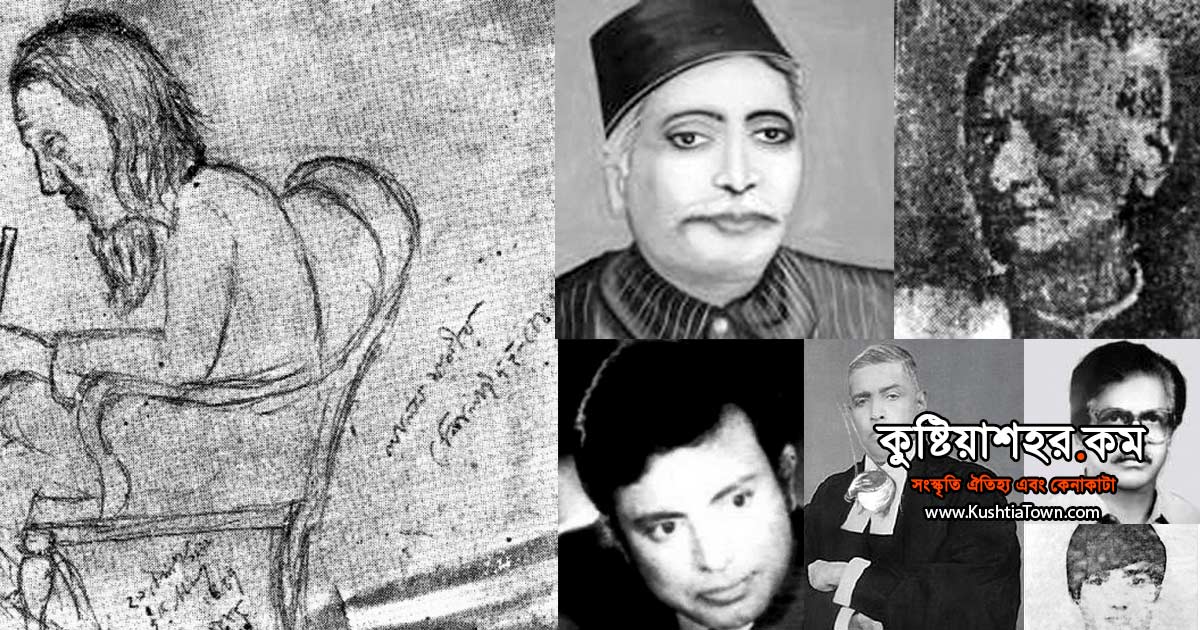
Many eminent persons have been born, and are being born, in this land of Kushtia: renowned Bauls, creators of mystic songs, eminent lawyers, freedom fighters, leaders of peasant movements, contributors to periodicals, social revolutionaries, Baul poets, travel writers, novelists, renowned businessmen, renowned musicians, renowned litterateurs, historians, lawyers, an international judge, renowned Swadeshi leaders, armed strugglers, famed children's writers, famed children's organizers, chess players, educationists, poets, lyricists, eminent organizers of the Liberation War, the designer of Bangladesh's national flag, jurists, human-rights campaigners, eminent theatre makers, actors, eminent music directors, composers, singers, and famous players of all kinds of sports.
In the end, in a word, Kushtia is a prosperous region. If the administration and the people of society all work together, much more is possible from this district.